

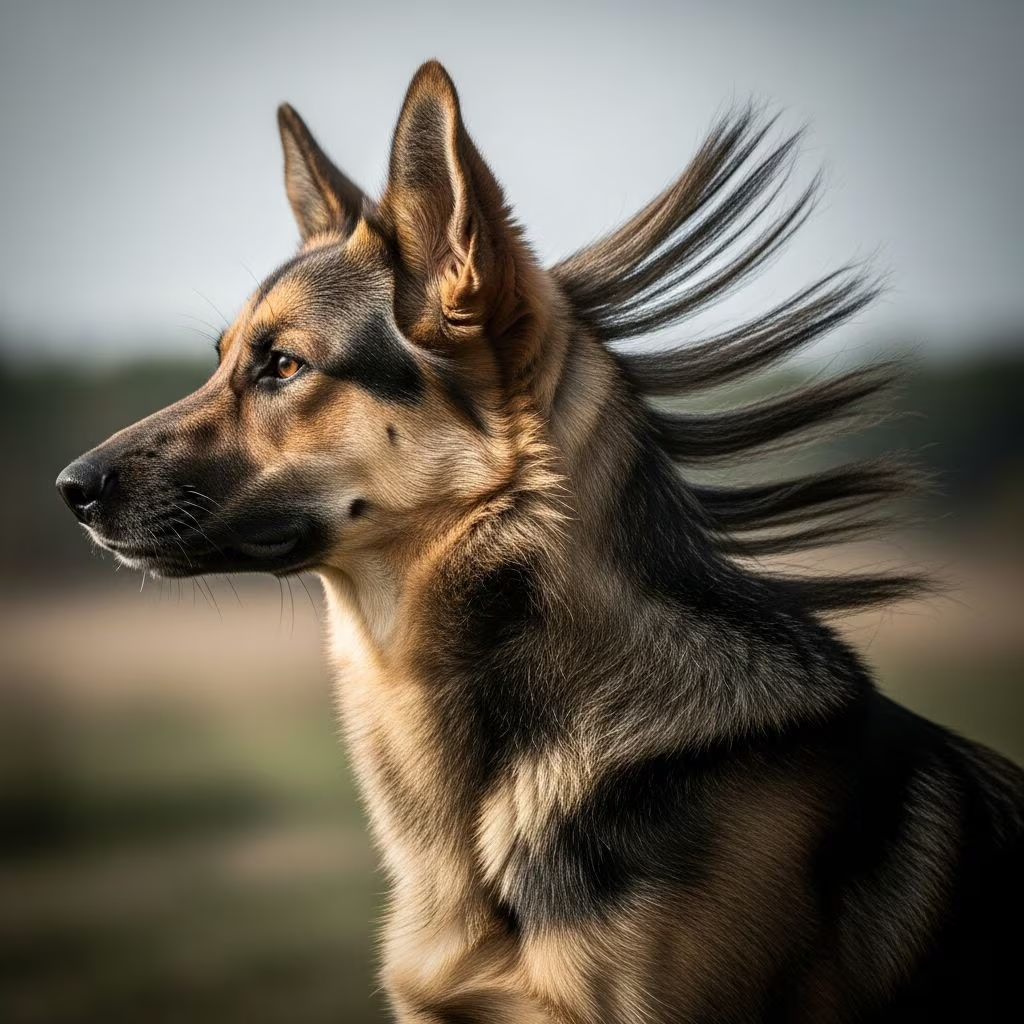
The phenomenon of a dog’s fur standing on end along its back, known as hackles or piloerection, is a striking visual cue that often catches owners off guard. This involuntary response serves as a window into your dog’s emotional world, signaling anything from heightened alertness to intense excitement. Understanding it requires looking beyond surface appearances to the biology and context behind it.
The Biology of Piloerection in Canines
Piloerection occurs when tiny muscles called arrector pili, attached to hair follicles beneath the skin, contract in response to signals from the sympathetic nervous system. This branch of the autonomic nervous system activates during states of arousal, much like the goosebumps humans get from cold or adrenaline rushes. The contraction pulls hair shafts upright, trapping air between them and creating a puffed-up appearance that makes the dog look larger—a primal defense mechanism shared across mammals.
This reflex is entirely automatic and uncontrollable, triggered by adrenaline surges tied to the “fight or flight” response. In dogs, it typically manifests along the neck, shoulders, back, and base of the tail, though visibility varies by coat type. Short-haired breeds display it more prominently, while long or curly coats like those on Poodles may obscure it. Even upon waking or during temperature shifts, this response can activate as the body adjusts.
Common Triggers for Raised Hackles
Dogs raise their hackles in diverse situations, not always negative. Key triggers include:
- Threat perception: Sudden appearances of strangers, other animals, or loud noises prompt a defensive posture, often preceding growls or lunges.
- Excitement or arousal: Playful greetings with other dogs or enthusiastic reunions can cause fur to bristle as energy peaks.
- Fear and anxiety: Unfamiliar environments like vet visits or thunderstorms heighten stress, leading to piloerection alongside other signs.
- Physical sensations: Cold air or stretching after sleep stimulates the reflex physiologically.
Recognizing these contexts prevents misinterpretation, as raised hackles alone don’t indicate aggression.
Interpreting Hackle Patterns and Locations
The extent and position of raised fur provide nuanced insights into a dog’s mindset. Trainers observe patterns to gauge confidence levels and predict behavior.
| Pattern | Location | Likely Emotion | Accompanying Signs |
|---|---|---|---|
| Shoulders only (narrow strip) | Across shoulders, 1/3 down back | Nervousness, low confidence | Shedding, tucked tail, avoidance |
| Shoulders and tail base | Gaps along spine | Ambivalence, conflict | Unpredictable reactions, stiff posture |
| Full spine line | Shoulders to tail | Confidence, possible aggression | High stiff tail, forward lean |
These patterns, combined with overall posture, offer a fuller picture. A confident dog might hold a raised-tail stance rigidly, while a fearful one tucks it.
Body Language Companions to Watch For
Raised hackles never occur in isolation; they pair with other signals for accurate reading. Positive contexts show loose, playful movements and wagging tails, while tension appears in stiff freezes or lip licks.
- Fearful cues: Yawning, pacing, whining, averted gaze, low tail.
- Aggressive indicators: Stiff body, forward ears, intense stare, raised lip.
- Excited signs: Play bows, rapid tail wag, bouncy gait.
Observing sequences over seconds, rather than snapshots, accounts for environmental factors like leash tension, which can escalate neutral arousal into conflict.
Breed Variations and Visibility Factors
Not all dogs show hackles equally. Smooth-coated breeds like Boxers reveal it starkly, aiding quick communication. Fluffy or dense-coated ones, such as Huskies, may hide it unless shoulders or tail base are checked closely. The Rhodesian Ridgeback’s ridge is a genetic trait, not true piloerection, evolved for display rather than reflex.
Shedding often accompanies stress-induced raises, as hairs in the telogen (resting) phase loosen and fall during the reflex. Owners of reactive breeds benefit from learning these subtleties to intervene early.
Evolutionary Roots and Survival Value
This trait traces to wild ancestors, where appearing larger deterred predators or rivals. Air trapped in raised fur also insulates against cold, doubling as thermal protection. Porcupines amplify it with quills, but in dogs, it’s purely fur-based intimidation. Modern domestication hasn’t erased it; instead, it persists as an emotional barometer.
Practical Tips for Dog Owners
Safe management starts with awareness:
- Keep leashes loose during dog greetings to avoid frustration.
- Use positive reinforcement to build confidence in triggers.
- Consult trainers for reactive dogs showing frequent full-spine raises.
- Video unusual episodes for vet or behaviorist review.
Never punish the response—it’s involuntary. Instead, redirect focus with commands or distance from stimuli.
When to Seek Professional Help
Frequent piloerection with aggression, excessive fear, or unpredictability warrants a veterinary behaviorist. Rule out medical issues like pain or thyroid imbalances mimicking stress. Early intervention prevents bites or chronic anxiety.
FAQs
Is raised hackles always a sign of aggression?
No, it often signals excitement, fear, or arousal. Context and full body language matter most.
Why do some dogs show it more than others?
Coat length and texture affect visibility; short stiff fur displays it clearly.
Can I train my dog out of raising hackles?
No, as it’s involuntary, but training reduces underlying triggers like fear.
Does it happen in puppies?
Yes, from early socialization periods, reflecting innate responses.
What if hackles stay raised constantly?
Rare; check for chronic stress or health issues with a vet.
References
- Why Do Dogs Put Their Hackles Up — Wagwalking. 2023. https://wagwalking.com/behavior/why-do-dogs-put-hackles-up
- Why Do My Dog’s Hackles Stand Up on End? — Beyond the Dog Training. 2023. https://beyondthedogtraining.com/dog-training/why-do-my-dogs-hackles-stand-up-on-end/
- What Your Dog’s Hackles Are Telling You — Rover.com. 2023. https://www.rover.com/blog/dog-hackles/
- Piloerection in Dogs: Scared, or Just Glad to See Me? — Patricia McConnell. 2023. https://www.patriciamcconnell.com/theotherendoftheleash/piloerection-in-dogs-scared-or-just-glad-to-see-me/
- Everything You Need to Know About Dog Hackles — Pawsbetter. 2023. https://pawsbetter.com/blogs/blog/all-about-dog-hackles
- Piloerection: What Does Raised Hackles Mean? — Kinship. 2023. https://www.kinship.com/dog-behavior/piloerection
- The Surprising Evolutionary Reason Your Dog’s Hairs Stand on End — Parade Pets. 2023. https://paradepets.com/dogs/evolutionary-reason-your-dogs-hairs-stand-on-end



