

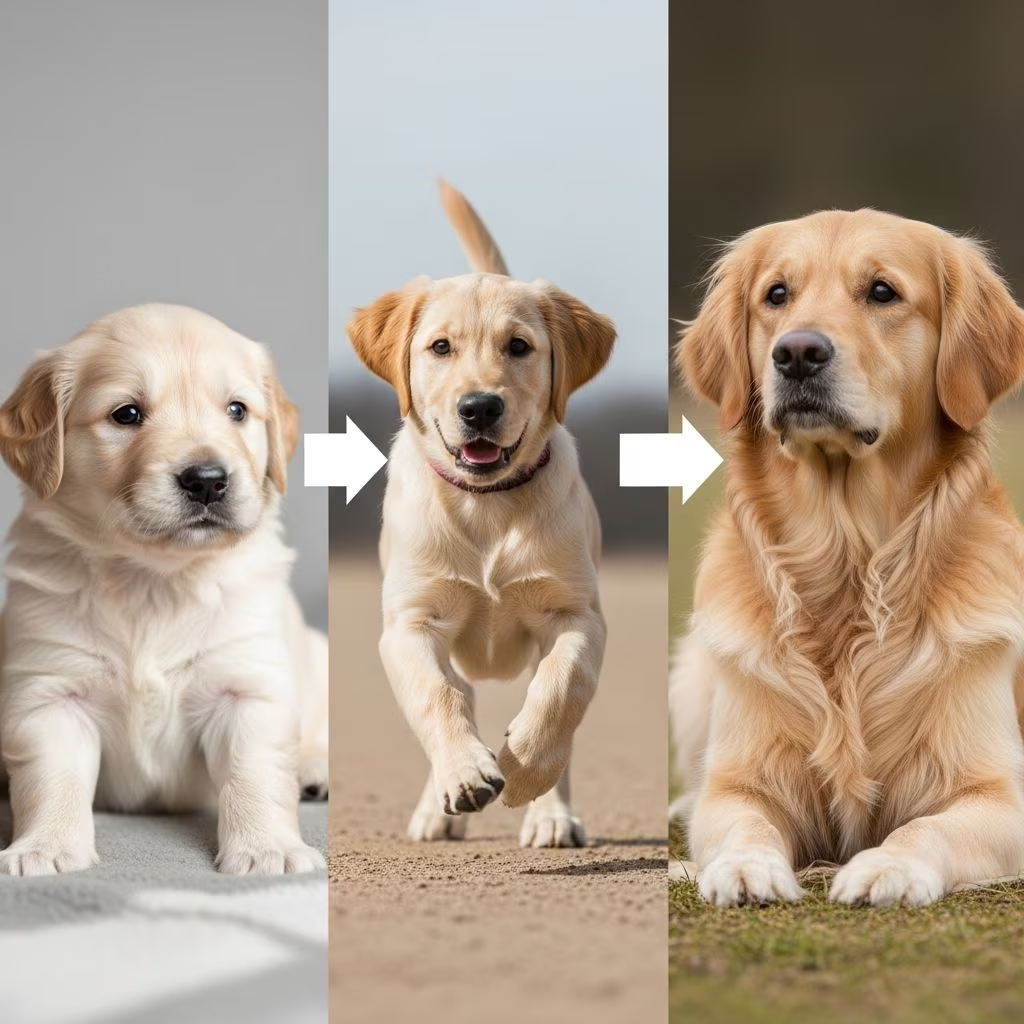
Dogs undergo remarkable transformations from fragile newborns to robust adults, with growth timelines heavily influenced by breed size. Small breeds often mature by 9-12 months, while giant breeds may take up to 24 months to fully develop physically and emotionally.
Understanding Breed Size Impact on Growth
The pace at which a dog reaches adulthood depends primarily on its expected adult size. Toy and small breeds complete most growth early due to shorter skeletal development periods, whereas large and giant breeds experience prolonged bone elongation followed by muscle filling.
- Toy breeds (under 10 lbs): Full maturity around 8-10 months.
- Small breeds (10-25 lbs): Typically 9-12 months.
- Medium breeds (25-50 lbs): 12-15 months.
- Large breeds (50-100 lbs): 15-21 months.
- Giant breeds (over 100 lbs): Up to 24 months or longer.
This variation means owners must adjust feeding, exercise, and health monitoring accordingly to prevent issues like rapid growth syndrome in larger pups.
Neonatal Phase: Birth to 2 Weeks
Newborn puppies are helpless, relying entirely on their mother for warmth, nutrition, and elimination stimulation. They cannot regulate body temperature or see/hear, focusing energy on doubling their birth weight within days.
Key milestones include instinctive rooting for milk and sleeping 90% of the time. Weight gain is rapid: small breeds add grams daily, giants ounces. Owners should minimize handling to avoid stress, ensuring the dam has a quiet whelping area.
| Breed Size | Birth Weight Example | 2-Week Weight Gain |
|---|---|---|
| Toy | 3-5 oz | 8-12 oz |
| Small | 6-12 oz | 1-2 lbs |
| Giant | 1-2 lbs | 4-6 lbs |
Monitor for failure to thrive, characterized by lethargy or crying, and consult a vet promptly.
Transitional Stage: 2 to 4 Weeks
Puppies’ eyes open around day 10-14, ears follow shortly. They begin stumbling walks, play-fighting with siblings, and making initial vocalizations like whines turning to barks.
Milk teeth erupt, signaling weaning preparation. Introduce gruel (softened kibble) by week 3, transitioning from mother’s milk. Pups learn self-elimination and thermoregulation.
- Sensory development: Vision sharpens by week 4, hearing fully functional.
- Motor skills: Crawling to coordinated walking.
- Social bonds: Littermate interactions build bite inhibition.
This phase sets foundations for lifelong health; gentle human exposure starts here without overwhelming the pups.
Socialization Window: 4 to 12 Weeks
The critical socialization period demands diverse positive experiences. Puppies explore boldly, learning from litter and humans. Vaccinations begin at 6-8 weeks, alongside deworming.
Rapid physical changes include full dentition of puppy teeth and coat softening. Training basics like potty cues and name response emerge. Fear periods may appear briefly, requiring confidence-building.
Ideal adoption age is 8-12 weeks, when social skills peak but dependency allows bonding.
Juvenile Period: 3 to 6 Months
Energy explodes as puppies hit adolescence early. Puppy teeth shed for 42 adult ones by 6-7 months. Growth accelerates: height surges in larger breeds.
Behavioral testing begins—chewing, boundary-pushing. Consistent positive reinforcement curbs issues. Nutrition shifts to puppy formulas supporting 2-3x daily weight gains in big breeds.
- Exercise: Short, frequent sessions to protect developing joints.
- Training: Focus on recall, sit, and leash manners.
- Health: Spay/neuter discussions at vet visits.
Adolescent Growth Spurt: 6 to 18 Months
This ‘teenage’ phase features sexual maturity: males leg-lift urinate, females cycle. Growth slows post-9 months, emphasizing muscle over skeleton in giants.
Personality solidifies—independence challenges rules. Large breeds gain 70-100x birth weight total. Monitor for orthopedic issues like hip dysplasia via controlled exercise.
| Age | Small/Medium Milestones | Large/Giant Milestones |
|---|---|---|
| 6-9 months | Near full height, adult coat | Rapid bone growth peaks |
| 9-12 months | Full physical maturity | Muscle filling begins |
| 12-18 months | Emotional settling | Continued weight gain |
Emotional maturity aligns with physical around 12-18 months universally.
Physical Maturity Markers
Signs of adulthood: Full dentition, proportional build, steady weight, calm demeanor. X-rays confirm growth plate closure in breeds prone to limb issues.
Breed examples:
- Chihuahua: Stops at 8 months.
- Labrador: 15 months.
- Great Dane: 24 months.
Nutrition Through Growth Phases
Puppy food high in calories, DHA for brain, glucosamine for joints until maturity. Transition gradually to adult kibble. Large breed formulas limit calcium to curb overgrowth.
Feed 3-4 meals early, reducing to 2 by 6 months. Weekly weigh-ins track curves; deviations warrant vet checks.
Exercise Guidelines by Stage
Match activity to development:
- Neonatal/Transitional: Minimal, mother-led.
- Socialization: Playdates, 5-min walks.
- Juvenile/Adolescent: 30-60 min daily, no high-impact.
- Maturity: Breed-appropriate endurance.
Avoid forced exercise in giants pre-18 months to safeguard hips.
Health Monitoring Milestones
Regular vet schedules: Vaccines at 8,12,16 weeks; dentals at 6 months; maturity exams. Watch for growth spurts causing appetite spikes or lameness.
Spay/neuter timing varies: 6 months for small, post-growth for large to minimize cancer risks.
Common Growth Concerns
Overfeeding leads to obesity; under-exercise to hyperactivity. Fear periods (8-10 weeks, 6 months) pass with reassurance. Consult pros for aggression or stunting.
FAQs
When do most dogs stop growing in height?
Small breeds by 9 months, giants by 18-24 months. Height stabilizes when growth plates fuse.
How can I predict my mixed-breed puppy’s adult size?
Use growth charts based on current weight/age and parental sizes. Vet estimates help.
Is it safe to switch to adult food before 1 year?
Not for medium+ breeds; puppy formulas support until full maturity.
What if my puppy grows slower than peers?
Possible nutrition/parasite issues; vet diagnostics needed.
Do neutered dogs grow differently?
Early neuter may slightly prolong growth in large breeds; discuss with vet.
References
- Puppy development from birth to adulthood — Royal Canin. 2023. https://www.royalcanin.com/us/dogs/puppy/puppy-development-from-birth-to-adulthood
- Puppy Development Stages: Newborn Milestones & Growth Charts — Bow Wow Insurance. 2023. https://bowwowinsurance.com.au/pet-community/pet-talk/puppy-development-stages-newborn-milestones-growth-charts/
- The Puppy Timeline: Physical And Mental Changes — Texas A&M Veterinary Medicine. 2022-10-01. https://vetmed.tamu.edu/news/pet-talk/puppy-timeline-part-1/
- The Journey of a Lifetime: Understanding Your Dog’s Life Stages — AAHA. 2023. https://www.aaha.org/resources/the-journey-of-a-lifetime-understanding-your-dogs-life-stages/
- Puppy Development Stages From Birth to 2 Years Old — Best Friends Animal Society. 2023. https://bestfriends.org/pet-care-resources/puppy-development-stages-birth-2-years-old
- A Puppy Growth Timeline: Transitions in Puppyhood — AKC. 2023. https://www.akc.org/expert-advice/puppy-information/puppy-growth-timeline-transitions-puppyhood/



