

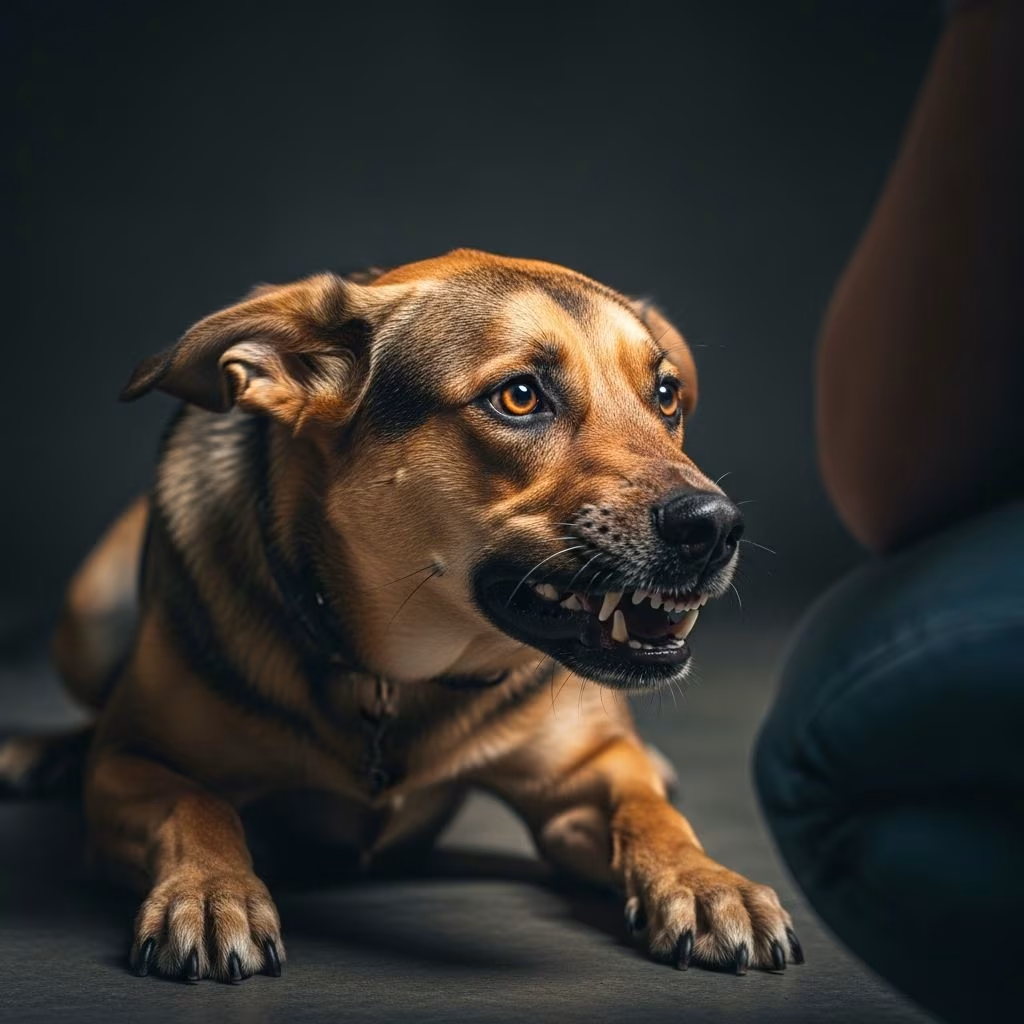
Understanding the Critical Role of Growling in Dog Communication
When a dog growls, many owners interpret it as a sign of aggression or dominance and feel compelled to take immediate corrective action. However, this interpretation fundamentally misunderstands what growling actually represents in canine communication. Growling serves as a crucial warning system that provides dogs with a non-violent way to communicate their discomfort, fear, or need for personal space. Rather than an indication that a dog is inherently aggressive or dangerous, growling is actually a valuable communication tool that allows dogs to express themselves before resorting to more serious behaviors.
The underlying function of a growl is to prevent escalation. When a dog feels threatened, uncomfortable, or protective of resources, growling communicates “back off” to the perceived threat. This early warning gives owners and other individuals crucial time to recognize the dog’s distress and create distance. A dog that has learned growling is unacceptable may skip this warning entirely and proceed directly to biting, making the situation far more dangerous. Understanding this distinction is foundational to responding appropriately when your dog growls.
The Counterproductive Nature of Punishment-Based Responses
Why Yelling and Physical Corrections Backfire
One of the most common mistakes owners make when their dog growls is responding with punishment. This includes yelling at the dog, physical corrections such as hitting or grabbing, use of choke chains or shock collars, or punishment tools like water bottles. While these methods may temporarily suppress the growling behavior, they do not address the underlying issue causing the dog’s distress and typically make the situation worse.
Punishment techniques fundamentally increase a dog’s fear and anxiety rather than alleviating it. When an owner yells at or physically corrects a dog that is growling from fear or stress, the dog learns that being afraid results in painful or frightening consequences. This creates a cycle where the dog becomes even more anxious and fearful. Additionally, punishment-based responses damage the human-animal bond and teach the dog not to trust the humans in their environment.
Perhaps most critically, punishing growling can increase aggression. A dog that has learned growling leads to punishment may suppress the warning growl entirely and progress directly to biting with no warning signs. From a safety perspective, this is the worst possible outcome. The dog you thought you corrected into compliance is now more dangerous than before.
The Hidden Consequences of Suppression
Suppressing growling through punishment creates what experts call a “silent biter”—a dog that skips the warning signals and goes straight to aggressive behavior when stressed or threatened. This makes the dog substantially more dangerous to family members, visitors, and other animals. What appears to be successful behavior correction is actually the removal of valuable early warning signs, leaving owners with a false sense of security.
Common Scenarios Where Punishment Fails
Growling appears in multiple contexts, and punishment is equally counterproductive in all of them:
- Resource Guarding: A dog growling while eating or protecting a toy is communicating “this is mine, stay away.” Punishing this growl teaches the dog that someone approaching its resources results in punishment, but does not change the dog’s underlying possessive feelings. The dog may eventually allow access to the resource out of fear of punishment, but the anxiety remains.
- Fear-Based Growling: When a dog growls because it is frightened by strangers, loud noises, or unfamiliar situations, punishment adds additional fear on top of existing fear. The dog now fears both the original trigger and the owner’s response, accelerating anxiety.
- Protective Growling: Dogs that growl at the door or when someone approaches the home are often showing protective behavior. Punishing this growl does not reduce the dog’s sense of protectiveness; it only teaches the dog that alerting the owner to perceived threats results in punishment.
- Play Growling: Some dogs growl during play or when excited. Punishing play growling teaches the dog that enjoyment and excitement result in corrections, dampening normal social behavior and potentially creating anxiety around play situations.
The Emotional Impact of Punishment on Your Dog
Beyond the immediate behavioral consequences, punishment-based responses to growling create emotional damage. Dogs experience genuine fear and confusion when corrected for expressing discomfort. A dog that growls while experiencing stress is already in a heightened emotional state. Adding punishment to this state intensifies the stress and creates negative associations with situations where growling occurs.
Over time, this pattern erodes the dog’s confidence and creates learned helplessness. The dog learns that expressing its feelings results in negative consequences from its owner, leading to suppressed behavior and potential behavioral issues. The trust that forms the foundation of a healthy dog-owner relationship deteriorates, replaced by fear and uncertainty.
Identifying the Underlying Cause Before Responding
A critical mistake owners make is responding to growling without first understanding what caused it. Growling serves different functions, and the appropriate response depends entirely on the underlying motivation. Before taking any action, assess the context:
| Growling Context | Likely Cause | What the Dog Needs |
|---|---|---|
| Growling during eating or near toys | Resource protection | Gradual desensitization, not punishment |
| Growling at strangers or new situations | Fear or anxiety | Safe distance and counterconditioning |
| Growling when picked up or touched in certain areas | Possible pain or medical issue | Veterinary examination |
| Growling during active play or when excited | Excitement or overstimulation | Redirection to calmer activities |
| Growling when told “no” or corrected | Fear or frustration with restriction | Changed interaction approach, not escalated correction |
Medical Issues Mistaken for Behavioral Problems
Another significant mistake owners make is failing to rule out medical causes before implementing behavioral interventions. Growling can indicate pain or discomfort from underlying health conditions. Dogs experiencing joint pain, ear infections, dental problems, or other medical issues may growl when touched in sensitive areas or when moving in ways that cause discomfort.
Punishing growling caused by pain is particularly cruel and counterproductive. The dog is communicating genuine physical distress, and punishment only adds emotional distress to the physical pain. Any pattern of growling should prompt a veterinary examination to rule out medical causes before behavioral training begins. Age-related changes, including cognitive dysfunction syndrome in older dogs, can also trigger growling and require professional evaluation.
Practical Alternatives to Punishment
Redirection and Attention Management
When your dog growls, the first response should be acknowledgment and redirection rather than punishment. If your dog growls at someone approaching on a walk, use a neutral attention-getting sound—a light whistle, finger snap, or soft clap—to redirect focus. The goal is not to startle or frighten the dog, but simply to interrupt the pattern and redirect attention toward you.
Once you have the dog’s attention, ask for a simple command such as “look” or “touch” and reward compliance with high-value treats and praise. This teaches the dog that when something causes discomfort or concern, the appropriate response is to focus on the owner rather than escalate the situation. Over time, this becomes the default behavior, replacing growling with a positive alternative.
Counterconditioning and Desensitization
Addressing growling long-term requires changing the dog’s emotional response to the situation triggering the growl. Counterconditioning involves pairing the trigger with positive experiences, gradually shifting the dog’s emotional association from negative to positive. For example, if your dog growls at strangers, you might position yourself at a distance where the dog notices strangers but does not yet growl, then immediately provide treats and praise. As the dog’s emotional response shifts, you gradually decrease the distance.
Desensitization works alongside counterconditioning by gradually exposing the dog to lower levels of the trigger stimulus over time. Combined, these techniques can fundamentally change how your dog responds to situations that previously caused growling.
Environmental Management
While working on behavioral modification, prevent situations that trigger growling from occurring. If your dog growls when the mailman arrives at noon, adjust the environment by closing curtains or moving to another room during this time. If your dog guards resources, manage feeding times and toy access to prevent triggering the behavior while you work on the underlying issue.
This is not avoiding the problem permanently; it is creating a window of opportunity where your dog can practice and learn new behaviors without practicing the old, problematic ones. Each time your dog practices growling, that neural pathway strengthens. Each time your dog practices the desired alternative behavior and receives reinforcement, that pathway strengthens instead.
When to Seek Professional Help
If your dog’s growling is frequent, intense, or you feel uncertain about how to proceed, consult with a qualified dog trainer or certified animal behaviorist. These professionals can identify the specific triggers and underlying causes, assess safety risks, and design a customized behavior modification plan. For dogs with serious anxiety or aggression, professional guidance is essential. Attempting to address these issues alone through trial-and-error, particularly with punishment-based methods, can worsen the problem and create safety risks.
Building the Relationship You Actually Want
The mistakes owners make in response to growling often stem from the belief that dogs need to be “dominated” or that asserting authority requires harsh corrections. This misunderstanding damages the dog-owner relationship and creates anxiety rather than respect. Dogs that trust their owners and feel secure behave better than dogs that fear their owners.
When you respond to growling with understanding and appropriate intervention, you teach your dog that you are a source of safety and support. You teach your dog that communicating discomfort leads to constructive solutions, not punishment. This builds genuine trust and creates a foundation for addressing behavioral issues effectively.
Frequently Asked Questions
Q: Does growling always indicate aggression?
No. Growling is a communication signal that indicates discomfort, fear, protectiveness, or excitement depending on context. Dogs that growl are not inherently aggressive; they are attempting to avoid escalation through communication.
Q: Will ignoring growling make it go away?
No. Ignoring growling means ignoring important information about your dog’s emotional state. You should acknowledge the growl, identify its cause, and respond appropriately through redirection or environmental management, not ignore it.
Q: Can an old dog learn not to growl?
Yes. Dogs of any age can learn new behaviors through consistent training and counterconditioning, though older dogs may require more patience. Age-related changes that contribute to growling should be evaluated by a veterinarian.
Q: Is it normal for puppies to growl?
Yes. Puppies growl during play, when startled, or when protecting resources. Responding to puppy growling with punishment during these formative months sets patterns that become difficult to change. Teaching puppies appropriate responses through redirection and positive reinforcement is essential.
Q: Should I allow my dog to growl?
You should not punish growling, as this can make dogs more dangerous. However, you can and should redirect growling through attention management and teach alternative behaviors. The goal is to change the response, not suppress the communication.
References
- Why Dogs Growl and How to Handle It — American Kennel Club. Accessed 2026. https://www.akc.org/expert-advice/training/why-dogs-growl-and-how-to-handle-it/
- Understanding Why a Dog Growls — Providence Veterinary Hospital. Accessed 2026. https://providencevethospital.com/blog/why-a-dog-growls/
- 11 Reasons Why Your Dog is Growling — Sahara Pines Animal Hospital. Accessed 2026. https://saharapinesah.com/blog/11-reasons-why-your-dog-is-growling/
- What Dog Growling Means and What To Do — PetMD. Accessed 2026. https://www.petmd.com/dog/behavior/why-do-dogs-growl
- Aggression in Dogs: Why Do Dogs Growl and What It Means — Pet Assure. Accessed 2026. https://www.petassure.com/new-newsletters/my-dog-growls-does-this-mean-hes-aggressive/



