
Dog Grass Kicking Explained
Discover the instinctive reasons behind your dog's grass-kicking habit and how to manage it effectively for a happier pet.
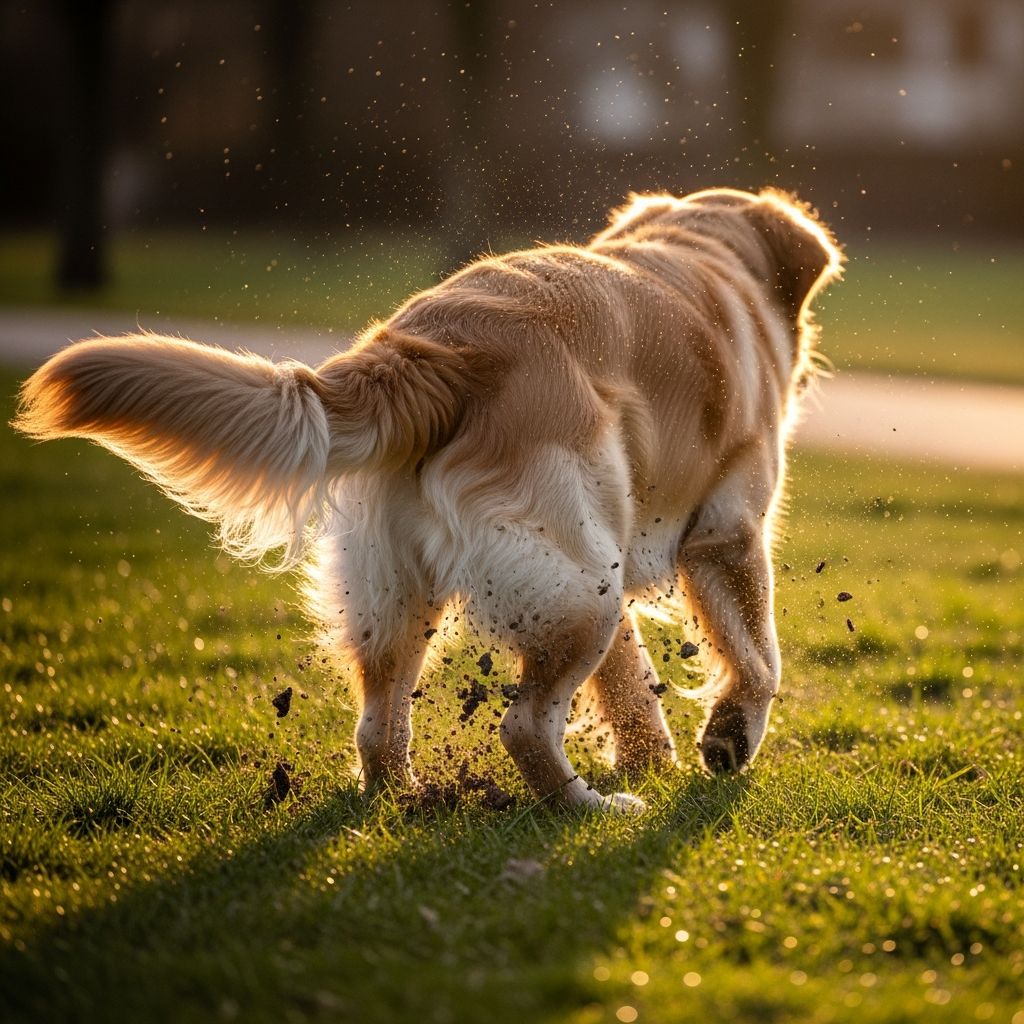
Dogs often kick their hind legs backward against grass or dirt after eliminating, a behavior rooted in instinctual communication and territorial marking. This action releases pheromones from paw glands, signaling presence to other dogs while leaving visual scratches.
The Science of Scent Glands in Paws
Canines possess specialized interdigital glands located between the toes on their paws, which produce unique pheromones. When a dog scratches or kicks the ground, these glands activate, dispersing scent molecules onto the surface. This creates a lasting olfactory signature that advertises the dog’s identity, health status, and dominance level to nearby animals.
Unlike urine or feces scents that fade quickly, paw pheromones adhere to grass blades and soil particles, extending the message’s duration. Studies on free-ranging dogs show this behavior intensifies near boundaries, reinforcing territorial claims.
- Pheromones convey individual scent profiles.
- Scratching distributes oils and secretions effectively.
- Combines with visual marks like dirt slashes for dual signaling.
Evolutionary Origins and Instinctual Drive
This habit traces back to wild ancestors like wolves and coyotes, who used ground-scratching to protect resources and deter rivals. In packs, dominant individuals scratched more frequently during encounters with strangers, intimidating others and securing space.
Domestic dogs retain this genetic programming, performing it regardless of environment—be it a yard, park, or even indoor floors. It’s not learned but innate, emerging early in puppyhood without training.
Modern contexts trigger it post-elimination or near other dogs, mimicking ancestral survival tactics in urban settings.
When and Why Dogs Display This Behavior Most
Dogs kick grass primarily after pooping or urinating, amplifying their eliminative scents. Observations reveal heightened activity in novel areas or during social interactions, such as fence-line meetings with neighbors’ pets.
| Trigger | Common Locations | Intensity Level |
|---|---|---|
| Post-pooping | Yard, park | High |
| Near other dogs | Fences, walks | Medium-High |
| New environments | Unfamiliar parks | Variable |
| Indoor visitors | Home floors | Low-Medium |
Higher-ranking or confident dogs exhibit it more boldly, using scratches as intimidation displays that prompt rivals to retreat.
Variations Across Breeds and Individuals
Not every dog kicks grass equally; personality, breed heritage, and confidence influence frequency. Herding breeds like Border Collies may show restrained versions, while terriers or hounds often display vigorous scrabbling tied to hunting instincts.
Some puppies skip it entirely if neutered early or in low-stress homes, but most intact males and females engage regularly. Environmental factors, like soft grass versus concrete, also modulate expression—hard surfaces yield subtler scratches.
- Bold personalities: Frequent, energetic kicks.
- Shy dogs: Rare or minimal motions.
- Breed traits: Scent hounds emphasize olfactory signals.
Potential Health and Safety Concerns
While typically benign, excessive kicking risks paw pad injuries on abrasive surfaces like pavement or tiles. Repetitive motion can cause cracking, bleeding, or soreness, especially in breeds with thin pads.
Monitor for:
- Redness or swelling on paws.
- Limping post-activity.
- Increased frequency signaling stress or anxiety from changes like new pets.
Apply pet-safe paw balms for protection and consult vets if wounds appear. Rarely, obsessive scratching indicates allergies or compulsions requiring behavioral intervention.
Practical Management Strategies for Owners
Most instances need no correction, as suppressing instincts frustrates dogs. Redirect instead:
- Timing:** Leash gently post-elimination before kicking starts.
- Enrichment:** Offer puzzle toys or fetch to channel energy.
- Training:** Teach “leave it” cues for indoor surfaces.
- Surface Prep:** Use paw booties on rough walks.
For yard damage, designate a mulch zone for elimination. Positive reinforcement builds compliance without stifling natural expression.
Myths and Misconceptions Debunked
Common errors include assuming dogs bury waste out of shame—false; they’re proudly claiming turf. Another myth: It’s solely for cleaning paws. Reality favors communication over hygiene.
- Myth:** Covering poop like cats.
- Fact:** Spreading scent outward.
- Myth:** Modern dogs outgrow it.
- Fact:** Lifelong instinct.
Enhancing Your Dog’s Well-Being
Embrace grass-kicking as healthy self-expression. Boost it with scent walks, where varied terrains stimulate glands naturally. Regular exercise curbs excess, preventing anxiety-driven spikes.
Integrate mental games mimicking wild foraging to satisfy evolutionary needs, fostering calmer home behavior.
Frequently Asked Questions
Is grass-kicking a sign of aggression?
No, it’s primarily communicative, though dominant dogs use it assertively. Context with body language clarifies intent.
Why does my dog kick indoors?
Triggers like visitors mimic territorial challenges, prompting instinctive responses on any surface.
Can I train my dog to stop?
Yes, through redirection and cues, but avoid punishment to prevent stress.
Does neutering reduce kicking?
It may lessen intensity in some males, but the behavior persists as a core instinct.
What if paws get hurt from kicking?
Inspect regularly, use balms, and limit rough-surface exposure. Vet check for persistent issues.
References
- Why Do Dogs Kick Grass? — Whole Dog Journal. 2023. https://www.whole-dog-journal.com/behavior/why-do-dogs-kick-grass/
- Why Do Dogs Kick Grass — WagWalking. 2024. https://wagwalking.com/behavior/why-do-dogs-kick-grass
- Why Does My Dog Kick the Grass After Pooping? — American Kennel Club. 2023-05-17. https://www.akc.org/expert-advice/advice/dog-kicks-poop-behavior/
- Why Dogs Kick Grass After Pooping — MyWoof. 2024. https://mywoof.com/blogs/articles/why-dogs-kick-grass-after-pooping-its-not-just-to-cover-it-up-what-your-dog-is-really-saying
- Why Do Dogs Kick After Pooping? — PetMD. 2024. https://www.petmd.com/dog/behavior/dog-behavior-why-do-dogs-kick-their-feet-after-pooping
- Why Do Dogs Kick the Ground After They Poop? — Chewy. 2023. https://www.chewy.com/education/dog/training-and-behavior/why-do-dogs-kick-the-ground-after-they-poop
Similar Articles








Read full bio of Sneha Tete




