

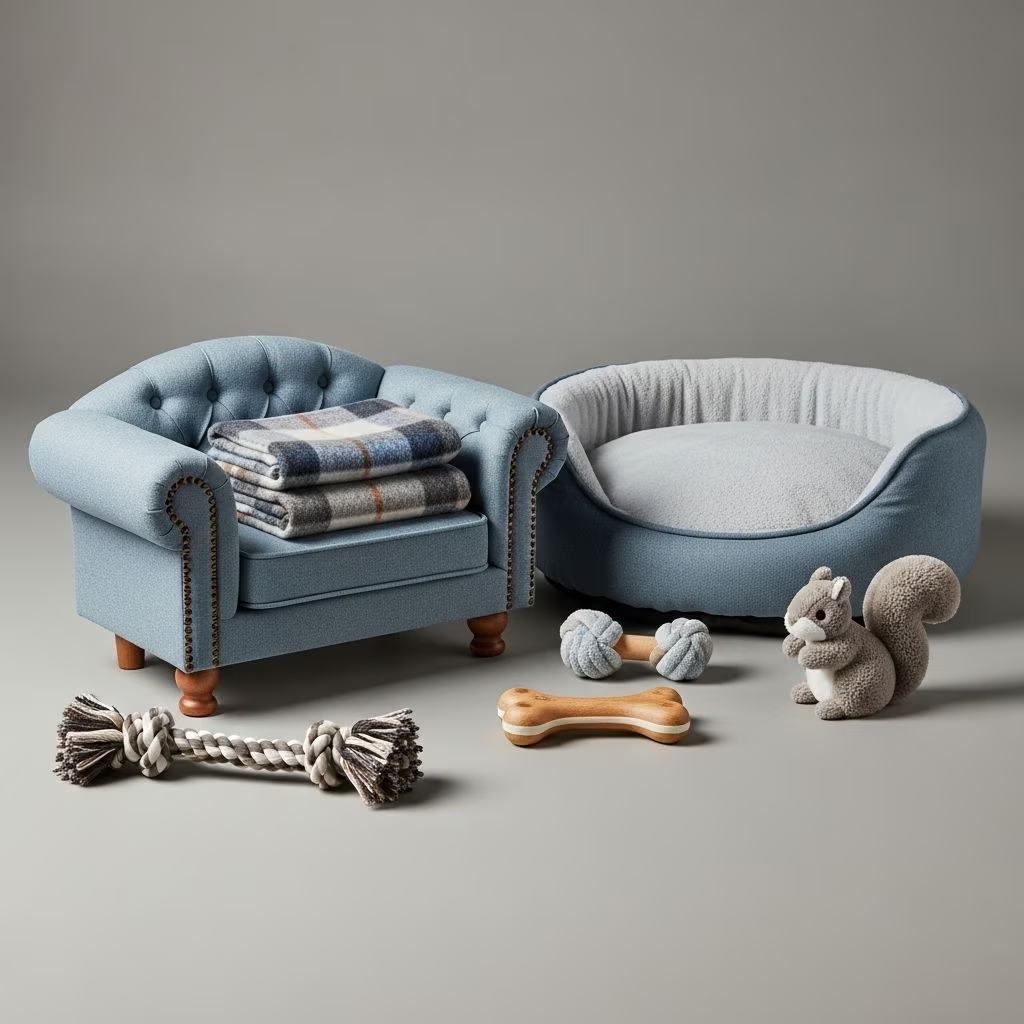
Many dog owners face the challenge of managing their pet’s access to household furniture. Whether you prefer a strict no-furniture policy or selective permission, consistent training ensures mutual respect and comfort. This guide explores humane, effective approaches rooted in positive reinforcement to help your dog learn appropriate behaviors.
Why Dogs Seek Out Furniture and How to Address It
Dogs are drawn to sofas, chairs, and beds for warmth, comfort, and proximity to their family. This instinct stems from pack behavior, where resting near leaders feels secure. However, unchecked access can lead to habits that conflict with owner preferences, such as shedding, dirt, or allergies.
Understanding motivations allows targeted solutions. For comfort-seeking dogs, especially seniors with joint issues, provide appealing alternatives like orthopedic beds placed near favored spots. Reinforce use of these beds with treats and praise to redirect naturally.
- Observe patterns: Note when and why your dog approaches furniture.
- Assess needs: Puppies may explore playfully; older dogs seek elevation for joint relief.
- Prioritize positives: Focus on rewarding desired actions rather than punishing undesired ones.
Core Training Commands for Furniture Control
Teaching specific verbal cues builds reliable communication. Start with “up” and “off” to grant or revoke permission on your terms.
Step-by-Step “Up” and “Off” Training
- Select a training spot: Use a single chair or low surface to minimize overwhelm.
- Invite with “up”: Lure with a treat onto the surface, say “up,” then mark success (clicker or “yes!”) and reward.
- Transition to “off”: Say “off,” toss a high-value treat to the floor. Mark and reward when all paws hit the ground.
- Fade lures: Repeat until cues prompt action without gestures. Practice from various positions, like sitting on the furniture.
- Generalize: Apply to all furniture, varying scenarios for robustness.
Sessions should last 5-10 minutes, multiple times daily. Consistency across household members prevents confusion.
Positive Reinforcement Foundations: The “Say Please” Approach
Institute a “say please” protocol where sitting politely precedes all rewards. This fosters deference without confrontation.
- Before meals, toys, or outings: Cue “sit,” reward compliance.
- Extend to furniture: Only invite “up” after a sit-stay on the floor.
- Benefits: Builds impulse control, reduces jumping demands.
Combine with incompatible behaviors. Train a “place” or “mat” cue directing to a designated bed. Reward generously whenever the dog chooses it independently, preempting furniture approaches.
Management Techniques for Immediate Results
While training builds long-term skills, management prevents rehearsal of unwanted habits, especially when unsupervised.
Physical Barriers and Deterrents
Block access creatively:
| Method | How It Works | Best For |
|---|---|---|
| Occupancy Block | Sit or place items on furniture to eliminate space. | Home supervision, quick fixes. |
| Baby Gates/Crates | Restrict room access; pair with crate training for absences. | Puppies, departures. |
| Surface Deterrents | Aluminum sheets, cookie pans (unpleasant texture/sound). | Temporary, supervised use. |
Avoid fear-based alarms; they risk anxiety without teaching alternatives.
Selective Permission with Designated Spots
For conditional access, use blankets or towels signaling approval. Train settling on floor versions first, then elevate to furniture only when present and permissive.
- Rule: No blanket, no access—enforced household-wide.
- Comfort upgrade: Elevated crates mimic furniture height for bedtime.
Addressing Common Challenges by Dog Life Stage
Puppies: Prevention from the Start
Begin rules day one. Crate train early, using it as a safe haven with gradual alone time. Introduce commands during play; short, frequent sessions leverage short attention spans.
Adult Dogs: Habit Reversal
Established habits require patience. Increase rewards for compliance; ignore or redirect violations calmly. Track progress in a journal to stay motivated.
Senior Dogs: Compassionate Adjustments
Account for mobility. Orthopedic ramps aid access if permitted; otherwise, plush floor beds with heating pads provide relief. Consult vets for arthritis management.
Household Consistency and Family Buy-In
Rules fail without unity. Hold a family meeting:
- Agree on policies: Strict off-limits or invite-only?
- Assign roles: Who trains, reinforces?
- Monitor compliance: No sneaky sofa time.
Children often undermine; supervise interactions, modeling cues.
Advanced Strategies: Proofing and Troubleshooting
Proof cues in distractions: TV on, visitors present. If regressions occur:
- Revert to lures temporarily.
- Boost rewards for high-motivation treats.
- Rule out medical issues like pain prompting elevation-seeking.
For persistent jumpers, tether training (leash attachment during sessions) ensures control without force.
FAQs: Quick Answers to Common Concerns
Can I allow furniture access sometimes?
Yes, via cues like “up” on invitation only. Reinforce floor alternatives otherwise.
How long until results?
2-4 days for basics with consistency; weeks for full reliability.
What if my dog ignores “off”?
Use higher-value lures, block physically, never force—build desire to comply.
Is crate training necessary?
Ideal for management, especially absences; make positive with treats and toys.
Will deterrents harm my dog?
Texture-based ones are safe if temporary; prioritize training over scares.
Long-Term Success: A Balanced Home
Furniture rules enhance the dog-owner bond through clear expectations. Regular reinforcement maintains behaviors; periodic refreshers prevent drift. Celebrate milestones—your consistent effort yields a respectful, happy companion.
References
- How to Keep Your Dog Off the Furniture — Dogs Trust. Accessed 2026. https://www.dogstrust.org.uk/dog-advice/training/unwanted-behaviours/furniture
- How to Keep Dogs Off Furniture – If You Want To — Whole Dog Journal. Accessed 2026. https://www.whole-dog-journal.com/training/how-to-keep-dogs-off-furniture-if-you-want-to/
- Teaching the Dog To Stay Off the Furniture — Training Canines. Accessed 2026. https://trainingcanines.com/teaching-the-dog-to-stay-off-the-furniture-or-like-us-on-the-furniture/
- How to Train Your Dog to Stay Off the Couch — LAYLO Pets. Accessed 2026. https://www.laylopets.com/blogs/barkives/train-your-dog-off-the-couch
- Positive Crate Training Guide — Karen Pryor Academy. 2018-05. https://karenpryoracademy.com/wp-content/uploads/2018/05/Karen_Pryor_Academy_Crate_Training_Guide-PDF.pdf
- How to Train Your Dog to Get Off Furniture — YouTube (Trainer Video). Accessed 2026. https://www.youtube.com/watch?v=QqL3zJSCm7g
- Crate training your dog or puppy — Animal Humane Society. Accessed 2026. https://www.animalhumanesociety.org/resource/crate-training-your-dog-or-puppy



