

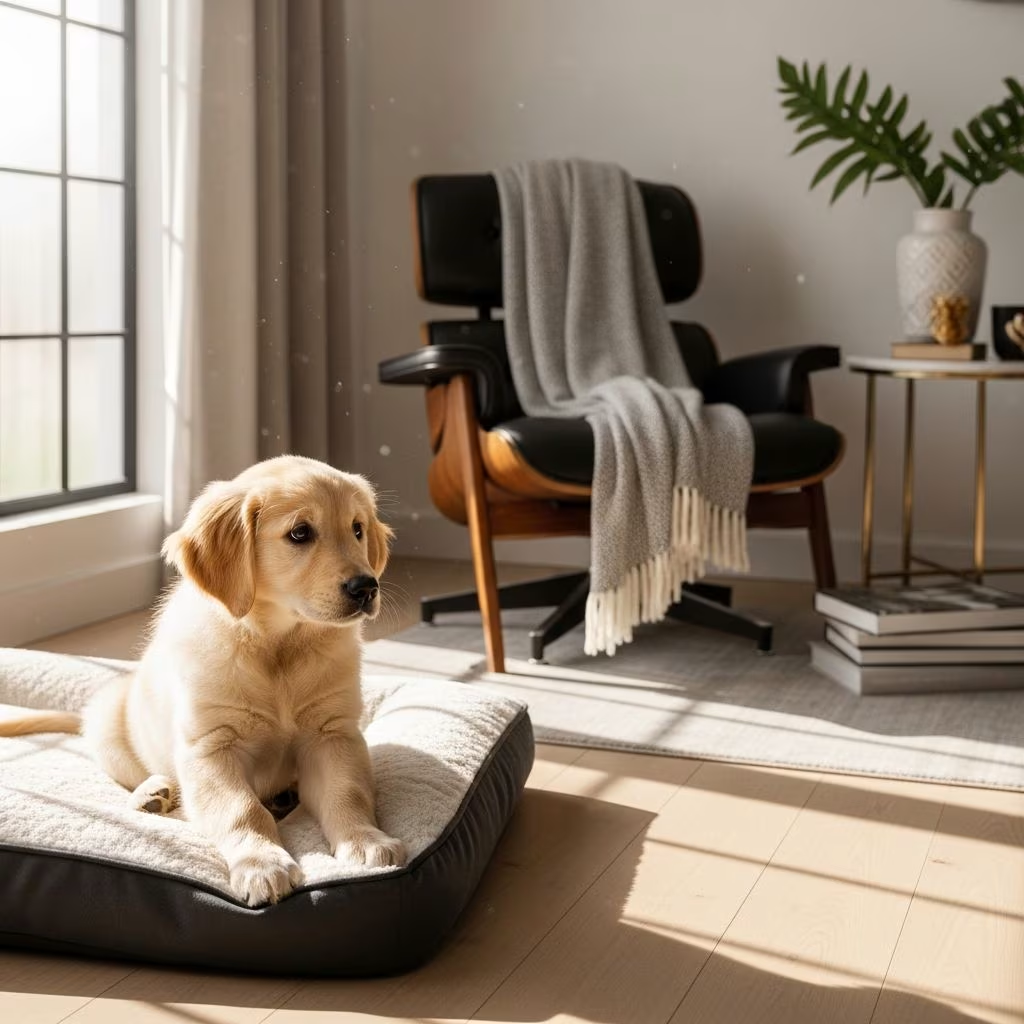
Establishing clear boundaries around household furniture helps maintain a clean, organized living space while ensuring your dog has appropriate resting areas. Many dogs naturally gravitate toward sofas and chairs for their softness and vantage points, but with consistent training, you can redirect this behavior effectively.
Understanding Why Dogs Claim Your Sofa
Dogs seek elevated, comfortable spots for security, warmth, and observation of their surroundings. These positions mimic natural perches in the wild, offering a sense of control. Soft cushions provide joint relief, especially for older pets or those with arthritis.
Without guidance, dogs may view furniture as their territory, leading to possessive behaviors like growling when approached. Early intervention prevents escalation, fostering mutual respect in the home.
Decide Your Household Policy
Before training begins, define rules: no furniture access, selective pieces only, or invitation-based entry. Consistency across family members is crucial to avoid confusion.
- No access rule: Ideal for allergy sufferers or hygiene-focused homes.
- Selective access: Allow on couch but not bed, using specific cues.
- Invitation only: Teach ‘up’ and ‘off’ for controlled visits.
For multi-dog homes, apply uniform standards to prevent jealousy or competition.
Creating an Irresistible Alternative Space
Deny access without offering a substitute leads to frustration. Designate a ‘place’ with premium bedding near family areas for visibility and comfort.
Enhance appeal:
- Use orthopedic foam mats for joint support, vital for aging dogs.
- Position near windows or activity zones.
- Scent with worn t-shirts for familiarity.
- Stock with toys, chews, and frequent treats.
Practice ‘place’ command: Lure to bed with treats, mark success with praise or clicker, and reward generously. Repeat until self-settling occurs.
Mastering Essential Commands: ‘Off’ and ‘Up’
Teach ‘off’ when the dog is already descending to build reliability—never when stationary, as it teaches ignoring.
Step-by-Step ‘Off’ Training
- Select permitted low furniture or stool for practice.
- Lure onto surface with treat, say ‘up’, reward.
- Say ‘off’, toss treat to floor; mark jump-down with clicker/verbal ‘yes!’ and reward.
- Phase out lures, add hand signal (palm down).
- Practice 5-10 reps daily, 80% success before generalizing to sofas.
For ‘up’, pair with invitation only to maintain control. Progress to off-leash reliability over weeks.
Management Tactics for Unsupervised Times
Prevent rehearsal of unwanted behavior when alone. Block access via:
- Baby gates or room barriers.
- Boxes, laundry baskets, or upside-down chairs on seats.
- Aluminum foil or textured mats for temporary deterrence (remove for guests).
Supervise rigorously initially; crate train if needed for safety.
Positive Reinforcement: Rewarding Choices
Praise and treat four-legged landings or bed use lavishly. Ignore furniture approaches or redirect calmly without scolding, preserving trust. Random rewards prevent anticipation.
| Week | Goal | Success Rate | Notes |
|---|---|---|---|
| 1 | Respond to ‘off’ on practice stool | 80% | Use high-value treats |
| 2 | No jumping when unsupervised 30min | 90% | Add barriers |
| 3 | Self-settle on bed | 95% | Fade treats |
| 4+ | Full reliability | 100% | Maintain random rewards |
Handling Resistance and Special Cases
Sneaking when alone: Increase supervision, use motion-activated deterrents sparingly (ensure humane).
Possessiveness: Never force off; trade for higher-value rewards. Consult trainer for aggression.
Senior dogs: Prioritize comfort with elevated, heated beds.
Puppies: Start rules day one; short sessions suit attention spans.
Selective Access with Visual Cues
Permit furniture conditionally using blankets as signals. Train settling on floor blanket first, then sofa version only when invited.
- Consistent blanket = permission.
- Store away otherwise.
- Teaches discrimination.
Great for cuddle lovers wanting control.
Common Mistakes to Avoid
- Inconsistent enforcement by family.
- Pushing off physically—risks fear biting.
- No alternative spot.
- Impatience; expect 2-6 weeks.
FAQs
Can I allow my dog on furniture sometimes?
Yes, use ‘up’/’off’ and blankets for clear rules.
What if my dog growls on the couch?
Trade calmly for treats; seek professional help if persistent.
How long until my dog learns?
2-8 weeks with daily practice.
Is crate training necessary?
Optional for management, not punishment.
What about multi-dog homes?
Train individually, equal alternatives.
Consistent application yields polite pets respecting your space. Celebrate progress to motivate.
References
- Queen of the Couch: Teaching Your Dog Your Furniture Etiquette — Rescue Groups. N/A. https://learn.rescuegroups.org/info/file?file=28046.pdf
- Teaching the Dog To Stay Off the Furniture — Training Canines. 2009-03-09. https://trainingcanines.com/teaching-the-dog-to-stay-off-the-furniture-or-like-us-on-the-furniture/
- How to Keep Your Dog Off the Furniture — Dogs Trust. N/A. https://www.dogstrust.org.uk/dog-advice/training/unwanted-behaviours/furniture
- Training Your Dog to Stay Off Furniture — Nolan Interior. N/A. https://nolaninterior.com/blogs/news/training-your-dog-to-stay-off-furniture
- Training Tips and Tricks Part 6 – Furniture Etiquette — Greyhounds as Pets. N/A. https://greyhoundsaspets.org.nz/blog/training-tips-and-tricks-part-6-furniture-etiquette
- Dogs and Fur-niture — AKC Pet Insurance. N/A. https://www.akcpetinsurance.com/blog/dogs-and-furniture
- How to Keep Dogs Off Furniture – If You Want To — Whole Dog Journal. N/A. https://www.whole-dog-journal.com/training/how-to-keep-dogs-off-furniture-if-you-want-to/



