

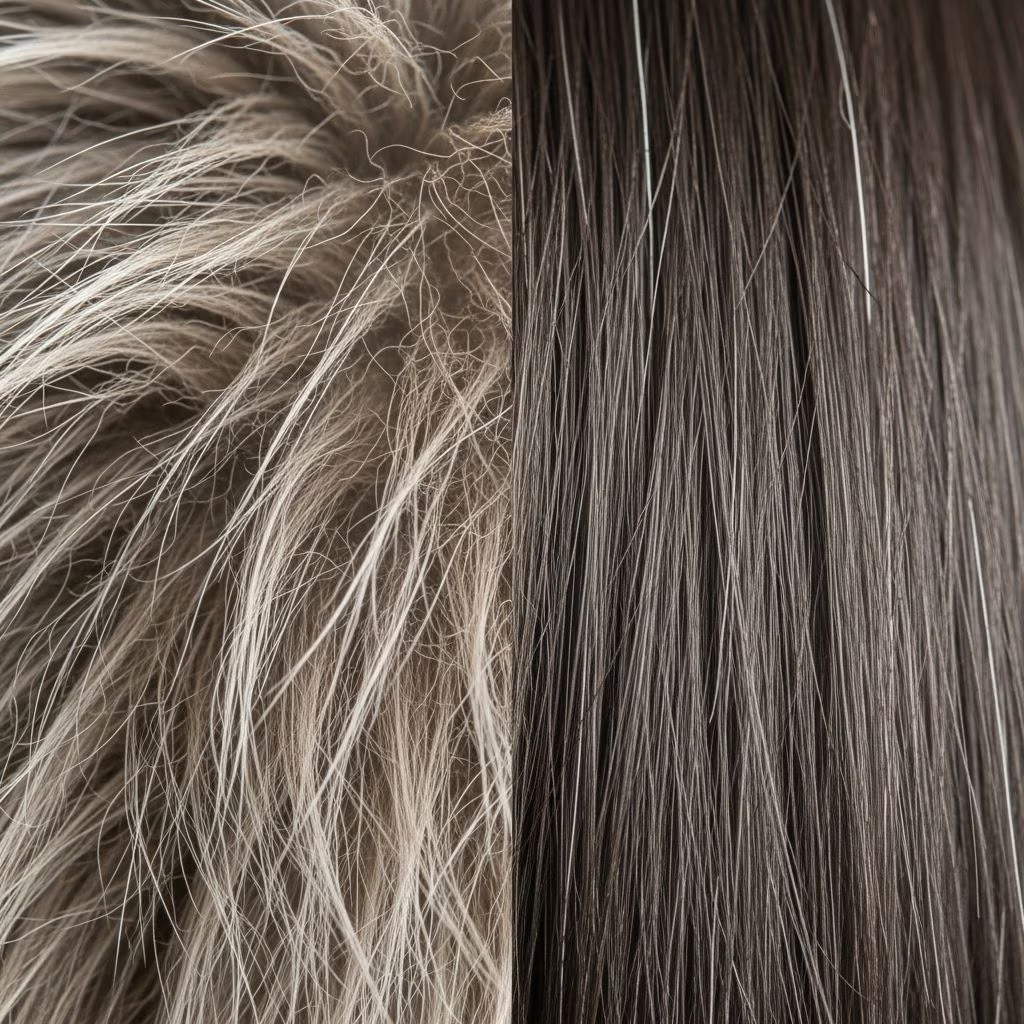
Dogs possess coats composed of keratin-based strands that serve vital protective roles, yet the terms “fur” and “hair” often spark confusion among pet owners. While both originate from similar follicles, they differ significantly in growth patterns, structure, and function, influencing everything from seasonal shedding to allergy risks.
Understanding Coat Composition in Canines
Canine coats typically feature two primary layers: the dense undercoat for insulation and the tougher outer guard hairs for protection. The undercoat consists of shorter, finer hairs that trap air for warmth, while guard hairs are longer, coarser, and repel water and dirt. These layers work together to regulate temperature and shield against environmental hazards.
Structurally, each strand includes three main parts: the protective cuticle on the outside, the supportive cortex in the middle, and the central medulla providing elasticity. In dogs, the medulla tends to be thicker compared to human hair, contributing to greater volume and resilience. Cuticle scales vary too—human hair has smooth, overlapping patterns for softness, whereas dog coats display wavy or mosaic designs that dictate textures from silky to wiry.
Growth Cycles: Fur vs Continuous Hair
The core distinction lies in growth behavior. **Fur coats** reach a genetically set length, known as predetermined length (PDL), then enter a resting phase before shedding. This cyclical process aligns with seasons, allowing dogs to adapt to temperature changes—thicker in winter, lighter in summer.
In contrast, **hair coats** exhibit undetermined length (UDL), growing continuously until trimmed or broken. Breeds with hair, like Poodles or Yorkies, require regular cuts to maintain shape and prevent matting. This ongoing growth reduces heavy shedding but demands consistent grooming.
| Coat Type | Growth Pattern | Shedding | Examples |
|---|---|---|---|
| Fur (PDL) | Stops at set length | Seasonal, heavy | Labrador, Husky |
| Hair (UDL) | Continuous growth | Minimal | Poodle, Shih Tzu |
Genetic Factors Shaping Coat Diversity
Coat variations stem from specific genes. Mutations in the FGF5 gene promote longer hair in breeds like Afghan Hounds, while R-spondin-2 influences wiry textures in Wire Fox Terriers. Keratin gene differences cause curliness, as seen in Portuguese Water Dogs. These few genes account for much of the 80+ coat types across breeds, blending length, texture, and curl.
- FGF5: Controls hair length; mutations lead to extended growth.
- R-spondin-2: Produces wiry, coarse hairs for protection.
- Keratin genes: Determine curl and wave patterns.
Selective breeding has amplified these traits, tailoring coats to climates—from thick double coats in cold regions to sleek singles in warmer areas.
Shedding and Molting Explained
Dogs with fur undergo biannual molts, blowing their undercoat to prepare for seasonal shifts. This “blowing coat” phase can last weeks, filling homes with loose hair. Hair coats shed lightly year-round due to slower turnover.
Factors like diet, hormones, and health affect shedding intensity. Poor nutrition or stress can trigger excessive loss, mimicking allergies or skin issues. Regular brushing removes dead hairs, distributes oils, and stimulates follicles.
Implications for Allergies and Hypoallergenic Breeds
Allergy sufferers often prefer hair coats, as they shed less dander—the primary allergen. Fur breeds release more skin flakes with loose hairs, worsening symptoms. No dog is fully hypoallergenic, but UDL coats trap particles better, reducing airborne irritants.
Breeds like Bichons or Maltese rank low on allergen scales thanks to non-shedding hair that captures dander until groomed away.
Grooming Strategies by Coat Type
Tailor care to your dog’s coat for optimal health.
For Fur Coats
Focus on de-shedding tools like undercoat rakes during molt. Bathe sparingly with dog-specific shampoos to preserve natural oils. Breeds with dense fur benefit from weekly brushing to prevent mats.
For Hair Coats
Professional clipping every 6-8 weeks keeps growth in check. Daily combing prevents tangles, especially in curly varieties. Moisturizing conditioners maintain elasticity.
Common tools include slicker brushes for loose fur, pin brushes for long hair, and deshedding blades for double coats.
Breed-Specific Coat Characteristics
Diversity shines in breeds:
- Double-Coated: Huskies, Golden Retrievers—thick undercoat for Arctic survival.
- Single-Coated: Greyhounds—short, smooth for speed.
- Curly/Wiry: Labradoodles, Schnauzers—water-repellent and low-shed.
- Silky Long: Afghan Hounds—ornamental, high-maintenance.
Health Indicators in Coat Condition
A lustrous coat signals good health; dullness or bald patches may indicate parasites, thyroid issues, or malnutrition. Monitor for hotspots, excessive oiliness, or brittleness, prompting vet visits.
FAQs
Is dog fur the same as hair?
No—fur grows to a fixed length and sheds seasonally, while hair grows indefinitely with minimal shedding.
Do all dogs shed?
Yes, but hair breeds shed far less than fur breeds.
Can I use human shampoo on my dog?
Avoid it—dog skin pH differs, risking irritation.
What causes excessive shedding?
Seasonal changes, poor diet, allergies, or medical conditions.
Are hypoallergenic dogs real?
Low-shedding breeds exist but produce allergens; grooming helps.
Choosing the Right Dog for Your Lifestyle
Consider coat type when adopting. Active families suit low-maintenance fur breeds; allergy-prone homes favor hair varieties. Regular grooming fosters bonding and detects issues early.
References
- Does My Dog Have Hair or Fur? — American Kennel Club. 2023-05-15. https://www.akc.org/expert-advice/health/dogs-hair-fur-grooming/
- Dog Fur Evolution — Answers in Genesis. 2022-10-20. https://answersingenesis.org/genetics/animal-genetics/dog-fur-evolution/
- How a Dog’s Hair (Fur) is Different Than Human Hair — Teleties. 2024-01-12. https://www.teleties.com/blogs/teletimes/how-a-dog-s-hair-fur-is-different-than-human-hair
- Unraveling the Genetic Tapestry: Evolutionary Insights into Dog Fur and Hair — Dog Trainers Boston. 2023-08-07. https://dogtrainersboston.com/unraveling-the-genetic-tapestry-evolutionary-insights-into-dog-fur-and-hair/
- Dog Hair vs. Fur — Native Pet. 2024-03-22. https://nativepet.com/blogs/health/dog-hair-vs-fur



