

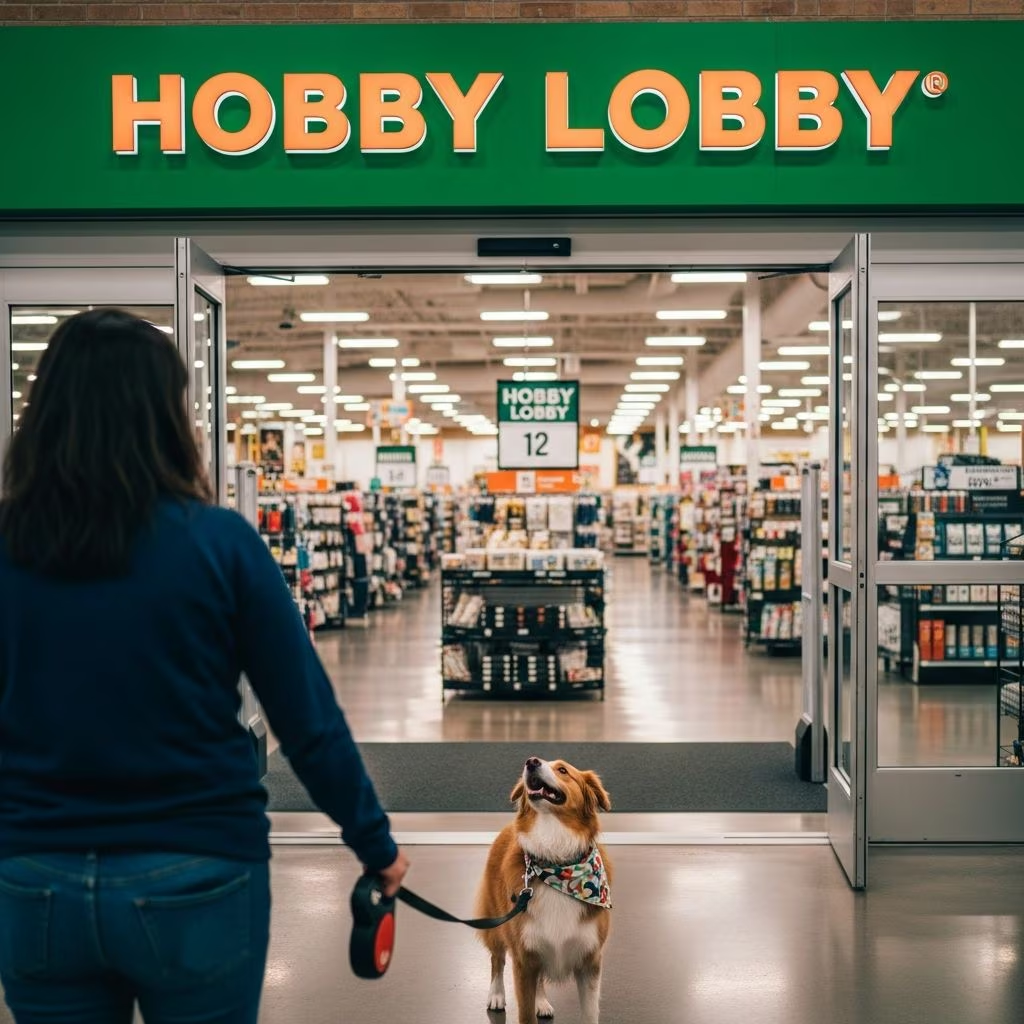
Whether you’re planning a craft supply run or browsing home decor with your canine companion, understanding Hobby Lobby’s approach to four-legged visitors is essential. Unlike many major retailers that maintain strict no-pet policies, Hobby Lobby takes a more flexible approach, though the rules aren’t always straightforward. This guide breaks down everything you need to know about bringing your dog to Hobby Lobby, from general pet policies to service animal protections and practical shopping tips.
Understanding Hobby Lobby’s Approach to Pet Visitors
Hobby Lobby has established itself as a relatively dog-friendly retail destination compared to competitors like Target, Walmart, and Costco, which restrict access to service animals only. However, the company’s approach differs significantly from these chains because it doesn’t enforce a universal corporate pet policy. Instead, Hobby Lobby delegates decision-making authority to individual store managers, allowing them to set rules based on their specific location’s circumstances, foot traffic patterns, and local regulations.
This decentralized approach means your experience with a dog at one Hobby Lobby location may differ entirely from another location across town or in a different state. Some stores enthusiastically welcome well-behaved pets, while others maintain stricter boundaries. The lack of published guidelines on Hobby Lobby’s official website adds another layer of uncertainty for pet owners planning their shopping trips.
When Pets Get the Green Light
If your local Hobby Lobby manager has decided to welcome pets, several conditions typically apply to ensure a positive shopping environment for everyone. The most consistent requirement across pet-friendly locations is that dogs must remain leashed throughout their store visit. Additionally, your dog should demonstrate calm behavior and not create disruptions that might distract other shoppers or concern staff members.
Store managers reserve the right to deny entry or ask you to leave if your dog displays problematic behaviors. These behaviors include excessive barking, lunging at other customers, marking territory inside the store, attempting to damage merchandise, or showing signs of aggression. Even a single incident can sometimes influence a manager’s future decisions about allowing pets in their location, potentially affecting other dog owners who visit later.
Protected Access: Service and Guide Dogs
While regular pets enjoy discretionary acceptance at Hobby Lobby, service animals receive guaranteed legal protection under federal law. The Americans with Disabilities Act (ADA) requires all businesses open to the public—including Hobby Lobby stores—to permit access to properly trained service dogs. This protection applies regardless of a particular store’s general pet policy or manager preference.
Service dogs must meet specific criteria to receive ADA protection. They must be individually trained to perform specific tasks or do work for a person with a disability. Common examples include guide dogs for individuals with visual impairments, seizure alert dogs that warn of impending seizures, and psychiatric service animals trained to assist individuals with PTSD or anxiety-related conditions.
Store managers cannot require you to produce documentation proving your dog is a service animal. However, they are permitted to ask two specific questions under ADA regulations: whether the animal is a service dog required because of a disability, and what specific task the dog is trained to perform. You must be able to answer these questions truthfully.
The Emotional Support Animal Question
Emotional support animals (ESAs) occupy a middle ground between regular pets and fully trained service animals, and this distinction creates important implications for Hobby Lobby access. Unlike service animals, ESAs are not legally protected under ADA public access laws, meaning Hobby Lobby has no legal obligation to grant them entry. This represents a significant difference in protection levels.
However, because Hobby Lobby generally maintains a more permissive stance toward pets than many retail competitors, some store managers may use their discretion to welcome ESAs under certain conditions. If an ESA is leashed, remains calm, and doesn’t disrupt the shopping experience, individual managers might approve access. The decision ultimately depends on the specific manager and location.
For individuals who depend on an emotional support animal for managing anxiety, depression, PTSD, or other conditions, upgrading your dog’s training to achieve Psychiatric Service Animal (PSA) status offers a more reliable long-term solution. A PSA is trained to perform specific tasks related to psychological disabilities and receives the same legal protections as traditional service dogs.
Key Differences Between ESAs and PSAs
| Characteristic | Emotional Support Animals | Psychiatric Service Animals |
|---|---|---|
| ADA Legal Protection | No protection in public spaces | Full protection under ADA |
| Training Requirements | No specific training required | Must be trained to perform specific tasks |
| Documentation Needed | ESA letter from healthcare provider | PSA letter plus task training verification |
| Hobby Lobby Access | Dependent on manager discretion | Guaranteed by federal law |
| Behavioral Standards | Expected to be calm | Required to be under handler control |
Practical Preparation Before Your Visit
Taking a few simple steps before heading to Hobby Lobby can prevent disappointment and ensure a smooth experience. The most important action is contacting your local store directly to confirm their pet policy. Call ahead and speak with a manager or employee who can provide accurate information about whether dogs are permitted and, if so, what specific requirements they have.
When you call, ask clarifying questions about leash requirements, size limitations, and behavioral expectations. This conversation gives you concrete information rather than relying on assumptions or experiences from other locations. If the store indicates they welcome dogs, confirm whether any additional requirements exist specific to that location.
Before your shopping trip, honestly assess your dog’s behavior and temperament in public settings. Does your dog remain calm around strangers and unfamiliar environments? Can they handle the sounds, sights, and activity levels typical in busy retail spaces? If your dog tends to bark excessively, pull on the leash, or show anxiety in crowded places, a pet sitter or boarding facility might be a better option than bringing them along.
Breed Considerations and Store Expectations
While Hobby Lobby doesn’t maintain an official breed restriction policy, managers retain the right to deny entry based on breed reputation or individual dog behavior. Certain breeds carry associations with aggression in public perception, including Pit Bulls, Rottweilers, and Dobermans, making store access more challenging even if the individual dog is well-behaved.
This isn’t necessarily a reflection of breed-specific aggression but rather a matter of customer perception and manager liability concerns. A well-socialized and trained dog from a typically restricted breed may still face challenges gaining entry, while calm, friendly dogs from any breed usually encounter fewer obstacles. The key factor remains your dog’s actual behavior rather than breed identity alone.
Situations That Result in Removal
Even if your dog initially receives permission to enter a Hobby Lobby store, circumstances can change if problematic behaviors emerge. Store management can ask you and your dog to leave if your pet displays unruly or aggressive behavior that concerns other shoppers or staff members. Additionally, if your dog’s size or appearance intimidates other customers, management may request that you remove your pet from the premises.
If another customer complains about your dog, staff members must balance your interests against the broader shopping experience of all customers. A well-behaved dog shouldn’t trigger removal even if someone complains, but a legitimately disruptive animal will be asked to leave regardless of the dog’s official status as a pet, ESA, or other category.
Multiple Dogs and Special Circumstances
If you’re considering bringing more than one dog to Hobby Lobby, understand that store managers typically prefer limiting access to single animals. Managing multiple dogs requires greater control and presents increased risk of disruption, property damage, or customer conflicts. While individual managers might occasionally permit multiple dogs in exceptional circumstances, single-dog visits represent the standard expectation.
In situations where customer complaints arise despite your dog’s appropriate behavior, you have reasonable expectation that staff will support your presence. Stores should not penalize well-behaved animals simply because someone registered a complaint. However, any legitimate behavioral issues will generally result in removal, regardless of the dog’s classification or official status.
Comparison with Other Retailers
Hobby Lobby’s pet policy stands apart from many major retailers that maintain stricter guidelines. Companies like Target, Walmart, and Costco limit public access to certified service animals only, creating a clear boundary without managerial discretion. This approach eliminates ambiguity but also prevents pet owners from shopping with their beloved companions under any circumstances.
Hobby Lobby’s manager-discretion model offers flexibility that benefits both businesses and pet owners willing to comply with behavioral expectations. The tradeoff involves uncertainty about whether your specific location permits dogs, which is why advance confirmation remains essential.
Essential Tips for a Successful Shopping Trip
If your Hobby Lobby has approved bringing your dog, following these guidelines helps ensure a positive experience for everyone:
- Use a well-fitted leash and maintain control throughout your visit
- Keep your dog positioned close to you to avoid blocking aisles or disturbing merchandise displays
- Prevent your dog from jumping on or greeting other customers without permission
- Monitor your dog’s stress levels and be prepared to leave if they become anxious or overwhelmed
- Clean up any accidents immediately using store-provided supplies
- Avoid bringing your dog during peak shopping hours when crowding might increase stress for both your pet and other customers
- Bring water and portable bowls if you’re planning an extended shopping trip
- Ensure your dog has recent parasite prevention treatments and vaccinations
Frequently Asked Questions
Does Hobby Lobby restrict specific dog breeds?
No official breed-specific restrictions exist in Hobby Lobby’s corporate policy. However, individual store managers may use discretion based on breed reputation and perception. Breeds with aggressive associations may face greater difficulty gaining entry, but any dog’s actual behavior matters more than its breed classification.
Can I bring my service dog to any Hobby Lobby?
Yes. Federal ADA law requires all Hobby Lobby locations to permit certified service dogs regardless of location-specific pet policies. Service dogs trained to perform specific tasks for individuals with disabilities enjoy guaranteed access.
What counts as a service dog versus a pet?
Service dogs must be individually trained to perform specific tasks or work for someone with a documented disability. Pet dogs don’t undergo specialized task training and don’t receive ADA protection. ESAs fall between these categories—they provide comfort but aren’t trained for specific tasks and don’t receive legal protection in public spaces.
What should I do if my dog becomes anxious in the store?
If your dog shows signs of anxiety, fear, or stress, remove them from the store promptly. Forcing an anxious dog to remain in an overstimulating environment can escalate behavioral problems and create safety risks. Consider leaving your dog at home for future visits or choosing less crowded shopping times.
Can Hobby Lobby refuse entry to my service dog?
No. Store managers cannot refuse entry to a certified service dog performing specific tasks. They can only ask two permitted questions under ADA law. If a manager improperly denies access to a legitimate service dog, you have grounds to report this discrimination.
Making Your Decision
Bringing your dog to Hobby Lobby can enhance your shopping experience if certain conditions align—your local store permits dogs, your pet demonstrates reliable good behavior, and your dog handles public environments well. Taking time to confirm your store’s policy, honestly assessing your dog’s temperament, and following proper etiquette ensures the best possible outcome for everyone involved. By respecting both the store’s guidelines and other customers’ experiences, dog owners can help maintain Hobby Lobby’s reputation as a relatively pet-friendly retail destination.
References
- Can I Bring My Dog Into Hobby Lobby? The Full Pet Policy — American Service Pets. 2026. https://my.americanservicepets.com/can-i-bring-my-dog-into-hobby-lobby/
- Are Dogs Allowed in Hobby Lobby? 2026 Pet Policy & FAQ — Dogster. 2026. https://www.dogster.com/lifestyle/are-dogs-allowed-in-hobby-lobby
- Are Dogs Allowed in Hobby Lobby? Your Full Guide — U.S. Service Animals. 2026. https://usserviceanimals.org/blog/are-dogs-allowed-in-hobby-lobby/



