

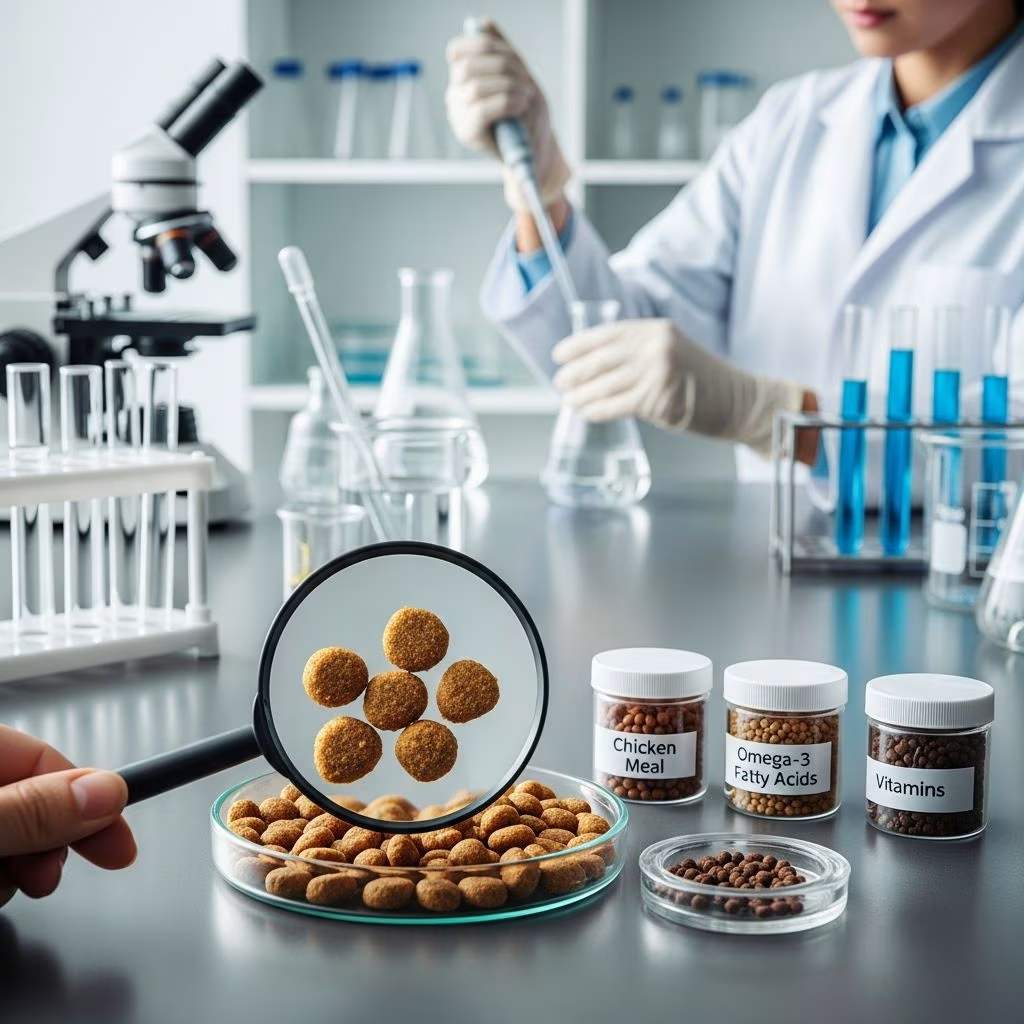
Pet owners increasingly recognize that nutrition forms the foundation of their dog’s long-term health and vitality. However, navigating the complex landscape of dog food selection requires understanding how commercial pet foods are regulated, what safety standards manufacturers must follow, and how to evaluate whether a product truly meets your dog’s nutritional needs. This comprehensive guide explores the regulatory framework governing dog food production, examines the transparency requirements manufacturers face, and provides practical strategies for assessing food quality through careful label examination and ingredient analysis.
The Regulatory Framework Governing Commercial Dog Food
The safety and quality of dog food in the United States operates under a multi-layered regulatory system involving federal agencies, state authorities, and industry standards organizations. Understanding this framework helps pet owners recognize that commercial dog foods undergo scrutiny designed to protect canine health, though the oversight mechanisms differ from those applied to human food products.
The Food and Drug Administration (FDA) holds primary federal responsibility for ensuring that dog food remains safe for consumption, is manufactured under appropriate conditions, contains no harmful substances, and carries accurate labeling. Unlike many pharmaceutical products and food additives, pet food manufacturers do not require pre-market approval from the FDA before selling their products. Instead, the regulatory model emphasizes post-market monitoring and compliance verification through facility inspections and investigation of consumer complaints.
The FDA’s enforcement authority extends to preventing contamination and adulteration of pet food products. Federal regulations mandate that facilities implement current good manufacturing practices (cGMPs) that address employee training, facility design, equipment maintenance, hazard identification, and documentation of safety procedures. These standards help ensure that manufacturing environments maintain sanitary conditions throughout the production, processing, packing, and storage phases.
State-Level Oversight and Product Registration Requirements
Beyond federal regulation, state authorities play a critical role in dog food quality assurance. State feed control officials enforce both federal and state regulations using guidelines developed by the Association of American Feed Control Officials (AAFCO) and the FDA. Many states require that pet food products undergo registration before distribution within their jurisdictions, enabling regulators to maintain awareness of which products are sold and by whom.
State regulatory agencies conduct their own inspections of manufacturing facilities and verify that product labels accurately reflect the contents and meet all disclosure requirements. This includes examining whether required information such as brand name, intended species, product quantity, guaranteed analysis, ingredient statements, and nutritional adequacy claims appear correctly on packaging. State officials also respond to consumer complaints and verify that only approved ingredients appear in formulations.
Ingredient Safety and Approval Processes
The FDA classifies pet food ingredients into different categories based on their safety history and regulatory status. Many common ingredients including meat, poultry, and grains are considered inherently safe and do not require pre-market approval for inclusion in dog food. These ingredients have an extensive history of safe use in animal diets and are recognized as having appropriate nutritional functions.
Other substances require different approval pathways. Ingredients serving as sources of minerals, vitamins, other nutrients, flavorings, preservatives, or processing aids must either be included in the FDA’s list of substances Generally Recognized As Safe (GRAS) for their intended use, or they must receive explicit approval through the formal food additive petition process. When manufacturers seek approval for novel food additives, they must submit detailed petitions describing the chemical identity, manufacturing process, safety data, and proposed labeling. The FDA evaluates this information before granting approval for specific intended uses.
Using unapproved food additives in dog food constitutes an illegal practice that renders the product unsafe and adulterated under federal law. This regulatory requirement helps prevent the introduction of untested substances that could harm dogs or compromise food safety.
Understanding Nutritional Adequacy Standards and AAFCO Compliance
The Association of American Feed Control Officials (AAFCO) establishes nutritional standards that form the basis for determining whether a dog food product qualifies as complete and balanced. These standards vary based on the dog’s life stage—puppies, adult dogs, and senior dogs have different nutritional requirements.
Products labeled as AAFCO-compliant meet nutritional profiles that ensure dogs receive necessary vitamins, minerals, proteins, and fats appropriate for their life stage and size. The concept of “complete and balanced” depends on multiple factors including the dog’s age, breed, body size, and activity level. A food suitable for growing puppies may not provide the optimal nutrient ratios for an adult dog or a senior dog with different metabolic needs.
State regulators require manufacturers to submit documentation substantiating their nutritional adequacy claims. This may involve providing nutrient profile comparisons demonstrating that the food meets or exceeds AAFCO standards for the specified life stage. Manufacturers lacking this substantiation cannot legally claim that their product is complete and balanced.
Label Transparency and Ingredient Disclosure Requirements
Pet food labels serve as critical documents for communicating product composition and nutritional content to consumers. Federal and state regulations mandate specific formatting and disclosure requirements designed to ensure transparency and prevent misleading claims.
Ingredients must appear on labels listed in order of predominance by weight, beginning with the heaviest components and progressing to the lightest. This ordering system allows informed consumers to quickly understand what comprises the bulk of the product. For example, if chicken appears first in the ingredient list, chicken represents the largest proportion of the food by weight.
Beyond ingredient ordering, labels must include a guaranteed analysis section specifying measurable levels of crude protein (minimum), crude fat (minimum), crude fiber (maximum), and moisture content. Manufacturers may also provide guaranteed levels for other nutrients if they make specific claims about those nutrients. This information allows pet owners to compare nutritional profiles across different products and select foods matching their dog’s dietary requirements.
Labels must also display a nutritional adequacy statement clearly indicating whether the food is complete and balanced for a specific life stage, or whether it serves as a supplement or treat that does not provide complete nutrition. Any potential allergens should be highlighted or clearly identified, protecting dogs with known food sensitivities.
Manufacturing Safety Standards and Inspection Protocols
Federal standards establish baseline requirements for safe dog food manufacturing. All dog food products must be safe for canine consumption, produced under sanitary conditions, contain no harmful substances, and carry truthful labeling. Additionally, canned dog foods must comply with low-acid canned food regulations to prevent contamination with dangerous pathogens.
The FDA implements risk-based inspection strategies prioritizing facilities according to compliance history, the nature of the animal food produced, hazards associated with specific product types, and the time elapsed since the last inspection. This approach focuses resources on facilities with higher contamination risks or compliance concerns. When inspecting facilities, the FDA evaluates whether manufacturers have implemented systems-based practices addressing all applicable regulatory requirements.
Modern pet food manufacturers increasingly exceed minimum regulatory requirements by implementing additional safety measures. Some facilities voluntarily undergo third-party audits examining food safety practices, good manufacturing processes, quality programs, and sanitary conditions. These audits provide independent verification that manufacturing operations maintain rigorous standards throughout the production chain.
Raw Pet Food and Special Handling Considerations
Raw and minimally processed dog foods represent a growing market segment requiring careful evaluation due to increased contamination risks. Unlike cooked or heat-treated products, raw foods have not undergone processes that reliably kill pathogens such as Salmonella, E. coli, and Listeria.
For consumers choosing to feed raw products, the Centers for Disease Control and Prevention (CDC) recommends prioritizing companies demonstrating high food safety standards. Relevant questions for raw food manufacturers include whether they test final products for common foodborne pathogens, what methods they employ to kill germs in raw products, how frequently they clean and disinfect manufacturing facilities, and whether they employ veterinary nutritionists to ensure adequate nutrition.
The answers to these questions reveal a company’s commitment to safety and nutritional science. Manufacturers employing rigorous testing, facility sanitation, and expert oversight reduce the risks inherent in raw food feeding while still maintaining the product characteristics that appeal to raw food advocates.
Key Nutritional Components and Label Analysis
| Nutrient Component | Typical Function | Label Designation |
|---|---|---|
| Crude Protein | Muscle development, tissue repair, immune function | Minimum percentage required |
| Crude Fat | Energy provision, skin health, nutrient absorption | Minimum percentage required |
| Crude Fiber | Digestive health, gastrointestinal function | Maximum percentage allowed |
| Moisture | Hydration, nutrient transport | Minimum percentage required |
| Ash | Mineral content (calcium, phosphorus, magnesium) | Measured and may be limited |
Reading and interpreting the guaranteed analysis section of a dog food label requires understanding what each component measures. Crude protein percentage indicates the minimum amount of protein the food contains, essential for muscle maintenance and immune function. Crude fat percentage shows the minimum fat content, crucial for energy provision and skin health.
Crude fiber represents the maximum amount of indigestible plant material, important for digestive health but excessive amounts can reduce nutrient absorption. Moisture content indicates the maximum amount of water in the product—a relevant factor when comparing dry kibble to canned foods. Ash content reflects the mineral composition of the food, and manufacturers may highlight specific mineral levels for products targeting dogs with particular health conditions.
Identifying Quality Ingredients and Nutritional Trustworthiness
Beyond regulatory compliance, evaluating ingredient quality involves examining whether the ingredient list reflects meaningful nutritional contributions to the dog’s diet. Ingredient labels must include ingredient names that accurately describe their composition, allowing consumers to assess whether products contain whole food sources or byproducts and rendered materials.
Trustworthy manufacturers increasingly pursue independent third-party testing and certification to validate their nutritional claims. Laboratory testing confirms that guaranteed analysis percentages accurately reflect the product’s actual nutrient content and that no contamination with harmful substances has occurred. This independent verification demonstrates confidence in product quality and provides consumers with assurance beyond what regulatory compliance alone provides.
Practical Steps for Evaluating Your Dog’s Food
Pet owners can implement several practical strategies when selecting or evaluating their dog’s current food:
- Review the ingredient list and verify that the first ingredients represent the primary nutritional sources
- Check the guaranteed analysis to ensure protein and fat levels match your dog’s life stage and activity level
- Confirm the product carries a nutritional adequacy statement appropriate for your dog’s age and health status
- Investigate the manufacturer’s safety practices and facility standards
- Verify AAFCO compliance for foods serving as complete daily nutrition
- Ask manufacturers whether they conduct independent testing and quality verification
- Consult with your veterinarian about whether the food meets your individual dog’s nutritional needs
- Monitor your dog’s health indicators including coat quality, energy levels, digestion, and weight maintenance
Frequently Asked Questions About Dog Food Evaluation
What does “complete and balanced” mean on a dog food label?
A complete and balanced label indicates that the food provides all essential nutrients in appropriate proportions to serve as the dog’s sole dietary source. This designation applies to specific life stages and is based on AAFCO nutritional standards.
Why do ingredient lists vary between brands of similar-seeming products?
Different manufacturers source ingredients from different suppliers and may use different processing methods, resulting in varied ingredient lists. However, all must meet the same nutritional standards for their designated life stage.
How often does the FDA inspect pet food manufacturing facilities?
The FDA uses a risk-based inspection approach, prioritizing facilities with compliance concerns or higher contamination risks. Inspection frequency varies based on these factors rather than occurring on a fixed schedule.
Are all pet food ingredients FDA-approved before use?
Common ingredients like meat and grains do not require pre-market FDA approval. However, food additives and novel substances must either be on the GRAS list or receive explicit FDA approval through the food additive petition process.
What questions should I ask raw food manufacturers?
Key questions include whether they test products for pathogens like Salmonella and E. coli, what methods they use to eliminate harmful bacteria, how frequently they sanitize facilities, and whether they employ veterinary nutritionists.
Conclusion: Making Informed Choices About Your Dog’s Nutrition
Selecting appropriate dog food involves understanding the regulatory systems protecting your pet, recognizing the standards manufacturers must meet, and developing skills to evaluate product labels and ingredient quality. By combining knowledge of federal and state regulations, AAFCO nutritional standards, and practical label-reading techniques, pet owners can confidently choose foods supporting their dog’s long-term health and wellbeing. Regular monitoring of your dog’s condition and consultation with your veterinarian ensure that your selected food continues meeting your individual dog’s evolving nutritional needs throughout its life.
References
- Pet Food — U.S. Food and Drug Administration. https://www.fda.gov/animal-veterinary/animal-foods-feeds/pet-food
- Pet Food Regulations & Compliance Guide for Dogs — The Doggies Deli. https://thedoggiesdeli.com/blogs/dogs/pet-food-regulations
- How Pet Food Is Regulated — Pet Food Institute. https://www.petfoodinstitute.org/how-pet-food-is-regulated/
- Product Handling Safety — Association of American Feed Control Officials (AAFCO). https://www.aafco.org/resources/startups/product-handling-safety/
- Pet Food Standards Explained: What Dog Owners Need to Know — The Farmers Dog. https://www.thefarmersdog.com/digest/pet-food-standards-explained/
- About Pet Food Safety — Centers for Disease Control and Prevention (CDC). https://www.cdc.gov/healthy-pets/about/pet-food-safety.html
- FDA’s Regulation of Pet Food — U.S. Food and Drug Administration. https://www.fda.gov/animal-veterinary/animal-health-literacy/fdas-regulation-pet-food



