

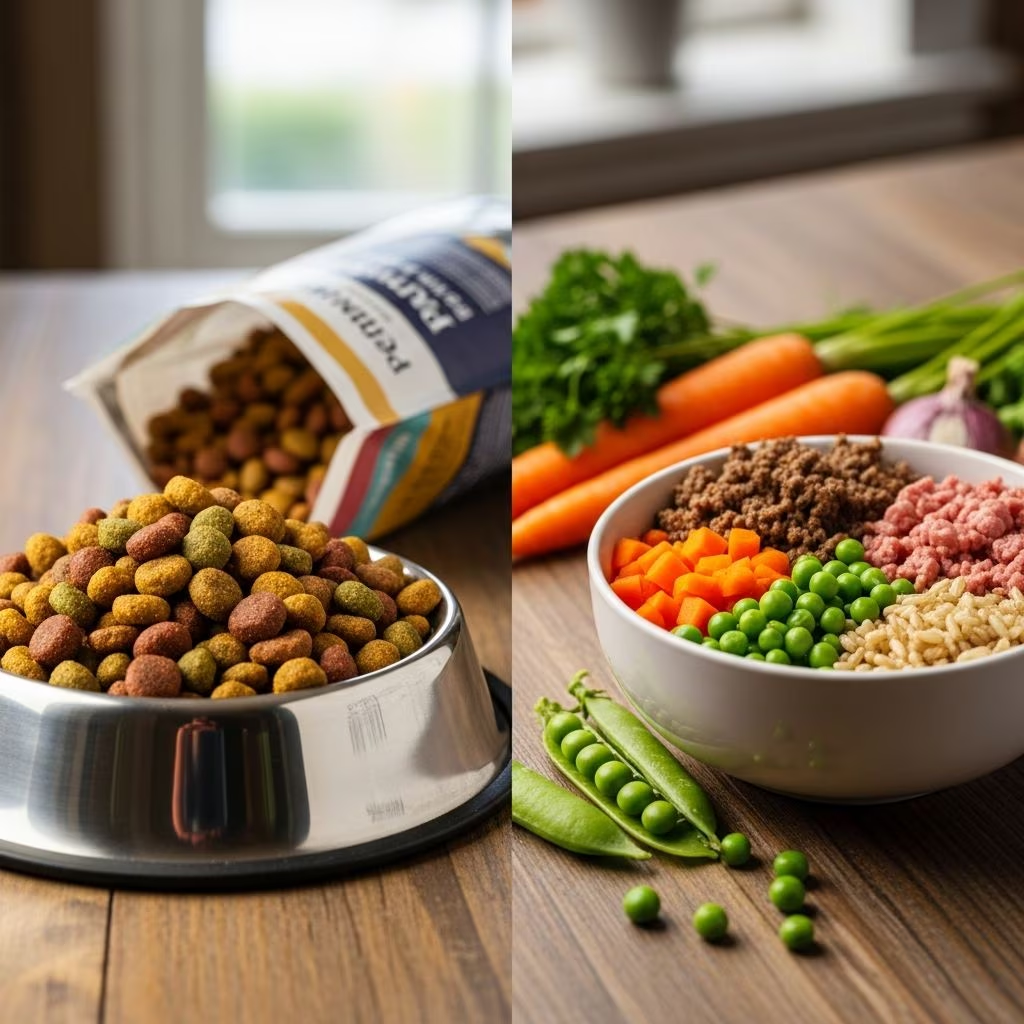
Choosing between commercial dog food and homemade meals involves balancing nutrition, cost, convenience, and your pet’s specific needs. Both options have strengths, but scientific data reveals commercial dry foods often provide better value and reliability for most dogs.
Understanding Your Dog’s Nutritional Requirements
Dogs require a precise mix of proteins, fats, carbohydrates, vitamins, and minerals tailored to their age, size, breed, and activity level. The Association of American Feed Control Officials (AAFCO) sets standards for complete and balanced diets, ensuring essential nutrients like omega-3 fatty acids, glucosamine for joints, and taurine for heart health.
Homemade diets appeal to owners seeking fresh ingredients, but without veterinary nutritionist guidance, they risk deficiencies in critical areas such as calcium-phosphorus ratios or trace minerals. Commercial foods, especially premium ones, are formulated and tested to meet these standards consistently.
Advantages of Commercial Dog Food
Commercial diets dominate the market due to their reliability and ease of use. Key benefits include:
- Nutritional Completeness: Formulated by experts to match AAFCO profiles, with added nutraceuticals like omega-3s that are hard to replicate at home.
- Convenience: Ready-to-serve options save time for busy owners, available in dry kibble, wet cans, or freeze-dried formats.
- Variety for Health Conditions: Specialized formulas for obesity, kidney disease, allergies, or seniors provide targeted support.
- Cost-Effectiveness: Dry super-premium foods cost less per kcal than homemade or wet options.
Premium commercial dry foods average 3.6 kcal/g energy density, outperforming standard segments with higher fiber content that dilutes calories.
Benefits and Challenges of Homemade Diets
Homemade food offers personalization and the satisfaction of cooking for your dog. Owners control ingredient quality, avoiding fillers or preservatives, and can customize for allergies or preferences.
- Freshness and Palatability: Freshly prepared meals often entice picky eaters with aromas and textures.
- Customization: Adjust for joint issues with glucosamine-rich additions or digestive sensitivities.
However, challenges abound. Recipes must be scaled precisely for body weight, as nutrient needs aren’t linear—doubling a recipe doesn’t double vitamins correctly. Poor formulation can lead to imbalances, and sourcing human-grade ingredients raises costs significantly.
Cost Analysis: Breaking Down the Numbers
Many assume homemade is cheaper, but data shows otherwise. A study comparing costs per 1000 kcal and metabolic weight found homemade chicken-based diets 117.73% more expensive than super-premium commercial dry food; beef versions soared 298.84% higher.
| Diet Type | Avg. Cost per 1000 kcal (Example) | Monthly Cost for 50kg Dog | Notes |
|---|---|---|---|
| Super-Premium Dry Commercial | Low | Baseline | Includes functional additives |
| Homemade (Chicken) | 117.73% higher | Higher | Excludes supplements |
| Homemade (Beef) | 298.84% higher | Much higher | Premium proteins inflate price |
| Wet Commercial | Highest | Highest | Less energy-dense |
| Standard Dry Commercial | Slightly higher than premium | Up to 27.7% more | Low energy density |
For therapeutic needs like food hypersensitivity, homemade tilapia diets still exceeded commercial dry costs by 15-52%. Large dogs amplify savings with commercial bulk buys.
Nutritional Balance: Science vs. Home Cooking
Commercial foods undergo rigorous testing for digestibility and nutrient retention, often exceeding homemade efforts. Homemade shines in freshness but falters without lab analysis—many lack bioavailable calcium or complete amino acids.
Dry commercial kibble extrusion preserves nutrients while enhancing digestibility, unlike variable home cooking methods. For long-term health, consistency trumps occasional fresh boosts.
Health Impacts: Digestion, Longevity, and Disease Management
Well-balanced commercial diets support steady growth, coat health, and immunity via fortified antioxidants. Homemade can improve palatability for seniors but risks malnutrition if not monitored.
In disease management, prescription commercial diets outperform DIY for kidney support or diabetes, with proven outcomes. Monitor stool quality and energy levels to gauge either diet’s success.
Practical Tips for Feeding Commercial Food
- Select AAFCO-approved labels with named meat meals as first ingredients.
- Choose super-premium over standard for better calorie density and fewer fillers.
- Transition gradually over 7-10 days to avoid tummy upset.
- Pair with fresh toppers sparingly to maintain balance.
Guidelines for Safe Homemade Feeding
If opting homemade:
- Consult a board-certified veterinary nutritionist for recipes.
- Use tools like BalanceIT for precise formulations.
- Batch-cook and freeze portions; add supplements post-cooking to preserve potency.
- Regular bloodwork checks nutrient levels annually.
Hybrid Approaches: Best of Both Worlds
Combine 75-90% commercial base with 10-25% fresh toppers like steamed veggies or fish for enhanced appeal without imbalance risks. Freeze-dried commercial raw options bridge convenience and freshness.
Common Myths Debunked
- Myth: Homemade is always cheaper. Reality: Often 100%+ pricier per kcal.
- Myth: Commercial = processed junk. Reality: Premium brands use high-quality, tested ingredients.
- Myth: Dogs prefer homemade only. Reality: Palatability varies; many thrive on commercial.
FAQs
Is homemade dog food healthier than commercial?
Not necessarily—commercial premium foods ensure balance, while homemade risks deficiencies without expert input.
How much more does homemade cost?
Up to 300% more for protein-heavy recipes compared to dry commercial.
Can I mix both diets?
Yes, in moderation (e.g., 80/20 rule) to boost variety safely.
What if my dog has allergies?
Hypoallergenic commercial options or vet-formulated homemade work best.
Which is better for puppies or seniors?
Commercial life-stage formulas provide precise nutrition.
Making the right choice depends on your lifestyle, budget, and commitment. For most, high-quality commercial dry food delivers optimal health at lower cost and effort.
References
- Homemade versus extruded and wet commercial diets for dogs — PMC / National Library of Medicine. 2020-07-15. https://pmc.ncbi.nlm.nih.gov/articles/PMC7380597/
- Homemade vs. Store-Bought Pet Food: Which Is Healthier? — Caring Hands Veterinary Hospital. 2023-05-20. https://caringhandsvet.com/homemade-vs-store-bought-pet-food/
- Pros and Cons of Homemade vs Commercial Pet Foods — Whole Pet Provisions (PDF brochure). 2022-07-01. https://wholepetprovisions.com/wp-content/uploads/2022/07/HMD-vs-Comm-brochure.pdf
- Homemade vs Store Bought Pet Food: Which Should You Choose? — RR Vet. 2024-02-10. https://rrvet.com/homemade-vs-store-bought-pet-food-which-should-you-choose/
- Homemade vs. Commercial Pet Diets: What’s Best for Long-Term? — Parkwood Animal Hospital. 2023-11-05. https://parkwoodanimalhospital.com/homemade-vs-commercial-diets/



