

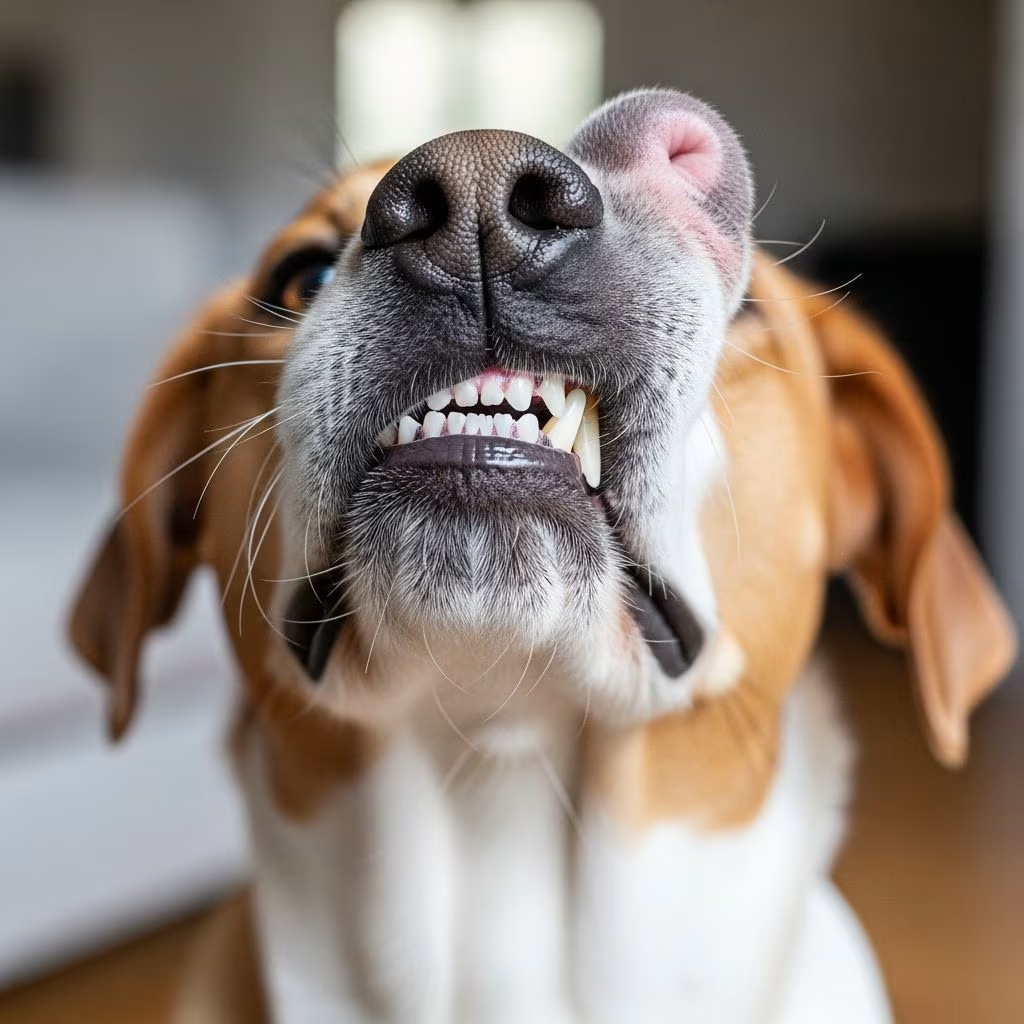
The flehmen response is a distinctive behavioral pattern observed in dogs and numerous other mammals, serving as a specialized mechanism for analyzing scents, particularly pheromones. This reaction enables canines to draw chemical signals into their vomeronasal organ for deeper processing, playing a crucial role in social, reproductive, and environmental interactions.
Recognizing the Flehmen Reaction in Canines
Dogs exhibit the flehmen response subtly compared to species like horses or cats. Owners might notice their pet lifting its head after intense sniffing, parting the lips slightly, and curling the upper lip to reveal teeth. Additional signs include head elevation, open mouth positioning, nostril wrinkling, lip smacking, or brief teeth chattering. These actions typically last only seconds but indicate active scent investigation.
- Key visual cues: Upper lip curl exposing incisors, elevated head and neck.
- Auditory/ tactile signs: Teeth clatter, saliva production, or tongue flicking.
- Common triggers: Urine marks, other dogs’ genital areas, or novel odors from grass or objects.
In dogs, the response is less pronounced due to anatomical constraints; their upper lips attach firmly via a frenulum, limiting dramatic curling. Instead, they often show a forward-stretched neck and rapid tongue retraction to aid pheromone intake.
The Vomeronasal Organ: Core of Scent Detection
Central to the flehmen response is the vomeronasal organ (VNO), also called Jacobson’s organ. Located in the nasal cavity’s front, behind the incisors, this structure contains sensory cells tuned to pheromones—volatile chemicals conveying social and reproductive messages. Discovered in 1813 by Danish physician Ludwig Levin Jacobson, the VNO connects directly to the brain’s olfactory centers, bypassing standard smell pathways for specialized processing.
During flehmen, dogs open their mouths to channel air and scent molecules through ducts into the VNO. This setup allows detection of non-volatile pheromones undetectable by regular olfactory epithelium. In canines, the organ’s efficiency supports critical functions like identifying mates, kin recognition, and territory assessment.
| Feature | VNO Function | Comparison to Standard Olfaction |
|---|---|---|
| Location | Roof of mouth, behind incisors | Nasal cavity lining |
| Detects | Pheromones, social chemicals | Volatile odors, aromas |
| Brain Pathway | Direct to accessory olfactory bulb | Main olfactory bulb |
| Role in Flehmen | Primary receptor | Secondary support |
Biological Process Behind the Response
The flehmen sequence activates when a dog encounters potent pheromonal scents. Sniffing draws initial molecules into the nose; intriguing odors prompt mouth opening and lip curling. This posture creates a vacuum effect, pumping scents via the nasopalatine duct to the VNO. Neural signals then relay information to brain regions governing behavior, reproduction, and emotions.
Physiologically, this involves trigeminal nerve stimulation and increased saliva to solubilize pheromones. Dogs may drool or smack lips as solubilized chemicals contact VNO receptors. Studies confirm this mechanism enhances pheromone discrimination, vital for intact males assessing female estrus or mothers bonding with offspring.
Primary Functions in Dog Society
Beyond curiosity, flehmen facilitates essential canine communications. In reproduction, males use it to evaluate female fertility via vulvar scents. Neutered dogs or females employ it for individual identification through urine pheromones, aiding pack dynamics and conflict avoidance.
Maternal applications include puppies recognizing dam scents for nursing and safety. Environmentally, it processes territorial markers, food sources, or threats. Overall, this behavior underscores olfaction’s dominance in dogs—up to 300 million olfactory receptors versus humans’ 6 million—enabling nuanced world interpretation.
Triggers Prompting Flehmen Displays
Common elicitors include other dogs’ urine, feces, or anogenital regions, rich in pheromonal signatures. Intact males react strongly to estrous females; neutered pets to social scents. Novel environmental odors like fermented grass or marked posts also provoke it. Rarely, it signals health issues if excessive alongside appetite loss or lethargy—consult a vet then.
- Reproductive scents: Female heat indicators.
- Social markers: Urine from pack mates or strangers.
- Environmental cues: Decaying matter, animal traces.
Species Variations and Comparisons
While universal among mammals, flehmen manifests differently. Horses dramatically hoist lips skyward, holding poses for seconds. Cats tongue-flick post-smelling, aiding VNO access. Ungulates like goats wrinkle muzzles profoundly. Dogs’ subtlety—mere head lift and concentration—reflects lip anatomy, yet achieves identical sensory goals.
Snakes and lizards tongue-flick similarly, transferring scents to oral VNOs. Evolutionary conservation highlights pheromones’ cross-species importance, from mating to predation.
| Species | Flehmen Style | Duration | Primary Use |
|---|---|---|---|
| Dogs | Subtle lip curl, head raise | Seconds | Social/reproductive ID |
| Horses | Exaggerated lip lift, nostrils flare | 5-10 seconds | Mate detection |
| Cats | Tongue flick, open mouth | Brief | Territory/pheromones |
| Goats | Full grimace, head high | Several seconds | Reproduction |
Myths and Owner Misinterpretations
Many mistake flehmen for aggression, disgust, or pain due to the toothy grimace. In reality, it’s neutral curiosity—akin to a human eyebrow raise. Aggression pairs with stiff posture, growls; pain with whining, limping. Context clarifies: post-sniffing flehmen is benign. Educating owners prevents unnecessary worry or scolding, preserving natural behaviors.
Health Contexts and When to Worry
Occasional flehmen is normal, reflecting robust olfaction. Frequent episodes without scent sources, or with nasal discharge, sneezing, or appetite changes, warrant veterinary review. Potential issues: dental disease, nasal infections, or tumors impairing smell. Routine checkups ensure oral health supports VNO function.
Practical Insights for Dog Guardians
Observe flehmen to gauge your dog’s social awareness. During walks, it signals scent hotspots—ideal enrichment. For multi-dog homes, it aids introductions by allowing pheromone familiarization. Training tip: Reward calm post-flehmen to reinforce manners around distractions. Embrace it as a window into your pet’s rich sensory life.
Frequently Asked Questions
Is the flehmen response painful for dogs?
No, it’s a voluntary, instinctive action without discomfort, purely for enhanced smelling.
Do all dogs show flehmen equally?
Varies by individual, sex, neuter status, and breed; scent hounds like Beagles display it more overtly.
Can puppies perform flehmen?
Yes, emerging early for maternal bonding and litter recognition.
Does neutering eliminate flehmen?
No, neutered dogs still analyze non-reproductive pheromones for social cues.
How does flehmen differ from scent rolling?
Flehmen analyzes scents internally; rolling masks or advertises with the dog’s own odor.
This behavior exemplifies dogs’ extraordinary olfactory prowess, integral to their evolutionary success. Understanding it fosters deeper human-canine bonds.
References
- Canine Olfaction: Physiology, Behavior, and Possibilities for Practical Applications — PMC / Kovacs et al. 2021-08-19. https://pmc.ncbi.nlm.nih.gov/articles/PMC8388720/
- Dog Flehmen Response—Explained — Kinship. 2023 (approx., recent). https://www.kinship.com/dog-behavior/flehmen-response-dog
- The Science Behind the Flehmen Response in Dogs and Cats — Zoetis Petcare. 2024 (recent). https://www.zoetispetcare.com/blog/article/science-behind-flehmen-response-dogs-cats
- Flehmen Response in Dogs — Whole Dog Journal. 2022. https://www.whole-dog-journal.com/behavior/flehmen-response-in-dogs/
- Flehmen response — Wikipedia (background, primary refs). N/A. https://en.wikipedia.org/wiki/Flehmen_response



