

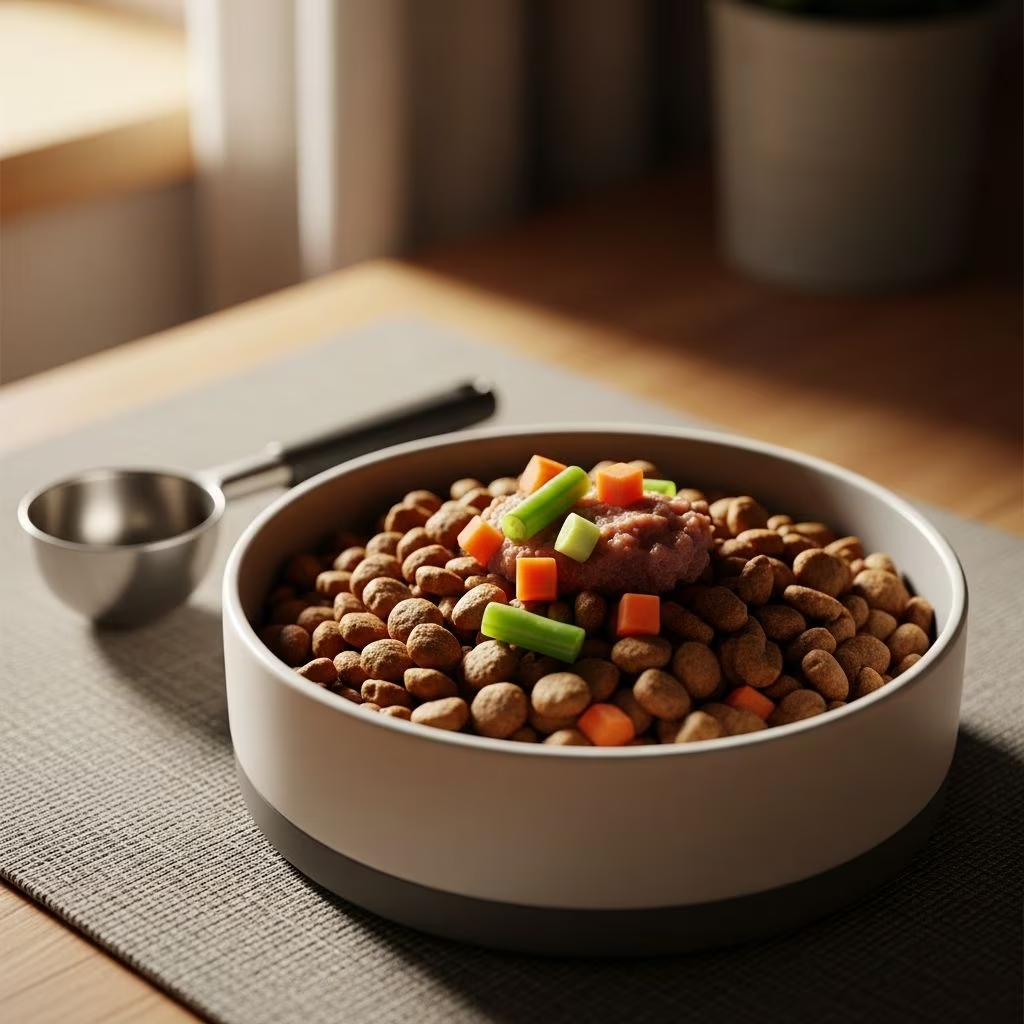
Determining the correct amount of food for your dog is essential for maintaining ideal body weight, supporting energy levels, and preventing health issues like obesity or malnutrition. Factors such as breed size, life stage, activity, and food type all influence daily intake. This guide provides practical tools, including feeding charts and calculation methods, to help you tailor portions precisely.
Why Portion Control Matters for Canine Health
Overfeeding is a common pitfall that leads to weight gain, joint strain, diabetes, and reduced lifespan. Underfeeding, conversely, can cause nutrient deficiencies, lethargy, and weakened immunity. According to pet nutrition guidelines, adult dogs require about 25-30 calories per pound of body weight daily, adjusted for specifics. Consistent monitoring ensures your dog thrives.
- Obesity Prevention: Excess calories convert to fat, stressing the heart and joints.
- Energy Balance: Matches intake to expenditure for sustained vitality.
- Longevity Boost: Proper nutrition correlates with healthier aging.
Key Factors Influencing Food Amounts
No universal formula fits every dog; personalize based on these elements:
- Body Weight: Larger dogs need more calories; use ideal weight, not current.
- Age: Puppies grow rapidly, seniors metabolize slower.
- Activity Level: Active dogs burn more; sedentary ones need less.
- Food Type: Dry kibble is calorie-dense; wet food has higher moisture.
- Health Conditions: Spayed/neutered dogs or those with thyroid issues require adjustments.
- Metabolism: Breed traits like those in Labs or Beagles affect needs.
Always start with package guidelines and consult a vet for custom plans.
Daily Calorie Needs by Dog Size
Caloric requirements form the foundation. Use this table for estimates (adjust for activity: add 20-50% for high energy, subtract for low).
| Ideal Weight (lbs) | Average Daily Calories |
|---|---|
| 3 | 144 |
| 10 | 346 |
| 20 | 587 |
| 30 | 794 |
| 50 | 1,165 |
| 70 | 1,499 |
| 100 | 1,958 |
These figures assume moderate activity on dry food (approx. 350-400 kcal/cup).
Feeding Charts for Adult Dogs
For maintenance in healthy adults, follow these dry food approximations (cups per day, split into 2 meals).
Small Breeds (3-20 lbs)
| Weight (lbs) | Cups/Day |
|---|---|
| 3-6 | ⅓ – ¾ |
| 10 | ¾ – 1 |
| 15-20 | 1 – 1⅓ |
Medium Breeds (21-50 lbs)
| Weight (lbs) | Cups/Day |
|---|---|
| 21-35 | 1⅓ – 2 |
| 30-40 | 1¾ – 2¼ |
| 50 | 2⅔ |
Large Breeds (51-100 lbs)
| Weight (lbs) | Cups/Day |
|---|---|
| 51-75 | 2⅔ – 3⅓ |
| 60-70 | 3 – 3½ |
| 80-90 | 3¾ – 4¼ |
| 100 | 4½ |
For giants over 100 lbs, add ¼-⅓ cup per extra 10 lbs.
Adjustments for Puppies and Seniors
Puppy Feeding
Growing pups need 2-3x adult calories, fed 3-4 times daily. Example for wet food: 3½ trays/5 lbs under 4 months.
- Toy breeds: ½-1 cup/day total.
- Medium: 1-2 cups.
- Transition to adult food at 12 months (small) or 18-24 (large).
Senior Dogs
Reduce by 10-20% due to lower metabolism. Focus on joint-friendly, high-fiber formulas. Monitor for weight loss.
Wet vs. Dry vs. Fresh Food Portions
Different formats vary in density:
- Dry Kibble: Compact; 1 cup ≈ 350-400 kcal.
- Wet Food: 3¾ trays/10 lbs body weight.
- Fresh/Refrigerated: Slice per package; often 20-30% more volume than kibble.
Mix types? Calculate combined calories to avoid excess.
Practical Tips for Accurate Feeding
- Measure Precisely: Use a kitchen scale or standard cup; eyeballing leads to 20-50% errors.
- Read Labels: Follow brand-specific charts as calorie content differs.
- Schedule Meals: 2x/day for adults; free-feeding promotes overeating.
- Body Condition Score: Ribs palpable but not visible = ideal (score 4-5/9).
- Weigh Monthly: Adjust if gaining/losing 5-10% unexpectedly.
- Water Always: Especially with dry food.
Common Mistakes and Fixes
- Treating as Snacks: Limit to 10% daily calories.
- Ignoring Spay/Neuter: Reduce 25% post-surgery.
- Breed Oversights: brachycephalics may need less due to lower exercise.
Table scraps? Avoid; they unbalance nutrition.
Monitoring and Vet Collaboration
Track weight, stool quality, coat shine, and energy. Annual bloodwork reveals issues early. Vets use tools like Purina calculators for precision.
Frequently Asked Questions
How often should I feed my adult dog?
Twice daily, 10-12 hours apart, for digestion and satiety.
What if my dog is overweight?
Gradually reduce by 10-20%, increase exercise; aim 1-2% weekly loss.
Can I switch foods abruptly?
No; transition over 7-10 days to prevent upset.
How much for pregnant dogs?
Increase 20-50% in late gestation; consult vet.
Raw diet portions?
2-3% body weight daily, split meals.
Advanced Calculation: Calorie Math
Formula: RER (70 x weight_kg^0.75) x factor (1.6 active adult, 1.2 sedentary). Example: 20kg dog RER ≈ 1000 kcal; active = 1600 kcal/day.
Convert kg: lbs/2.2. Tools like online calculators simplify.
References
- Feeding Chart For Dogs: A Complete Guide — Darwin’s Pet. 2023. https://www.darwinspet.com/blogs/transitioning/feeding-chart-for-dogs-a-complete-guide
- Dog Food Serving Size: How Much To Feed Your Dog — The Honest Kitchen. 2023. https://www.thehonestkitchen.com/blogs/pet-food-ingredients/dog-food-serving-size-guide
- Dog Feeding Chart: How Much Should I Feed My Dog? — Purina US. 2025. https://www.purina.com/articles/dog/feeding/guides/how-much-should-i-feed-my-dog
- How Much Food Should I Feed My Dog? — Chewy. 2024. https://www.chewy.com/education/dog/food-and-nutrition/how-much-food-to-feed-my-dog
- How Much Wet Food Should You Feed Your Dog? — CESAR. 2023. https://www.cesar.com/dog-care/meal-time/how-much-wet-food-to-feed-a-dog
- How Much Freshpet to Feed Your Dog – Feeding Guidelines — Freshpet. 2024. https://www.freshpet.com/blog/how-much-to-feed-a-dog
- How Much Food Should I Feed My Dog? — Ultimates Pet Food. 2023. https://www.ultimatespetfood.com/how-much-food-should-i-feed-my-dog/



