

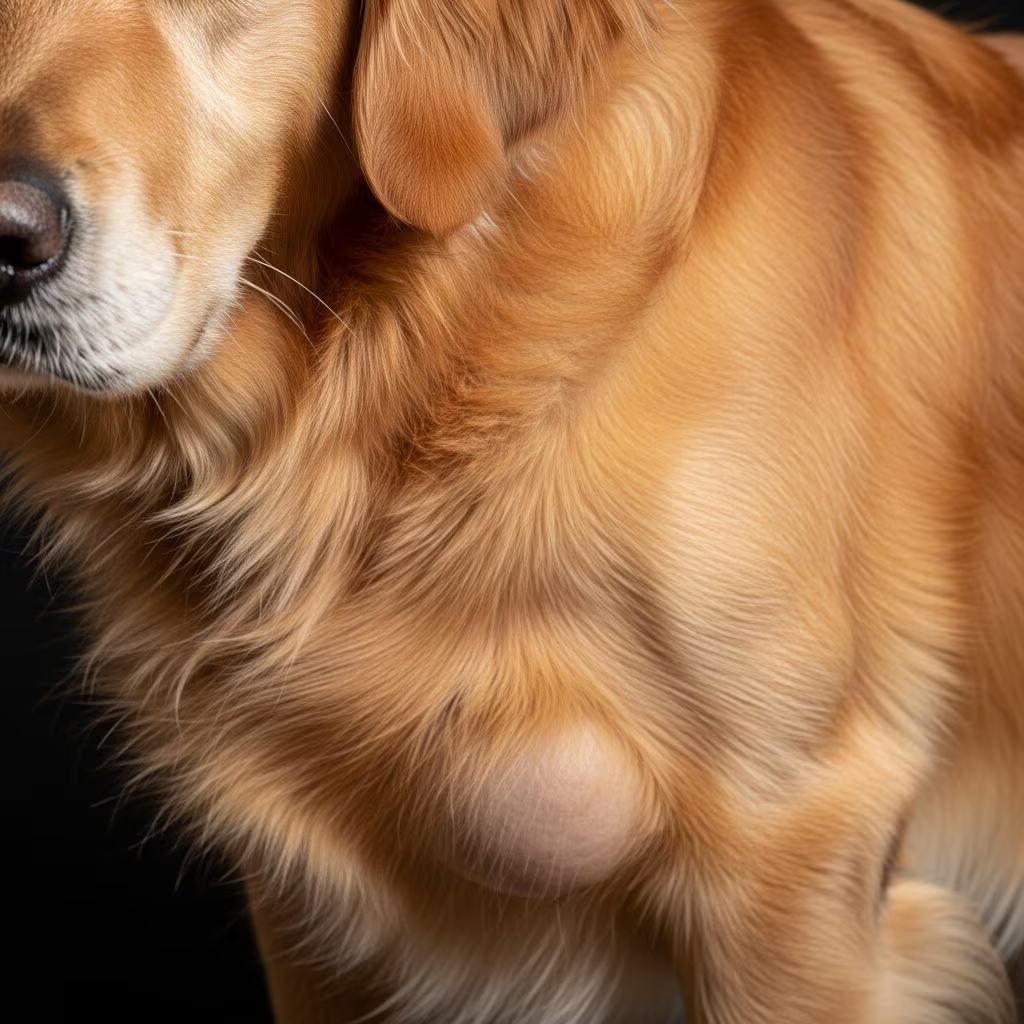
Fatty tumors, commonly called lipomas, represent one of the most frequent benign growths observed in dogs, particularly as they age. These soft, movable masses arise from an overgrowth of fat cells beneath the skin and typically pose no immediate threat to your pet’s health. Understanding their nature empowers owners to make informed choices about monitoring and intervention.
Recognizing Fatty Tumors in Canines
Spotting a lump on your dog prompts concern, but many prove harmless. Lipomas usually appear as soft, squishy bumps that shift easily under the skin when gently pressed. They favor locations like the chest, abdomen, flanks, or limbs, often emerging in middle-aged or senior dogs over seven years old. Certain breeds, including Labrador Retrievers, Doberman Pinschers, and overweight pets, show higher susceptibility, though the precise triggers remain unclear—possibly linked to genetics, obesity, or hormonal shifts.
- Texture and Mobility: Feels like a gel-filled balloon; easily moves side-to-side.
- Size Range: From pea-sized to golf ball or larger, growing gradually over months or years.
- Symptom Absence: No pain, itching, redness, or behavioral changes unless interfering with movement.
Any new lump warrants a veterinary exam. Early assessment via fine-needle aspiration—drawing cells with a thin needle—confirms lipoma status in most cases, avoiding unnecessary worry.
Types of Lipomas Affecting Dogs
Not all fatty tumors behave identically. Veterinary classification helps predict behavior and guides management.
| Type | Characteristics | Location | Behavior |
|---|---|---|---|
| Simple Lipoma | Soft, mobile, slow-growing | Under skin on trunk, limbs | Benign, rarely problematic |
| Infiltrative Lipoma | Firm, fixed, invasive | Often between muscles | Locally aggressive; recurs post-surgery |
| Myelolipoma | Contains fat and blood-forming cells | Adrenal glands, liver, spleen | Rare, internal; usually incidental |
Simple lipomas dominate, comprising over 90% of cases, while infiltrative variants demand closer scrutiny due to tissue invasion risks.
When Do Lipomas Become a Worry?
Most lipomas remain innocuous, but monitor for red flags signaling potential issues:
- Rapid Enlargement: Doubling in size within weeks suggests reevaluation for malignancy.
- Pain or Lameness: If pressing on nerves, joints, or organs, causing limping or reluctance to move.
- Surface Changes: Hardening, ulceration, color shifts, or attachment to deeper tissues.
- Multiplicity: Sudden appearance of several lumps may indicate systemic factors.
Rarely, lipomas mimic liposarcomas—malignant counterparts that, though uncommon (less than 5% of fat tumors), can invade locally or metastasize. Biopsy provides definitive diagnosis, especially for ambiguous cases.
Diagnosis: Steps Your Vet Will Take
Professional evaluation starts with a physical exam, palpation, and history review. Diagnostic tools include:
- Fine-Needle Aspiration (FNA): Quick, in-clinic cytology; 80-90% accurate for simple lipomas.
- Biopsy: Surgical or core sample for infiltrative or suspicious masses.
- Imaging: Ultrasound or X-rays to assess depth, organ involvement, or multiplicity.
- Bloodwork: Rules out metabolic contributors in obese patients.
These steps ensure accurate identification, preventing oversight of serious conditions like mast cell tumors or hernias.
Management Strategies for Benign Lipomas
Treatment hinges on size, location, growth rate, and your dog’s comfort. Observation suffices for small, stable masses.
Watchful Waiting Protocol
Monthly self-checks track changes: measure diameter, note texture, photograph for comparison. Annual vet rechecks maintain vigilance. Weight management via diet and exercise may slow progression in predisposed dogs.
Minimally Invasive Options
- Steroid Injections: Triamcinolone acetate shrinks some lipomas by 50-75%, but recurrence hits 50% within six months.
- Liposuction: Suction removal for superficial, medium-sized tumors; less scarring but higher regrowth risk.
These suit pets unfit for anesthesia.
Surgical Removal: The Gold Standard
For problematic lipomas—those over 5cm, rapidly growing, or mobility-impairing—excision offers cure. Performed under general anesthesia, the procedure involves wide margins for clean removal.
- Pre-Op Prep: Blood tests, fasting, pain meds.
- Procedure Time: 30-90 minutes; day surgery for most.
- Recovery: 10-14 days; e-collar prevents licking; staples/sutures removed at follow-up.
- Cost Factors: $300-$2000+, varying by size, location, and clinic.
Infiltrative types may require oncologic surgery plus radiation, boosting success to 80-90%.
Advanced Interventions for Challenging Cases
Recurrent or malignant fatty tumors necessitate escalation:
- Radiation Therapy: Post-op for infiltrative lipomas; shrinks remnants, cuts recurrence by 70%.
- Liposarcoma Management: Aggressive excision, chemo if metastatic; prognosis fair with early catch.
Board-certified surgeons handle complex resections, often at referral centers.
Lifestyle Adjustments to Minimize Risks
While unpreventable, obesity exacerbates lipoma formation. Maintain ideal body condition score (4-5/9) through:
- Calorie-controlled, high-quality kibble or fresh diets.
- Daily 30-60 minute walks or play.
- Regular wellness exams starting at age 7.
Avoid unproven supplements; consult vets before holistic remedies like castor oil, lacking robust evidence.
FAQs on Dog Fatty Tumors
Will my dog’s lipoma disappear on its own?
No, lipomas persist and may enlarge; monitoring or removal addresses them.
Are fatty tumors painful for dogs?
Typically not, unless large or infiltrative, compressing tissues.
Can diet cure lipomas?
No evidence supports this; focus on weight control for prevention.
How often should I check my dog’s lumps?
Weekly at home; vet every 3-6 months if stable.
Do all dogs get lipomas?
Common in 20-30% of seniors; breed and obesity increase odds.
Partnering with Your Veterinarian
Open dialogue ensures tailored care. Share photos, growth logs, and behavior notes. Routine screenings catch issues early, preserving quality of life. With prompt action, most dogs thrive alongside their lipomas—or post-removal.
References
- Fatty Tumor (Lipoma) in Dogs – West Gate Veterinary Hospital — West Gate Veterinary Hospital. 2024-06-15. https://www.westgatevet.com/site/blog/2024/06/15/lipomas-dog
- Fatty Tumor (Lipoma) in Dogs | Thousand Oaks Vets — VSECTO. 2023-06-15. https://www.vsecto.com/site/blog/2023/06/15/dogs-fatty-tumor-lipoma
- Understanding Dog Lipomas: Causes, Symptoms, and Treatment Options — Chino Valley Animal Hospital. N/A. https://chinovalleyanimalhospital.com/blog/dog-lipomas/
- Lipomas and Liposarcomas (Adipose Tumors) — VCA Animal Hospitals. N/A. https://vcahospitals.com/know-your-pet/adipose-lipoma-tumors
- Lipoma in Dogs: Symptoms, Causes, and Treatment — GoodRx. N/A. https://www.goodrx.com/pet-health/dog/lipoma-in-dogs
- DISSOLVE Dog Lipomas (Lumps): 5 Natural Remedies That Work! — YouTube. N/A. https://www.youtube.com/watch?v=3LlvY8izOyU
- Lipoma in Dogs: Everything a Pet Parent Needs To Know — PetMD. N/A. https://www.petmd.com/dog/condition/skin/lipoma-in-dogs



