

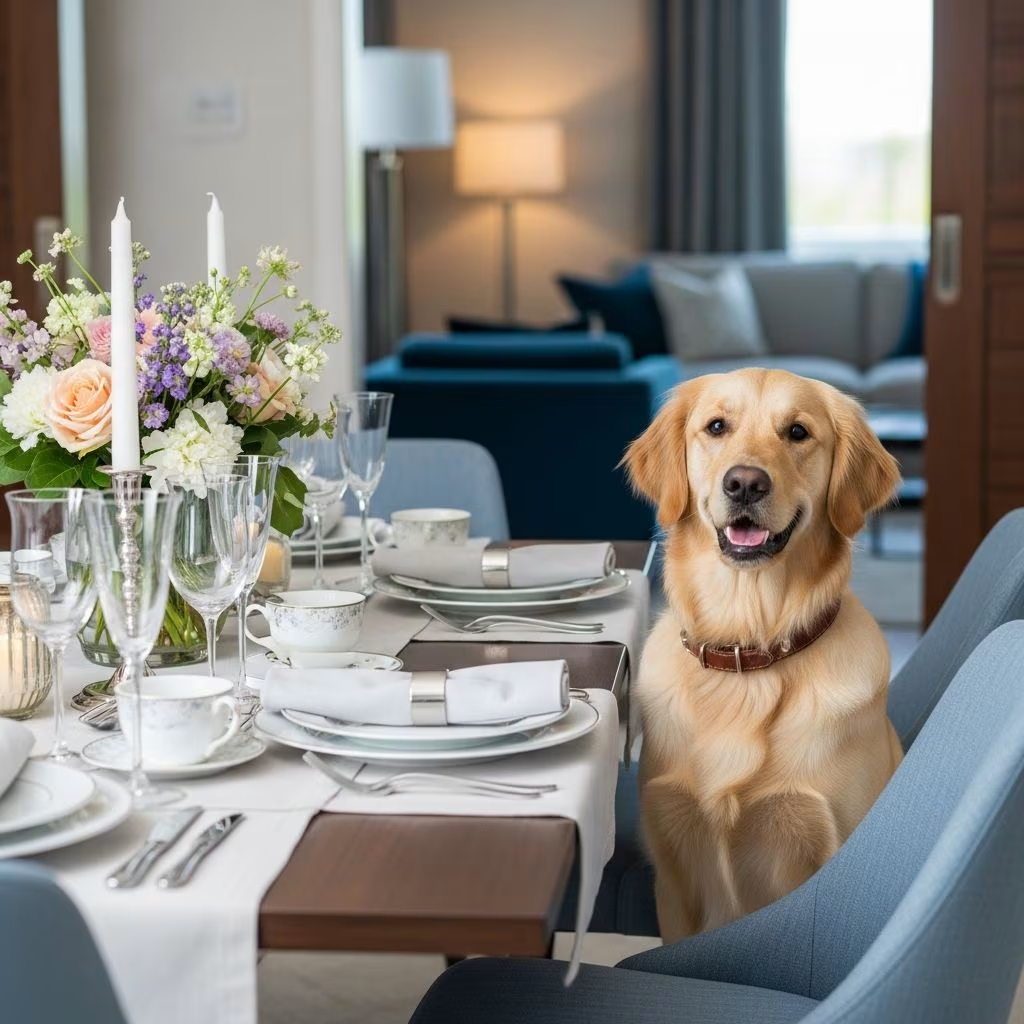
Inviting your dog to social gatherings, friends’ homes, or family events can be rewarding, but only if your pup knows how to behave. Proper **dog etiquette** ensures harmonious interactions, prevents mishaps, and makes your dog welcome everywhere. This comprehensive guide covers essential steps to train your dog in social graces, drawing from canine behavior experts and practical advice.
First, Get Permission to Bring Your Pet
Never assume your dog is invited. Always ask hosts in advance if they are comfortable with pets. Consider allergies, other animals, or phobias that might make your dog’s presence unwelcome. Kinship emphasizes this as the foundational rule of dog etiquette: respect others’ boundaries first.
Discuss specifics like your dog’s size, energy level, and vaccination status. For example, high-energy breeds may overwhelm small spaces, while small dogs might trigger larger pets’ prey drive. If permission is granted, confirm house rules—leash requirements, off-limits areas, or quiet zones.
- Call or message ahead: ‘Is it okay to bring Fido? He’s friendly and house-trained.’
- Offer alternatives: ‘If not, I can arrange boarding.’
- Respect a ‘no’: Pushing boundaries sets a poor tone for future invites.
This step fosters goodwill and positions you as a considerate pet parent, aligning with broader dog-walking etiquette like respecting others’ space.
Brush Up on Basic Commands (and Fun Tricks)
A well-trained dog is a gracious guest. Solidify core commands: **sit**, **stay**, **come**, **leave it**, and **down**. These prevent jumping, begging, or chasing. Practice in distracting environments to mimic party chaos.
Fun tricks like ‘shake,’ ‘spin,’ or ‘roll over’ entertain guests without chaos. They redirect energy positively. According to behavior guides, consistent training builds impulse control essential for social settings.
| Command | Purpose in Social Settings | Training Tip |
|---|---|---|
| Sit/Stay | Prevents jumping on arrivals | Use high-value treats; practice with doorbells |
| Come/Leave It | Recalls from distractions; ignores food | Long-line training in parks |
| Down | Calms hyper dogs under tables | Reward relaxed positions |
Recall training shines in contained areas before real-world tests. Aim for 90% reliability off-leash in safe spots.
Nip Bad Behavior in the Bud
Anticipate issues like jumping, barking, or counter-surfing. Intervene early with calm corrections. Ignore attention-seeking antics; reward calm behavior instead.
Common pitfalls include greeting rushes or resource guarding. Teach polite greetings: sit before petting. For barking, desensitize to triggers like door knocks. Kinship advises nipping habits proactively to avoid escalation.
- Jumping: Turn away, fold arms; praise four-on-floor.
- Barking: Quiet command + rewards for silence.
- Stealing food: ‘Leave it’ + management (crate during meals).
Supervise constantly, as group play etiquette stresses attentive ownership to prevent conflicts. Recognize stress signals: yawning, lip-licking, or whale-eye, and remove your dog if needed.
Bring Toys and Treats to Keep Them Occupied
Pack engaging items: chew toys, puzzle feeders, or long-lasting treats. These occupy your dog during downtime, preventing boredom-induced mischief.
Choose quiet toys—no squeakers in echoey homes. High-value treats reinforce commands. Rotate items for sustained interest. This mirrors advice for walks: keep dogs cognizant and contained.
Pro tip: A frozen Kong with peanut butter can entertain for 30+ minutes, giving you mingling freedom.
Master Proper Dog Greetings
Understanding Canine Introductions
Dogs communicate via scent and body language. Proper greetings start side-on, relaxed approaches, not head-on stares. Sniffing anogenital areas is normal; males target tails, females heads first.
Relaxed signs: loose tails wagging flexibly, soft ears, open mouths. Trouble signs: stiff tails, pinned ears, growling, or muzzle punches. Over 80% of greetings are one-sided—respect that.
Safe Introduction Techniques
- Approach calmly in open space; allow ‘pee-and-flee’ if outdoors.
- Keep leashes loose; avoid tension transfer.
- Short duration: 10-20 seconds max for strangers.
- Human role: Stay upbeat, move away if tense with ‘This way!’
Indoors, confined spaces heighten tension—opt for neutral yards. Familiar dogs may skip formalities, but don’t assume with new ones.
Handle Multi-Dog Environments
In groups, observe before entering. Assess play styles: big vs. small dogs differ. Remove collars/harnesses to prevent snags; supervise phone-free.
Recognize over-arousal: humping, bullying, or avoidance. Intervene early. Small-dog areas prevent unintentional injuries. Bring water bowls to avoid sharing.
Dog Etiquette on Walks and Outings
Extend graces outdoors: leash unless off-leash zones, pick up poop immediately, respect lawns. Avoid approaching eliminating dogs or forcing meets. Keep greetings brief.
Advanced Socialization Tips
Expose puppies early (8-16 weeks) to stimuli. Adult dogs benefit from controlled playdates. Parenting styles influence outcomes—warm, consistent training boosts secure attachments.
Track progress: log successful visits. Adjust for breed traits, e.g., herding dogs need outlets.
Frequently Asked Questions (FAQs)
Q: How do I know if my dog is ready for social visits?
A: Mastery of sit/stay/leave it in distractions, no aggression history, and relaxed greetings signal readiness. Test in low-stakes settings first.
Q: What if my dog gets overexcited around guests?
A: Crate or separate initially; gradual desensitization with thresholds. Reward calm incrementally.
Q: Can shy dogs learn etiquette?
A: Yes, with positive reinforcement. Force nothing; let them observe from safety.
Q: How to handle food aggression at parties?
A: Management first—no plates accessible. Train ‘leave it’ rigorously; feed last.
Q: Are certain breeds harder to train for etiquette?
A: Energy/drive varies; high-drive breeds need more outlets, but all respond to consistency.
Conclusion: A Lifetime of Gracious Visits
Consistent etiquette training creates a confident, beloved dog. Practice yields polite pups who enhance gatherings. Start small, celebrate wins, and enjoy!
References
- 4 Ground Rules for Good Dog Walking Etiquette — Kinship. 2023. https://www.kinship.com/dog-lifestyle/dog-walking-etiquette
- How to Properly Introduce Two Dogs — Kinship. 2023. https://www.kinship.com/dog-behavior/guide-dog-dog-greetings
- Proper Etiquette in Dog Group Play Settings — Dr. Judy Morgan. 2023. https://drjudymorgan.com/blogs/blog/proper-etiquette-in-dog-group-play-settings
- Intergenerational Transmission of Human Parenting Styles to Dogs — PMC/NIH (peer-reviewed). 2024-04-10. https://pmc.ncbi.nlm.nih.gov/articles/PMC11010965/
- How to Train Your Dog in Social Graces — Kinship. 2023. https://www.kinship.com/dog-behavior/dog-etiquette-turning-your-dog-gracious-guest



