

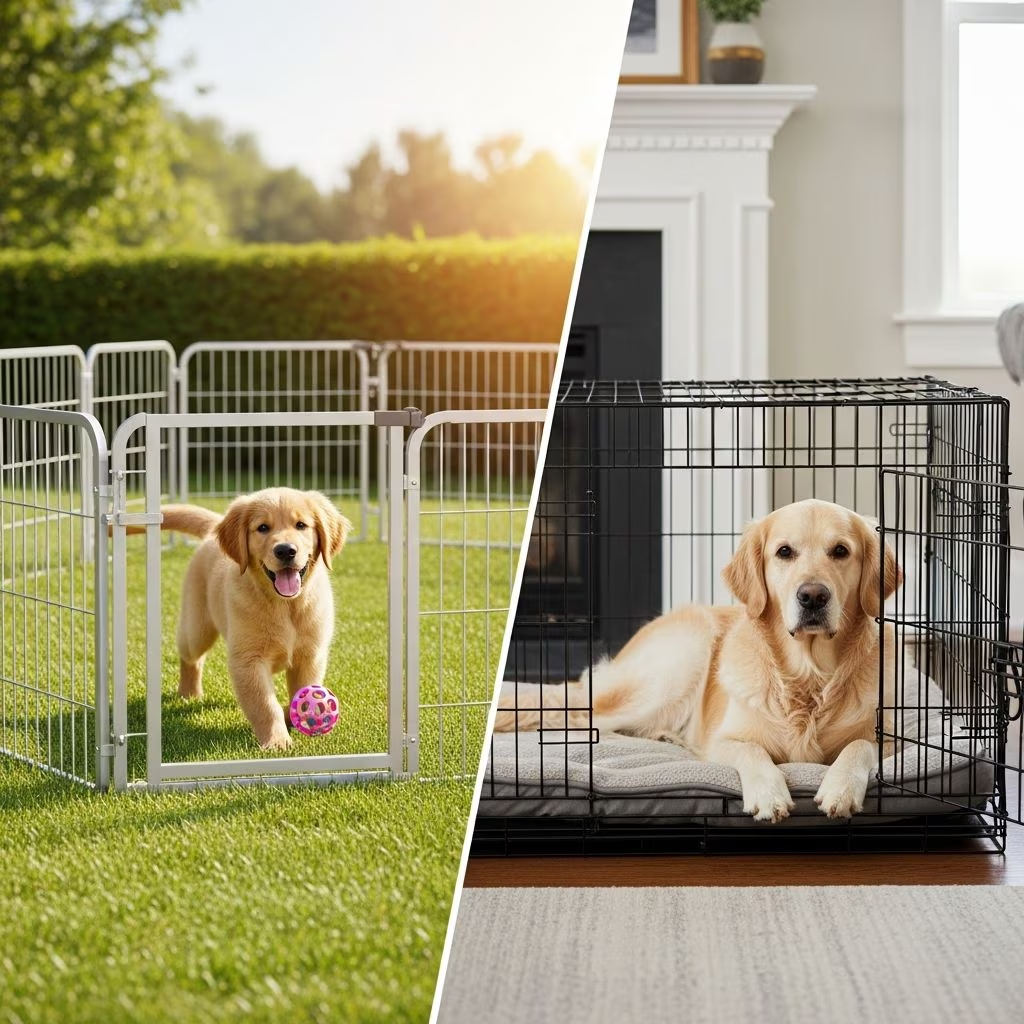
Dog Enclosures: Should You Use a Dog Pen or a Dog Crate?
Choosing the right enclosure for your dog is an important decision that affects their safety, comfort, and training progress. Whether you’re a first-time dog owner or an experienced pet parent, understanding the differences between dog pens and dog crates can help you make the best choice for your furry friend. Both enclosures serve valuable purposes, and many dog owners find that having both types available gives them flexibility to handle different situations throughout the day.
Understanding the Differences Between a Dog Pen and Dog Crate
While dog pens and dog crates may seem similar at first glance, they have significant differences in design, size, and function that make each one suitable for different scenarios. Understanding these distinctions is the first step toward choosing the right enclosure for your pet.
What Is a Dog Crate?
A dog crate is a box-like structure with four sides, a bottom, a top, and a door. It creates a small, enclosed space that mimics the den-like environment that dogs naturally seek. When selecting a dog crate, it’s crucial to choose one that allows your dog to walk in, turn around, and lie down comfortably. The enclosed nature of a crate makes it an excellent tool for specific situations where you need to keep your dog in a confined space for short periods.
What Is a Dog Pen?
A dog pen, also known as an exercise pen or playpen, is a larger enclosure that typically consists of connected gates that can be arranged in various configurations. Unlike a crate, most dog pens have an open top, which means they rely on height to prevent dogs from jumping out. Pens are generally larger than crates and provide significantly more space for your dog to move around, play, and explore. The adjustable and foldable design of most pens makes them versatile for different spaces and situations around your home.
Key Differences Summarized
| Feature | Dog Crate | Dog Pen |
|---|---|---|
| Size | Smaller, compact space | Larger, more spacious area |
| Design | Fully enclosed with top and bottom | Open-top, gate-based structure |
| Mobility | Limited movement | More room to move and play |
| Best For | Short-term confinement (up to 4 hours) | Longer confinement periods (4+ hours) |
| Portability | Very portable and easy to transport | Portable but requires more effort to set up |
| Potty Training | More effective due to limited space | Less effective due to more available space |
When to Use a Dog Pen
Dog pens are ideal for several specific situations where you need to keep your dog safely contained while allowing more freedom than a crate provides. Understanding when a pen is the better choice helps you create the most comfortable environment for your pet.
Confinement for More Than Four Hours
If you need to confine your dog for extended periods, a dog pen is the better choice. Dogs, like humans, need to change positions regularly to maintain physical health and comfort. When confined for more than a few hours, your dog should have enough space to stand, stretch, walk around, and lie down in different positions. A pen provides this necessary room for movement that a crate cannot offer, making it ideal for situations where you’ll be away for several hours or when you need your dog contained for an entire afternoon.
Providing Exercise and Mental Stimulation
Pens are excellent for giving your dog more exercise compared to the limited mobility available in a crate. While a pen is not a substitute for outdoor walks or free play in your home, it does allow your dog to move around and engage in light activity. This can help prevent boredom and restlessness, especially for active dogs or puppies that need regular stimulation throughout the day.
Multiple-Dog Households
If you have multiple dogs, a pen provides enough space for them to interact, play, and socialize together while remaining safely contained. This is particularly useful when you need to keep them in one area without worrying about them getting into mischief or bothering other family members.
Flexibility and Adjustability
Dog pens are highly adaptable and can be configured in different shapes and sizes to fit your space. Whether you need a square configuration, a rectangular pen, or even an L-shaped setup, most pens allow you to adjust their layout. This flexibility makes them ideal for different areas of your home and for growing puppies whose needs change over time.
When to Use a Dog Crate
Dog crates serve essential purposes in specific situations where their enclosed, secure design provides the best solution for your dog’s safety and training.
Short-Term Confinement (Up to Four Hours)
A dog crate is perfect for short-term confinement situations. Adult dogs can typically be crated for three to four hours in a row, while young puppies should not be crated for more than two hours at a time during the day. Common scenarios for crate use include when a repair person visits your home, while you’re cooking and don’t want your dog underfoot, or when you need to keep your pet away from something temporarily.
Safety and Emergency Situations
If you ever need to evacuate your home during an emergency, a crate is invaluable. Most evacuation centers require pets to be crated for safety reasons. Additionally, the fully enclosed design of a crate keeps your dog safe from whatever emergency situation is occurring and provides them with a secure space during stressful circumstances.
Crate Creates a Refuge
Once properly trained, most dogs view their crate as a safe haven and refuge. This den-like quality makes a crate particularly valuable when you have rowdy house guests, during stressful situations like thunderstorms, or when visiting anxiety-inducing locations such as veterinary clinics or grooming facilities. Many dogs naturally seek out their crate when they want to feel secure and calm.
Potty Training
Crates are highly effective tools for potty training because dogs naturally avoid soiling their sleeping area. The confined space encourages your puppy to hold their bladder and bowel movements, which helps establish a routine for outdoor elimination. When used correctly as part of a comprehensive potty training program, a crate can significantly accelerate the housebreaking process.
Benefits of Crates
Beyond their use in specific situations, dog crates offer several unique advantages that make them a valuable addition to any dog owner’s toolkit.
Transportability and Travel
Crates are extremely portable and convenient for travel. Whether you’re flying with your dog or traveling by car, a crate keeps your pet safe and secure during transportation. You can simply place your dog in the crate, close the door, and go. Many airlines require dogs to be crated during flights, and crates are often the primary mode of transport for dogs traveling long distances.
Behavioral Management
The secure nature of a crate helps manage unwanted behaviors. It prevents your dog from engaging in destructive chewing, accessing restricted areas of your home, or getting into hazardous situations when you cannot directly supervise them. This makes crates particularly useful during the training phases of puppyhood.
Anxiety Reduction
For many dogs, the enclosed space of a crate provides comfort and reduces anxiety. The den-like environment appeals to a dog’s natural instincts and can help them feel more secure and calm, particularly in unfamiliar or stressful situations.
Benefits of Pens
Dog pens offer distinct advantages that crates cannot provide, making them essential for certain situations and training stages.
Spaciousness and Comfort
The primary advantage of a pen is the generous space it provides. Your dog can stretch out completely, move around freely, and change positions without feeling confined. This is essential for your dog’s physical health, especially during longer confinement periods when they need to maintain circulation and flexibility.
Exercise and Mental Engagement
Pens allow for more exercise and mental stimulation than crates. Your dog can walk around, explore, and engage in light play within the pen, which helps prevent boredom and the behavioral problems that often result from understimulation.
Socialization Opportunities
The open design of a pen makes it easier for family members and visitors to interact with your dog. This can facilitate socialization and help your dog develop good manners and positive associations with people. Multiple dogs can also interact together in a pen, promoting healthy social skills.
Reduced Anxiety in Some Dogs
Some dogs feel less confined and anxious in a pen compared to a crate because they have more freedom to move around and see their surroundings. For dogs with mild anxiety about confinement, a pen may be a more comfortable option.
Considerations for Choosing the Right Enclosure
When deciding whether to use a dog pen or crate, consider several factors specific to your dog and your situation.
Your Dog’s Size and Age
Small puppies and toy breeds may do better initially with a pen that can be adjusted to fit their size. Larger dogs and adult dogs may need sturdy, appropriately-sized crates and pens. Growing puppies benefit from adjustable pens that can be resized as they mature.
Duration of Confinement
The length of time your dog needs to be confined is the primary factor in choosing between a pen and a crate. Short periods favor crates, while longer confinement periods require the space provided by a pen.
Your Living Space
Consider the space available in your home. If you have limited room, a crate might be the only practical option. If you have more space, both a crate and pen can be accommodated.
Your Dog’s Temperament
Some dogs are naturally suited to crate training and feel secure in enclosed spaces, while others may have a higher energy level or mild anxiety about confinement that makes a pen more appropriate.
The Recommended Solution: Use Both
Many dog experts recommend having both a crate and a pen available. This gives you the flexibility to choose the appropriate enclosure for each specific situation. A crate handles short-term needs and serves as a travel companion and training tool, while a pen accommodates longer confinement periods and provides more space for exercise and comfort. Having both options means you can always select the best solution for your dog’s current needs.
Training Your Dog to Use Enclosures
Whether you choose a crate, a pen, or both, proper training is essential. Introduce your dog to the enclosure gradually with positive associations. Use treats, toys, and praise to make the space appealing. Never use the enclosure as punishment, as this will create negative associations. Start with short periods of confinement and gradually increase the duration as your dog becomes more comfortable.
Frequently Asked Questions
Q: Can I use a dog pen for potty training?
A: While a pen can be used as part of a potty training program, a crate is more effective because the smaller space encourages dogs to hold their bladder and bowel movements. Pens provide too much space for effective potty training alone.
Q: How long can I leave my dog in a crate?
A: Adult dogs can be crated for three to four hours at a time, while puppies should not be crated for more than two hours during the day. For longer periods, use a pen instead.
Q: Can dogs escape from pens?
A: Some active or adventurous dogs may be able to climb or jump over a pen if it’s not tall enough. Make sure to choose a pen with appropriate height for your dog’s size and breed.
Q: Are pens suitable for outdoor use?
A: Yes, many dog pens can be used both indoors and outdoors. Just ensure they are sturdy and tall enough to contain your dog safely.
Q: What size crate do I need?
A: Choose a crate that allows your dog to stand, turn around, and lie down comfortably. It should not be so large that your dog can eliminate in one corner and sleep in another, as this reduces potty training effectiveness.
Q: Can I use a pen for multiple dogs?
A: Yes, pens are excellent for housing multiple dogs together, provided the pen is large enough and the dogs get along well. This can facilitate socialization and play.
References
- Dog Academy: Puppy Pens vs Crates: Which Is Better? — Dog Academy. Accessed November 28, 2025. https://dogacademy.org/blog/puppy-pen-vs-crate/
- Crate vs. Pen: The Pros and Cons of Puppy Confinement Options — Pawmos. Accessed November 28, 2025. https://pawmos.com/crate-vs-pen-the-pros-and-cons-of-puppy-confinement-options/
- Dog Enclosures: When to Use a Dog Pen Versus a Dog Crate — Chewy. Accessed November 28, 2025. https://www.chewy.com/education/dog/pet-parenting/dog-enclosures-should-you-use-a-dog-pen-or-a-dog-crate
- Dog Crates, Gates, and Exercise Pens: What’s the Difference? — Four Paws. Accessed November 28, 2025. https://www.fourpaws.com/pets-101/potty-time-and-training/dog-crates-gates-and-exercise-pens
- Playpen and Crate Training a Puppy — RSPCA. Accessed November 28, 2025. https://www.rspca.org.uk/adviceandwelfare/pets/dogs/environment/crates



