

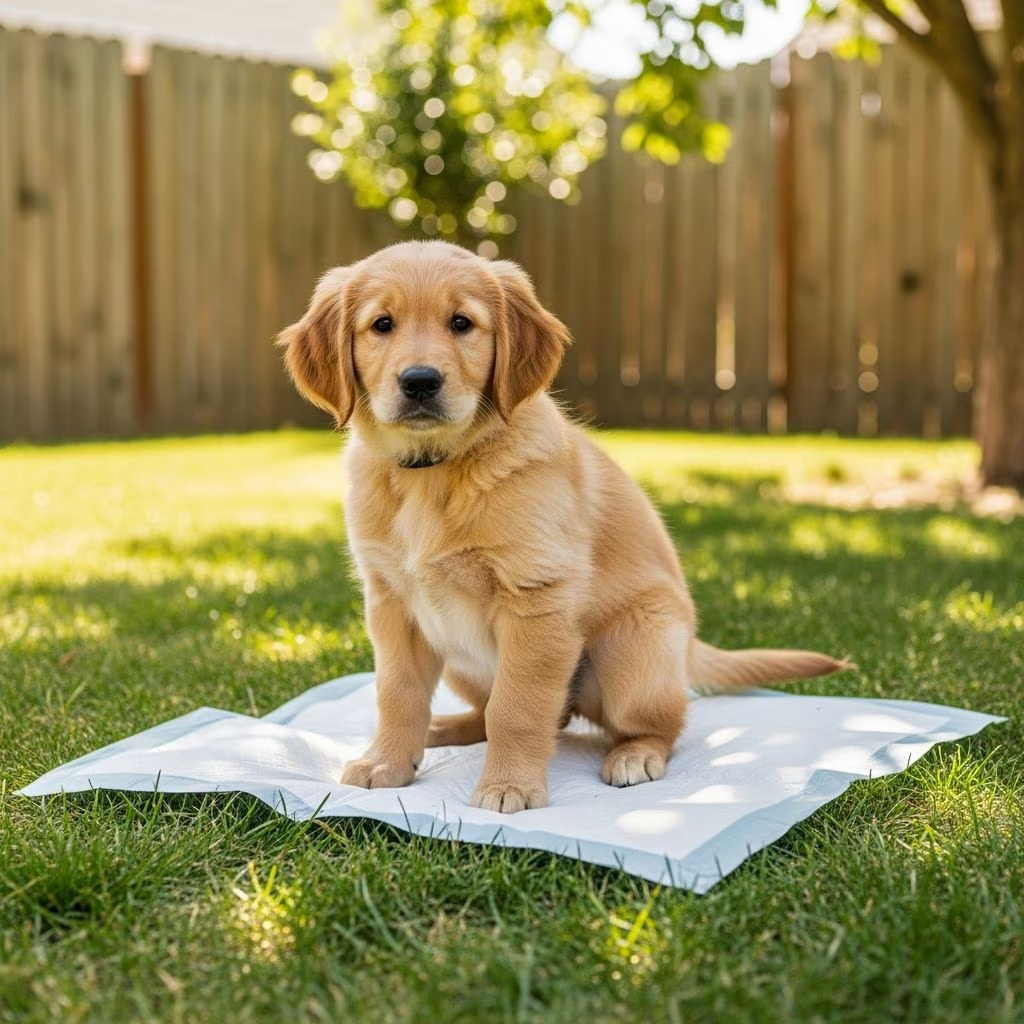
One of the most rewarding aspects of dog ownership involves establishing reliable elimination habits. When your dog consistently uses a specific location for bathroom needs, household management becomes significantly easier, and your living space remains cleaner and more hygienic. This comprehensive guide explores the systematic approach to teaching your dog to eliminate in one designated spot, drawing on behavioral principles and practical strategies that work across different dog ages and temperaments.
Understanding the Foundation of Successful Elimination Training
Before implementing any training strategy, recognizing that dogs operate through natural instincts and learned behaviors is essential. Dogs possess an inherent tendency to eliminate away from their sleeping and eating areas, which forms the biological basis for housetraining success. Additionally, familiar scents powerfully trigger elimination responses, meaning that repeated use of a specific location naturally reinforces the behavior. Understanding these biological realities allows you to work with your dog’s natural inclinations rather than against them.
Every dog presents unique patterns regarding bladder and bowel control capacity. Younger dogs, particularly puppies, require more frequent elimination opportunities—often every one to two hours—while adult dogs typically manage longer intervals. Recognizing your individual dog’s specific needs, behavioral signals, and personal rhythm represents the first critical step toward successful training at any designated location.
Selecting and Preparing Your Designated Elimination Area
The location you choose for your dog’s bathroom needs significantly influences training success. This area should be:
- Easily accessible to your dog throughout the day
- Away from primary living and sleeping spaces
- Simple to maintain and clean thoroughly
- Consistent in location across all training phases
- Either an outdoor space or an indoor pad area, depending on your living situation
Once you’ve identified your designated spot, prepare it properly by introducing your dog to the area during calm, low-pressure moments. Allow your dog to investigate the space naturally, sniff the surroundings, and become comfortable with the location. This familiarization process reduces anxiety and helps your dog understand that this particular area serves a specific purpose in your household routine.
Establishing Predictable Timing and Routine Structure
Consistency in elimination schedules dramatically accelerates training progress. Rather than leaving elimination timing to chance, structure regular bathroom breaks around predictable daily activities. The most effective times to take your dog to the designated spot include:
- First thing in the morning before any other activities
- Immediately after meals or drinking water
- Following play sessions or exercise periods
- After naps or rest periods
- Before bedtime at night
- Whenever you notice pre-elimination behavioral signals
If you work outside the home, consider arranging for a dog walker or trusted friend to maintain these intervals during your absence. Maintaining the schedule consistency matters more than the specific times selected, as your dog’s body will adapt to the predictable rhythm and naturally prepare for elimination at those moments.
Recognizing Pre-Elimination Behavioral Signals
Dogs display observable behaviors moments before elimination. Learning to recognize these signals enables you to proactively guide your dog to the designated area before accidents occur elsewhere in your home. Common pre-elimination indicators include:
- Sniffing the ground intensely or in circular patterns
- Pacing or restlessness throughout the space
- Sudden interruption of play or activity
- Whining, scratching at doors, or other attention-seeking behaviors
- Circling repeatedly in one location
Developing keen observation skills allows you to catch these signals and immediately escort your dog to the appropriate elimination area. This proactive approach prevents accidents while creating numerous successful experiences at the designated spot.
Implementing Effective Positive Reinforcement Strategies
The timing and quality of rewards fundamentally determines training success. When your dog eliminates in the designated area, provide immediate positive reinforcement before your dog has time to move away from the spot. This instantaneous connection helps your dog understand precisely which behavior earned the reward.
Select high-value rewards that your dog finds genuinely exciting—these might include small pieces of chicken, cheese, hot dog, or other preferred treats. Reserve these special rewards exclusively for successful elimination at the designated spot, creating a strong association between that location and something intensely positive. Be generous with rewards during the initial training phases, as this establishes powerful motivation.
Beyond food rewards, enthusiastic verbal praise provides additional reinforcement. Use an excited, celebratory tone while your dog is still at the elimination spot, making it clear that this location and behavior deserve celebration. Some dogs respond equally well to play sessions or brief outdoor exploration after successfully eliminating at the designated area.
Using Verbal Cues to Establish Behavioral Patterns
Pairing a specific verbal command with the elimination behavior creates a conditioned response that eventually allows you to prompt elimination on demand. Select a clear, distinctive word or phrase such as “go potty” or “do your business,” then consistently use this command as your dog begins to squat or assume the elimination position. Repeat this pairing across numerous successful eliminations until the word itself triggers the behavioral response.
Some trainers recommend using separate verbal cues for urination versus defecation, allowing for more precise control in different situations. For example, you might use “go pee” for urination and “go poop” for defecation. Once this conditioned response develops, the verbal cue alone can prompt elimination even in new environments or situations where your dog might otherwise hesitate.
Managing and Learning from Elimination Accidents
Accidents inevitably occur during the training process and represent learning opportunities rather than failures. How you respond to accidents significantly influences your dog’s training progress and emotional response to the training process itself.
If you witness your dog beginning to eliminate in an inappropriate location, interrupt the behavior calmly without expressing anger or frustration, then immediately guide your dog to the designated elimination area. Avoid harsh corrections, as these generate fear and confusion rather than understanding. Once your dog completes elimination at the correct location, provide immediate positive reinforcement.
When you discover accidents after the fact, clean the area thoroughly using enzymatic cleaners specifically formulated to eliminate urine and feces odors. Standard cleaners leave scent traces that attract your dog back to that location for future elimination. Complete odor removal prevents your dog from being drawn to the same spot repeatedly.
Adapting Training Approaches for Different Living Situations
Urban apartment dwellers, owners of tiny toy breeds, and those with physical limitations may need to adapt the training approach to their specific circumstances. Indoor potty pads or actual dog potty boxes offer viable alternatives to outdoor-only elimination areas, particularly in harsh climates or situations where frequent outdoor access proves impractical.
If using indoor pads, apply identical training principles: establish a consistent location, use positive reinforcement, maintain a predictable schedule, and recognize behavioral signals. Many dogs successfully learn to use designated indoor areas with the same reliability as outdoor spots.
Restricting Space to Reinforce Learning
During the training phase, limiting your dog’s unsupervised access to your home encourages reliance on the designated elimination area. When your dog cannot eliminate elsewhere in your home, success automatically occurs in the appropriate location. Crate training, baby gates restricting room access, or tethering your dog to your belt loop during supervision creates this controlled environment.
Crates provide additional benefits beyond space restriction. Dogs naturally resist eliminating in their sleeping quarters, so crate time encourages bladder and bowel control while you work on establishing the designated spot habit. After removing your dog from the crate, immediately take your dog to the elimination area, increasing the likelihood of successful bathroom use at the correct location.
Troubleshooting Persistent Challenges
Some dogs require extended training periods or modified approaches to achieve consistent elimination in designated areas. If progress stalls, evaluate whether your routine provides sufficient elimination opportunities, whether your rewards truly motivate your dog, and whether you’re recognizing behavioral signals accurately.
Maintaining a journal documenting all elimination successes, accidents, and the times and circumstances surrounding each event often reveals patterns. Perhaps your dog consistently has accidents at specific times or under particular conditions. These patterns guide more targeted interventions and help you identify whether medical factors, anxiety, or behavioral issues require professional evaluation.
Frequently Asked Questions
How long does training typically require?
Timeline varies considerably based on your dog’s age, prior experience, and consistency of your training approach. Puppies may require several weeks to months, while adult dogs often respond more quickly. Consistency matters more than speed—maintaining structured routines produces results even if progress feels gradual.
Can adult dogs learn new elimination habits?
Absolutely. Dogs possess significant capacity for behavioral change throughout their lives. Adult dogs often housetrain more quickly than puppies because they possess greater bladder control. Apply identical principles regardless of your dog’s age.
What if my dog eliminates multiple times at different locations?
Dogs naturally prefer different locations for urination versus defecation. Your training plan might accommodate multiple designated spots, or you might work toward consolidating both functions in a single area through consistent positive reinforcement.
Should I punish my dog for accidents?
Punishment proves ineffective and counterproductive for elimination training. Dogs don’t understand punishment delivered after the behavior concludes, and punishment generates fear, anxiety, and confusion. Focus exclusively on positive reinforcement for successful eliminations at the designated area.
References
- How to Potty Train a Puppy — American Kennel Club. Accessed January 30, 2026. https://www.akc.org/expert-advice/training/how-to-potty-train-a-puppy/
- Potty Training — Nebraska Humane Society. Accessed January 30, 2026. https://nehumanesociety.org/services/pet-tips-behavior-help-and-resources/potty-training/
- Housetraining an Adult Dog — Dog Spring Training. Accessed January 30, 2026. https://www.dogspringtraining.com/tips/housetraining-adult-dog/



