

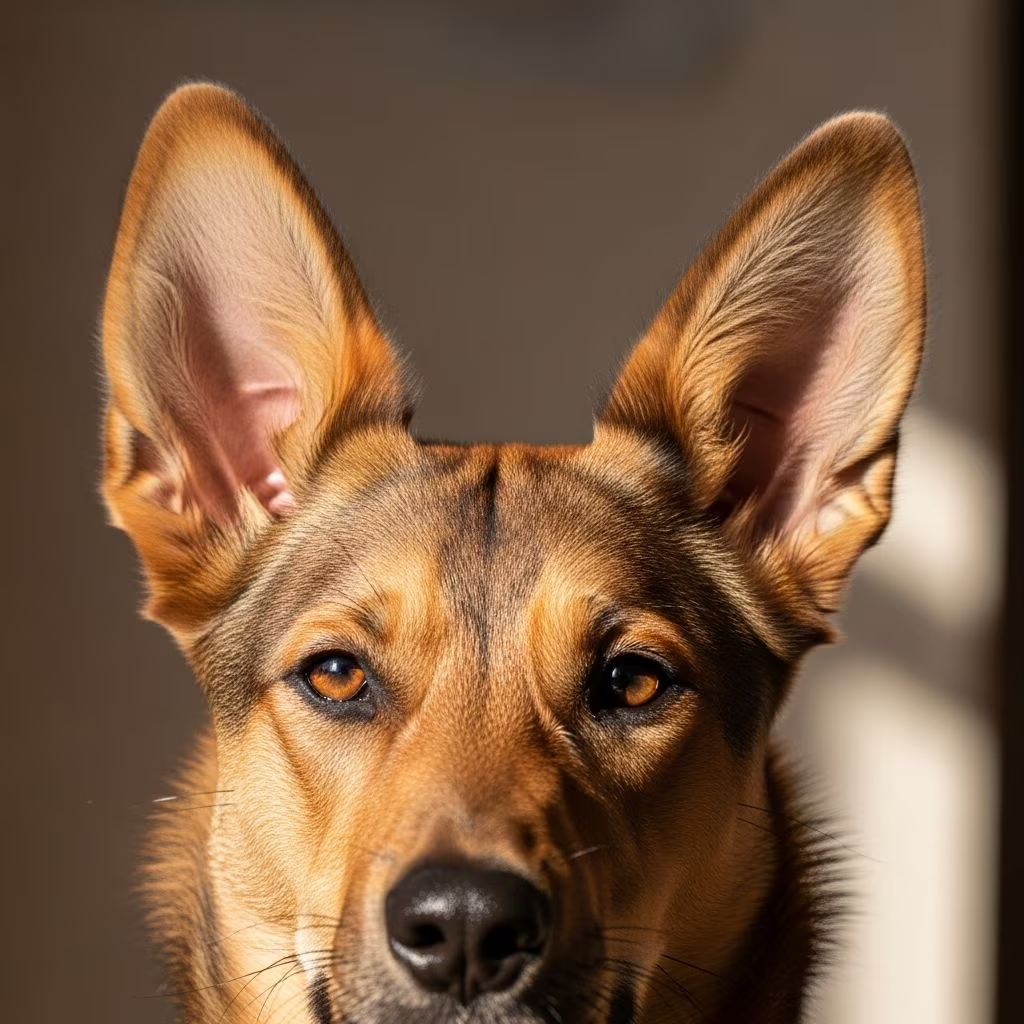
Dogs rarely speak with their voices alone. Instead, they use a combination of ear positions, tail movement, facial expressions, and posture to communicate how they feel and what they plan to do. Learning to read your dog’s ears is one of the simplest ways to understand their emotions and keep them safe, comfortable, and confident.
This guide breaks down the most common dog ear meanings, explains how to interpret them with your dog’s overall body language, and highlights when ear changes may point to a health concern that needs a veterinarian’s attention.
Why Dog Ear Positions Matter
Your dog’s ears are more than adorable accessories. They are sensitive, movable structures powered by multiple small muscles that can rotate, lift, flatten, and tilt the ears in many directions. These movements help dogs both locate sounds and send clear social signals to other dogs and humans.
Because ears respond quickly to changes in the environment, they are often one of the first body parts to shift when a dog becomes curious, anxious, relaxed, or defensive. When you understand what different ear positions usually indicate, you can:
- Spot early signs of stress or fear before they escalate.
- Recognize when your dog is relaxed and content.
- See when your dog is highly alert or potentially reactive.
- Notice ear postures that might be related to pain or infection rather than mood.
Understanding Ear Types: Upright vs. Floppy
Before interpreting ear positions, remember that dogs come with many ear shapes: pricked (upright), semi-pricked, floppy, cropped, or long and hanging. These structures are all normal variants and can slightly change how easily you see each position.
In general:
- Upright-eared breeds (e.g., German Shepherds, Huskies) show clearer forward, perked, or pinned-back positions.
- Floppy-eared breeds (e.g., Beagles, Cocker Spaniels) still move their ears, but the changes are subtler—look closely at the base of the ears and where they sit on the skull.
Puppies of breeds with naturally upright ears may have floppy ears at first; ears typically stand as the cartilage strengthens with growth and nutrition.
Common Dog Ear Positions and Their Meanings
The table below summarizes frequent ear positions and what they often signal. Remember that context—tail, eyes, mouth, and posture—always matters.
| Ear Position | Typical Meaning | Common Body Language Clues |
|---|---|---|
| Relaxed / Neutral | Calm, content, unconcerned | Loose body, soft eyes, gently wagging or neutral tail |
| Perked up / Forward | Alert, curious, highly focused | Weight forward, closed mouth or slight mouth tension, focused gaze |
| Flattened / Pinned back | Uncomfortable, anxious, fearful, or very excited | Low posture, tucked tail or very fast wag, lip licking, yawning |
| Extremely pinned back | High anxiety, fear, or defensive-aggressive state | Stiff body, possible growl or snarl, whites of eyes visible |
| One ear up, one ear down | Unsure, processing new information | Head tilt, searching for sound, mixed or shifting posture |
| Ears switching or rotating | Uncertain or tracking multiple sounds | Scanning environment, turning head, still or tense body |
Relaxed Ears: A Calm and Content Dog
When a dog is comfortable, their ears usually rest in a neutral position: not pushed forward and not pinned back, just naturally carried on the head.
You will often see:
- A loose, balanced posture with no stiffness.
- Soft, blinking eyes and a slightly open mouth.
- A tail in a neutral position, sometimes gently wagging.
This is your dog’s baseline “all is fine” look. Learning what your own dog’s truly relaxed ears look like makes it easier to notice subtle shifts toward tension, stress, or high arousal.
Perked-Up Ears: Alert, Curious, or Excited
When something catches your dog’s attention, their ears often move forward and upward, almost like a satellite dish locking onto a signal. This position can indicate:
- Curiosity about a new sound, person, or object.
- Excitement about play, food, or a favorite person approaching.
- Hunting or prey focus, especially if the body becomes still and directed toward a moving target.
Look at the rest of the body to refine the meaning:
- If the body is loose and wiggly with a wagging tail, the dog is probably happy and playful.
- If the body is tense, leaning forward, and motionless, the dog might be on high alert or feeling challenged and ready to react.
Ears Pulled Back: Anxious, Fearful, or Submissive
When a dog pulls their ears back toward the head, this is often an early sign of worry, fear, or social submission. The more tightly the ears are pinned, the more uncomfortable the dog is likely feeling.
Common accompanying signals include:
- A tucked tail or low tail carriage.
- A lowered body, crouching, or leaning away.
- Lip licking, yawning, panting without heat or exertion.
- Avoidance of eye contact or turning the head to the side.
Some dogs also pull their ears back in affectionate or appeasing contexts, such as when greeting a familiar person with rapid tail wags and wiggles. In this case, the overall picture is soft and friendly, not stiff or frozen.
Extremely Flattened Ears: Fear or Defensive Aggression
Ears that are strongly flattened against the head, combined with a stiff body and intense facial expressions, can indicate a dog is feeling very threatened. Studies of canine body language describe this posture at the more serious end of the fear–aggression spectrum, especially when paired with snarling or hard staring.
You may also see:
- Wrinkled forehead and tight facial muscles.
- Lips pulled back to expose teeth, even slightly.
- Weight shifted back, prepared either to flee or to lunge.
- Hackles (hair along the back) raised.
At this stage, it is important to increase distance, avoid looming over the dog, and not punish growls or warning signals. When dogs feel their warnings are ignored or punished, they may skip directly to a bite in the future.
One Ear Up, One Ear Down: Unsure or Processing
The classic “one ear up, one ear down” expression often appears when a dog is trying to figure something out. They may be hearing a new noise, smelling something unfamiliar, or deciding how to respond to a situation.
This posture commonly means:
- Curious but cautious about what is happening.
- Mixed emotions, such as wanting to approach but also feeling unsure.
- Actively processing information from multiple senses.
If one ear suddenly droops in a dog whose ears are normally both upright, and there is no clear emotional cause, keep health in mind as well—pain, infection, or trauma can change how a dog holds an ear.
Switching or Rotating Ears: Uncertainty or Intense Focus
Dogs can move their ears independently, so you may see them flicking, swiveling, or alternating ear positions when they are processing several sounds or signals.
This may indicate:
- Uncertainty about how to react to what they are hearing or seeing.
- Hyper-awareness of the environment, scanning for important information.
- Possible ear irritation if flicking is repetitive and paired with scratching or head shaking.
When you notice frequent ear switching paired with tense posture, help your dog by creating distance from the trigger, offering guidance, or giving them a quiet space to decompress.
Dog Ears and Overall Body Language
Interpreting ear positions in isolation can be misleading. Professional behavior guides emphasize looking at the whole dog—ears, tail, mouth, eyes, and posture—to get an accurate read on mood and intent.
Consider these combinations:
- Relaxed ears + loose body + soft eyes = likely calm and content.
- Forward ears + stiff body + hard stare = high arousal; may be guarding or ready to react.
- Pinned ears + low posture + tucked tail = fear, anxiety, or social submission.
- Ears back + wiggly body + sweeping tail wag = friendly and appeasing, often during greetings.
By observing patterns over time, you will learn what each ear position means for your individual dog, which can vary by personality and past experiences.
When Ear Position Might Signal a Health Problem
Not every ear posture is about emotion. Sometimes, a change in how your dog holds their ears signals pain, infection, or injury. Veterinary resources note that ear infections are among the most common health issues in dogs and can cause head tilting, ear rubbing, sensitivity, and unusual ear positions.
Contact your veterinarian if you notice:
- Sudden drooping of one ear in a normally upright-eared dog.
- Persistent head tilting or leaning to one side.
- Frequent scratching, rubbing, or shaking of the head.
- Redness, swelling, strong odor, or discharge in the ear canal.
- Signs of pain when you gently touch the ear.
Conditions such as otitis externa (ear canal infection), ear hematomas (blood-filled swellings in the ear flap), or foreign bodies (like grass awns) can all change how your dog positions and uses their ears. Early treatment can prevent complications and chronic discomfort.
How to Respond to Your Dog’s Ear Signals
Once you can read your dog’s ear language, you can adjust your own behavior to support them:
- Relaxed ears: Maintain what you are doing; your dog is comfortable.
- Perked ears and alert body: Gently guide their focus if they fixate on something that could trigger over-arousal, such as another dog or wildlife.
- Pinned-back ears and low posture: Give them space, avoid forcing interactions, and help them move away from what is worrying them.
- Extremely flattened ears with stiff body: Increase distance immediately and avoid reaching toward the dog; seek help from a qualified trainer or behavior professional if this is frequent.
- Repetitive ear flicking, rubbing, or head shaking: Schedule a vet visit to rule out medical causes.
Frequently Asked Questions (FAQs)
Q: What does it mean when my dog’s ears are back but they are wagging their tail?
A: Ears pulled back with a wagging tail can mean several things. If the dog’s body is loose and they are approaching you with soft eyes and a wiggly posture, it often signals friendly, appeasing excitement. If the body is stiff, low, or the tail is tucked or wagging very fast and low, it is more likely a sign of anxiety or fear, so give them space and observe the context.
Q: My dog suddenly holds one ear lower than the other. Is it behavior or health?
A: One ear up and one down can be a normal “processing” posture when your dog is listening to something new or deciding how to react. However, if the change is sudden and persistent, or if it appears with scratching, shaking, odor, or redness, a medical problem such as an ear infection or hematoma may be involved and a vet check is recommended.
Q: Do floppy-eared dogs still communicate with their ears?
A: Yes. Floppy-eared dogs still move the base and set of their ears to show emotions, but the changes can be more subtle. Look at where the ears attach to the head, whether that base lifts forward, pulls back, or sits neutrally, and combine that information with tail, eyes, and body posture to interpret their mood.
Q: Can I rely on ear position alone to judge if a dog is friendly?
A: No. Ear position is only one part of canine body language. To safely judge friendliness, consider the entire picture: tail carriage, body tension, facial expression, and context. Some fearful or conflicted dogs may show a wagging tail with pinned ears and still be uncomfortable. When in doubt, give the dog space and let them choose whether to approach.
Q: How can I get better at reading my dog’s ear language?
A: Spend time observing your dog in many situations—resting at home, greeting people, on walks, and at the vet. Notice how their ears look when they are clearly happy, nervous, or excited, and pair that with other body signs. Watching educational videos from certified trainers and behavior professionals can also sharpen your eye for subtle cues.
References
- What Do Your Dog’s Ear Positions Mean? — Rover.com (summarizing expert behavior guidance). 2023-05-10. https://www.rover.com/blog/dog-ear-position-chart/
- Now Ear This! Read Your Dog’s Mood by His Ear Posturing — Zymox. 2021-08-18. https://zymox.com/now-ear-this-read-your-dogs-mood-by-his-ear-posturing/
- What Your Dog’s Ears Are Telling You: Understanding Canine Ear Language — Bow Wow Labs. 2022-11-03. https://www.bowwowlabs.com/blogs/news/what-your-dog-s-ears-are-telling-you-understanding-canine-ear-language
- What Do Different Dog Ear Positions Mean? — ADAPTIL Expert. 2022-04-21. https://www.adaptil.co.uk/blogs/news/what-do-different-dog-ear-positions-mean
- Dog Ear Positions Chart and Meaning — Rover.com. 2023-05-10. https://www.rover.com/blog/dog-ear-position-chart/
- 29 Facts About Dog Ears That Might Surprise You — CareCredit. 2023-03-15. https://www.carecredit.com/well-u/pet-care/dog-ears/
- Canine Body Language: What Do Ears Tell Us? — American Veterinary Medical Association (via educational video content). 2020-09-01. https://www.youtube.com/watch?v=08tWJRp1RXg



