Dog Ear Hematoma: Symptoms, Causes, and Treatment
Complete guide to understanding, identifying, and treating ear hematomas in dogs.
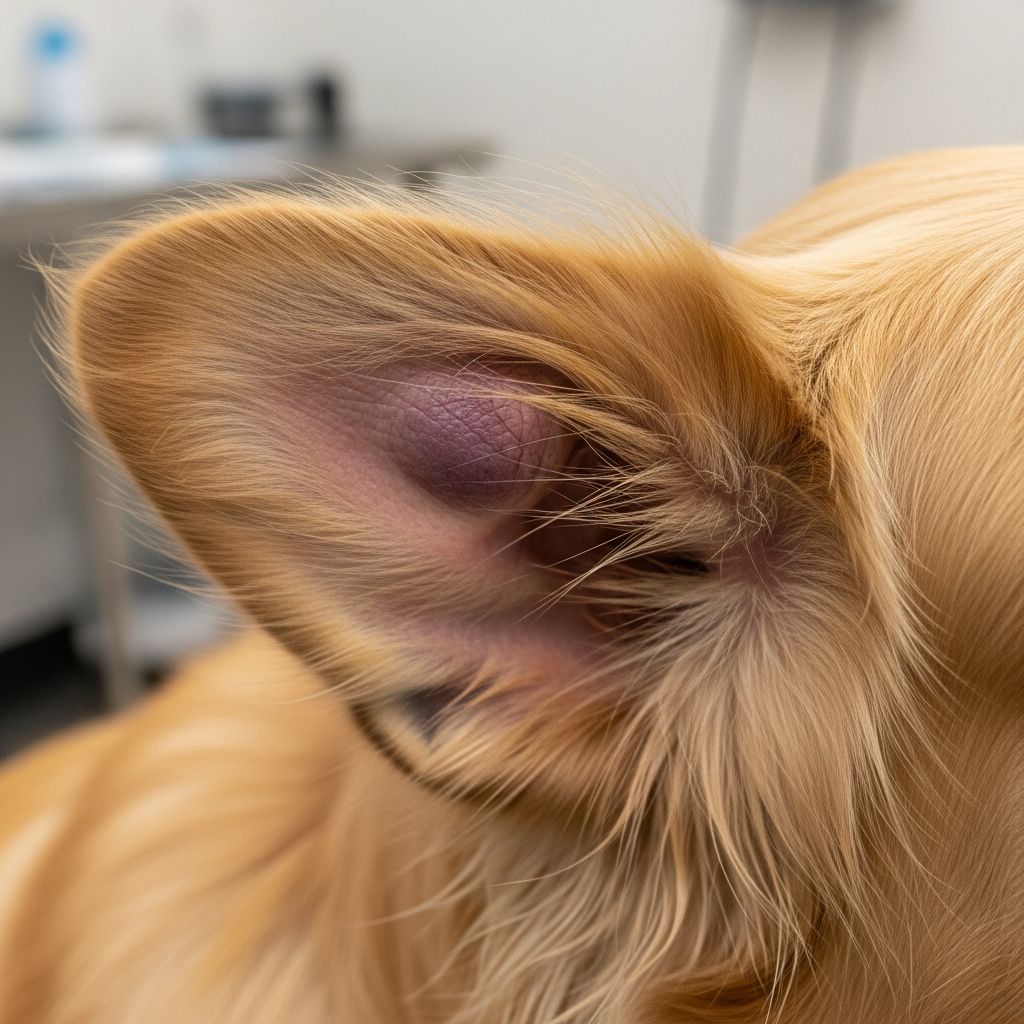
An ear hematoma, clinically known as an aural hematoma, is a condition that affects many dogs and can cause significant discomfort if left untreated. This condition occurs when blood accumulates between the skin and cartilage of the ear flap, creating a visible swelling that appears soft or spongy to the touch. Understanding the symptoms, causes, and available treatment options is essential for any dog owner who wants to protect their pet’s health and prevent permanent ear damage.
What is a Dog Ear Hematoma?
A dog ear hematoma is a collection of blood that pools between the pinna (ear flap) and its underlying cartilage. When small blood vessels rupture within the ear, blood fills the space with nowhere to go, causing the ear flap to swell significantly. The swelling may involve the entire pinna or just one specific area of the ear. When a hematoma is present, the pinna will appear very thick and spongy, distinguishing it from normal ear tissue.
The severity and appearance of an ear hematoma can vary considerably. Some hematomas are small, localized swellings, while others can affect the entire ear flap. If left untreated, the accumulated blood can harden and cause permanent deformity, commonly referred to as “cauliflower ear.” This condition is particularly painful for dogs and requires prompt veterinary attention to provide relief and prevent long-term complications.
Symptoms and Signs of Ear Hematoma in Dogs
Identifying the early signs of an ear hematoma is crucial for timely intervention. Dog owners should watch for the following symptoms:
Primary Symptoms:
- Visible swelling of the ear flap, often appearing as a soft bulge
- Sensitivity or pain when the ear is touched
- Visible redness or bruising on the ear
- A thick, spongy appearance of the pinna
- Difficulty with head positioning or holding the ear at an unusual angle
Since ear hematomas are often painful, you may notice your dog reluctant to have their ear examined or touched. Additionally, if the underlying cause is an ear infection or allergy, you might observe excessive head shaking or scratching behaviors that preceded the hematoma development.
Common Causes of Ear Hematoma in Dogs
Understanding what causes ear hematomas is essential for prevention and treatment. The underlying factors that lead to this condition are varied and often interconnected.
Ear Infections and Allergies
Ear infections are among the most common causes of ear hematomas in dogs. Both bacterial and yeast infections cause intense inflammation, itching, and head shaking, which directly increases the risk of hematoma development. When dogs shake their heads vigorously in response to infection-related discomfort, the blood vessels in their ears can rupture more easily.
Allergies present another significant risk factor. Allergic reactions to food, pollen, or environmental irritants cause ear inflammation and chronic itching, leading to excessive scratching. Dogs with allergies often develop a cycle of ear irritation and scratching that can eventually result in hematomas.
Physical Trauma and Injury
Direct trauma to the ear can immediately cause blood vessel rupture and hematoma formation. Dog fights, rough play, accidents, or bite wounds can directly damage the ear tissue and its blood vessels. Additionally, the American College of Veterinary Surgeons explains that small blood vessels rupture due to head shaking, scratching, or trauma.
Parasites and Foreign Objects
Parasites such as ear mites, fleas, or ticks cause persistent ear irritation, prompting dogs to scratch aggressively, which can result in hematomas. Grass seeds, dirt, or other foreign objects lodged in the ear canal can similarly cause irritation that leads to excessive scratching and head shaking. In some cases, a foreign body may have initiated the shaking but was later dislodged, yet the damage has already been done.
Underlying Medical Conditions
Certain medical conditions increase a dog’s susceptibility to spontaneous hematomas. Dogs with coagulation disorders or bleeding problems may develop aural hematomas with minimal or no obvious trauma. Additionally, immune-related diseases can make dogs prone to hematoma formation.
Breed Predisposition
Specific dog breeds are more prone to developing hematomas. Dogs with floppy ears, such as Cocker Spaniels and Basset Hounds, face increased risk because their ear flaps slap against their heads when shaking, causing repeated trauma to the ears.
Why Prompt Treatment is Important
While ear hematomas can be slowly reabsorbed by a dog’s body over time, they are particularly painful and require treatment to provide relief from discomfort. The consequences of leaving an ear hematoma untreated are significant and often permanent.
Without appropriate treatment, an ear hematoma can lead to permanent ear deformity. Even if the hematoma is eventually absorbed, the inflammation it causes can result in significant scar tissue formation, causing a permanently distorted, cauliflower-shaped ear—damage that is often irreversible. Additionally, the swelling from an untreated hematoma can block access to the ear canal, preventing proper treatment of any underlying ear infections. Untreated hematomas are also known to reoccur, with the swelling potentially refilling at any time.
Treatment Options for Ear Hematomas
The treatment approach for an ear hematoma depends on several factors, including the hematoma’s size, severity, location, and the dog’s age and overall health. Your veterinarian will recommend the most appropriate treatment strategy for your specific situation.
Non-Surgical Treatment Options
Needle Aspiration: In simple cases, a veterinarian can drain an ear hematoma using a needle in a procedure called needle aspiration. This is a simple and relatively inexpensive treatment that involves inserting a thin needle into the hematoma to drain the fluid. A steroid may be injected into the ear to reduce inflammation, swelling, and itchiness, along with medicine to combat any infection. The process is typically repeated a week later. While aspiration provides immediate relief by reducing swelling, it is often a temporary solution, and fluid may reaccumulate, requiring additional treatments.
Steroid Injections: Veterinarians may inject steroids to prevent the hematoma from refilling after initial drainage. Oral steroids are also often recommended to reduce inflammation and discomfort. Depending on the hematoma’s size and location, some hematomas can be treated with oral steroids alone.
Cannulization: Cannulization involves inserting a tube into the hematoma to drain the blood. In larger breeds, placing a drain inside the ear flap may be an option if the ear is large enough to accommodate the drain and the dog is willing to tolerate it.
Often, the hematoma will need to be drained more than once, so pet owners should be prepared to return to their veterinarian for multiple visits when choosing non-surgical options.
Surgical Treatment
For larger or more persistent hematomas, surgical intervention is often necessary and tends to be more effective in avoiding repeat visits to the veterinarian. Surgery is the preferred treatment for moderate to severe hematomas and offers a higher success rate in preventing recurrence.
Surgical treatment typically involves:
- Making an incision in the ear flap
- Draining the blood and removing clots
- Suturing the skin to promote healing and maintain the natural shape of the ear
- Applying a bandage to support the earflap’s healing
In some cases, a small drain may be placed to allow any residual fluid to exit as the ear heals. After surgery, your veterinarian may recommend an Elizabethan collar (E-collar) or ear flap wrap to restrict access to the ear during the healing process. Surgery requires anesthesia but provides the most definitive treatment, significantly reducing recurrence risk compared to non-surgical methods.
Addressing Underlying Conditions
Since hematomas are often linked to an underlying ear problem, addressing the root cause is essential. Your dog may need antibiotic ear drops or anti-inflammatory medications to treat any existing infection or allergy. If an underlying cause is found, such as an infection, allergy, or foreign body, it will be treated once the hematoma is corrected.
Without treating the underlying condition, hematomas are likely to recur. By identifying and managing the root cause—whether it’s an ear infection, allergy, parasites, or foreign object—you can help prevent future hematoma development.
Benefits of Timely Treatment
Treating an ear hematoma promptly offers several important benefits:
- Pain Relief: Hematomas are uncomfortable and may cause your dog significant pain, especially when touched. Treatment provides immediate relief from this discomfort.
- Reduced Risk of Infection: If left untreated, an open or untreated hematoma can become infected, leading to more significant health concerns.
- Preventing Ear Deformity: Prolonged or untreated hematomas can lead to scar tissue formation, resulting in a permanently altered ear shape.
- Addressing Underlying Causes: Treating a hematoma can help identify any underlying conditions, such as allergies or infections, that may have caused the issue.
Frequently Asked Questions (FAQs)
Q: How quickly should I seek veterinary care if I suspect my dog has an ear hematoma?
A: You should seek veterinary care as soon as possible. Prompt treatment helps prevent permanent ear damage and provides pain relief for your dog. The longer a hematoma remains untreated, the higher the risk of complications.
Q: Can an ear hematoma heal on its own without treatment?
A: While some hematomas can be slowly reabsorbed by the body, this process is painful and often results in permanent scarring and cauliflower ear deformity. Professional treatment is strongly recommended to prevent these complications.
Q: What is the most effective treatment for an ear hematoma?
A: Surgery is generally the most effective treatment for moderate to severe hematomas, offering the highest success rate in preventing recurrence. However, the best treatment depends on factors like hematoma size, severity, and your dog’s overall health.
Q: Will my dog need multiple treatments?
A: With non-surgical treatments like needle aspiration, multiple visits may be necessary as fluid can reaccumulate. Surgical intervention typically requires only one procedure but involves anesthesia and a recovery period.
Q: How can I prevent my dog from developing an ear hematoma?
A: Prevent ear hematomas by promptly treating ear infections and allergies, regularly checking ears for parasites, removing foreign objects from the ear canal, and addressing any excessive scratching or head shaking behaviors.
Q: Are certain dog breeds more prone to ear hematomas?
A: Yes, dogs with floppy ears, such as Cocker Spaniels and Basset Hounds, are more prone to developing hematomas because their ear flaps slap against their heads during shaking, causing repeated trauma.
Q: What happens if I don’t treat an ear hematoma?
A: Untreated hematomas can lead to permanent ear deformity (cauliflower ear), chronic pain, infection, and recurrence of the condition. The swelling can also block access to the ear canal, preventing treatment of underlying infections.
References
- Understanding Ear Hematomas in Dogs: Expert Insights — Providence Veterinary. November 2024. https://providencevetva.com/understanding-ear-hematomas-in-dogs-expert-insights/
- Ear Hematoma in Dogs: Signs, Symptoms, and Treatments — American Kennel Club. 2024. https://www.akc.org/expert-advice/health/ear-hematoma-in-dogs/
- Understanding Ear Hematomas in Dogs: Your Go-To Guide — VetMedi RC. 2024. https://vetmedirc.com/understanding-ear-hematomas-in-dogs-your-go-to-guide/
- Hematoma of the Ear in Dogs — VCA Animal Hospitals. 2024. https://vcahospitals.com/know-your-pet/hematoma-of-the-ear-in-dogs
- Ear Hematoma in Dogs — Small Door Veterinary. November 2024. https://www.smalldoorvet.com/learning-center/medical/ear-hematoma-in-dogs
- Ear Hematoma in Dogs: Why Immediate Care Is Critical — Great Southern Veterinary Specialists. 2024. https://gsvs.org/blog/ear-hematoma-dogs-immediate-care/
- Dog Ear Hematoma Treatment — Lane Veterinary. 2024. https://lanevet.com/blog/dog-ear-hematoma-treatment/
- Aural Hematoma — American College of Veterinary Surgeons. 2024. https://www.acvs.org/small-animal/aural-hematoma/
Similar Articles








Read full bio of medha deb