

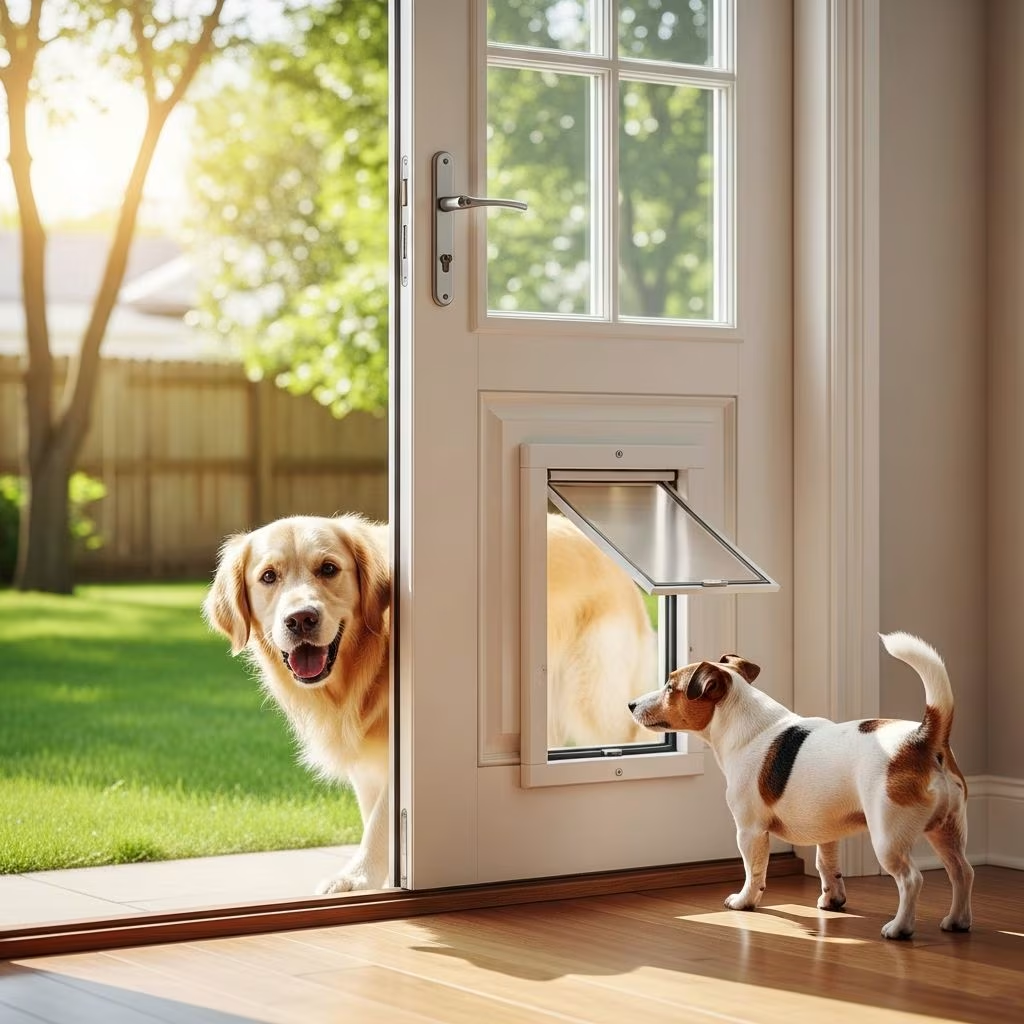
Installing a dog door provides pets with independent access to the outdoors, offering convenience for owners while promoting your dog’s natural behaviors. However, it comes with trade-offs like security concerns and maintenance needs that every pet parent should evaluate.
Why Consider a Dog Door for Your Home?
Dog doors, also known as pet flaps or pet portals, are specially designed openings fitted into doors, walls, or windows that allow dogs to move freely between indoor and outdoor spaces. These devices typically feature flexible flaps made from durable plastic or magnetic-secured panels that close behind the pet. Available in various sizes to accommodate small breeds up to large dogs, they cater to different household needs.
The concept dates back decades but has evolved with modern materials like insulated flaps for weather resistance and electronic versions using microchip recognition for added security. Before committing, understanding both the upsides and potential issues is crucial for making an informed choice.
Key Advantages of Installing a Dog Door
Dog doors transform daily routines by granting pets autonomy, which can significantly improve their quality of life and reduce owner workload.
- Boosted Independence and Exercise: Dogs can exit to relieve themselves, play, or explore without waiting for you, encouraging more physical activity and reducing indoor accidents.
- Convenience for Busy Schedules: No more interrupting work or sleep to let your dog out, ideal for remote workers or families with varying routines.
- Improved Bladder Control: Puppies and senior dogs benefit from frequent access, minimizing house soiling and supporting potty training.
- Energy Savings in Mild Climates: Pets regulate their own comfort by moving between spaces, potentially lowering heating or cooling costs.
- Mental Stimulation: Access to yards provides environmental enrichment, curbing boredom-related behaviors like chewing or barking.
These benefits shine in homes with secure, fenced yards where dogs can safely enjoy outdoor time.
Potential Disadvantages and How to Mitigate Them
While appealing, dog doors introduce challenges that require proactive management.
- Security Vulnerabilities: Unlocked flaps can allow intruders or stray animals entry; opt for keyed or microchip-activated models to restrict access.
- Weather Infiltration: Drafts, rain, or insects may enter; choose double-flap, insulated designs and seal edges with caulk.
- Increased Utility Bills: Poorly insulated doors exacerbate heat loss; energy-efficient flaps with weatherstripping help counteract this.
- Neighbor and Wildlife Issues: Barking dogs or attracted critters can disturb peace; train commands and use deterrents like motion-activated sprinklers.
- Training Demands: Not all dogs adapt quickly; patience and positive reinforcement are essential for success.
Weigh these against your lifestyle—renters may face installation restrictions, while homeowners with young children need child-proof options.
Choosing the Right Dog Door Type
Selection depends on your door material, pet size, and security priorities. Here’s a comparison:
| Type | Best For | Pros | Cons | Price Range |
|---|---|---|---|---|
| Standard Flap (Plastic/Rubber) | Wooden doors, mild weather | Affordable, easy install | Less secure, drafts | $20–$100 |
| Insulated Double Flap | Cold climates, energy savings | Weatherproof, quiet | Bulkier, higher cost | $80–$250 |
| Electronic (4-way Locking) | Multi-pet homes, security | Custom access, collar-based | Batteries needed, pricier | $150–$400 |
| Microchip Reader | Selective entry | Pet-specific, no collar | Expensive, programming | $200–$500 |
| Wall-Mount | Thicker barriers | Tunnel options, sturdy | Complex install | $100–$300 |
Measure your dog’s shoulder height and width, adding 1–2 inches for comfort. For rise (step-over height), measure from floor to elbow and subtract from shoulder height.
Step-by-Step Installation Guide for Beginners
Most installations are DIY-friendly with basic tools: tape measure, pencil, drill, jigsaw, screwdriver, level, safety gear, and caulk. Allow 1–2 hours.
- Measure Precisely: Stand your dog naturally; note withers height (shoulders) +2 inches for flap height, belly height for bottom placement. Ensure 3–4 inches from door bottom.
- Select Location: Center on door, avoiding hinges/locks. For panels, center in solid wood.
- Tape Template: Align provided template level, mark outline and pilot holes.
- Drill Corners: Use 1/2-inch bit for jigsaw entry at inner corners; add screw holes if needed (3/8-inch bit).
- Cut Opening: Connect marks with tape/pencil, jigsaw along line. Support door on sawhorses.
- Test Fit Frames: Insert exterior frame from outside, interior from inside. Level and caulk gaps.
- Secure: Screw tightly but not over; trim screws for thin doors. Rehang door.
- Seal: Apply caulk around perimeter, especially panels.
For glass/sliding doors, consult professionals due to hazards. Video tutorials confirm these steps yield professional results.
Safety Considerations During and After Installation
Prioritize protection: wear gloves/eye gear, secure work area, and supervise pets/children. Post-install, inspect for sharp edges, ensure flap closes fully, and test stability. Avoid pool-adjacent installs without barriers. Electronic models prevent unwanted access, vital in urban areas.
Training Your Dog to Use the Door
Success rates improve with gradual exposure.
- Start indoors: Prop flap open, lure with treats through it.
- Progress to pushing flap: Hold partially closed, reward passage.
- Unsupervised trials: After 1–2 weeks, allow solo use in safe yard.
- Address hesitancy: Use a stuffed toy or smaller pet to demonstrate.
- Praise lavishly: Positive association speeds learning.
Large breeds may need larger flaps; puppies adapt faster.
Maintenance for Longevity
Monthly checks: Clean flaps, lubricate hinges, replace seals. Insulated models last 5–10 years with care.
Frequently Asked Questions (FAQs)
Can any dog use a dog door?
Most can, but timid or elderly dogs may need extra training. Size appropriately.
Do dog doors damage property value?
Minimal if professionally sealed; removable inserts preserve aesthetics.
Are they safe from burglars?
Electronic versions with locks deter entry; pair with alarms.
How to install in a wall?
Similar steps but cut through studs; use tunnel extensions.
What if my cat uses it too?
Selective locks allow dogs only; measure for multi-species.
Final Thoughts on Making the Switch
Dog doors offer freedom and convenience outweighing drawbacks for many, especially with proper selection and setup. Assess your yard security and commitment to training before installing.
References
- DIY Pet Door Installation: A Step-by-Step Guide for Beginners — PetDoors.com. 2023. https://www.petdoors.com/pages/install-pet-door
- How To Install A Pet Door — Pinnacle Pet Doors. 2022. https://www.pinnacle.net.au/how-to-install-a-pet-door/
- Door-Mount Installation — Ranger Pet Doors. 2024. https://rangerpetdoors.com/installation-guides/door-mount-installation/
- INSTALLATION INSTRUCTIONS FOR ALL PET DOORS — Catwalk Pet Doors. 2020-04. https://catwalkpetdoors.co.uk/wp-content/uploads/2020/04/pet-tek-installation-instructions-for-all-pet-doors.pdf
- How Install a Dog Door (Video Transcript) — Family Handyman (YouTube). 2018. https://www.youtube.com/watch?v=of6q2in44BU



