

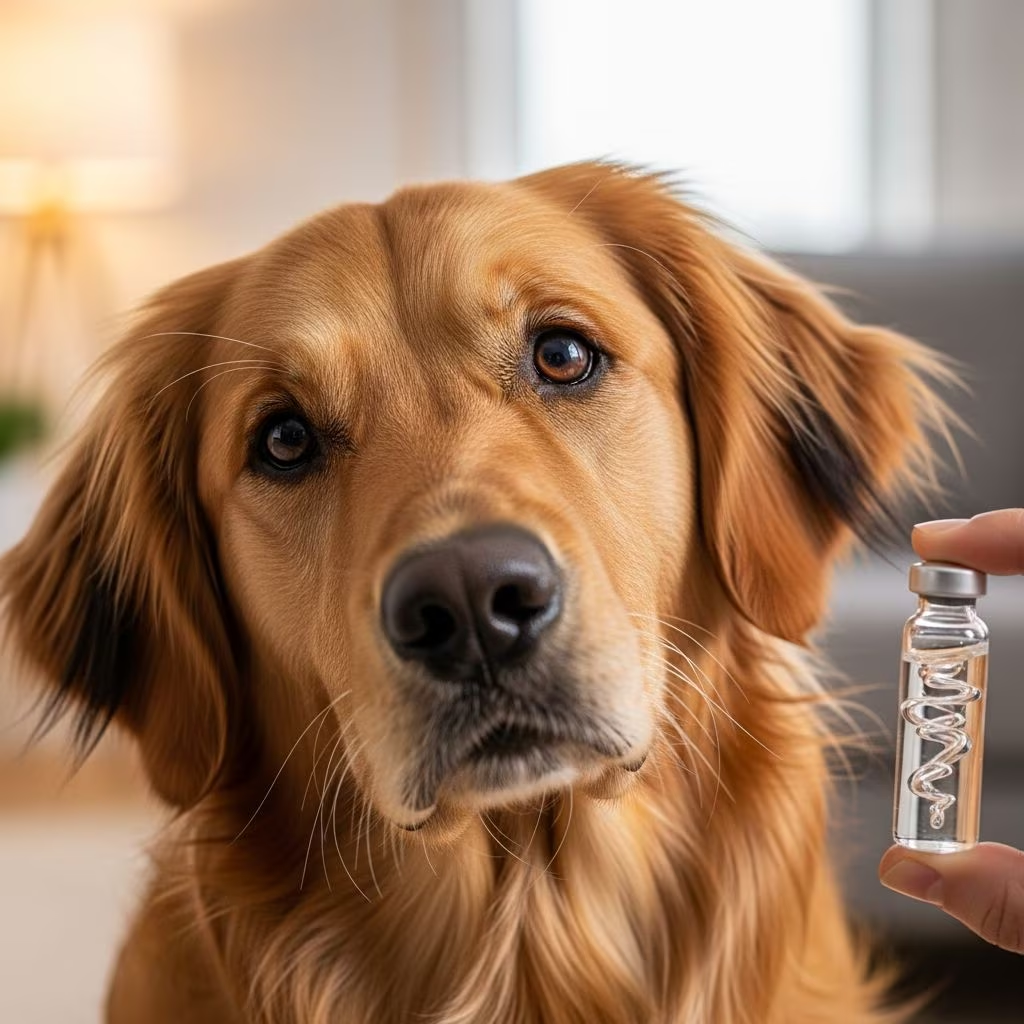
Commercial dog DNA tests promise to reveal a pet’s breed mix, potential health issues, and behavioral traits through a simple cheek swab. However, their results often vary widely between companies, raising questions about true reliability. This comprehensive guide examines the technology, scientific validations, common pitfalls, and practical advice for dog owners considering these tests.
The Rise of At-Home Canine Genetic Testing
Over the past decade, direct-to-consumer dog DNA kits have surged in popularity, allowing owners to uncover their dog’s genetic makeup from home. These tests analyze saliva samples to estimate breed ancestry, screen for hereditary diseases, and predict physical or behavioral characteristics. Companies market them as easy tools for better pet care, but accuracy depends on several factors including database size, testing methods, and algorithmic sophistication.
The process typically involves swabbing the inside of a dog’s cheek, mailing the sample to a lab, and receiving results in 2-6 weeks. Labs extract DNA and use microarrays—chips with thousands of probes—to scan specific genetic markers known as single nucleotide polymorphisms (SNPs). These markers help identify breed-specific patterns and disease-linked mutations.
Core Technologies Powering Dog DNA Analysis
Most reputable tests employ SNP microarray technology, which tests hundreds of thousands of genetic locations simultaneously. This method offers high precision for known mutations, often exceeding 99% accuracy when multiple probes confirm a single health risk. For instance, labs customize arrays based on platforms like Illumina’s CanineHD, tailoring probes to detect over 270 health conditions, 55+ traits, and diversity metrics.
Unlike whole-genome sequencing, which reads every DNA base pair but is costlier, microarrays focus on pre-selected markers. This efficiency makes tests affordable ($100-200) but limits detection to cataloged variants. Breed identification relies on comparing a dog’s markers against reference databases of known breeds, where larger, more diverse databases yield better matches.
Breed Detection: Hits and Misses
Breed ancestry is the headline feature of most kits, yet it’s prone to discrepancies. No test can definitively prove purebred status; they only estimate percentages based on genetic similarities. A landmark study by University of Colorado Anschutz researchers tested 12 registered purebred dogs across six companies. Results showed frequent mismatches: one purebred beagle was reported as 50% poodle and 50% bichon frisé by a provider, despite zero beagle DNA detected.
The experiment cleverly submitted half the samples with correct photos and half with mismatched ones (e.g., a Chinese Crested swab paired with a spaniel image). Shockingly, some results aligned more with the photo than the genetics—one company pegged the Crested as part border collie and golden retriever based on the wrong image. This suggests visual bias in algorithms for ambiguous cases.
| Test Scenario | Expected Breed | Common Reported Mix | Accuracy Issue |
|---|---|---|---|
| Purebred Beagle (Correct Photo) | 100% Beagle | Varied: Rottweiler, Foxhound mixes | Database gaps |
| Chinese Crested (Spaniel Photo) | 100% Crested | Border Collie/Golden Retriever | Photo influence |
| General Mixed Breed | N/A | 20-50% top breeds | Algorithm variance |
This table summarizes key findings from the CU study, highlighting how even pedigreed dogs defy expectations.
Health and Trait Predictions: What You Can Trust
Health screenings target mutations like those for progressive retinal atrophy or MDR1 drug sensitivity, using redundant probes for >99% genotyping accuracy. These are more reliable than breed estimates since they focus on specific, well-studied variants. Trait predictions—such as coat length or shedding—are probabilistic, linking alleles to phenotypes but influenced by multiple genes and environment.
Genetic diversity reports, assessing inbreeding risks, add value for breeders. However, CU researchers caution against over-relying on health/trait data from breed-misidentifying companies, as unvalidated predictions could mislead veterinary decisions.
- High-Accuracy Areas: Single-gene disorders (e.g., cystinuria).
- Moderate Reliability: Polygenic traits like size or energy level.
- Variable Results: Rare breed components or novel mutations.
Factors Influencing Test Outcomes
Several variables explain inconsistencies:
- Database Quality: Companies with millions of samples (e.g., those analyzing 250,000+ dogs) detect obscure mixes better.
- Reference Populations: Purebred databases may not represent mutts accurately.
- Algorithms: Proprietary software interprets data differently; photo uploads may bias visual confirmation steps.
- Sample Quality: Poor swabs yield failed tests; recent meals or contamination matter.
- Breed Definitions: Historical crossbreeding blurs lines (e.g., many ‘pure’ breeds have recent mixes).
Veterinarians note that while fun, these tests lack regulatory standards, unlike human diagnostics.
Comparing Top Providers: A Balanced View
Leading companies differentiate via probe count, database scale, and validations. Embark, for example, uses a custom microarray for comprehensive results, emphasizing redundancy. Others falter on purebreds, per CU findings—Accu-Metrics notably photo-influenced.
Owners report mixed experiences: one dog’s test showed 75% Labrador (correct), another’s identical pup 40% (same company, different run). Cross-testing with 2-3 providers clarifies patterns.
Practical Tips for Dog Owners
To maximize value:
- Choose kits with large databases and peer-reviewed validations.
- Test siblings or parents for confirmation.
- Consult vets for health results—pair with physical exams.
- Avoid purebred proofs; use for health intel instead.
- Free photo-based apps are entertaining but inaccurate.
For breeders, diversity scores guide pairings; for rescues, ancestry aids training (e.g., herding instincts).
Future Directions in Canine Genomics
Advancements like cheaper whole-genome sequencing could boost accuracy, detecting all variants. Expanded databases, AI-refined algorithms, and photo-blind protocols may address biases. Regulatory oversight could standardize reporting, benefiting vets and owners.
Research continues: CU’s work underscores the need for transparency. Pet owners should view tests as starting points, not absolutes.
Frequently Asked Questions (FAQs)
Are dog DNA tests worth the cost?
Yes for health insights and fun ancestry; no for purebred certification. Reliability varies by company.
Why do results differ between tests?
Differences stem from databases, markers tested, and algorithms. Even purebreds show mixes.
Can DNA tests predict behavior?
Partially—traits like trainability link to genes, but environment dominates.
Is photo upload required?
Often optional, but it may influence results in flawed systems.
How accurate are health predictions?
Very high (>99%) for targeted mutations; consult vets for context.
In summary, dog DNA tests offer valuable glimpses into genetics but demand cautious interpretation. By understanding limitations, owners make smarter decisions for their pets’ well-being.
References
- How Accurate Are Dog DNA Tests? — Embarkvet. 2023. https://embarkvet.com/resources/how-accurate-are-dog-dna-tests/
- Dog DNA Test Accuracy: How Accurate are at Home DNA Tests? — Total.vet. 2024. https://total.vet/dog-dna-test-accuracy/
- CU data scientists find flaws with dog DNA-testing companies — CU Anschutz Medical Campus. 2023-05-15. https://medschool.cuanschutz.edu/deans-office/cu-med-today/profilesarchives/cu-data-scientists-review-dog-dna-companies
- How Trustworthy is Your Dog’s DNA Test? — CU Anschutz Newsroom. 2023-05-16. https://news.cuanschutz.edu/dbmi/how-trustworthy-is-your-dogs-dna-test



