

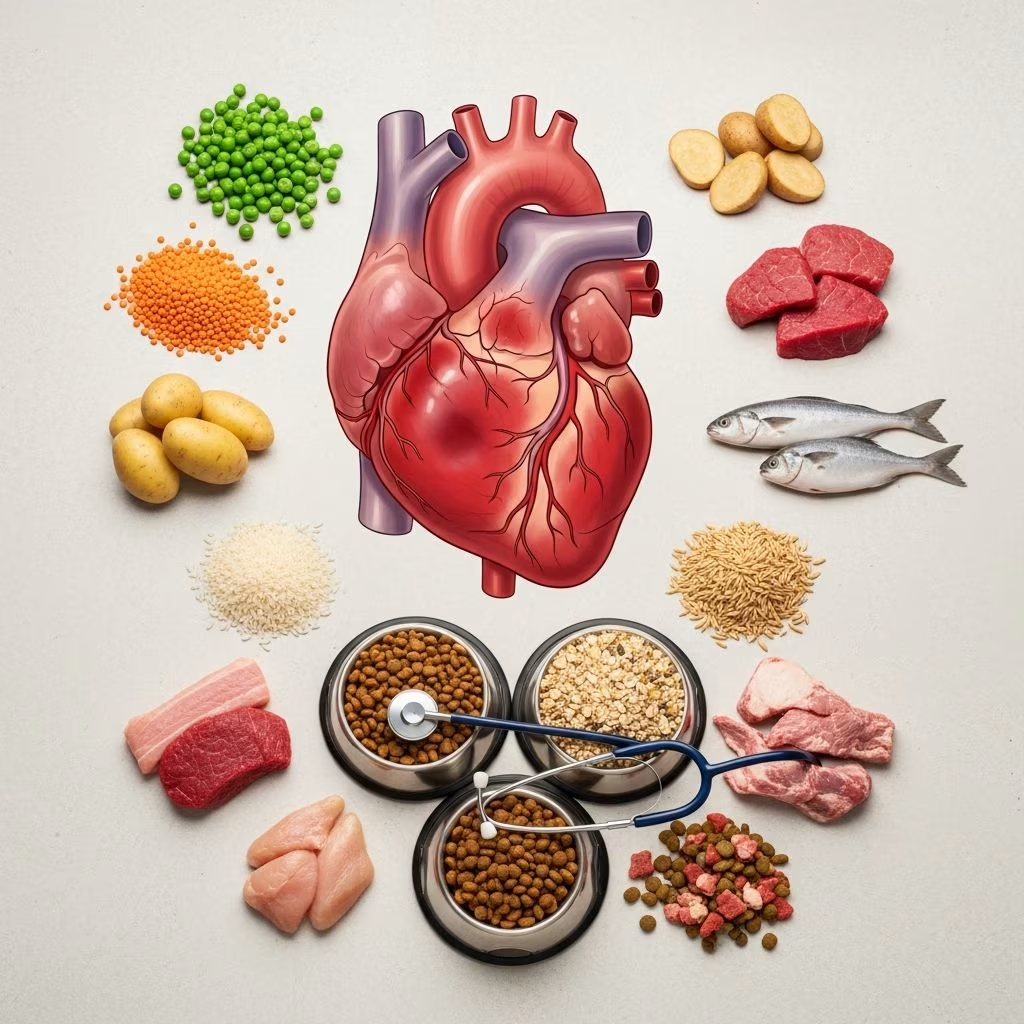
Dilated cardiomyopathy (DCM) in dogs, a serious heart condition characterized by weakened heart muscle and enlarged chambers, has been linked to certain diets, particularly grain-free formulas rich in legumes like peas and lentils. Clinical evidence shows that switching affected dogs to traditional grain-inclusive diets often leads to improvements in heart function, highlighting diet’s role in this potentially reversible form of the disease.
Understanding Dilated Cardiomyopathy in Canines
DCM occurs when the heart’s left ventricle thins and dilates, impairing its pumping efficiency and risking congestive heart failure or arrhythmias. Traditionally genetic in breeds like Dobermans and Great Danes, recent cases appear in non-predisposed breeds such as Golden Retrievers, suggesting environmental factors like nutrition.
Symptoms include lethargy, coughing, rapid breathing, and fainting. Diagnosis involves echocardiography, measuring left ventricular internal diameter in diastole (LVIDdN) and systole (LVIDsN), ejection fraction (EF), and biomarkers like high-sensitivity cardiac troponin I (hs-cTnI). Early detection is crucial, as dietary DCM may reverse with intervention, unlike genetic forms.
The Rise of Grain-Free and Non-Traditional Diets
Grain-free diets surged in popularity due to misconceptions about grains causing allergies, often replacing them with legumes, potatoes, or exotic proteins. These “boutique, exotic, or grain-free” (BEG) diets list peas, lentils, or potatoes prominently in ingredients. FDA data from 2018 noted DCM cases in atypical breeds eating these foods.
- High legume content may interfere with nutrient absorption, notably taurine, an amino acid vital for heart muscle function.
- Studies found dogs on these diets had lower taurine levels, larger heart dimensions, and reduced systolic function compared to those on grain-inclusive foods.
- Golden Retrievers showed overrepresentation in taurine-deficient DCM cases, with many improving post-diet change.
Scientific Evidence Linking Diets to DCM
Peer-reviewed studies provide robust data. A review of clinical cases revealed dogs on grain-free diets exhibited elevated LVIDdN, LVIDsN, and LA/Ao ratios, with premature ventricular complexes. Transitioning to low-legume diets normalized these in most cases.
In one study, seven dogs re-evaluated after diet change showed significant reductions in heart measurements and clinical signs, including pairs of unrelated cohabiting dogs, pointing to diet as the shared factor. Another found grain-free fed dogs had higher hs-cTnI levels, which decreased post-switch.
| Study Group | Diet Type | Key Findings | Outcome After Change |
|---|---|---|---|
| Grain-Free (GF) | High legumes/potatoes | Increased LVIDdN, LVIDsN, hs-cTnI | Reduced measurements, improved EF |
| Grain-Inclusive (GI) | Traditional, low legumes | Normal heart parameters | N/A |
| Post-Diet Switch | From GF to GI | Reversibility in subclinical cases | Discontinued diuretics in some |
Freeman et al. (2022) reported mild echocardiographic improvements over nine months in dogs switching from non-traditional diets, though sudden death risk persisted. FDA investigations confirmed multiple factors but emphasized legume-rich formulas.
Taurine Deficiency: A Key Mechanism?
Taurine, essential for cardiac myocytes, may be deficient in grain-free diets due to legumes inhibiting synthesis or absorption. Early Golden Retriever cases responded to taurine and L-carnitine supplementation alongside diet changes, unlike genetic DCM.
Fox studies showed DCM incidence tied to low dietary taurine (below 510 mg/kg). However, not all affected dogs had low plasma taurine, suggesting broader metabolic issues like altered amino acid profiles or pulse ingredient effects on gut health.
Reversibility and Treatment Approaches
Unlike primary DCM, diet-associated cases often improve. Studies document clinical recovery: reduced diuretic needs, normalized biomarkers, and better EF after 6-9 months on new diets.
Treatment combines:
- Diet modification: Switch to AAFCO-compliant, grain-inclusive foods with animal proteins first.
- Supplementation: Taurine (500-1000 mg BID), L-carnitine if needed.
- Medications: ACE inhibitors, pimobendan, diuretics for heart failure.
- Monitoring: Serial echoes every 3-6 months.
Haimovitz et al. (2022) confirmed subclinical reversibility via hs-cTnI drops. Owners report veterinarians suggesting adding cooked rice to grain-free kibble as a bridge.
FDA and Ongoing Investigations
The FDA’s 2018 alert spurred Vet-LIRN collaboration, analyzing over 500 cases. While no single ingredient is pinpointed, patterns favor BEG diets. No recalls issued, but labels now warn of risks. Research continues into formulation specifics, not grain-free status per se.
UC Davis and AKC Canine Health Foundation studies reinforce associations, urging caution with high-pulse diets.
Recommendations for Dog Owners
Consult a veterinary cardiologist for breeds at risk or symptoms. Choose WSAVA-compliant brands with grains, meat meals, and proven safety records. Avoid diets with peas/lentils in top 4-5 ingredients.
- Review ingredient lists: Prioritize named meat sources.
- Test taurine levels if on BEG diets.
- Transition gradually over 7-10 days.
- Monitor for early signs like exercise intolerance.
FAQs
Can all grain-free foods cause DCM?
No, evidence points to specific high-legume formulas in susceptible dogs, not grain-free universally. Controlled trials found no broad risk.
Which breeds are affected?
Primarily non-genetic breeds like Golden Retrievers, mixed breeds; genetic breeds may have compounded risk.
How long to see improvement after diet change?
Clinical signs may ease in weeks; echocardiographic normalization takes 6-12 months.
Should I supplement taurine preventively?
Only under vet guidance; test first. Balanced commercial diets suffice for most.
Are there safe grain-free options?
Yes, those low in pulses and meeting nutritional standards via feeding trials.
Preventive Strategies for Heart Health
Beyond diet, maintain ideal weight, provide omega-3s from fish oil, and ensure annual cardiac screenings for at-risk dogs. Research evolves, but current data empowers informed choices.
References
- Role of Diet as a Predisposing Factor for Dilated Cardiomyopathy in Dogs — PMC. 2024. https://pmc.ncbi.nlm.nih.gov/articles/PMC12656978/
- Review of canine dilated cardiomyopathy in the wake of diet-associated cases — Journal of Animal Science, Oxford Academic. 2020-06-01. https://academic.oup.com/jas/article/98/6/skaa155/5857674
- Grain-Free Dog Food and DCM: What the Data Actually Says – Part 2 — Northpoint Pets & Company (vet-reviewed summary). 2023. https://www.northpointpets.com/grain-free-dog-food-dcm-data-part-2/
- UC Davis Investigates Link Between Dog Diets and Deadly Heart Disease — UC Davis School of Veterinary Medicine. 2023. https://www.vetmed.ucdavis.edu/news/uc-davis-investigates-link-between-dog-diets-and-deadly-heart-disease
- Incidence of Canine Dilated Cardiomyopathy Diagnosed at Referral Hospitals — Frontiers in Animal Science. 2022. https://www.frontiersin.org/journals/animal-science/articles/10.3389/fanim.2022.846227/full
- FDA Investigation into Potential Link between Certain Diets and Canine Dilated Cardiomyopathy — U.S. Food and Drug Administration. 2023. https://www.fda.gov/animal-veterinary/outbreaks-and-advisories/fda-investigation-potential-link-between-certain-diets-and-canine-dilated-cardiomyopathy
- Investigation into Diet-Associated Dilated Cardiomyopathy in Dogs — PWD Foundation. 2023. https://www.pwdfoundation.org/research-update-chf-02661-final-investigation-into-diet-associated-dilated-cardiomyopathy-in-dogs/



