

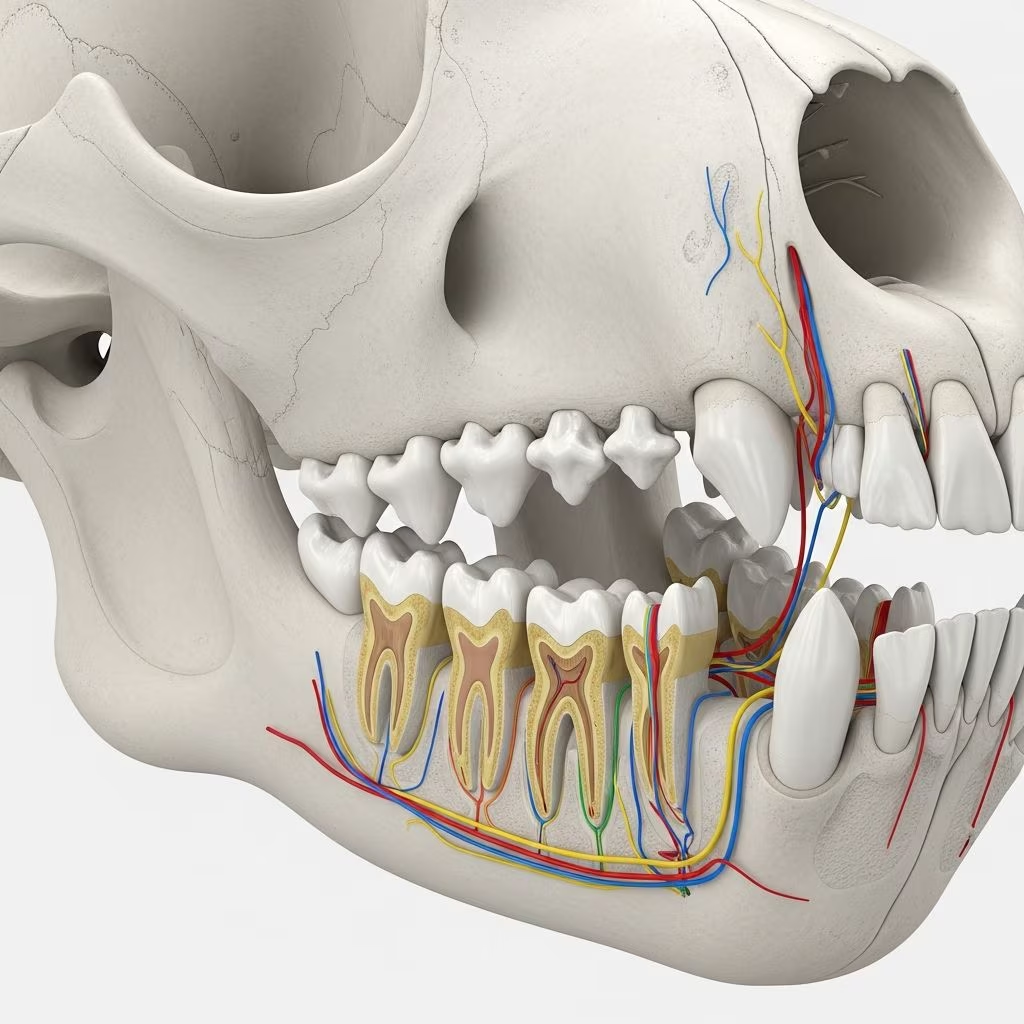
Dogs possess a sophisticated dental system adapted for tearing, gripping, and grinding food, consisting of 42 permanent teeth in adults. Understanding this anatomy is crucial for pet owners to recognize issues early and promote oral wellness throughout their dog’s life.
The Building Blocks of Canine Teeth
Each dog tooth comprises distinct layers and regions that work together for function and durability. The visible portion above the gumline forms the foundation, while hidden structures provide support and vitality.
Visible and Protective Outer Layers
The crown represents the exposed part of the tooth, designed for direct contact with food and objects. Covering this crown is enamel, the hardest material in a dog’s body, composed of about 90% minerals for resistance against wear. This layer forms completely by around 8 weeks of age and cannot regenerate, making early protection vital.
Beneath the enamel lies dentin, a yellowish layer that constitutes most of the tooth’s bulk. Softer than enamel at roughly 70% mineralization, dentin offers structural support and continues forming throughout life. It connects to the jawbone, aiding tooth stability.
Root and Anchoring Mechanisms
Extending below the gums, the root anchors the tooth securely. Cementum encases the root’s dentin, facilitating attachment to surrounding tissues. At the crown-root transition, known as the cemento-enamel junction or cervical line, gums attach, forming a protective seal prone to issues like cavities if compromised.
The periodontal ligament, a regenerative fibrous tissue, links cementum to the alveolar bone—the jaw socket housing the root. This ligament absorbs shock during chewing and slowly repairs if injured.
Vital Core: Pulp Chamber
At the tooth’s center runs the pulp chamber, housing nerves, blood vessels, and dentin-producing cells. Extending from the root’s apex (tip) into the crown, it supplies nutrients and sensation. Damage here leads to pain, discoloration, and potential tooth death, often necessitating extraction or root canal therapy.
Types and Arrangement of Dog Teeth
Dogs exhibit heterodont dentition, meaning varied tooth shapes for specialized roles. Permanent teeth total 42: 12 incisors, 4 canines, 16 premolars, and 10 molars, distributed as 20 maxillary (upper) and 22 mandibular (lower).
| Tooth Type | Maxillary (Upper) | Mandibular (Lower) | Primary Function |
|---|---|---|---|
| Incisors | 6 (3 per side) | 6 (3 per side) | Grooming, nibbling |
| Canines | 2 (1 per side) | 2 (1 per side) | Tearing, grasping |
| Premolars | 8 (4 per side) | 8 (4 per side) | Shearing, crushing |
| Molars | 4 (2 per side) | 6 (3 per side) | Grinding |
Incisors, small and chisel-shaped with single roots, front the dental arcade for precise tasks. Canines, robust and conical with long single roots, excel in holding prey. Premolars feature one to three roots, acting as carnassials for slicing. Molars, especially the lower first and upper fourth premolar (discordant teeth), handle grinding with multiple roots.
Deciduous Teeth: The Puppy Phase
Puppies start with 28 primary teeth, erupting around 3-8 weeks: 12 incisors, 4 canines, and 12 premolars (no deciduous molars). These smaller, whiter teeth shed between 12-16 weeks for permanent replacements, sometimes causing persistent deciduous cases visible on radiographs.
- Incisors: Erupt 4-6 weeks, shed 10-12 weeks.
- Canines: Erupt 5-6 weeks, shed 14-16 weeks.
- Premolars: Erupt 6-12 weeks, shed 18-24 weeks.
- Permanent molars: Appear without predecessors at 4-7 months.
This transition ensures growing jaws accommodate larger adult dentition.
Jaw and Supporting Structures
The maxilla (upper jaw) and mandible (lower jaw) form the framework, with alveolar processes cradling tooth roots. Radiographically, enamel appears as thin radiopaque lines on crowns, dentin fills most volume, and periodontal spaces show as lucent gaps.
Cusps, pointed crown tips, vary by tooth: incisors have one, carnassials multiple for efficiency. The apex, root endpoint, admits vessels and nerves, vulnerable to abscesses from infections.
Common Dental Conditions Linked to Anatomy
Awareness of structure aids in spotting problems. Plaque and caries erode enamel at the cervical line, exposing dentin. Pulpitis from trauma causes pain via nerve sensitivity. Periodontal disease inflames ligaments and bone, loosening teeth. Triple-rooted molars like maxillary PM4 challenge extractions.
- Enamel Hypoplasia: Defective formation leads to thin, pitted crowns.
- Resorption: Dentin breakdown, common in older dogs.
- Persistent Deciduous Teeth: Smaller teeth alongside permanents cause crowding.
Daily Care Strategies for Structural Health
Preserve enamel integrity with brushing using enzymatic toothpaste 3+ times weekly. Dental chews reduce plaque on crowns and roots. Professional cleanings under anesthesia allow scaling below gums, probing ligaments, and radiographs for hidden pulp/apex issues.
Monitor for halitosis, drooling, or fractured cusps signaling pulp exposure. Diets with kibble promote natural abrasion without dentin overload.
Advanced Insights from Veterinary Imaging
Intraoral radiographs reveal submerged details: roots superimposed by bone mimic crown density, apices show vessel canals. CT scans highlight bone variations around canines, aiding surgical planning.
FAQs on Canine Dental Anatomy
How many teeth do adult dogs have?
Adult dogs have 42 permanent teeth: 20 upper, 22 lower.
What is the hardest part of a dog’s tooth?
Enamel, covering the crown, is the hardest substance, fully formed early in life.
Why do some dogs have overcrowded teeth?
Persistent deciduous teeth or jaw misalignment prevent proper permanent eruption.
Can dog teeth grow back if lost?
No, permanent teeth do not regenerate; preventive care is essential.
How often should dogs get dental checkups?
Annually, or more if signs of disease appear, for full-mouth assessments.
Age-Related Dental Changes
Puppies shed milk teeth seamlessly, but adults face wear: enamel thins, dentin exposes, roots resorb in seniors. Breeds like small dogs suffer faster periodontal loss due to tooth crowding. Regular vet exams track these shifts.
References
- Diagram Of Dog’s Teeth, Dog Tooth Anatomy – Safarivet — Safari Veterinary Care Centers. Accessed 2026. https://www.safarivet.com/care-topics/dogs-and-cats/dentistry/anatomy-dental-structures/
- Normal Tooth Anatomy in Dogs and Cats — Texas Veterinary Dental Center. Accessed 2026. https://texasveterinarydentalcenter.com/normal-tooth-anatomy-in-dogs-and-cats/
- Intraoral Radiographic Anatomy of the Dog — Veterian Key. 2019-02-01. https://veteriankey.com/intraoral-radiographic-anatomy-of-the-dog/
- [Dental anatomy of dogs] — PubMed (Peer-reviewed). 2015-01-01. https://pubmed.ncbi.nlm.nih.gov/25617107/
- Dentition, dog — Merck Veterinary Manual. Accessed 2026. https://www.merckvetmanual.com/multimedia/image/dentition-dog
- Dentistry 101: Surfaces of teeth and directions in the mouth — dvm360. Accessed 2026. https://www.dvm360.com/view/dentistry-101-surfaces-teeth-and-directions-mouth



