

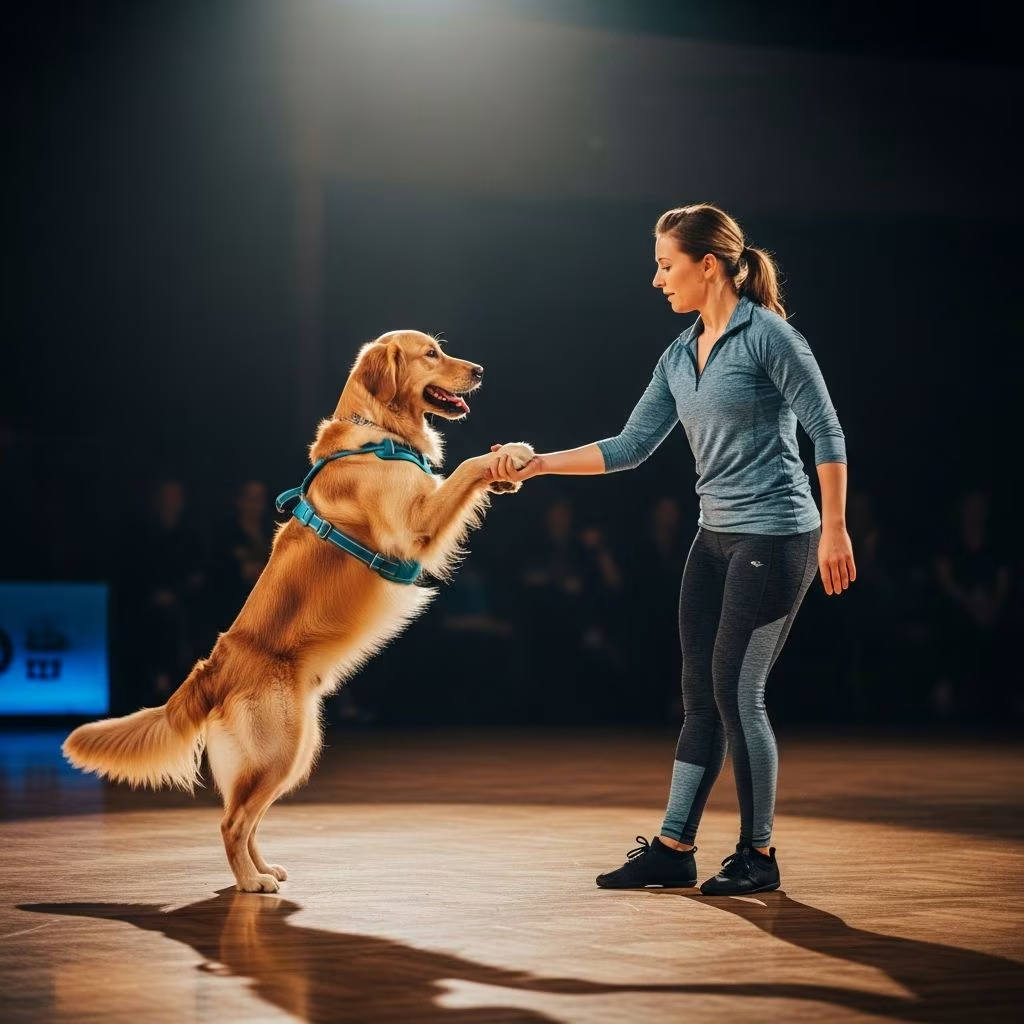
Dog dancing, often called canine freestyle or heelwork to music, transforms basic obedience into captivating performances set to tunes. This activity strengthens the human-dog bond while providing physical and mental exercise for both. Handlers guide dogs through intricate sequences of spins, leg weaves, and upright stances, all synchronized to rhythm.
Understanding the Appeal of Canine Freestyle
At its core, canine freestyle emphasizes partnership over perfection. Unlike traditional obedience, it allows creativity, adapting moves to a dog’s unique strengths, whether agility or charm. Routines typically last 2-4 minutes, blending heel positions—where the dog stays close to the handler’s side—with flourishes like backing up or paw shakes.
Participants highlight mental benefits: dogs learn focus amid distractions, while handlers improve timing and cues. Competitions exist, but most enjoy it recreationally, filming home videos or joining local clubs for practice.
Foundational Skills Every Dog Dancer Needs
Success starts with basics. Solid heeling ensures smooth transitions, preventing awkward pauses in routines. Key prerequisites include:
- Attention on cue: Dog maintains eye contact or position regardless of surroundings.
- Position changes: Fluid shifts from heel to front, side, or rear.
- Basic tricks: Sit, down, stay as building blocks for chains.
These form the skeleton; tricks add flair. Common ones include bow for entrances, roll over for playfulness, and march in place for rhythmic flair.
Training the Perfect Spin: Clockwise and Counterclockwise
Spinning captivates audiences with its simplicity and elegance. Begin in a quiet space with high-value treats.
- Lure the circle: Hold a treat at nose level, guiding your dog in a full circle. Mark completion with praise and reward.
- Elevate the lure: Raise your hand higher, shrinking the circle to encourage tighter spins without full guidance.
- Introduce verbal cue: Say “spin” as the dog completes the motion, pairing with hand signal.
- Fade the lure: Use empty hand after successes, rewarding from your other pocket to avoid anticipation.
- Reverse direction: Repeat for the opposite spin (“spin left”), mixing cues once mastered.
Practice daily for 5-10 minutes. Within weeks, chain spins: two clockwise, one counterclockwise, building endurance.
Weaving Through Legs: A Graceful Dance Essential
Weaving adds intimacy, with the dog threading between handler legs. Desensitize first by calmly stepping over your relaxed dog, treating generously.
| Step | Description | Tips |
|---|---|---|
| 1. Lure through | Straddle legs apart; use treat to draw dog under from front to back. | Keep legs wide initially; narrow gradually. |
| 2. Hand signal | Point or swipe to guide without treat; reward success. | Use consistent gesture like downward flick. |
| 3. Verbal cue | Add “weave” or “through” with signal; repeat in varied spots. | Increase distractions like toys nearby. |
| 4. Dynamic weave | Step over dog mid-weave or angle entry for flair. | Practice at walks for real-world flow. |
Combine with movement: handler walks forward as dog weaves backward, mimicking dance steps.
Teaching the Stand-Up Dance Position
The upright “dance” stance showcases balance. Use lure-reward initially.
- Initial lure: Hold treat above head, encouraging rear-leg rise. Click or mark, then treat.
- Empty hand: Raise both hands palms up; reward straight-up paws.
- Duration build: Delay reward until 3-5 seconds of balance; shape for straighter posture.
- Add motion: Sidestep together while upright, supporting if needed.
- Cue integration: “Up” or “dance” with gesture; phase out support.
Strengthens hindquarters; start with short sessions to avoid strain, especially for puppies or seniors.
Chaining Behaviors into Full Routines
Once tricks are fluent, link them. Chaining means sequencing without pauses: heel, spin, weave, stand, bow.
Start short: 3-5 moves to music snippets. Use a playlist matching your dog’s energy—upbeat pop for high-drive breeds, slower jazz for laid-back ones. Video sessions to self-critique timing.
Advanced chains incorporate backing up (dog retreats in heel), paw shakes mid-sequence, or leg circles where dog orbits handler.
Choosing Music and Crafting Routines
Music drives the performance. Select tracks with clear beats (90-120 BPM ideal). Lyrics can cue moves thematically—”spin” on rotation words.
Routine structure:
- Opening (0-30s): Attention grabber like synchronized heel or bow.
- Build (30s-2min): Mix tricks with transitions.
- Peak (2-3min): High-energy weaves, spins.
- Close: Dramatic stand or roll over.
Tailor to breed: herding dogs excel in precise heeling; terriers shine in quirky tricks.
Equipment and Safety Considerations
Minimal gear needed: treats, clicker, harness for security. Flat collars risk injury during spins; harnesses distribute pressure.
Safety first:
- Warm up with walks to prevent pulls.
- Monitor for fatigue; short sessions.
- Avoid slips on slick floors—use rugs.
- Consult vets for joint issues before upright work.
Progressing to Competitions and Clubs
Local freestyle organizations host matches with novice divisions. Entry-level routines score on teamwork over polish.
Join online forums for feedback; many share free routine templates. Not competing? Host “dog dance parties” with friends for fun judging.
Common Challenges and Fixes
Problem: Dog anticipates treats. Randomize rewards; use verbal praise more.
Issue: Loses focus outdoors. Graduate slowly from indoors, adding distractions.
Challenge: Physical limits. Modify for age—ground spins for arthritic dogs.
FAQs
What breeds are best for dog dancing?
Any breed; adapt to strengths. Border Collies for precision, Labs for enthusiasm.
How long to learn basics?
4-8 weeks with daily practice, varying by dog.
Is it safe for puppies?
After 6 months; focus on basics, no jumps.
Can seniors participate?
Yes, with low-impact mods like seated tricks.
Cost to start?
Under $50: treats, clicker, music app.
References
- How to Train Your Dog to Dance — WagWalking. Accessed 2026. https://wagwalking.com/training/dance
- Canine Freestyle (Heel to Music) — Positively.com. Accessed 2026. https://positively.com/dog-training/article/dogs-sports-activities-canine-freestyle-heel-to-music
- Good List of Tricks for Beginner Canine Freestyle — Dog Trick Academy Forum. Accessed 2026. https://www.dogtrickacademy.com/forum/threads/good-list-of-tricks-for-beginner-canine-freestyle.6068/
- Put Your Best Paw Forward: Inside the World of Dog Dancing — Dance Magazine. Accessed 2026. https://dancemagazine.com/animals-dancing/



