

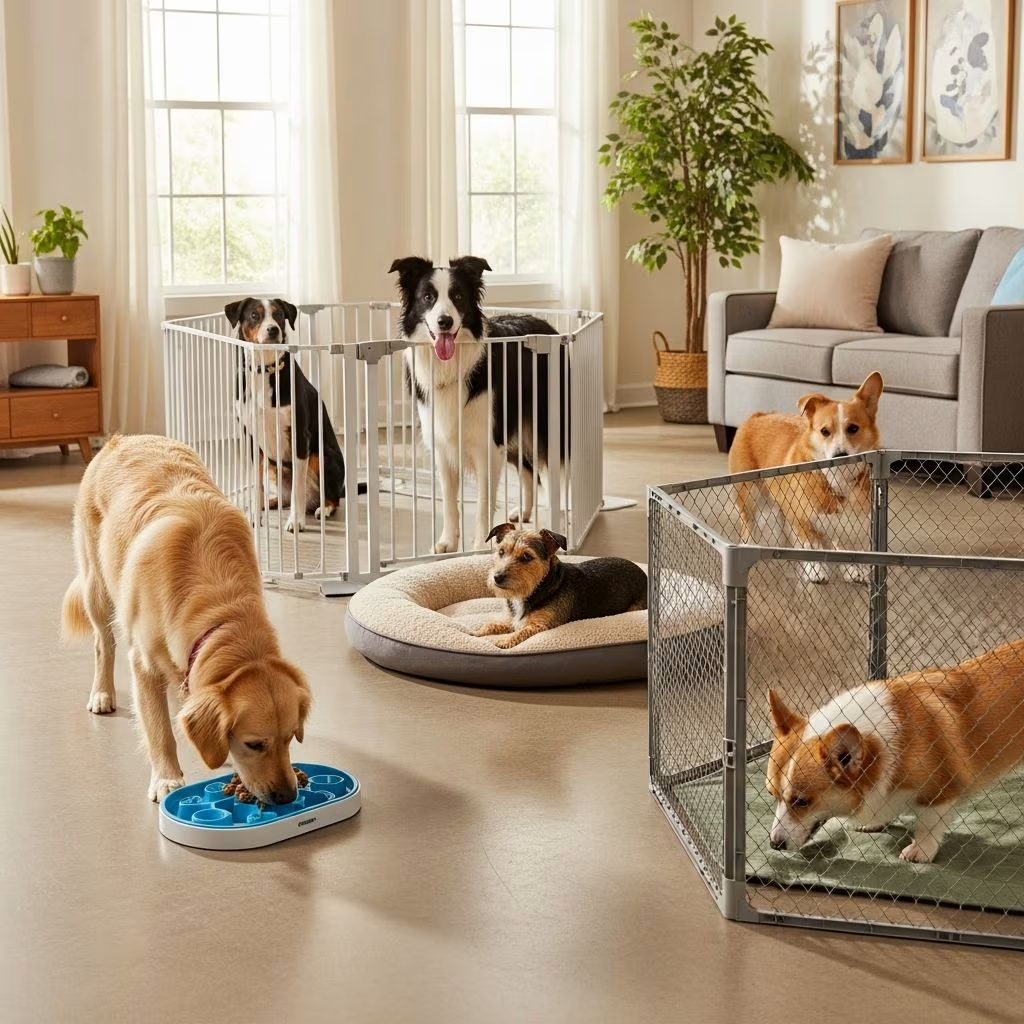
Many dog owners seek ways to manage their pets’ behavior and housetraining without relying on crates, especially if their dogs show signs of distress or discomfort in enclosed spaces. These alternatives provide secure confinement while allowing more freedom of movement, fostering positive associations with alone time and structured environments. This guide outlines proven methods drawn from expert recommendations, helping you choose options that suit your home and your dog’s needs.
Why Consider Crate-Free Confinement Options?
Traditional crate training leverages a dog’s natural aversion to soiling their sleeping area to aid housetraining. However, not all dogs adapt well to crates, leading to whining, escape attempts, or heightened anxiety. Alternatives like exercise pens, tethers, and gated rooms offer flexibility, larger spaces for play and rest, and gradual exposure to independence. These methods support housetraining by maintaining supervision and preventing accidents while building confidence in being alone.
Key benefits include reduced stress for sensitive puppies, customizable setups for different home layouts, and easier transitions to full house freedom. Always prioritize puppy-proofing any area by removing hazards like cords, small objects, or toxic plants.
Exercise Pens: Versatile Playpens for Growing Puppies
Exercise pens, often called ex-pens, consist of interconnected panels that form an adjustable enclosure. They provide significantly more space than crates, ideal for active puppies needing room to stretch, play, or even use a designated potty area during training.
Setup tips:
- Choose wire or plastic panels that clip together securely; eight-panel sets create a spacious hexagon.
- Place a comfortable bed, water bowl, chew toys, and interactive puzzles inside to encourage relaxation.
- For housetraining, divide the pen into sleeping and elimination zones to mimic crate instincts.
- Position in a quiet, low-traffic area but within sight and sound of family activity to ease separation anxiety.
Gradually increase alone time: Start with 5-10 minutes while you stay nearby, rewarding calm behavior with treats. Expand to hours as your dog settles. Ex-pens excel for naps, mealtimes, or overnight stays, and can be reshaped into barriers across doorways. Portable fabric versions suit small dogs or travel, offering a cozy den-like feel.
Tethers and Leashes: Close Supervision Tools
Tethering secures your dog to a sturdy anchor like furniture using a short leash or cable, keeping them within reach without full enclosure. This method shines for supervision during work-from-home days or when constant monitoring is feasible.
| Method | Pros | Cons | Best For |
|---|---|---|---|
| Leash Tether | Easy setup, promotes settling near owner | Risk of chewing; requires constant watch | Short sessions, adult supervision |
| Cable Tether | Durable, chew-resistant | Less mobility | Puppies learning house manners |
Introduce positively: Clip the tether during play or feeding, offering stuffed toys like Kongs or snuffle mats to occupy them. Never leave a tethered dog unsupervised, as it risks tangling or frustration. Use for 15-30 minute intervals, gradually desensitizing to departure cues like keys jingling.
Gated Areas and Baby Gates: Room-Based Management
Baby gates or door barriers transform kitchens, laundry rooms, or hallways into safe zones. These setups allow visibility and sound from household activity, minimizing isolation feelings.
Customization ideas:
- Puppy-proof the space thoroughly: Secure cabinets, cover outlets, and elevate valuables.
- Add bedding, toys, and a water station; include a potty pad corner if needed.
- Combine with ex-pens for hybrid enclosures in larger rooms.
For escape-prone dogs, opt for hardware-mounted gates over pressure ones. Trainers note creative barriers like crib rails or bar stools work temporarily. Practice short absences, returning calmly without fanfare to reinforce self-soothing.
Portable Play Yards and Fabric Pens: On-the-Go Solutions
Lightweight play yards fold for storage and travel, providing a familiar space anywhere. Fabric pens, best for small breeds, offer soft walls and a breathable cover for den-like security.
Enhance with frozen stuffed toys or white noise to promote calm. Rotate between setups—crate one day, pen the next—to generalize comfort across environments.
Step-by-Step Training Protocol for Any Alternative
Success hinges on positive reinforcement and gradual progression:
- Build Positive Associations: Lure with high-value treats or meals inside the space. Allow free exploration.
- Short Sessions: Confine for 1-5 minutes with you present, rewarding quiet moments.
- Introduce Alone Time: Step away briefly, returning before fussing starts. Mix durations unpredictably.
- Simulate Real Life: Practice departures with cues like shoes or keys, monitoring via camera.
- Expand Freedom: Earn longer stays through calm behavior; use gates to limit house access initially.
Catch sleepy moments to guide naps in the setup, associating it with rest. Consistency across family members prevents confusion.
Housetraining Without a Crate
Alternatives maintain the schedule-based elimination principle: Frequent potty breaks every 1-2 hours, plus after meals, play, and naps. Confine between outings to prevent errors, rewarding outdoor success with freedom bursts. Larger pens allow zonal training—sleep on one side, potty on the other—accelerating reliability.
Addressing Common Challenges
Anxiety or Whining: Cover pens partially, add calming music, or use pheromone diffusers. Short, frequent positives rebuild trust.
Escape Artists: Double barriers or heavier fencing; supervise rigorously.
Chewing: Provide durable toys; rotate to prevent boredom.
For retraining crate-averse adults, revert to puppy protocols with enforced naps and limited freedom.
Combining Methods for Optimal Results
Rotate tools: Tether mornings, pen afternoons, gated evenings. This versatility prepares dogs for varied scenarios, from travel to visitors. Track progress in a journal noting durations and behaviors.
FAQs
Is crate training necessary for all dogs?
No, effective housetraining and management occur via alternatives if introduced thoughtfully.
How long until my puppy adjusts to a playpen?
Most settle in 1-2 weeks with daily short sessions.
Can I use these for adult dogs?
Yes, especially for separation training or multi-pet homes.
What if my dog hates confinement entirely?
Focus on desensitization and consult a trainer for underlying anxiety.
Choosing the Right Alternative for Your Dog
Assess breed size, energy level, and home space. High-energy breeds favor ex-pens; lap dogs suit fabric pens. Test setups during play to gauge preferences.
(Word count: 1678)
References
- Puppy Crate Training Tips That Actually Work (Plus Alternatives to Crate Training) — Manners for Mutts. 2025-05-06. https://mannersformutts.com/blog/2025/05/06/puppy-crate-training-tips-that-actually-work-plus-alternatives-to-crate-training/
- Dog Crate Alternatives | Indoor Dogs Gates, Tethers, and More — Whole Dog Journal. N/A. https://www.whole-dog-journal.com/training/creative-confinement-dog-crate-alternatives/
- 3 Alternatives To Dog Crates — Dog Kind Training. N/A. https://www.dogkindtraining.com/blog/crate-alternatives



