

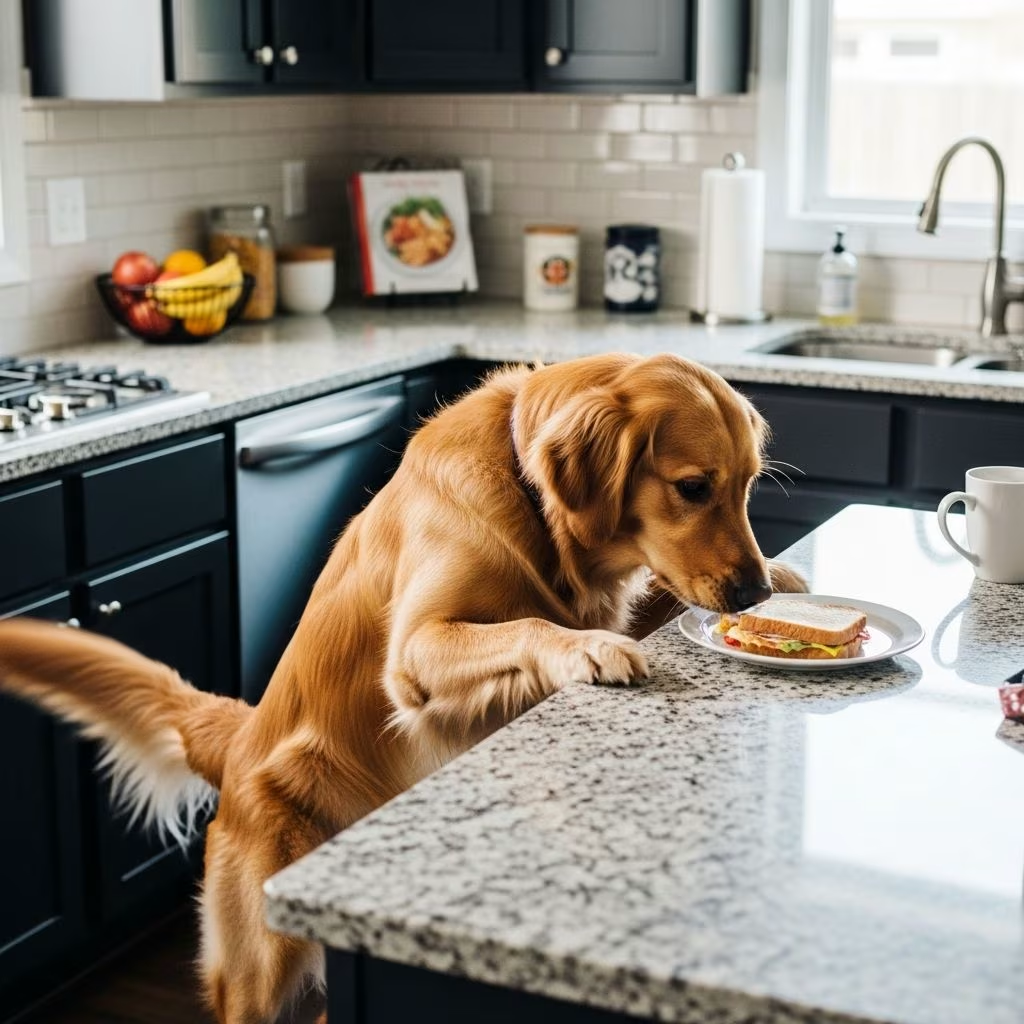
Dog Counter Surfing: Prevention and Deterrents
You put food on the kitchen counter and turn your back. Moments later, the food has vanished, and your dog is standing next to the counter licking their lips. Has this scenario happened in your house? If so, you have a pooch who’s a counter surfer. Counter surfing is one of the most common behavioral challenges dog owners face, and the good news is that it can be effectively managed with the right combination of prevention strategies and training techniques. This comprehensive guide will help you understand why dogs engage in this behavior and provide you with practical solutions to keep your kitchen safe from your four-legged friend.
Understanding Counter Surfing Behavior
Counter surfing occurs when dogs jump up on counters or tables to investigate or steal food. This behavior is driven by a simple yet powerful motivation: dogs are opportunists who seek out readily available rewards. When a dog discovers that counters contain food, they learn to repeat this behavior because it consistently results in a desirable outcome—a tasty treat. The more often your dog successfully finds food on the counter, the more ingrained this habit becomes. Understanding this reinforcement cycle is crucial to addressing the problem effectively, as it shapes both prevention and training strategies.
How Can I Prevent My Dog from Getting on Counters and Tables?
The simplest and most effective solution is to manage the situation so that your dog doesn’t have access to food on the counters. This preventive approach removes the primary motivation for counter surfing before it even starts. By eliminating opportunities for your dog to be rewarded with food, you significantly reduce the likelihood that they will develop or maintain this unwanted behavior.
Key Prevention Strategies
Never Keep Food on Your Counters
The foundation of counter surfing prevention begins with a simple rule: if your dog doesn’t find any food, they’re not getting rewarded for counter surfing. Make it a habit to immediately clear counters after meals and put food away in cabinets, refrigerators, or airtight containers. Even when you’re actively cooking, keep food toward the back of the counter rather than near the edge where your dog can easily reach it. This single practice can dramatically reduce the reinforcement opportunities that teach your dog to counter surf in the first place.
Wipe Countertops Thoroughly After Cooking
Don’t overlook the power of residual food. Thoroughly wipe countertops when you are done cooking so that there’s no delicious residue for the dog to lick up. Licking something tasty on a counter can be just as rewarding as finding a piece of food to snack on. Your dog doesn’t need a full meal to be reinforced for counter surfing—even crumbs, juice residue, or cooking splatters can encourage the behavior. Make thorough cleaning after meal preparation a non-negotiable part of your routine.
Crate Your Dog During Meal Preparation
The process of cooking tends to involve food spread out on the counters, making it easy for your dog to snag a morsel when you’re not looking. If you don’t have a crate, you can use a baby gate in the doorway to restrict access to the kitchen or put the dog in another room while you cook. This removes the temptation entirely during the times when your counters are most vulnerable to raiding. A tether can also be used for short periods to keep your dog in a particular area away from food preparation zones. Small dogs or puppies can be confined to an exercise pen during these high-risk times.
Restrict Kitchen Access
Blocking off access to the kitchen with doorway gates or an exercise pen is one of the most effective environmental management techniques. When your dog simply cannot reach the kitchen, counter surfing becomes impossible. This strategy is particularly useful when you’re not actively supervising or when you’re away from home.
How to Prevent Counter Surfing Through Training
While environmental management prevents the behavior from happening, teaching your dog alternative behaviors and specific commands provides additional layers of protection. Training gives your dog something else to do instead of counter surfing and helps them understand what you want them to do in those situations.
Teaching the “Leave It” Cue
“Leave it” is a useful and versatile cue for many situations—not the least of which is managing counter surfing. This command teaches your dog to stop interacting with something enticing and shift their attention to you. To start training your dog to leave it, go somewhere quiet and less exciting to the dog than the kitchen. Here are the steps to follow:
Step 1: Foundation Training
- With a treat in both hands, place your hands behind your back.
- Make a fist with one hand and offer that hand to your dog, letting them sniff your fist.
- Say “leave it,” and wait until they’re done sniffing.
- As soon as they’re done sniffing, say “yes” or click with a clicker and offer your dog the treat from the other hand.
Step 2: Building Consistency
- Keep doing this until your dog immediately stops sniffing your hand when you say “leave it.”
- When this happens consistently, you are ready to move on to the next step.
Step 3: Distance and Distractions
- Start by leashing the dog, and then toss a treat outside of their reach.
- Say “leave it,” and wait until your dog stops sniffing and pulling toward the treat.
- When the dog stops sniffing and pulling, say “yes” (or click) and give them a treat that they like even more than the one on the floor.
- Over time, by practicing this exercise, your dog should stop pulling as soon as you give the “leave it” cue.
Teaching the “Off” Cue
“Off” is another useful cue to teach your counter surfer. This command specifically addresses the counter surfing behavior by teaching your dog to get down from the counter when prompted. Here’s how to teach this valuable command:
Step 1: Using a Treat Lure
- When the dog jumps up onto the counter in search of food, put a dog treat in front of their nose.
- When you have their attention, use the treat as a lure to guide them off the counter and onto the floor, saying “off.”
- When their feet hit the ground, say “yes” (or click) and give them the treat.
Step 2: Reducing the Lure
- After practicing this exercise three or four times, say “off” instead of placing a treat in front of their nose to lure them off.
- If the dog jumps off the counter, praise them, say “yes” (or click) and give them a treat.
Teaching an Alternative Behavior: “Go to Bed”
Rather than only teaching your dog what not to do, it’s equally important to teach them what they should do instead. Teaching your dog to go to their bed or mat provides them with a specific, appropriate place to be during times when counter surfing might otherwise occur. This gives them a constructive outlet for their desire to be near you while you’re cooking or eating.
Training Steps:
- Begin by tossing some treats onto a dog bed or mat, and when your dog goes over to investigate, say “yes” (or click).
- After you do this several times, your dog will probably start going over to their bed without any treats to prompt them.
- When they start walking over to the bed, say whatever cue you want to use (for example, “bed”).
- Then when they get there, mark it with a “yes” or click, and give them some treats.
Additional Deterrent Methods
Using Tin Foil as a Deterrent
Most pets don’t like the feeling of tin foil or the sound it makes when it rustles. To deter your dog from getting on the counter consider putting a sheet or two of tin foil along the edge of the counter. Though this method may seem unconventional, it can be used in conjunction with proper training. The texture and sound create an unpleasant sensory experience that discourages dogs from jumping up. This technique works best as a temporary measure while you’re actively training your dog and implementing other prevention strategies.
Important Considerations for Success
Supervision is Key
Remember that the training strategies outlined above only work when you are there to give the cue and provide immediate feedback. When you’re not going to be around, make sure you remove temptation either by blocking off access to the kitchen or by keeping the counters clear of food. Dogs are opportunists, so it’s unfair to expect your dog to ignore delicious food that’s within their reach when you’re not there to guide their behavior.
Consistency Matters
For counter surfing prevention to be effective, every member of your household must follow the same rules and strategies. If one family member leaves food on the counter while another member is training your dog to ignore it, your dog will become confused and the training will take much longer to be effective. Everyone in the home needs to be committed to both preventing access to food and reinforcing the desired behaviors.
Patience and Persistence
Changing ingrained behaviors takes time and consistent effort. If your dog has had successful counter surfing experiences in the past, they’ve learned that this behavior pays off. Be patient with your dog as they learn new behaviors and gradually lose interest in the counter as a source of food and entertainment.
Frequently Asked Questions
Q: How long does it take to stop counter surfing?
A: The timeline varies depending on how long your dog has been counter surfing and how consistently you implement prevention and training strategies. Some dogs show improvement within weeks, while others may take several months. Consistency is more important than speed—the key is never allowing your dog to be rewarded for the behavior.
Q: What should I do if I catch my dog counter surfing?
A: Calmly and without anger, interrupt the behavior by using a cue like “off” and lure or guide your dog away from the counter. Reward them for getting down and redirect their attention to an appropriate behavior. Avoid punishing your dog, as this can create fear and anxiety rather than teaching them what to do instead.
Q: Can counter surfing lead to other problems?
A: Yes, counter surfing can lead to serious health issues if your dog consumes toxic foods like chocolate, grapes, onions, or xylitol. Additionally, your dog might ingest bones, wrappers, or other non-food items that could cause intestinal blockages. Prevention is essential not just for behavioral reasons but for your dog’s safety and health.
Q: What if my dog is too tall and can easily reach the counter?
A: For tall breeds, environmental management becomes even more critical. Focus on keeping your dog out of the kitchen during meal preparation and eating, using baby gates or closing doors. Ensure counters are completely clear of food and are thoroughly wiped clean. Consider rearranging your kitchen to make counters less accessible or using high cabinets for food storage.
Q: Is counter surfing a sign of a behavioral problem?
A: Counter surfing is not necessarily a sign of a serious behavioral problem—it’s a natural behavior driven by food motivation. However, if your dog also shows signs of aggression, anxiety, or other concerning behaviors, consult with a professional dog trainer or veterinary behaviorist to address all issues comprehensively.
Q: Should I punish my dog for counter surfing?
A: Punishment is not recommended and can be counterproductive. Dogs don’t understand punishment as a consequence of their actions—they only understand that something unpleasant happened around the counter. This can create anxiety and fear rather than preventing the behavior. Positive reinforcement and prevention are far more effective and humane approaches.
References
- Dog Counter Surfing: Prevention and Deterrents — Best Friends Animal Society. 2025. https://www.bestfriends.org/pet-care-resources/dog-counter-surfing-prevention-and-deterrents
- How to Stop Your Dog from Counter Surfing — North American Sheltering Council (NASC). 2025. https://www.nasc.cc/dog/how-to-stop-your-dog-from-counter-surfing/
- How to Get Your Dog to Stop Counter-Surfing For Food — American Kennel Club (AKC). 2025. https://www.akc.org/expert-advice/health/stop-dog-counter-surfing/
- Ask Crystal: Counter Surfing Is Not a Sport — Blue Ridge Humane Society. 2025. https://www.blueridgehumane.org/how-to-teach-your-dog-to-stay-off-the-counter/



