

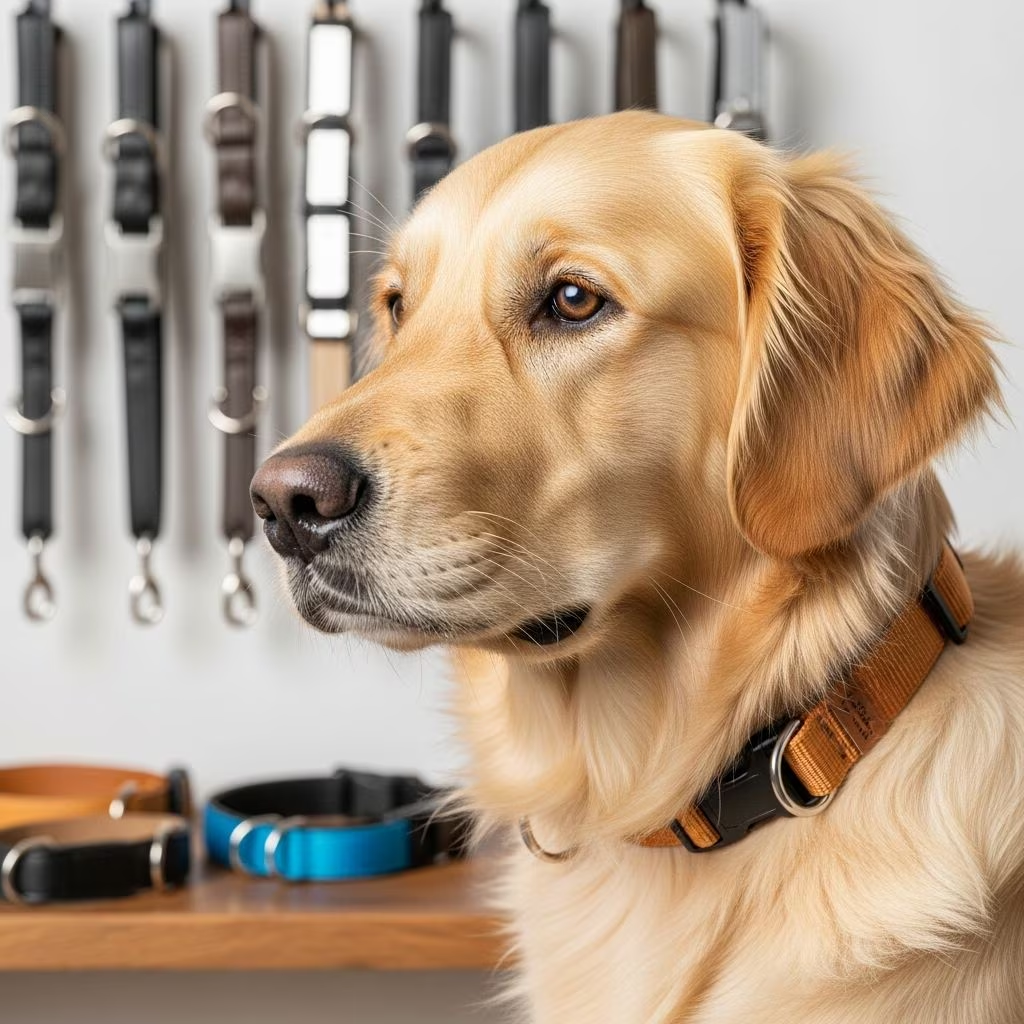
Choosing a dog collar involves more than aesthetics or convenience—it directly impacts your pet’s physical safety, comfort, and behavioral development. The collar serves multiple functions: it holds identification tags, provides a point of attachment for the leash, and can influence how your dog responds to training and handling. However, not all collars offer equal protection. Understanding the distinctions between different collar types helps pet owners make informed decisions that prioritize their dog’s wellbeing while meeting their specific needs.
Understanding Collar Function and Purpose
A dog collar’s primary responsibility extends beyond decoration or simple identification. The collar must distribute pressure evenly if it does tighten, resist breakage during normal activity, and accommodate your dog’s comfort throughout daily wear. Different collars serve different purposes based on your dog’s size, temperament, behavior patterns, and your training philosophy. What works perfectly for a calm lap dog may be entirely inappropriate for a strong, energetic breed that pulls during walks.
The hardware and construction materials significantly influence safety. D-ring quality—the attachment point for leashes—determines how securely your dog remains connected to you during walks. Welded D-rings provide substantially stronger attachment points compared to cast alternatives, offering three times the holding strength. Hardware composition also matters: stainless steel resists corrosion and maintains structural integrity above 1,200 pounds of force, while zinc-plated hardware begins deteriorating within six months of regular use.
Safe Collar Options for Everyday Wear
The Flat Collar: Traditional Reliability
The flat collar represents the most straightforward option for general-purpose dog wear. This collar sits comfortably around your dog’s neck and typically features either a buckle or snap closure. The variety available is remarkable—leather, nylon, cloth, or fabric blends; solid colors, patterns, embroidered designs, or reflective materials; and customizable features like embroidered contact information for lost dogs.
Proper fitting is essential for safety and comfort. A correctly fitted flat collar allows you to slide two fingers underneath, perpendicular to your dog’s neck, creating a comfortable space without constriction. This collar works well for everyday use, holding ID tags and serving as a general walking and identification tool. However, flat collars may not be ideal for dogs that pull consistently during walks, as continuous pulling pressure can stress the neck structures.
The Martingale Collar: Preventing Escape Safely
The martingale collar, also called a “limited-slip” or “no-slip” collar, solves a specific problem: dogs with narrow heads relative to their necks who can slip out of standard flat collars. Greyhounds, whippets, salukis, and other sighthound breeds frequently benefit from this design. However, martingales also work well for any dog prone to backing out of their collar, including some anxious or fearful dogs who attempt to escape during walks.
The martingale design features a length of material with metal rings at each end, plus a separate loop passing through both rings where the leash attaches. When your dog pulls backward or tries to escape, the loop tightens the collar around their neck to prevent slipping. The critical safety feature is that proper fitting ensures the collar tightens only enough to prevent escape, never enough to choke or restrict breathing. This design maintains humaneness while providing security.
One important safety consideration: because the tightening loop can potentially catch on objects, martingale collars should only be worn during supervised activities. Leaving a martingale on unsupervised dogs poses an entanglement risk that could cause injury.
Safety or Breakaway Collars: Emergency Release Mechanism
The breakaway collar incorporates a mechanism that releases under pressure, providing crucial protection against accidental hanging or choking. This design proves particularly valuable when dogs play together and engage in collar-grabbing behavior, or when collars become snagged on environmental objects like fencing, branches, or crate components.
Many breakaway collars feature a double-ring system: one ring triggers the breakaway mechanism while the second ring provides a secure attachment point that won’t release even during vigorous pulling. This dual-ring design allows owners to attach leashes without accidentally activating the safety release. For dogs that regularly interact with other dogs or spend time in environments where entanglement is possible, breakaway collars represent a sensible safety investment.
Problematic Collar Types and Why to Avoid Them
Choke Chains and Continuous-Tightening Design
Choke chains represent one of the most dangerous collar options available, despite their historical use in dog training. These metal-link collars tighten continuously as a dog pulls, with no predetermined stopping point. This means the collar can cinch to dangerous levels, potentially restricting airflow, damaging throat tissues, or causing injury if the dog becomes trapped or stuck.
The physics of choke chains creates an escalating problem: as the collar tightens and causes discomfort, many dogs pull harder due to their natural opposition reflex—the instinctive tendency to pull harder when experiencing neck pressure. This creates a dangerous cycle where the dog’s stress response actually increases the pressure, potentially leading to serious injury or even death in worst-case scenarios.
Some trainers use what are called “Fur Saver” choke collars, manufactured by companies like Herm Sprenger, which use wider chain links that distribute pressure more effectively than thin chains. While these represent an improvement over traditional thin-chain choke collars and are less likely to pinch fur on thick-coated dogs like German Shepherds or Huskies, they still operate on the continuous-tightening principle and lack the safety guarantees of modern alternatives.
Prong and Pinch Collars: Pain-Based Tools
Prong collars, also called pinch collars, utilize a ring of blunt-pointed prongs designed to inflict discomfort or pain when the dog pulls. These collars operate on an aversive principle: the dog experiences unpleasant sensations and theoretically learns to avoid the behavior causing the discomfort. However, this approach contradicts modern behavioral science understanding of how dogs learn most effectively.
Beyond the ethical concerns about using pain or discomfort-based training methods, prong collars carry physical risks. They can cause bruising, puncture wounds, or tissue damage. Dogs may develop anxiety or fear responses associated with walks, leashes, or their handler. The learning that occurs is often fear-based rather than based on genuine understanding or voluntary behavior change.
Shock Collars: Electronic Aversive Tools
Electronic shock collars deliver electrical stimulation to discourage unwanted behaviors. Like prong and choke collars, shock collars rely on aversive principles and carry significant ethical and practical concerns. Beyond the animal welfare issues, shock collars can cause fear, anxiety, aggression, and unpredictable behavioral responses. Dogs may develop anxiety disorders or become fear-aggressive toward other dogs or people if shocked during certain situations.
Modern positive reinforcement training methods have demonstrated superior effectiveness compared to aversive tools, making shock collars unnecessary for most training situations.
Collar Selection Based on Your Dog’s Characteristics
| Dog Characteristic | Best Collar Option | Why This Works |
|---|---|---|
| Narrow-headed breeds (Greyhounds, Whippets, Salukis) | Martingale or limited-slip collar | Prevents escape while avoiding choking; tightens only to neck size |
| Thick-necked breeds (Bulldogs, Pitbulls) | Martingale or flat collar with proper fit | Accommodates unique body proportions without constriction |
| Dogs prone to pulling during walks | Front-clip harness (instead of collar) or martingale | Redirects pulling force through body rather than neck; gentler control |
| Anxious or fearful dogs | Martingale with supervision or flat collar | Prevents escape when stressed; familiar, non-aversive design |
| Dogs that play with other dogs frequently | Breakaway collar or clip-on collar | Releases under pressure to prevent entanglement injuries |
| General purpose/calm companions | Flat collar | Comfortable, secure, allows ID tag attachment; versatile use |
Closure Mechanisms: Buckles Versus Clips
The method by which a collar closes affects both security and safety. Buckle closures, typically made from metal, provide superior strength and are less likely to accidentally open during normal activity or pulling. This makes buckle collars the better choice when you need absolute security during walks or in situations where escape could be dangerous.
Clip-on or snap closures, usually plastic or plastic-and-metal combinations, offer easier on-and-off convenience and can be quickly released if necessary. Clip collars represent an excellent choice for dogs playing at parks, daycare facilities, or backyards where the ability to quickly remove the collar adds an extra safety layer. However, clip closures may not provide adequate security during leashed walks, especially for strong dogs that pull.
Metal clasps offer durability and reliability for larger or active dogs but are heavier and susceptible to rust over time. Plastic clasps work well for smaller breeds and are lightweight but may not withstand heavy strain. Breakaway clasps combine safety with security by releasing under excessive pressure while maintaining normal attachment strength during regular wear.
Special Considerations for Specific Situations
Shelter and Emergency Situations
In shelter environments where dogs must be moved quickly without time for proper collar fitting, slip leads represent a temporary, acceptable option despite their limitations. These simple noose-style leads allow rapid control in emergency situations. However, they should never be used for extended periods or regular walks. A safer alternative that maintains speed while reducing risk is the martingale variety of show lead, which tightens only to a predetermined point rather than continuously.
Once shelter dogs transition to regular walks or homes, more appropriate equipment such as flat collars or front-clip harnesses should replace temporary emergency leads.
Multi-Dog Households
Homes with multiple dogs benefit from breakaway or clip-on collars, particularly if dogs engage in play that includes collar-grabbing behavior. The ability to quickly release a collar prevents accidental strangulation during play sessions while maintaining identification and security during supervised activities.
Fitting and Maintenance Guidelines
Regardless of collar type selected, proper fitting remains essential. Most collars should fit snugly enough that escape is impossible but loosely enough to maintain comfort. The two-finger test—sliding two fingers under the collar—provides a reliable fitting guide for most dogs. Puppies outgrow collars quickly, requiring frequent adjustments as they develop.
Regular inspection ensures collars remain safe and functional. Check hardware for corrosion, especially after exposure to water or salt. Inspect material for fraying, tears, or damage. Replace worn collars promptly rather than attempting repairs that might compromise safety. Leather collars require occasional conditioning to prevent cracking and maintain flexibility. Nylon collars need simple soap-and-water cleaning to remove dirt and odors.
Remove collars during unsupervised crate time or when dogs rest to prevent accidental entanglement. This simple habit significantly reduces injury risk, particularly with martingale collars that feature tightening loops.
Understanding Your Dog’s Behavioral Needs
Dogs that pull on leashes benefit from collars and equipment specifically designed to discourage pulling through gentle redirection rather than force or pain. The opposition reflex—dogs’ natural instinct to pull harder against pressure—explains why painful or restrictive collars often fail to solve pulling problems and may actually worsen behavioral issues by creating anxiety.
Gentle guidance methods work more effectively with dogs’ natural learning patterns. Martingale collars provide this gentle approach by tightening just enough to prevent escape or redirect attention without causing pain or fear. Front-clip harnesses, while not collars, offer superior pulling control by redirecting force to the dog’s chest and body rather than the delicate neck structures.
Making Your Final Decision
The ideal collar for your dog depends on several interconnected factors: your dog’s breed characteristics, individual temperament, size, training philosophy, and daily activities. What works wonderfully for one dog may be entirely inappropriate for another, even within the same breed. Consider your dog’s specific needs, consult with your veterinarian or positive-reinforcement trainer if uncertain, and prioritize safety alongside functionality.
Remember that collars represent just one component of responsible dog ownership. They work best combined with proper training, consistent positive reinforcement, and a deep understanding of canine behavior. By selecting safe, appropriate collar types and using them correctly, you create an essential foundation for your dog’s security, comfort, and wellbeing throughout their life with you.
Frequently Asked Questions
Can I leave a martingale collar on my dog unsupervised?
No. While martingale collars are safe during supervised wear, the tightening loop can catch on objects, fencing, crate components, or other environmental hazards when a dog is alone. Remove the martingale during unsupervised time and replace it with a flat collar if ID tags are necessary.
What’s the main difference between a martingale and a choke collar?
A martingale tightens only to a preset limit matching your dog’s neck size, preventing escape without choking. A choke collar continues tightening continuously as a dog pulls, with no safety limit. This makes choke collars significantly more dangerous and martingales far safer for regular use and training.
Are breakaway collars secure enough for walks?
Many breakaway collars feature dual-ring systems where one ring triggers the release mechanism while a second ring provides a secure attachment point. When you attach the leash to both rings, the collar won’t accidentally release during normal pulling on walks. This design combines safety with security.
Should I use a front-clip harness instead of a collar?
Harnesses aren’t collars, but they represent an excellent alternative for dogs that pull significantly. Harnesses distribute pressure across the chest and body rather than concentrating it on the neck, reducing injury risk and providing superior pulling control. Many dogs benefit from harnesses during walks while wearing flat collars for identification at home.
How do I know if a collar fits properly?
Use the two-finger test: when properly fitted, you should be able to slip two fingers under the collar perpendicular to your dog’s neck. This provides snug security without constriction. Check the fit regularly as puppies grow and adjust as needed.
References
- Collar and Harness Options for Dogs — VCA Animal Hospitals. 2024. https://vcahospitals.com/know-your-pet/collar-and-harness-options-for-dogs
- What Is the Best Collar for Dogs? Guide to Types, Safety, and Durability — Hoss Straps. 2026. https://www.hossstraps.com/blogs/news/what-is-the-best-collar-for-dogs-guide-to-types-safety-and-durability
- Which Type of Dog Collar is Best for Your Dog? — Humane World. https://www.humaneworld.org/en/resources/dog-collars
- Dog Collars: Buckles vs. Clips — Orvis News. https://news.orvis.com/dogs/dog-collars-buckles-vs-clips
- Your Guide to Dog Collars: Comfort, Safety and Fit Comparisons — CareCredit. https://www.carecredit.com/well-u/pet-care/how-to-choose-dog-collar/
- Dog Collars – The Different Styles and Their Purpose — Happy Dog Training. https://happydogtraining.info/general-information/dog-collars-the-different-styles-and-their-purpose/



