

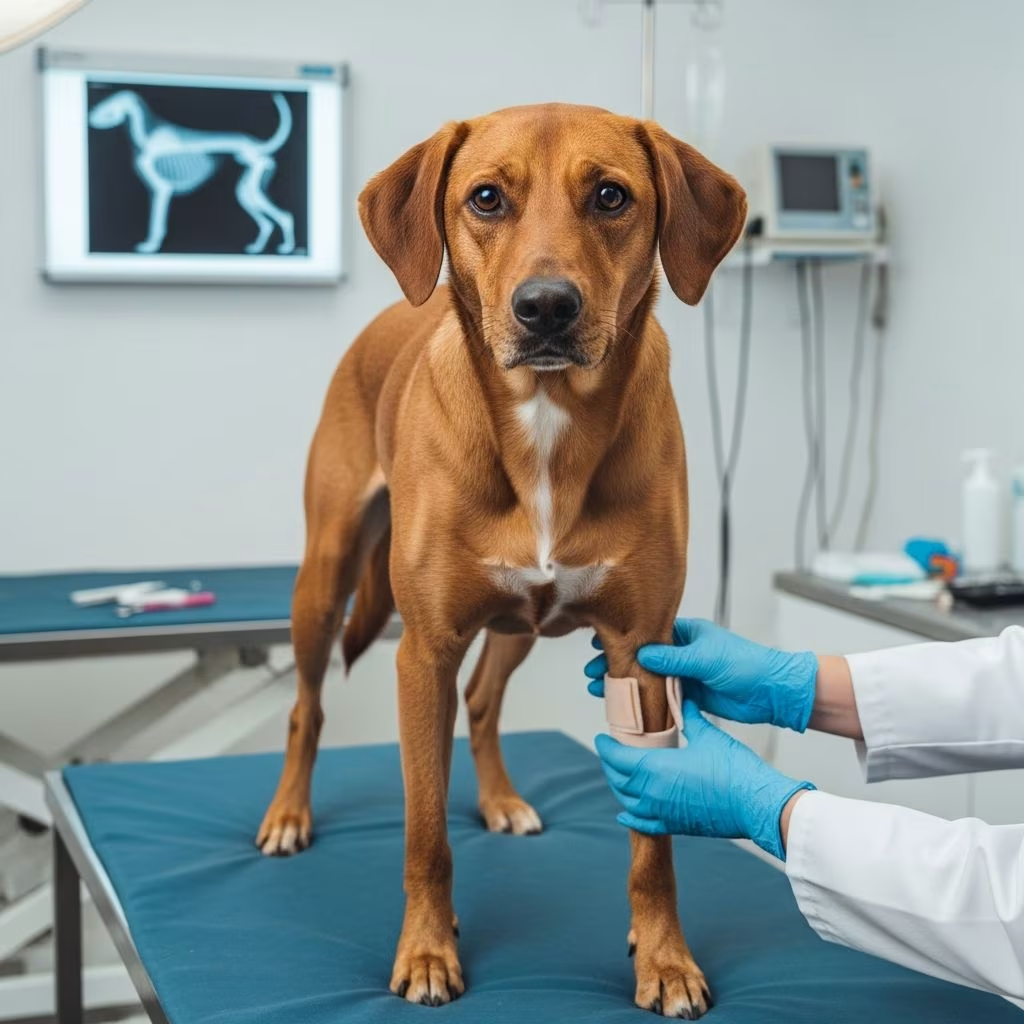
Cranial cruciate ligament (CCL) tears represent one of the most frequent orthopedic issues in dogs, often leading to hind limb lameness and reduced quality of life if untreated. These injuries destabilize the knee joint, prompting swift veterinary intervention through conservative care or surgery.
Understanding the Canine Knee Anatomy
The dog’s stifle joint, equivalent to a human knee, relies on the cranial cruciate ligament (CCL) to prevent the tibia from sliding forward relative to the femur during movement. Unlike humans where acute trauma causes anterior cruciate ligament (ACL) ruptures, canine CCL issues typically stem from degenerative processes over time.
This degeneration weakens the ligament, making it prone to partial or complete tears. Factors like breed predisposition—Labradors, Rottweilers, and Pit Bulls are common—affect joint conformation, accelerating wear.
Recognizing Early Warning Signs
CCL injuries manifest in acute or chronic forms. Acute tears cause sudden severe pain, limping, and reluctance to bear weight on the affected leg, often following vigorous activity.
- Sudden lameness: Dog holds leg up or toes-touch walks after play or jumps.
- Joint swelling: Noticeable puffiness around the knee, tender to touch.
- Instability: ‘Cranial drawer’ motion where tibia shifts forward when manipulated.
Chronic cases develop gradually with intermittent stiffness post-exercise, difficulty rising, and muscle wasting in the thigh due to disuse. Dogs may whine during movement or avoid stairs and jumping.
Factors Contributing to CCL Damage
While trauma can trigger tears, most cases involve multifactorial degeneration. Obesity exacerbates stress on the joint, poor conditioning weakens supporting muscles, and conformational issues like steep tibial plateaus promote instability.
| Risk Factor | Impact on CCL | Common Breeds Affected |
|---|---|---|
| Obesity | Increases joint load, hastens degeneration | All, especially large breeds |
| Age-related wear | Ligament weakens naturally over time | Middle-aged to seniors |
| Conformation flaws | Alters biomechanics, causes uneven stress | Labrador, Rottweiler |
| High activity | Repetitive impact without conditioning | Athletic breeds |
Compounding issues include meniscal tears, where cartilage damage causes secondary lameness weeks after initial injury.
Diagnostic Approaches for Confirmation
Veterinarians start with physical exams, testing for drawer sign and tibial thrust. Radiographs reveal joint effusion, arthritis, or meniscal fragments. Advanced imaging like CT or MRI pinpoints tear extent, though often unnecessary for treatment planning.
Non-Surgical Management Strategies
For small dogs under 25-50 lbs, sedentary pets, or partial tears, conservative treatment can suffice. Success hinges on strict adherence.
- Rest and confinement: 6-12 weeks crate rest, leash walks only.
- Weight control: Critical to lessen joint strain; diet adjustment key.
- Medications: NSAIDs like carprofen or meloxicam reduce inflammation; tramadol for pain.
- Supplements: Glucosamine, chondroitin, omega-3s support joint health.
- Physical therapy: Massage, controlled exercises rebuild muscle.
This approach stabilizes 20-50% of cases but risks arthritis progression and contralateral limb injury.
Surgical Interventions: Gold Standards
Surgery is ideal for large, active dogs or complete tears, boasting 90-95% return to function rates. Techniques neutralize tibial thrust without ligament replacement.
Tibial Plateau Leveling Osteotomy (TPLO)
TPLO cuts and rotates the tibial plateau to 90 degrees, stabilizing via plate and screws. Gold standard for dogs over 25 lbs; recovery 8-12 weeks with 95% success.
- Pros: Low re-injury, suits all sizes/ages.
- Cons: Higher cost, requires skilled surgeon.
Tibial Tuberosity Advancement (TTA)
TTA advances the tibial tuberosity forward, balancing forces. Effective for medium-large dogs; similar outcomes to TPLO.
Other Options
- Lateral Suture (ECLS): Extracapsular suture mimics CCL; best for dogs <50 lbs.
- Tightrope: Minimally invasive fiber-wire stabilization.
Meniscectomy addresses cartilage tears during surgery.
Post-Operative Care and Rehabilitation
Recovery demands 8-12 weeks restricted activity, pain meds, and rehab. Protocols include:
- Weeks 1-2: Strict rest, incision monitoring.
- Weeks 3-6: Passive range motion, underwater treadmill.
- Weeks 7+: Building strength, agility drills.
Monitor for infection, implant issues. Most dogs regain near-normal function by 3-6 months.
Preventing CCL Injuries in At-Risk Dogs
Proactive steps mitigate risks:
- Maintain lean body weight via portion control, low-cal diets.
- Regular low-impact exercise strengthens muscles.
- Joint supplements from early age.
- Avoid sudden high-impact activities in overweight or senior dogs.
Cost Considerations and Insurance
Conservative care: $500-2000. Surgery: $3000-6000 per knee, plus rehab $500-1500. Bilateral tears common (50% within 1 year). Pet insurance often covers 70-90% post-deductible.
Frequently Asked Questions (FAQs)
Can my dog live with a CCL tear without surgery?
Yes, small/inactive dogs may manage with conservative care, but large/active ones risk arthritis and other leg injury.
How long does TPLO recovery take?
Full recovery: 3-6 months; weight-bearing often by week 2.
Will my dog tear the other CCL?
Up to 50% chance within 1-2 years; prevention crucial.
Is TPLO better than TTA?
Comparable outcomes; surgeon expertise and dog size guide choice.
What breeds are prone to CCL tears?
Labradors, Golden Retrievers, Rottweilers, Newfoundlands.
Long-Term Joint Health Outlook
With timely intervention, most dogs resume active lives. Ongoing management—weight control, supplements, periodic vet checks—curbs osteoarthritis. Early detection transforms prognosis from chronic pain to vitality.
References
- Torn Cranial Cruciate Ligament in Dogs: Symptoms and Treatment — OK Vets. Accessed 2026. https://www.okvets.com/post/torn-cranial-cruciate-ligament-in-dogs-symptoms-and-treatment
- What Procedure is Best for a Dog Cruciate Ligament Tear? — Veazie Veterinary Clinic. Accessed 2026. https://veazievet.com/blog/dog-cruciate-ligament-tear/
- Cruciate Ligament Injury in Dogs | Symptoms & Treatment — Embrace Pet Insurance. Accessed 2026. https://www.embracepetinsurance.com/health/cruciate-ligament-injury
- What Is the Best Treatment For A Dog With a Torn Acl? — Rea Road Animal Hospital. Accessed 2026. https://www.rearoadanimalhospital.com/best-treatment-for-a-dog-with-a-torn-acl/
- Cranial Cruciate Ligament Injuries | CCL Injuries — CC Vet Specialists. Accessed 2026. https://www.ccvetspecialists.com/cranial-cruciate-ligament-injuries
- Canine Cruciate Ligament Injury — Colorado State University Veterinary Teaching Hospital. Accessed 2026. https://vetmedbiosci.colostate.edu/vth/services/orthopedic-medicine/canine-cruciate-ligament-injury/
- How to Tell If Your Dog Has a Torn ACL and What to Do Next — Stack Vet Hospital. Accessed 2026. https://stackvethospital.com/how-to-tell-if-your-dog-has-a-torn-acl-and-what-to-do-next/



