

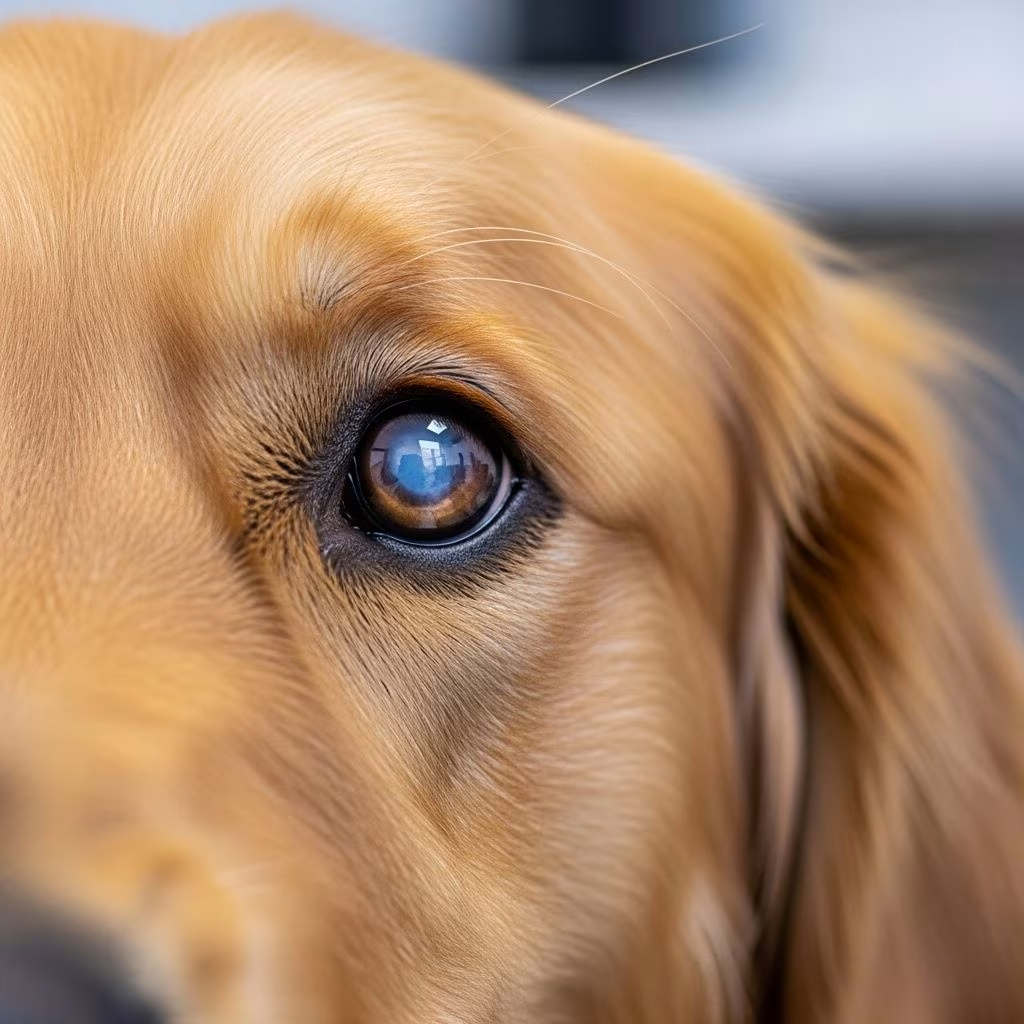
Cataract surgery offers dogs a chance to regain clear vision when cloudy lenses impair sight. This procedure removes the opaque lens and replaces it with an artificial one, boasting high success rates when conditions are favorable.
Recognizing Cataracts in Canines
Cataracts manifest as white or bluish haziness in a dog’s pupils, often progressing from partial clouding to total opacity. Owners might notice their pet bumping into objects, hesitating on stairs, or showing reluctance to play fetch. Unlike nuclear sclerosis, a common age-related haze that minimally affects vision, true cataracts block light transmission severely.
- Early signs: Subtle lens cloudiness, minor vision glitches during low light.
- Advanced stages: Complete white pupil, total blindness, eye inflammation.
Breeds like Poodles, Labrador Retrievers, and Cocker Spaniels face higher risks due to genetic factors. Diabetes accelerates cataract formation rapidly in affected dogs.
Root Causes Behind Lens Opacity
Genetic mutations drive most juvenile cataracts, appearing before age 6. In seniors, oxidative damage and protein clumping degrade lens clarity. Trauma from injuries or inflammation (uveitis) can induce secondary cataracts. Diabetic dogs develop them swiftly as high glucose alters lens metabolism, often bilaterally within months.
| Cause | Common Breeds/Ages | Progression Speed |
|---|---|---|
| Genetic | Poodles, Terriers (young) | Slow to rapid |
| Diabetic | Any breed with diabetes | Very fast |
| Trauma/Uveitis | All ages | Variable |
| Age-related | Seniors | Gradual |
Diagnostic Steps for Confirmation
Veterinarians start with a thorough eye exam using a slit lamp to magnify lens details. Pupil dilation aids in assessing cataract extent and concurrent issues like retinal atrophy. Electroretinography (ERG) tests retinal function, crucial since atrophied retinas doom surgery outcomes. Ultrasonography images the posterior eye segment, detecting detachments invisible externally. Blood tests screen for diabetes or infections.
- Slit-lamp biomicroscopy: Pinpoints opacity location (nuclear, cortical, capsular).
- ERG: Confirms viable retina (essential for vision post-op).
- Ocular ultrasound: Reveals hidden detachments or tumors.
Only eyes with healthy retinas, stable pressure, and minimal inflammation qualify for surgery.
Preparation Before the Operation
Pre-surgical protocols stabilize the eye. Diabetic dogs require glucose normalization to prevent surgical complications. Anti-inflammatory drops reduce swelling over 2-4 weeks. Owners withhold food overnight and arrange transport, as dogs remain groggy post-anesthesia.
- Stabilize blood sugar if diabetic.
- Administer pre-op meds for 1-4 weeks.
- Fast after midnight; use calm carrier for travel.
The Surgical Procedure Explained
Performed by board-certified veterinary ophthalmologists, phacoemulsification uses ultrasound to emulsify and aspirate the cataractous lens. A tiny incision allows insertion of a folding intraocular lens (IOL) tailored to canine vision. The 30-60 minute outpatient procedure per eye employs general anesthesia with monitoring.
Advanced tools minimize trauma: capsulorhexis creates a precise opening, viscoelastic protects endothelium. IOLs correct focus, vastly improving acuity over aphakic states.
Immediate Post-Operative Phase
Dogs recover in-clinic under observation until steady. Discharge occurs same-day or next morning with e-collar, drops, and orals. Mild light sensitivity is normal; pain is rare.
- Overnight stay possible for monitoring.
- Initial vision flickers next day.
- Strict e-collar prevents self-trauma.
Detailed Recovery Roadmap
The first two weeks demand vigilance. Restrict to leash walks with harness, no stairs or roughhousing. Administer 3-5 drop types 4x daily: antibiotics, steroids, NSAIDs. Taper per rechecks at 1-2 weeks.
| Timeframe | Key Actions | Restrictions |
|---|---|---|
| Days 1-7 | Drops 4x/day, oral meds, cone 24/7 | No jumping, playing; short harness walks |
| Weeks 2-4 | Taper drops, first recheck | Leash only; clean environment |
| Months 1-3 | Monthly checks, minimal meds | |
| Long-term | 6-monthly exams, possible lifelong drops | Monitor for clouding |
Cleaning: Wipe discharge gently with vet-approved saline; avoid baths for 2-4 weeks.
Success Metrics and Vision Outcomes
Uncomplicated cases yield 85-95% vision restoration immediately, with 90% retention at 1 year, 80% at 2 years. Full acuity develops over weeks as brains adapt to IOLs. Factors like pre-existing retinal disease slash odds.
Potential Complications to Watch
Early risks: corneal edema (resolves), ulcers from rubbing, pressure spikes. Late issues: posterior capsule opacification (treatable with laser), retinal detachment (5-10%). Inflammation (uveitis) or glaucoma may recur, necessitating lifelong meds.
- Signs needing ER: Redness, squinting, clouding return, pupil dilation issues.
- Proactive checks avert 80% of long-term failures.
Financial Considerations and Worth
Costs range $3,000-$5,000 per eye, covering diagnostics, surgery, IOL, aftercare. Insurance offsets for many. Weigh against blindness costs: heightened injury risk, quality-of-life dip. Most owners deem restored playfulness invaluable.
FAQs on Canine Cataract Surgery
Can all dogs with cataracts undergo surgery?
No; retinal health is prerequisite. ERG confirms viability.
How soon post-op does vision return?
Partial sight next day; optimal in 1-4 weeks.
Is the procedure painful?
Rarely; anti-inflammatories manage discomfort.
Will cataracts recur?
Lens removal prevents, but capsule clouding (10-20%) may need laser.
What’s lifelong care like?
Semi-annual exams, possible drops for inflammation control.
Enhancing Long-Term Eye Wellness
Post-recovery, antioxidants like Ocu-GLO support retinal health. Control diabetes rigorously. Routine ophthalmology visits catch issues early. Breeds prone to glaucoma benefit from pressure screenings.
Surgery transforms blind dogs into vibrant companions, chasing balls anew. Commitment to meticulous care underpins enduring success.
References
- Cataract Surgery for Dogs – What to Expect — Riverside Veterinary Hospital. 2023-07-15. https://www.riverside-vet.com/site/blog/2023/07/15/cataract-surgery-dogs
- What to Expect Cataract Surgery for Dogs — Memphis Veterinary Specialists. 2020-07-10. https://www.memphisveterinaryspecialists.com/site/blog-cordova/2020/07/10/what-to-expect-cataract-surgery-for-dogs
- What to Expect During Your Dog’s Cataract Surgery — Zoetis Petcare. N/A. https://www.zoetispetcare.com/blog/article/what-expect-dog-cataract-surgery
- What to Expect Before, During, and After Your Pet’s Cataract Surgery — Veterinary Vision Center. N/A. https://veterinaryvisioncenter.com/what-to-expect-before-during-and-after-your-pets-cataract-surgery/
- Cataract Surgery for Dogs: Everything You Need To Know — PetMD. N/A. https://www.petmd.com/dog/procedure/cataract-surgery-for-dogs
- Cataract Surgery FAQ — Vet Vision Center. N/A. https://www.vetvisioncenter.vet/cataract-faq
- What To Expect When Your Pet Has Cataract Surgery — Virginia Veterinary Centers. N/A. https://www.virginiaveterinarycenters.com/blog/what-to-expect-when-your-pet-has-cataract-surgery
- Cataract Surgery — Michigan State University College of Veterinary Medicine. N/A. https://cvm.msu.edu/hospital/services/ophthalmology/cataract-surgery



