

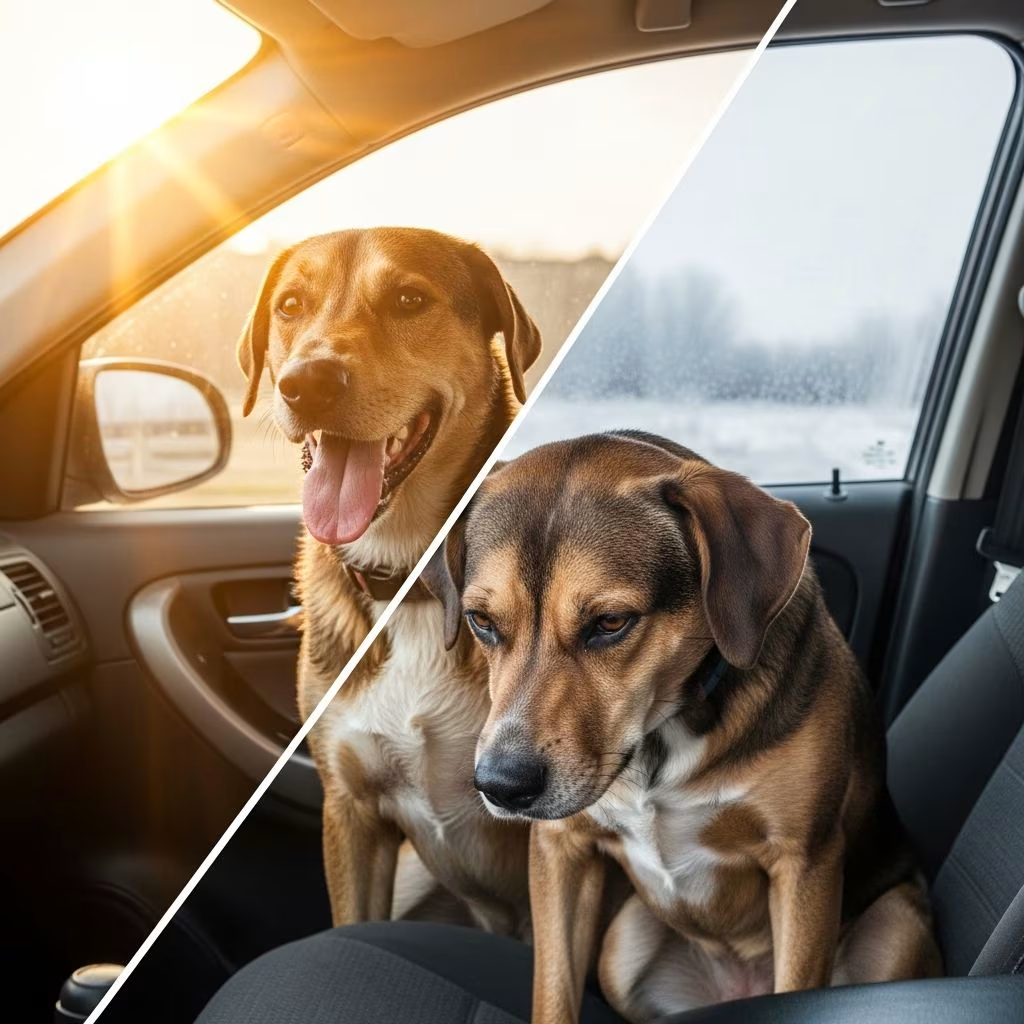
Dogs left unattended in vehicles face life-threatening temperature extremes regardless of season. Cars trap heat rapidly in summer, turning into ovens, while in winter they become frigid traps leading to hypothermia. Understanding these dynamics is crucial for responsible pet ownership.
The Science of Heat Buildup in Parked Cars
Parked vehicles act as greenhouses, absorbing sunlight through windows and converting it into intense interior heat. On a mild 70°F day, interior temperatures can climb to 99°F in 20 minutes and exceed 109°F on hotter days shortly after. Even cracking windows provides negligible relief, as airflow remains insufficient against the rapid rise.
Studies confirm that within 10 minutes on a 68°F day, car interiors reach 81°F, surging to 115°F after an hour. Dark-colored cars amplify this, hitting over 125°F in 20 minutes in sunlight. Dashboards and seats can scorch to 200°F, burning paws and radiating heat to accelerate heatstroke.
| Outside Temp (°F) | Car Interior After 10 Min (°F) | Car Interior After 60 Min (°F) |
|---|---|---|
| 70 | 99 | 116+ |
| 75 | 116 | 130+ |
| 90 | 109 | 140+ |
This table illustrates data from observed conditions, showing why even brief stops are hazardous.
Why Dogs Overheat So Quickly
Dogs cool primarily through panting and paw sweating, mechanisms that fail in confined, humid spaces. A mere 3°F rise in body temperature to 104°F triggers heatstroke, with treatment averaging $1,591 in vet bills. Brain damage or death can occur in 15 minutes.
- Panting inefficiency: Becomes ineffective above 85°F ambient heat.
- Brachycephalic breeds: Pugs and Bulldogs struggle more due to airway restrictions.
- Surface burns: Asphalt at 135°F on 86°F days scorches paws in minutes.
Obese, elderly, or heart/lung-compromised dogs face amplified risks, as their systems can’t dissipate heat efficiently.
Winter Vehicle Hazards: The Cold Trap
In cold weather, cars offer no insulation, conducting outdoor chill rapidly. Without a running heater, interiors plummet, risking hypothermia when core temperature drops below 99°F. Frostbite, organ failure, and death follow if untreated.
Small, short-haired, thin, puppy, or senior dogs are most vulnerable; northern breeds like Huskies tolerate better but still risk issues in extremes.
- Shivering signals early hypothermia.
- Frostbite hits extremities first.
- Young/old/ill dogs succumb fastest.
Recognizing and Responding to Heatstroke
Signs include excessive panting, drooling, lethargy, vomiting, and collapse. Act immediately:
- Move to shade/AC.
- Offer cool (not ice) water.
- Apply cool towels to groin/chest/paws.
- Use fan; avoid overcooling.
- Rush to vet—delays cause permanent damage.
For witnessed distress in cars, note vehicle details, alert authorities/businesses, stay until help arrives, and prepare first aid if safe.
Spotting and Treating Hypothermia
Look for shivering, weakness, slow breathing, or gum paleness. Response steps:
- Warm gradually with blankets/heater.
- Avoid direct heat sources.
- Seek vet for severe cases.
Legal Ramifications of Leaving Pets in Cars
28 states prohibit leaving pets in unattended vehicles under hazardous conditions. Cruelty laws apply nationwide; rescuers may break windows legally in many areas. Prosecution follows if pets require treatment or die.
Safe Alternatives and Prevention Strategies
Never leave dogs alone in cars. Opt for:
- Home stays or pet sitters.
- Human companions keeping engine on.
- Dog-friendly venues.
- Portable cooling: Fans, water bowls, thermometers, shades.
Avoid “dog mode” reliance—systems fail. Walk on grass mornings/evenings; test pavement with your hand.
Breeds and Pets at Greatest Risk
| Category | Heat Risk Examples | Cold Risk Examples |
|---|---|---|
| High Risk Heat | Pugs, Bulldogs, Obese dogs | Short-haired, Small breeds |
| High Risk Cold | All in extremes | Seniors, Puppies, Hairless |
| Better Tolerance | Athletic breeds | Huskies, Malamutes |
Tailor care to your dog’s profile.
Year-Round Travel Safety Essentials
Restrain pets during drives; never on laps. Pack cooling mats, sweaters, and ID. Monitor via apps if using climate features cautiously.
Frequently Asked Questions
Is cracking windows enough in summer?
No—temperatures still rise lethally fast.
Can thick-furred dogs handle cold cars better?
Somewhat, but no dog is safe unattended; hypothermia risks remain.
What if I must leave my dog briefly?
Don’t—find alternatives to avoid risks and laws.
How do I test if pavement is too hot?
Hand test: If too hot for 5 seconds, it’s burning paws.
Are electric vehicles safer?
Not necessarily; modes fail, and temps shift quickly.
References
- What To Do If You See a Dog in a Hot Car — WoofDoctor on Wheels. 2023. https://www.woofdoctor.vet/dog-hot-car/
- Can I Leave My Dog in the Car in Winter? — American Kennel Club. 2024-01-15. https://www.akc.org/expert-advice/health/leaving-a-dog-in-the-car-in-winter/
- Hot Weather Do’s & Don’ts to Keep Your Dog Safe — Kearns Utah Government. 2024. https://www.kearns.utah.gov/community/page/hot-weather-dos-dont-keep-your-dog-safe
- Pets in Hot Cars: Tips to Avoid Disaster — State Farm. 2023-06-20. https://www.statefarm.com/simple-insights/family/pets-in-hot-cars
- Dogs in Hot Cars and on Hot Pavement — PETA. 2024. https://www.peta.org/issues/animal-companion-issues/cruel-practices/dog-hot-car/
- Dogs In Hot Cars and Other Summer Dangers — ASPCA. 2023-07-10. https://www.aspca.org/news/dogs-hot-cars-and-other-summer-dangers
- Pet safety in vehicles — American Veterinary Medical Association. 2024-02-01. https://www.avma.org/resources-tools/pet-owners/petcare/pets-vehicles



