

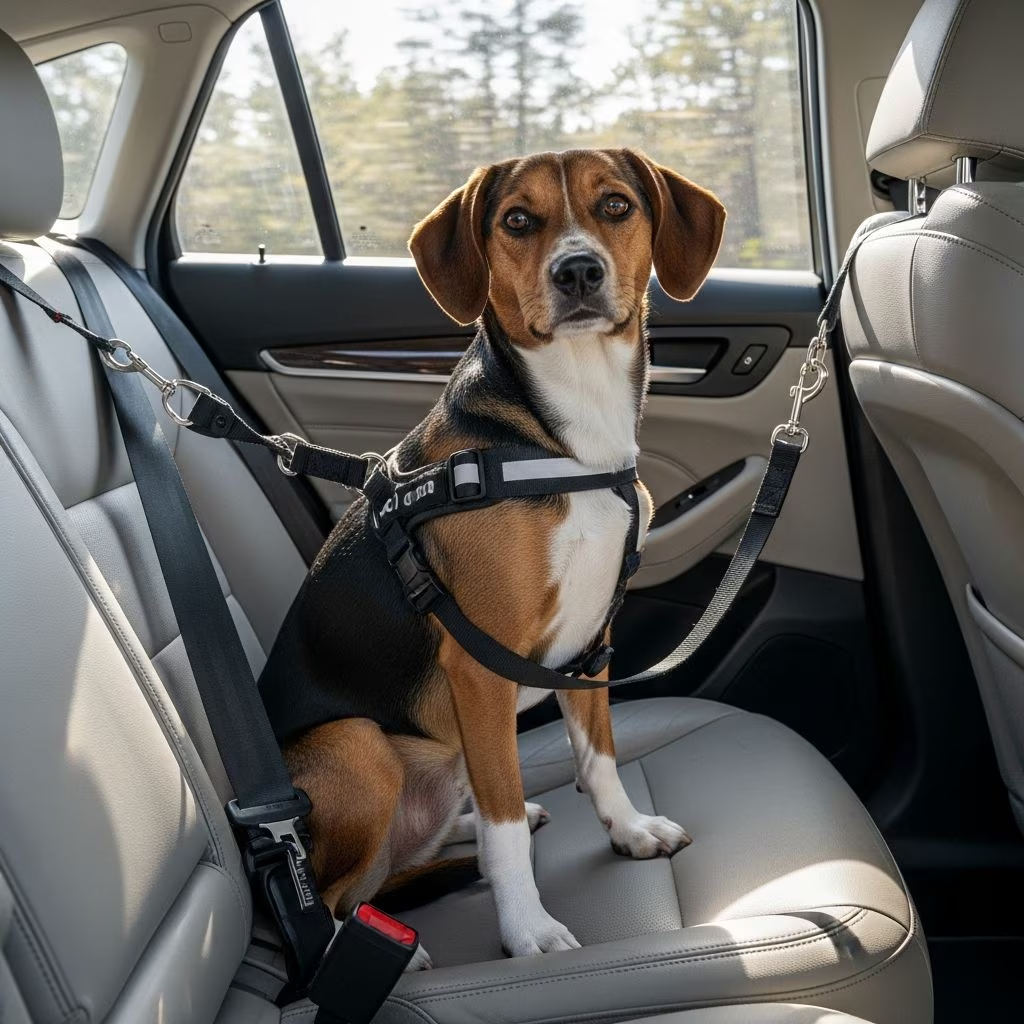
Traveling with dogs requires thoughtful planning to ensure their safety during vehicle transit. One of the most critical decisions pet owners face involves selecting an appropriate restraint system that prevents injury during sudden stops or collisions. Unlike human passengers who benefit from airbags and seatbelts designed specifically for their physiology, dogs need specialized equipment engineered to distribute impact forces safely across their bodies. This guide explores the various approaches to canine car safety and helps owners understand the factors that differentiate quality restraint systems.
Understanding Why Car Restraints Matter for Canine Safety
Unrestrained dogs pose multiple hazards during vehicle operation. A sudden stop or collision can transform an unrestrained dog into a projectile, creating serious injury risk for both the animal and vehicle occupants. Research from the Center for Pet Safety indicates that harness designs consistently outperform other restraint types in crash test scenarios, demonstrating the protective value of properly engineered systems. Beyond collision protection, restrained dogs experience reduced anxiety during travel, as the secure connection provides behavioral reassurance. Additionally, many jurisdictions have begun implementing regulations requiring pet restraint systems during vehicle operation, reflecting growing recognition of this safety imperative.
Pet owners often underestimate the forces generated during vehicle incidents. At relatively modest speeds, physics generates tremendous impact energy. A harness system designed with proper weight distribution and secured attachment points helps absorb and redirect these forces away from vital organs and skeletal structures.
Primary Design Categories for Canine Restraint Systems
The market offers several distinct approaches to restraining dogs during vehicle travel, each with different structural characteristics and safety implications.
Vest-Style Full-Body Harnesses
These systems encompass the dog’s torso with broad panels that contact significant body surface area. The Sleepypod Clickit Terrain represents this category, utilizing an “Infinity Loop” design that creates a seamless connection without discrete failure points. This architectural approach distributes impact forces across multiple anchor points simultaneously. Dogs secured in vest-style systems typically experience the most comprehensive force distribution, though some animals perceive these harnesses as restrictive during travel. The padded construction common to vest designs offers additional comfort during extended journeys.
Seatbelt-Loop Attachment Systems
These harnesses feature attachment loops that thread through a vehicle’s existing seatbelt system. The EZYDOG Drive harness exemplifies this approach, with webbing loops on the back that accept the vehicle’s seatbelt latch plate. This design philosophy leverages existing vehicle safety infrastructure, though the connection points represent potential vulnerability zones during high-impact scenarios. The advantage lies in simplicity of installation and the elimination of vehicle-specific mounting requirements.
Hybrid Configuration Harnesses
Some modern systems combine elements of both approaches. The Sleepypod Clickit Sport incorporates a shock-absorbing padded vest in the front section while maintaining traditional harness design in the rear, with automotive-grade seatbelt loops for vehicle connection. This hybrid philosophy attempts to balance protective coverage with comfort and practicality.
Evaluating Safety Performance Through Crash Testing
Prospective buyers should prioritize harnesses that have undergone rigorous crash testing protocols. The Center for Pet Safety conducts independent evaluations that simulate collision scenarios, measuring how effectively different restraint systems protect canine occupants. When reviewing product specifications, seek documentation indicating crash test participation and results. Third-party validation from organizations focused specifically on pet safety provides more reliable information than manufacturer claims alone.
Crash testing typically evaluates multiple impact scenarios at various speeds and angles. A harness that performs well under frontal impact may behave differently during side impact or rollover scenarios. Comprehensive test data encompasses multiple collision orientations, providing a more complete safety picture than single-scenario testing.
Key Design Features That Enhance Protective Capability
Beyond the basic structural category, several specific design elements contribute meaningfully to restraint effectiveness and user experience.
- Padding Distribution: Neoprene or foam padding in contact areas reduces pressure concentration and distributes forces more uniformly across body surfaces. The EZYDOG Drive incorporates molded neoprene-padded chest and back plates specifically for this purpose.
- Material Quality: Vehicle-tested seatbelt webbing provides superior strength compared to standard harness materials. Wider webbing distributes forces across greater surface areas, reducing localized pressure that could cause injury.
- Attachment Point Engineering: The number and location of connection points between harness and vehicle influence how forces distribute during impact. Systems with multiple redundant attachment pathways offer inherently greater safety margins.
- Adjustment Precision: Systems incorporating numbered straps or visual guides help owners achieve proper centering and tension, ensuring consistent performance across sessions. The EZYDOG Drive includes numbered straps for this purpose.
- Dual D-Rings: Double anchor points for leash attachment in some designs provide flexibility for use beyond vehicle contexts without requiring harness replacement.
Comparative Analysis of Popular Restraint Options
| Harness Type | Safety Rating | Comfort Level | Primary Advantage | Notable Limitation |
|---|---|---|---|---|
| Sleepypod Clickit Terrain | Highest | Moderate | Infinity Loop design eliminates failure points | Can feel restrictive to some dogs during use |
| Ruffwear Load Up | Moderate | Highest | Minimal movement restriction, comfortable fit | Lower safety rating than vest-style alternatives |
| EZYDOG Drive | Moderate-High | Moderate | Vehicle seatbelt integration, numbered strap adjustment | Seatbelt loop attachment creates potential vulnerability |
| Sleepypod Clickit Sport | High | Moderate-High | Hybrid design balances protection and comfort | Premium pricing compared to basic options |
Size Selection and Proper Fitting Considerations
Restraint effectiveness depends critically on appropriate sizing. Harnesses that fit too loosely fail to distribute forces properly during impact, while excessively tight systems restrict breathing and cause discomfort. Most quality systems offer multiple size options based on either weight ranges or chest girth measurements. The Sleepypod Clickit Terrain accommodates dogs from 18 to 110 pounds or chest girth from 16 to 40 inches, representing an unusually broad range within a single size classification.
Owners should measure chest girth according to each manufacturer’s specifications rather than estimating based on body weight alone. Two dogs of identical weight may have significantly different chest dimensions depending on body structure. Proper fit allows approximately one finger of clearance between the harness and the dog’s body, providing secure restraint without excessive pressure.
Installation and Vehicle Integration
Different harness systems require distinct installation approaches. Seatbelt-loop designs necessitate threading the vehicle’s existing seatbelt through harness attachment points before securing the seatbelt buckle. This process remains consistent across vehicle models and requires no permanent modifications. Vest-style harnesses with multiple anchor points may benefit from vehicle-specific mounting solutions, though many models function adequately when secured to existing seatbelt systems.
The Center for Pet Safety recommends avoiding harness designs that include separate tether connections, as these can distract drivers and create safety hazards. Vehicle-integrated systems that utilize existing seatbelt mechanisms provide superior safety outcomes compared to supplementary tether systems.
Balancing Safety Priorities with Comfort and Practicality
Pet owners often face competing priorities when selecting restraint systems. Maximum safety designs sometimes impose comfort trade-offs, with some dogs experiencing anxiety from restrictive positioning. The Ruffwear Load Up harness prioritizes comfort and minimal movement restriction, though this design philosophy results in lower crash-test safety ratings compared to more comprehensive vest-style alternatives.
Realistic decision-making requires honest assessment of individual circumstances. Dogs that travel frequently in vehicles may justify investment in premium crash-tested systems. Occasional short trips might accommodate less-intensive restraint approaches. Dogs with pre-existing anxiety around vehicles may benefit from harnesses specifically engineered to minimize restrictive sensation, even if this choice involves modest safety trade-offs.
Price Considerations and Value Assessment
Quality canine restraint systems range from approximately $80 to $115 for popular options. While premium pricing correlates generally with enhanced safety features and crash-tested design, entry-level systems still provide meaningful protection compared to unrestrained travel. The Ruffwear Load Up at $80 represents the most affordable option in the comparison category. Mid-range pricing of $95-$115 covers most serious crash-tested designs with comprehensive safety engineering.
Owners should evaluate pricing in context of expected usage duration and the replacement timeline. Harnesses that accommodate growth or can be adjusted across multiple dogs provide better long-term value than single-use systems.
Frequently Asked Questions About Dog Car Restraints
Can I use a regular walking harness for vehicle travel?
Regular walking harnesses lack engineering specifically designed for impact forces and may incorporate attachment systems unsuitable for vehicle application. For safety-critical vehicle use, dedicated car restraint harnesses provide superior protection through crash-tested design and vehicle-appropriate attachment mechanisms.
How do I know if my current restraint system has been crash tested?
Manufacturers that have subjected their products to independent crash testing typically highlight this achievement prominently in marketing materials and product documentation. Research from the Center for Pet Safety provides comprehensive crash test data for many popular harness models.
What size harness should I choose for a dog between size categories?
Always size up rather than down when a dog falls between category boundaries. Oversized harnesses can be adjusted for proper fit, while undersized systems cannot be expanded and may restrict breathing or movement.
How often should harnesses be replaced?
Regular inspection for wear, fraying, or weakened attachment points helps identify when replacement becomes necessary. Most quality harnesses endure several years of regular use if properly maintained and not subjected to impact incidents.
Conclusion: Making an Informed Selection
Selecting an appropriate dog car restraint represents a significant responsibility for pet owners. The array of available options, each with distinct advantages and limitations, requires careful evaluation based on individual circumstances, safety priorities, and practical constraints. Crash-tested designs from reputable manufacturers provide the highest confidence in protective capability during impact scenarios. Balancing safety engineering with comfort considerations and realistic usage patterns guides owners toward appropriate selections. Whether prioritizing maximum protective coverage through vest-style systems or embracing practical simplicity through seatbelt-loop integration, the act of restraining dogs during vehicle travel demonstrates fundamental commitment to their wellbeing and the safety of all vehicle occupants.
References
- How to Choose the Best Dog Car Safety Harness (Crash-Tested) — EzyDog. Accessed March 2026. https://ezydog.co.nz/blogs/news/how-to-choose-the-best-dog-car-safety-harness
- Best Crash-Tested Dog Harnesses For The Car — GoPetFriendly. Accessed March 2026. https://www.gopetfriendly.com/blog/crash-tested-dog-harnesses/
- Dog Car Harnesses Review — Whole Dog Journal. Accessed March 2026. https://www.whole-dog-journal.com/care/collars-harnesses-leashes-muzzles/dog-car-harnesses-review/
- Best Dog Car Seats and Restraints for 2026, Tested — Car and Driver. March 2026. https://www.caranddriver.com/car-accessories/g60191102/best-dog-car-seats-restraints-tested/
- How to Select a Harness — Center for Pet Safety. Accessed March 2026. https://www.centerforpetsafety.org/pet-parents/how-to-select-a-harness/
- How to Choose the Best Dog Safety Seat Belt — The Dogington Post. Accessed March 2026. https://www.dogingtonpost.com/how-to-choose-the-best-dog-safety-seat-belt/



