

The gnarly scoop on canine transmissible venereal tumors by Dr. Alycia Washington, DVM, MS
Picture this: Charlie, a handsome 2-year-old unneutered male mixed-breed dog, finally gets his big break. Rescued from the streets, he lands in a loving new home. But just weeks later, something’s off. He’s obsessively licking his prepuce—the sheath around his penis—and his breath reeks.
At the vet, they gently pull back the prepuce to reveal a horrifying sight: a lumpy, irregular tumor at the base of his penis. Tests confirm it: Charlie has canine transmissible venereal tumor (TVT), a contagious cancer passed directly from dog to dog. While alarming, TVT is treatable, and understanding it can help prevent heartbreak for pet parents everywhere.
TVT, also known as sticker’s sarcoma or transmissible venereal tumor, is one of only three known contagious cancers in mammals (the others affect Tasmanian devils and Syrian hamsters). Unlike typical cancers caused by genetic mutations, TVT spreads viable cancer cells from one dog to another via direct contact. It’s most common in tropical and subtropical regions like parts of South America, Africa, and Asia, where stray dog populations are high and spay/neuter rates are low.
How does sexually transmitted cancer happen?
Canine transmissible venereal tumors spread through direct physical contact between dogs. The primary route is sexual intercourse, where cancer cells from an infected dog’s genital tumor transfer to the healthy dog’s mucous membranes. But it’s not limited to mating—any skin-to-skin contact with the tumor can transmit the cells, including during fights or close sniffing.
Once transferred, these rogue cells “implant” in the new host, behaving like a graft. They proliferate rapidly, forming a new tumor at the contact site. Remarkably, the tumor cells are genetically identical to the original strain, traceable back to a single wolf-like ancestor in ancient Asia around 11,000 years ago. Over millennia, these cells have evolved to evade dog immune systems, allowing persistence across breeds and continents.
TVT thrives in immunocompromised or young dogs, but even healthy adults can contract it. Prevention hinges on responsible ownership: spaying/neutering, avoiding contact with strays, and supervising dog park interactions. In endemic areas, vaccination trials are underway, but none are commercially available yet.
Recognizing the signs of TVT
TVT tumors typically begin as small, pinkish lumps on the penis, vulva, or surrounding skin. They grow quickly—sometimes doubling in size within days—becoming friable (easily bleeds), ulcerated, and inflamed. Affected dogs lick excessively, worsening irritation and leading to secondary bacterial infections. Common symptoms include:
- Frequent licking or chewing at genitals
- Bloody discharge or oozing from the area
- Foul-smelling breath or odor from the tumor
- Swelling that protrudes noticeably
- Difficulty urinating or defecating in severe cases
If caught early, the tumor may resemble a benign polyp. But progression brings cauliflower-like masses, up to several inches across, causing pain and behavioral changes like lethargy or aggression.
How do some dogs end up with a sexually transmitted tumor on their face?
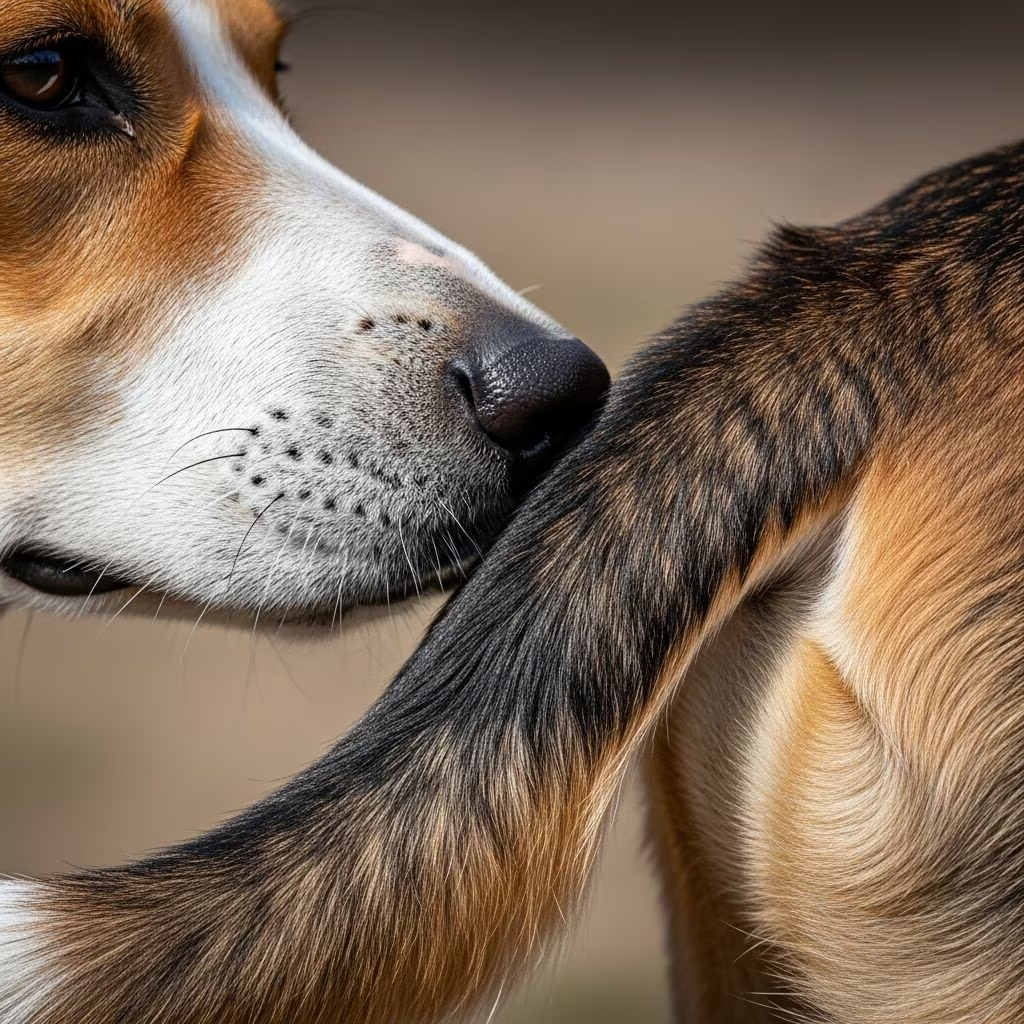
Yes, dogs can develop TVT tumors on their faces, noses, and mouths purely from sniffing infected genitals—a condition dubbed primary oronasal canine transmissible venereal tumor (CTVT). While genital TVT dominates cases, oronasal forms occur when dogs inhale or lick tumor cells during butt-sniffing greetings.
A landmark study from the University of Cambridge analyzed nearly 2,000 TVT cases over 10 years. Only 32 were primary oronasal (1.6%), but males dominated: 84% (27 cases) versus just 16% in females. Why the disparity? Anatomy and behavior.
Male dogs actively sniff female genitals to detect estrus pheromones, increasing exposure to vulvar tumors, which are more externally visible than penile ones sheathed in the prepuce. Females rarely sniff male genitals as intently. The study notes: “Female genital CTVT tend to be more exposed and accessible for licking or sniffing than those of males… coupled with a likely male preference for licking and sniffing female genitalia, may contribute to increased risk of oronasal CTVT in males.”
Oronasal symptoms mimic other issues: persistent sneezing, nasal discharge (often bloody), facial swelling, drooling, halitosis, and even tooth loss as tumors invade gums. Dogs may paw at their nose or snort. Though rare globally (under 2% of TVT), incidence spikes in high stray populations.
How can we tell canine transmissible venereal tumors apart from other lumps and bumps?
TVT mimics many conditions, from benign cysts to deadly cancers like mast cell tumors or squamous cell carcinoma. Key differentiators:
| Feature | TVT | Other Lumps (e.g., Benign/Squamous Cell) |
|---|---|---|
| Location | Genitals, mouth/nose | Anywhere on body |
| Growth Speed | Rapid (days-weeks) | Slow (months) |
| Appearance | Friable, ulcerated, cauliflower-like | Firm, hairless, non-bleeding |
| History | Stray/breeding exposure | No contact history |
| Cytology | Round cells, mitoses | Varies (e.g., mast cells) |
Diagnosis starts with history: roaming dogs, recent breeding, or dog park visits raise red flags. Physical exam reveals classic lesions. Confirmation via fine-needle aspirate (FNA) cytology shows uniform round “histiocyte-like” cells with high mitotic rates. Biopsy provides histology if needed. PCR can genotype the tumor, confirming ancient CTVT lineage.
Serology or imaging rules out metastases (rare in TVT). Vets differentiate from transmissible lymphoma or fungal infections via location and cell morphology.
Treatment options for TVT
TVT responds excellently to treatment, with cure rates over 90%. Chemotherapy is first-line, using drugs like vincristine (weekly IV injections for 4-6 weeks). Tumors shrink dramatically by week 2; most regress fully by week 6. Side effects are minimal in dogs.
Surgery suits tiny, accessible tumors but risks incomplete margins on genitals. Radiation or topical agents are alternatives for oronasal cases. Spontaneous regression occurs in 20-50% via immune rebound, but treatment accelerates recovery.
Post-treatment, spay/neuter prevents recurrence. Monitor for 3-6 months. In breeding dogs, isolate during therapy.
Prevention and when to see a vet
Prevent TVT by:
- Spaying/neutering before first heat (reduces roaming/mating)
- Supervising off-leash interactions, especially with unknowns
- Avoiding stray-heavy areas; vaccinate against rabies/core diseases
- Regular vet checkups for early lumps
See a vet immediately for genital licking, foul odors, or nasal issues. Early intervention saves pain and money—chemo costs $200-500 total.
Frequently Asked Questions (FAQs)
Q: Can my dog get TVT from casual butt-sniffing at the dog park?
A: Risk is low but real for oronasal TVT. Males sniffing infected females are most vulnerable. Supervise greetings.
Q: Is TVT fatal?
A: No, with treatment. Untreated genital tumors cause sepsis; oronasal block airways. Cure rate exceeds 90%.
Q: Does TVT spread to humans or other pets?
A: No, species-specific to dogs. Cats and humans are safe.
Q: Why is TVT more common in strays?
A: Intact dogs mate freely; poor immunity aids implantation. Rare in neutered pets.
Q: Can vaccinated dogs still get TVT?
A: No commercial vaccine exists yet, but trials show promise in endemic areas.
Related Insights: Why Dogs Sniff Butts
Dogs’ butt-sniffing is instinctual, powered by Jacobson’s organ for pheromone detection. Anal glands release unique scents revealing age, health, sex, diet, and mood. Males target females for reproductive cues, explaining TVT risks.
References
- Don’t Worry, But Dogs Can Get Cancer From Sniffing Other Dogs’ Nether-Regions — Kinship (Dr. Alycia Washington, DVM, MS). 2023. https://www.kinship.com/dog-health/dog-cancer-sniffing-butts-tvts
- Why Do Dogs Sniff Butts? — Kinship (Alexandra Bassett). 2023. https://www.kinship.com/dog-behavior/why-do-dogs-sniff-butts
- Why Do Dogs Sniff Each Other’s Butts? (Infographic) — American Chemical Society. 2019-01-15. https://www.acs.org/content/dam/acsorg/pressroom/reactions/infographics/why-dogs-sniff-each-other.pdf
- Should you let your dog sniff other dogs’ butts? There may be a hidden risk — Inverse. 2023. https://www.inverse.com/science/dog-butt-sniffing-risk
- Global Spread of Canine Transmissible Venereal Tumour (CTVT) in Europe — Veterinary Record (peer-reviewed). 2024-05-20. https://bvajournals.onlinelibrary.wiley.com/doi/full/10.1002/vetr.3467



