

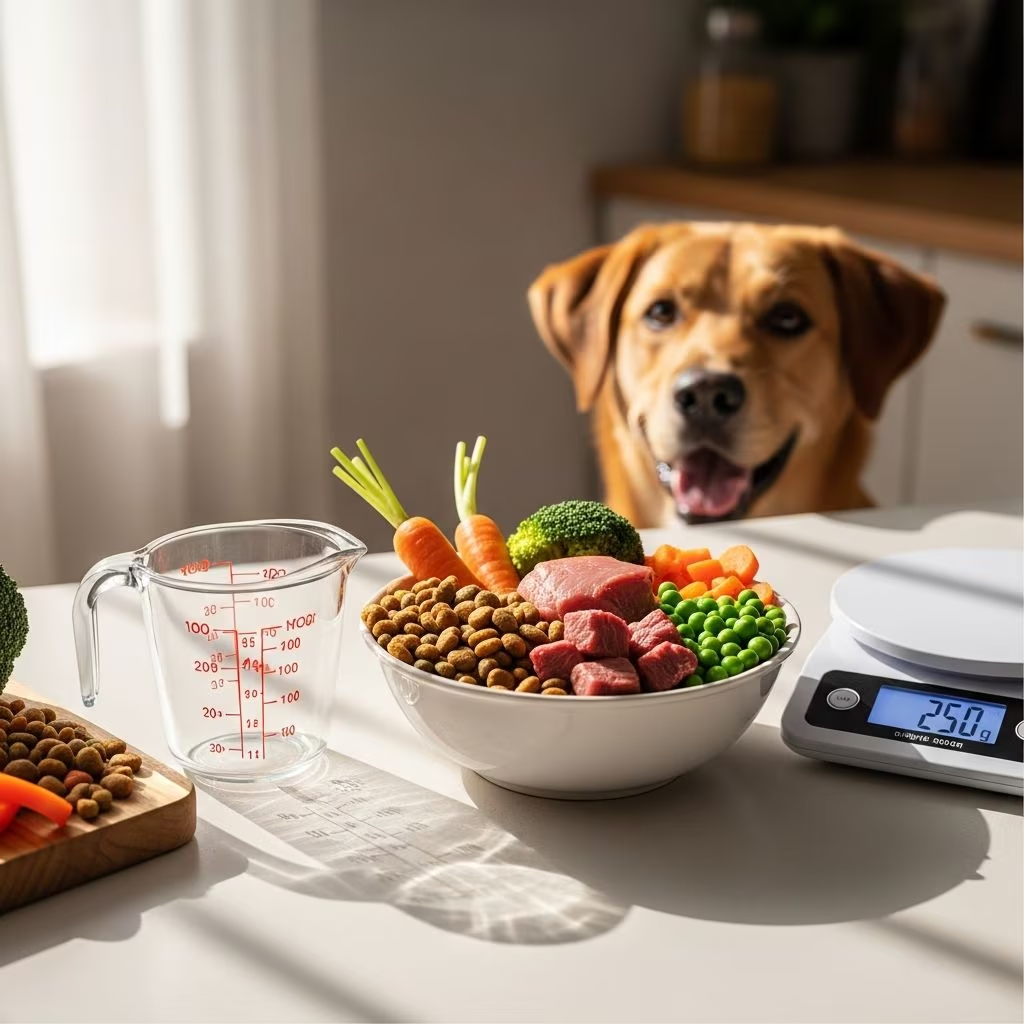
Determining the right number of calories for your dog is crucial for maintaining ideal body weight, supporting energy levels, and promoting long-term health. This guide breaks down the science behind canine energy requirements, offering formulas, factors influencing needs, and practical tools to help you feed your pet appropriately.
Understanding Canine Energy Basics
Dogs require energy from food to fuel basic bodily functions, physical activity, and growth or reproduction. The foundation of calorie calculation starts with the Resting Energy Requirement (RER), which represents the calories needed for essential processes like breathing, heart function, and maintaining body temperature when at rest. From there, adjustments are made for daily life demands to arrive at the Daily Energy Requirement (DER) or Maintenance Energy Requirement (MER).
The standard formula for RER in dogs is RER = 70 × (body weight in kg)0.75. This exponential equation accounts for the fact that metabolic rate scales differently with size—smaller dogs have higher relative energy needs per pound than larger ones.
Key Factors Influencing Calorie Requirements
Several variables beyond basic weight affect how many calories a dog needs. Owners must evaluate these to avoid underfeeding, which can lead to weight loss or lethargy, or overfeeding, which contributes to obesity—a common issue in pets.
- Body Weight and Condition: Use Body Condition Score (BCS) on a 1-9 or 1-5 scale to assess if your dog is lean, ideal, overweight, or obese. Ribs should be palpable without excess fat cover; waist visible from above.
- Activity Level: Sedentary couch potatoes need fewer calories than working dogs or those with long daily walks. Classify as low (1.2×RER), moderate (1.5×RER), or high (2.0×RER).
- Life Stage: Puppies demand 2-3 times adult RER for growth; seniors may need less due to reduced metabolism.
- Neutered Status: Spayed or neutered dogs often require 20-40% fewer calories as metabolism slows and activity drops.
- Environment: Cold climates increase needs for thermoregulation; short-haired breeds in winter may need up to 20% more.
- Health Issues: Conditions like diabetes, hypothyroidism, or injuries alter requirements—consult a vet for specifics.
Step-by-Step Calorie Calculation
Follow these steps to compute your dog’s needs accurately.
- Convert Weight to Kilograms: Divide pounds by 2.2 (e.g., 20 lb dog = 9.09 kg).
- Calculate RER: Apply the formula. For a 9.09 kg dog: 70 × (9.09)0.75 ≈ 430 kcal/day.
- Apply Multipliers: Multiply by factors based on profile:
- Puppy (up to 4 months): 3×RER
- Active adult: 1.6-2×RER
- Neutered adult: 1.6×RER (or less)
- Weight loss: 0.8×RER
- Monitor and Adjust: Weigh monthly and tweak by 10-20% based on BCS.
Calorie Needs by Weight and Lifestyle
Use this table for quick estimates of daily calories (kcal) tailored to dog profiles. These are approximations—individualize as needed.
| Weight (lb) | Puppy <4 mo | Puppy >4 mo | Neutered Adult | Intact Adult | Obese-Prone | Weight Loss |
|---|---|---|---|---|---|---|
| 10 | 654 | 436 | 349 | 392 | 305 | 218 |
| 20 | 1098 | 732 | 586 | 659 | 512 | 366 |
| 30 | 1491 | 994 | 795 | 895 | 696 | 497 |
| 40 | 1848 | 1232 | 986 | 1109 | 862 | 616 |
| 50 | – | 1458 | 1166 | 1312 | 1021 | 729 |
| 70 | – | 1876 | 1501 | 1688 | 1313 | 938 |
For example, a 20 lb neutered adult with moderate activity might need around 586-900 kcal, depending on precise factors.
Adjusting for Special Circumstances
Puppies and Growth
Young dogs have rapid growth rates, requiring calorie-dense food. Feed 2-3×RER until 4 months, then taper. Overfeeding here risks skeletal issues.
Seniors and Reduced Activity
Aging dogs experience 10-20% metabolic decline. Switch to senior formulas and reduce portions while monitoring muscle mass.
Pregnancy and Lactation
Gestating females need gradual increases up to 1.5×RER; nursing moms can require 2-6×RER based on litter size.
Obesity Management
For overweight dogs, aim for 0.8×RER initially, combined with exercise. Gradual 1-2% weekly loss prevents metabolic slowdown.
Practical Feeding Tips
Check food labels for kcal per cup or ounce. Divide total daily calories into 2-3 meals to aid digestion. Track intake with apps or journals.
- Fresh water always available.
- Incorporate veggies for fiber without excess calories.
- Avoid table scraps—25% of obesity cases link to human food.
Reassess every 3 months or after life changes like neutering.
Common Mistakes to Avoid
- Ignoring BCS: Formulas are starting points; body feel trumps math.
- Static Feeding: Needs change with seasons or health.
- Treat Overload: Limit to 10% of calories.
- Breed Oversights: Giants like Great Danes need less per lb than toys.
Frequently Asked Questions
How often should I recalculate my dog’s calories?
Every 3-6 months, or after weight changes, neutering, or activity shifts. Use BCS as your guide.
What’s the best way to measure portions?
Weigh food with a kitchen scale for precision; cups vary by kibble density.
Can I use human calorie rules for dogs?
No—dogs metabolize differently. Always use canine-specific formulas.
What if my dog won’t eat the calculated amount?
Consult a vet; underlying issues like dental pain or illness may be at play.
Are raw diets different for calorie counting?
Yes—calculate based on total kcal from ingredients, adjusting for high moisture content.
Tools and Professional Advice
Online calculators from vet sites provide estimates, but pair with vet input for conditions like allergies or heart disease. Regular check-ups ensure tailored nutrition.
References
- Identifying Activity Level for Canine Calorie Calculations — Perfectly Rawsome. 2023. https://perfectlyrawsome.com/raw-feeding-knowledgebase/activity-level-canine-calorie-calculations/
- Dog Diet Calorie Requirements For Dogs — Animal Medical Center of Chicago. 2024. https://www.animalmedicalcenterofchicago.com/dog-diet-calorie-requirements-for-dogs/
- Metabolic Food Requirements for Your Pet — Wilson Veterinary Hospital. 2023. https://wilsonvet.net/metabolic-food-requirements-for-your-pet/
- Estimate How Much to Feed Your Dog or Cat — Association for Pet Obesity Prevention. 2025. https://petobesityprevention.org/pet-caloric-needs
- Calorie Calculator — Pet Nutrition Alliance. 2024. https://petnutritionalliance.org/resources/calorie-calculator/
- Calories — AAFCO. 2025. https://www.aafco.org/consumers/understanding-pet-food/calories/



