

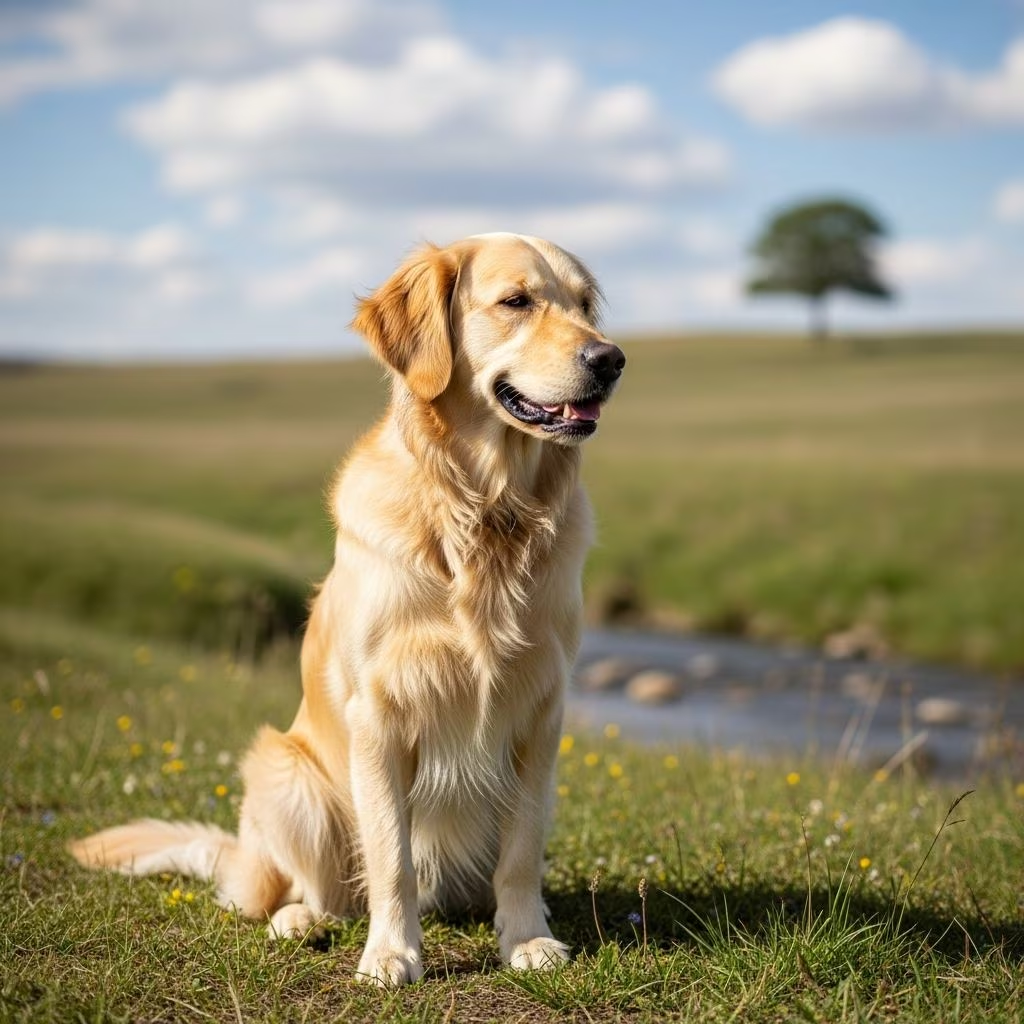
Dogs communicate primarily through body language, using subtle gestures known as calming signals to de-escalate tension, express discomfort, or promote peace during interactions. These signals help prevent misunderstandings that could lead to conflict, whether with other dogs, people, or new environments.
Understanding the Role of Calming Signals in Canine Communication
Calming signals are intentional behaviors dogs display to signal non-threat, reduce arousal, or self-soothe under stress. Originating from their social pack instincts, these cues evolved to maintain group harmony without resorting to aggression. Unlike overt vocalizations like barking, these are often understated, requiring owners to observe closely.
Stress triggers for dogs include overstimulation, fear, excitement, or uncertainty. In such moments, a dog might yawn excessively or lick its lips not from tiredness or hunger, but as a plea for space. Recognizing these early prevents escalation to growling or snapping.
Key Calming Signals Every Dog Owner Should Recognize
Dogs employ a repertoire of gestures, each conveying a message of peace. Here’s a breakdown of the most prevalent ones:
- Yawning: Often misinterpreted as sleepiness, yawning in social contexts indicates stress relief or a request to slow down interactions.
- Lip or Nose Licking: A quick tongue flick over the nose or lips signals discomfort, akin to a verbal ‘back off’ without confrontation.
- Shaking Off: A full-body shake, like after a bath, releases tension post-interaction, common after play or greetings.
- Averting Gaze or Turning Head/Body Away: Breaking eye contact or angling the body shows deference and avoids challenge.
- Paw Lift: Raising a front paw suggests hesitation or appeasement, often paired with a lowered posture.
- Sniffing the Ground: Sudden sniffing diverts attention and diffuses direct approaches.
- Slow Movement or Curving Path: Approaching in arcs rather than straight lines prevents intimidation.
- Freezing or Sitting/Lying Down: Pausing or lowering to the ground communicates non-aggression.
These signals frequently cluster; a single cue might not indicate distress, but multiples warrant attention.
Interpreting Calming Signals in Daily Scenarios
Context is crucial. A dog shaking off after a vet visit differs from one doing so during a park greeting. Common situations include:
- Walks and Dog Meetings: Your dog slows, sniffs intently, or curves around an oncoming dog to signal friendliness.
- Home Greetings: Excited jumps followed by repeated shakes indicate overload; the dog seeks a calmer approach.
- Children or Strangers: Yawning or lip licking when approached too directly requests gentler handling.
- Vet or Groomer Visits: Paw lifts, freezing, or averted gazes show anxiety; owners can intervene by mimicking calm.
| Scenario | Common Signals | Owner Response |
|---|---|---|
| Park Encounter | Curving path, sniffing, yawning | Increase distance, slow pace |
| Family Greeting | Shaking off, lip lick | Sit calmly, avoid looming |
| Unfamiliar Person | Head turn, paw lift | Allow space, no forced pets |
| High-Energy Play | Freezing, slow movement | Pause play, de-escalate |
Advanced Signs: From Stress to Fear Escalation
Beyond basic calming, dogs show displacement behaviors under mounting pressure. Panting without heat, whale eye (visible whites), or submissive urination signal rising discomfort. Tail positions matter: low and tucked indicates fear, while stiff high wags suggest agitation.
Hackles (raised fur), lip curling, or drooling precede aggression. Early calming signal awareness allows intervention before these thresholds.
How Humans Can Use Calming Signals to Communicate Back
Owners can mirror these gestures to reassure dogs, fostering trust. Techniques include:
- Turn your head away briefly instead of staring.
- Yawn softly or lick lips to match their signals.
- Approach in curves, never head-on.
- Sit or crouch to appear less threatening.
- Speak softly and move slowly during tense moments.
Practice yields results; dogs quickly learn humans ‘speak their language,’ reducing reactivity over time.
Training Exercises to Enhance Signal Recognition
Build your skills with these steps:
- Observe Neutrally: Watch your dog in low-stakes settings, noting baselines.
- Video Analysis: Record interactions; replay to spot subtle cues.
- Controlled Exposures: Introduce mild stressors (e.g., doorbell), reward calm responses.
- Mimic and Reward: Use signals yourself, treat when dog relaxes.
- Group Classes: Enroll in positive reinforcement training for real-world practice.
Consistency transforms misunderstandings into mutual understanding.
Common Misinterpretations and Pitfalls
Mistaking play bows for invitations or shakes for mere dirt removal leads to errors. Always consider clusters and context. Overlooking signals risks bites; underreacting prolongs stress.
Breed variations exist—herding dogs may curve more, hounds sniff frequently—but universals apply across.
FAQs on Dog Calming Signals
What if my dog shows multiple calming signals?
It’s a strong stress indicator. Create space and reduce stimuli immediately.
Can puppies use calming signals?
Yes, from young ages, though less refined; early recognition aids development.
Is tail wagging always happy?
No—context-dependent; stiff wags signal arousal.
How quickly should I respond to signals?
Instantly, to prevent escalation and build reliability.
Do all dogs use the same signals?
Most do, but individuals vary; learn your dog’s unique set.
Long-Term Benefits of Signal Awareness
Proficient owners report fewer incidents, stronger bonds, and confident pets. Integrating signals into routines enhances welfare, from walks to vet trips. Professional trainers emphasize this as foundational.
Expand knowledge via reputable resources; observe ethically without forcing stress.
References
- Dog Calming Signals — FernDog Training. Accessed 2026. https://www.youtube.com/watch?v=kGZuuzRiZMI
- Dog Body Language: Calming Signals — AKC Pet Insurance. Accessed 2026. https://www.akcpetinsurance.com/blog/calming-signals-what-your-dog-says-with-gestures
- Calming Signals in Dogs: Understanding Your Dog’s Language — The Training of Dogs. Accessed 2026. https://www.thetrainingofdogs.com/post/calming-signals-in-dogs-understanding-your-dogs-language
- Dog Body Language: Signs of Comfort, Stress, and More — Best Friends Animal Society. Accessed 2026. https://bestfriends.org/pet-care-resources/dog-body-language-signs-comfort-stress-and-more
- How to understand calming signals from your dog — YouTube. Accessed 2026. https://www.youtube.com/watch?v=YKr6WLksOKQ
- Body Language in Dogs — Wisconsin Humane Society. Accessed 2026. https://www.wihumane.org/dog-body-language
- Canine Calming Signals — SPCA. Accessed 2026. https://spca.org/file/Canine-Calming-Signals.pdf



