

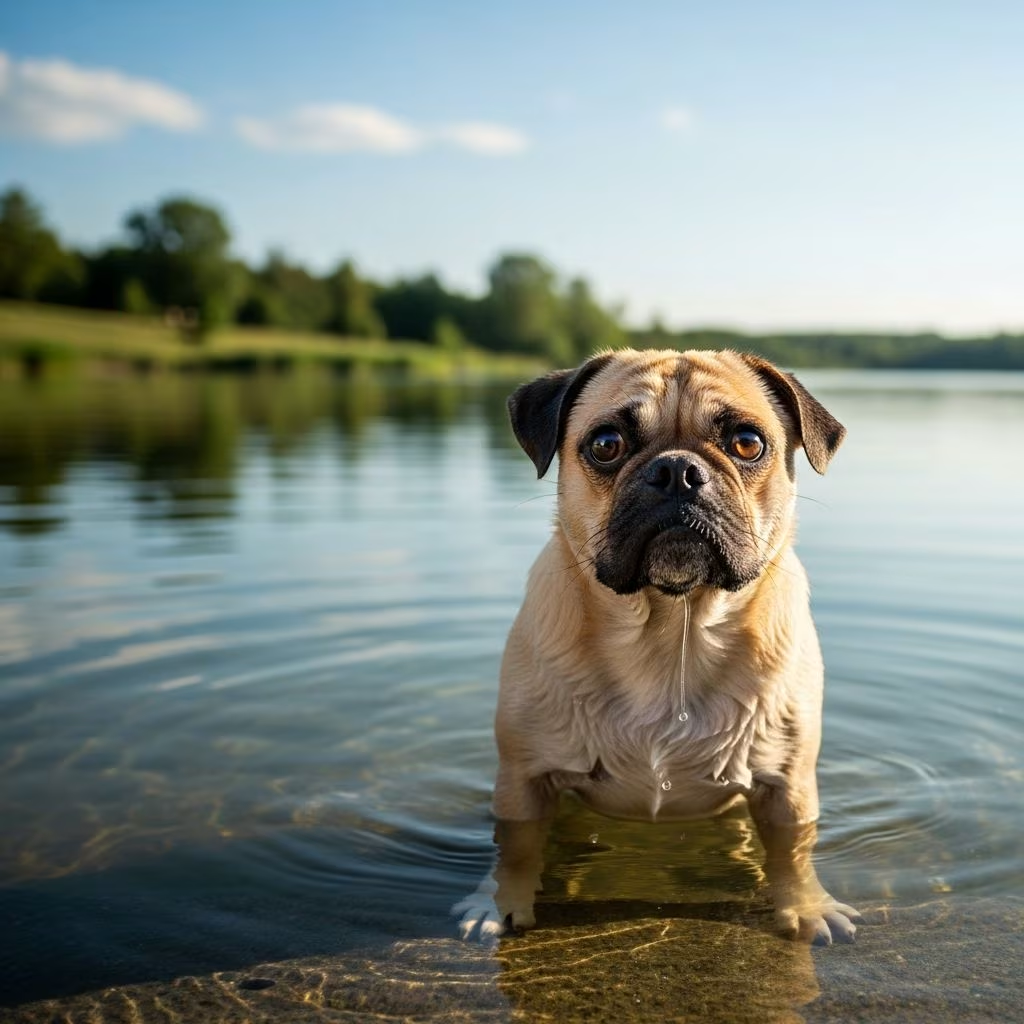
Not every dog is a natural water lover. While many breeds paddle effortlessly, others face serious challenges staying afloat due to their unique physical traits. Understanding these limitations helps owners prevent accidents and ensure safe fun.
Why Anatomy Affects Swimming in Dogs
Dogs’ ability to swim hinges on body structure. Key factors include leg length, body density, chest depth, and facial shape. Short legs make paddling inefficient, heavy builds reduce buoyancy, deep chests cause sinking rears, and flat faces (brachycephaly) force awkward head tilts that sink the hindquarters. Approximately 8% of breeds struggle significantly, per studies on canine physiology.
Brachycephalic breeds, with pushed-in noses, battle water entering nasal passages, making breathing labored. They often tilt heads upward excessively, leading to vertical positioning and rapid fatigue. Muscular or stocky dogs with disproportionate head-to-body weight also tire quickly, as dense muscle sinks them.
Common Breeds at Risk in Water
Several popular breeds require extra caution near water. Here’s a breakdown of those most prone to swimming difficulties:
- Bulldogs: Stocky frames, massive heads, and short limbs create poor buoyancy. Heavy fronts sink them fast without support.
- Pugs: Barrel bodies, stubby legs, and short snouts limit stamina and efficiency. They overheat easily during exertion.
- Basset Hounds: Long torsos with short legs cause rear sinking and front floating, yielding unstable, vertical strokes. Low endurance exacerbates issues.
- French Bulldogs: Flat faces demand head tilting, sinking hips. Short noses hinder smooth breathing.
- Boxers: Deep chests and short muzzles impede level floating; muscular builds add weight.
- Dachshunds: Elongated bodies and tiny legs demand extra effort to stay horizontal.
- Corgis: Big rears, short legs, and low centers of gravity lead to quick exhaustion from constant paddling.
- Shih Tzus: Compact forms and short snouts cause rapid tiring; delicate builds lack propulsion power.
- Maltese: Fragile bones and small legs hinder effective movement; they fatigue swiftly.
Other mentions include Chow Chows (thick fur weighs them down), Staffordshire Bull Terriers (dense muscles overwhelm head buoyancy), and Dobermans (deep chests sink rears).
Recognizing Signs of Swimming Struggle
Owners must spot distress early. Watch for frantic paddling, head bobbing above water, rear sinking, labored breathing, or attempts to exit water repeatedly. These breeds often lack instinctive doggy paddle, panicking instead. High-energy types like Dobermans may push too hard, risking exhaustion. Test in shallow, controlled areas first.
Safety Measures for Non-Swimmers
Prevention beats rescue. Essential strategies include:
- Never leave them unattended near water, even pools or baths.
- Use canine life jackets fitted snugly, with handles for lifting. Ensure neck and underbelly support.
- Stick to shallow waters no deeper than elbows or chest.
- Supervise constantly; enter water with them.
- Avoid strong currents, cold water, or open lakes/oceans.
| Breed | Main Issue | Recommended Jacket Type |
|---|---|---|
| Bulldog | Heavy head, short legs | Full-body support with lift handle |
| Pug | Short snout, low stamina | Lightweight, quick-release |
| Basset Hound | Sinking rear | Rear flotation emphasis |
| Corgi | Short legs, big rear | Balanced buoyancy |
Alternatives to Traditional Swimming
For exercise without submersion risks, consider these options:
- Kiddie Pools: Shallow splashing cools them safely.
- Hydrotherapy Tanks: Controlled, warm water with harness support aids rehab without free swimming.
- Land Activities: Walking, fetch, or agility builds fitness minus water worries.
- Sprinklers/Hoses: Playful cooling without depth.
Hydrotherapy benefits breeds like Bassets or Dachshunds for joint relief, as therapists adjust for poor technique.
Training Tips for Water Confidence
Gradual exposure builds tolerance. Start with positive associations:
- Introduce toys near water edges.
- Use treats for paw dips.
- Progress to supported floats in life jackets.
- Keep sessions short (5-10 minutes) to avoid fatigue.
- End on positive notes; never force.
Professional trainers can use treadmills or pools with ramps. Patience is key—some never enjoy it.
Health Risks Beyond Drowning
Water poses extras: ear infections from floppy ears (Bassets), overheating in brachycephalics, or exhaustion cramps. Wet fur chills small breeds like Maltese. Post-water drying, ear cleaning, and warmth prevent issues. Consult vets for breed-specific advice.
Breed Comparisons: Swimmers vs. Sinkers
| Good Swimmers | Poor Swimmers | Why the Difference |
|---|---|---|
| Labrador Retriever | Bulldog | Streamlined body vs. stocky build |
| Golden Retriever | Pug | Long legs vs. short snout |
| Portuguese Water Dog | Corgi | Webbed feet vs. low gravity center |
Breeds bred for water work excel; companions bred for looks falter.
Frequently Asked Questions
Can all dogs wear life jackets?
Yes, properly sized ones suit most, providing flotation for safety.
Is swimming ever okay for brachycephalic breeds?
With jackets, supervision, and short sessions—yes, but cautiously.
What if my dog panics in water?
Lift them out immediately; avoid forcing exposure.
Do short-legged breeds improve with age?
Anatomy limits persist, but training aids confidence.
How to choose a dog life jacket?
Look for adjustable straps, multiple handles, and breed-specific designs.
Knowing your breed’s limits fosters responsible ownership. Prioritize safety for joyful, worry-free summers.
References
- Which dog breeds can’t swim? — Purely Pets Insurance. 2024-05-20. https://www.purelypetsinsurance.co.uk/blogs/which-dog-breeds-cant-swim/
- Help! 13 Dog Breeds That Can’t Swim — KUOSER. N/A. https://www.kuoser.com/blogs/news/13-dog-breeds-that-can-not-swim
- Dogs That Don’t and Do Love To Swim — Canine Country. N/A. https://caninecountry.org/dogs-that-dont-and-do-love-to-swim/
- Why These Dog Breeds Can’t Swim — Sit Means Sit. N/A. https://sitmeanssit.com/dog-training-mu/south-orange-county/why-these-dog-breeds-cant-swim/
- 9 Dog Breeds That Don’t Like Water — PetMD. N/A. https://www.petmd.com/dog/slideshows/9-dog-breeds-dont-water
- The Dog Breeds That Don’t Like Water — PetCareRx. N/A. https://www.petcarerx.com/article/the-dog-breeds-that-dont-like-water/3019
- How Different Dog Breeds Respond to Hydrotherapy — OnlinePetHealth. N/A. https://onlinepethealth.com/the-tendencies-and-challenges-of-different-breed-types-during-hydrotherapy/



