

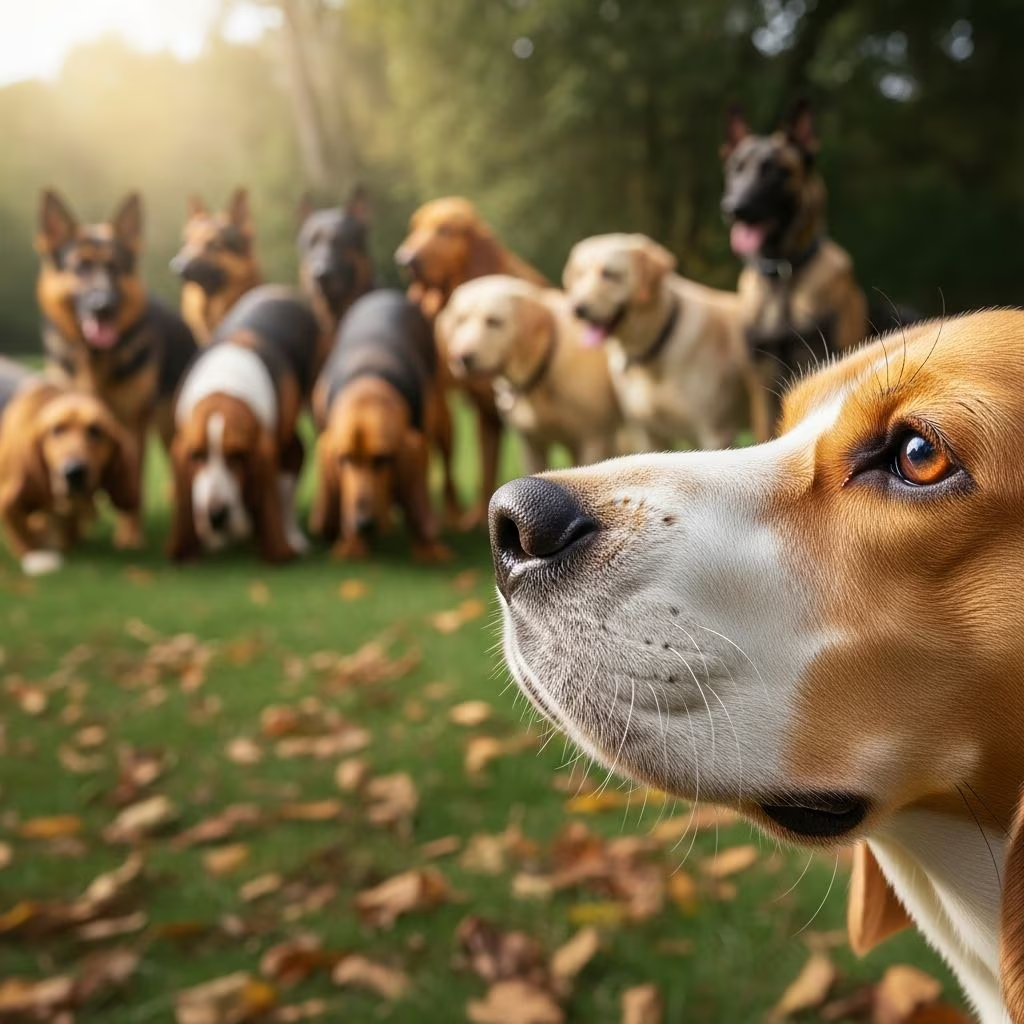
15 Dog Breeds with the Best Sense of Smell
Dogs have long been valued for their incredible ability to detect odors that humans cannot perceive. While all dogs possess a remarkable sense of smell compared to people, certain breeds stand out for their exceptional olfactory abilities. These breeds have been selectively bred over centuries for their superior scenting power, making them invaluable in various roles such as search and rescue, police work, medical detection, and hunting. Understanding which breeds have the best sense of smell can help potential dog owners select the right companion for their lifestyle and needs.
Understanding Canine Olfactory Abilities
The canine nose is one of the most sophisticated sensory organs in the animal kingdom. Dogs possess between 220 to 300 million olfactory receptors, depending on the breed, compared to only about 5 million in humans. This extraordinary difference allows dogs to detect scents at concentrations nearly 100 times lower than humans can perceive. Certain dog breeds have been developed specifically to maximize these natural abilities, with larger nasal passages, longer muzzles, and facial structures designed to trap and funnel scent particles directly to their olfactory centers.
Top 15 Dog Breeds with Exceptional Sense of Smell
1. Bloodhound
The Bloodhound stands at the pinnacle of canine scenting ability, boasting up to 300 million scent receptors—more than any other dog breed. These impressive hounds are legendary for their man-trailing abilities and can follow scents across vast distances, even picking up trails that are days old. The Bloodhound’s physical structure is perfectly adapted for scent detection, featuring a large, elongated head, loose skin folds around the face and neck (known as a cape), and long, pendulous ears that sweep the ground and funnel scent upward to their nose. Their evidence is so reliable that it has been admitted in court proceedings. Bloodhounds excel at both ground scenting and air scenting, making them invaluable in search and rescue operations.
2. Beagle
Despite their small stature, Beagles possess approximately 220 million scent receptors, rivaling larger breeds in olfactory power. These merry little hounds are driven by their sense of smell and demonstrate remarkable enthusiasm during scent work. Beagles have been trained to detect over 50 different odors and boast a 90 percent success rate in contraband detection at airports. The United States Department of Agriculture’s Animal and Plant Health Inspection Service employs Beagles extensively to detect prohibited food items and other contraband at entry points. Their compact size, coupled with their unstoppable determination to follow a scent, makes them perfect for working in confined spaces.
3. German Shepherd
German Shepherds are renowned for their versatility and intelligence, possessing approximately 225 million scent receptors. What sets them apart is their exceptional ability to air scent—detecting odors carried by the wind rather than requiring their nose to remain on the ground. This skill makes them particularly valuable for police and military applications. German Shepherds are widely employed in drug detection, bomb detection, and search and rescue operations. Their keen intelligence combined with their powerful nose has made them one of the most respected working dog breeds worldwide.
4. Dachshund
Originally bred as hunting dogs, Dachshunds possess an impressive sense of smell that belies their small size. These tenacious dogs were developed to track badgers and other small prey beneath the ground, requiring an exceptionally acute sense of smell. Modern Dachshunds retain this heritage and excel in detection work. Their long bodies and short legs allow them to navigate challenging terrain and confined spaces, making them valuable in search operations where their larger counterparts cannot venture.
5. Harrier
The Harrier is known for its strong nose, which was historically used to hunt hare across open fields and difficult terrain. This breed demonstrates excellent tracking ability and possesses a dedicated hunting instinct that translates into remarkable scent detection capabilities. Though less commonly seen than some other scent hounds, Harriers maintain their reputation as serious hunters with powerful noses capable of following complex scent trails.
6. Basset Hound
Basset Hounds are second only to Bloodhounds in scenting ability according to the American Kennel Club. These distinctive hounds, with their short legs and long bodies, are literally built for trailing scents. Their long, heavy ears sweep the ground, bringing scent particles upward to their powerful nose, while the loose skin beneath their chin, called a dewlap, traps scents and keeps them easily accessible. Basset Hounds have a naturally strong hunting instinct and will willingly follow a scent for miles, demonstrating remarkable endurance and determination.
7. Redbone Coonhound
The Redbone Coonhound is a natural hunter with a nose that allows it to trail even the faintest of scents. This breed was developed specifically for hunting raccoons and other game, requiring an extraordinary sense of smell to track prey through dense forests and challenging environments. Redbones are known for their persistence and ability to maintain focus on a scent trail regardless of distractions.
8. Labrador Retriever
Labrador Retrievers are the most popular dog breed in the United States and for good reason—their exceptional sense of smell makes them invaluable in numerous working roles. Labs excel at all types of detection work and are widely used as search and rescue dogs. They have been trained to detect explosives, narcotics, and even to sniff out cancer from patients’ breath. Their reliable temperament combined with their powerful nose has made them the preferred choice for many law enforcement and rescue organizations.
9. Black and Tan Coonhound
The Black and Tan Coonhound is a determined and persistent hunter that will remain on a track regardless of terrain or weather conditions. This breed was developed to hunt raccoons and other game at night, requiring exceptional scent detection abilities in low-light conditions. Their dedication to following a scent trail is legendary, and they demonstrate remarkable focus and endurance.
10. Treeing Walker Coonhound
The Treeing Walker Coonhound is described as a “hot-nosed” hunter that excels at following scents. This breed combines speed with scenting ability, making them particularly effective at tracking game across varied terrain. Their energetic approach to scent work, coupled with their powerful nose, has made them valued hunting companions for generations.
11. Belgian Malinois
Though less well-known than German Shepherds, Belgian Malinois possess an equally impressive sense of smell and are commonly employed by police and military forces, as well as in search and rescue operations. These athletic dogs can sniff out explosives, detect prostate cancer, and even identify cheetah scat. Their intelligence and drive make them exceptional working partners in demanding environments.
12. English Springer Spaniel
English Springer Spaniels come in two types—field-bred and show-bred—with field-type Springers being highly prized by hunters for their exceptional nose. They possess a liver-colored or black nose with broad nostrils that contribute to their superior scenting ability. English Springers have been trained to detect diverse odors including explosives, narcotics, fake currency, and even bee hives and human remains. As well as performing field duties, Springers make excellent family pets with their sociable and friendly disposition.
13. Golden Retriever
Golden Retrievers, cousins to the Labrador, possess an excellent sense of smell comparable to their retriever relatives. Their combination of scenting ability, intelligence, loyalty, and good nature makes them exceptionally versatile working dogs. Golden Retrievers excel as guide dogs for the blind, hearing dogs for the deaf, search and rescue dogs, detection dogs, and hunting companions. Their gentle temperament allows them to work effectively in therapeutic and service roles.
14. Pointer
Hunters greatly admire Pointers for their exceptional bird-finding ability, and many consider them to have the best nose among all pointing breeds. These elegant dogs feature a long, deep muzzle with wide-open nostrils that they use to seek out their feathered prey. Their natural hunting instinct combined with their superior scenting power makes them invaluable hunting partners in the field.
15. Scottish Terrier
The Scottish Terrier, often called a Scottie, is an avid vermin hunter that uses its strong sense of smell to dig and find its prey. Though smaller than many other scent-oriented breeds, Scotties retain the hunting heritage of their ancestors and demonstrate keen olfactory abilities. Their tenacious nature and powerful nose have made them effective at hunting small game for centuries.
How Scent Detection Works in Dogs
Understanding how dogs process scents reveals why certain breeds excel in detection work. When a dog inhales, air flows through the nasal passages and is divided into two streams: one for respiration and one dedicated entirely to olfaction. This separation allows dogs to smell continuously while breathing, unlike humans. The olfactory epithelium in a dog’s nose contains between 220 to 300 million receptor cells, with each receptor able to detect different odor molecules.
Certain breeds have been selectively bred to maximize their scenting capabilities through various physical adaptations. Dogs with longer muzzles typically have larger nasal passages and more surface area for olfactory receptors. Wrinkled faces and loose skin help trap scent particles near the nose, allowing for prolonged exposure to odor molecules. Long, droopy ears serve a functional purpose by sweeping scents upward from the ground directly to the nose.
Practical Applications of Scent-Detecting Dogs
The exceptional sense of smell possessed by these 15 breeds has made them indispensable in modern society. In law enforcement, dogs detect explosives, drugs, and other contraband with remarkable accuracy. Search and rescue teams rely on scent dogs to locate missing persons, often following trails that are days or even weeks old. In medical applications, certain trained dogs can detect diseases such as cancer, diabetes, and seizures by recognizing chemical changes in a person’s breath or body odor. Border control agencies employ beagles and other scent hounds to intercept prohibited agricultural products, protecting national food supplies and ecosystems.
Selecting a Scent-Oriented Breed
Choosing one of these scent-detecting breeds as a family pet requires careful consideration. Many of these dogs were bred specifically for hunting or tracking, meaning they possess strong prey drives and require substantial exercise and mental stimulation. Their powerful noses can lead them to follow interesting scents in undesirable directions, so secure fencing and controlled outdoor time are essential. However, for families willing to provide appropriate exercise, training, and outlets for their natural instincts, these breeds make wonderful, loyal companions.
Frequently Asked Questions
Q: Which dog breed has the absolute best sense of smell?
A: The Bloodhound has the best sense of smell of any dog breed, possessing up to 300 million scent receptors and a physical structure specifically designed for tracking scents across vast distances.
Q: Can all dogs be trained for scent detection work?
A: While all dogs have an excellent sense of smell compared to humans, certain breeds are naturally better suited for scent detection work due to their physical structure and breeding history. Dogs with larger nasal passages, longer muzzles, and strong hunting instincts typically perform best in these roles.
Q: How many scent receptors does an average dog have?
A: Average dogs possess between 220 to 300 million scent receptors, depending on breed, compared to only about 5 million in humans. This makes dogs roughly 50 times better at smelling than people.
Q: Are smaller dogs as good at scent detection as larger breeds?
A: Yes, smaller breeds like Beagles and Dachshunds can be equally as good at scent detection as larger breeds. The number of scent receptors and physical adaptations, rather than size, determine a dog’s olfactory abilities.
Q: Why do some dog breeds have loose skin around their face?
A: Loose skin folds and structures like the dewlap trap scent particles near a dog’s nose, allowing for prolonged exposure and better scent detection. This is why breeds like Bloodhounds and Basset Hounds have these distinctive features.
Q: Can scent-detecting dogs work in cold or wet conditions?
A: Yes, many scent-detecting dog breeds are specifically bred to work in various weather conditions. In fact, many perform exceptionally well in wet conditions, as moisture helps carry and preserve scent particles.
References
- The Dog Breeds With the Best Sense of Smell — DogTime. Accessed November 28, 2025. https://dogtime.com/dog-health/general/18724-10-dog-breeds-with-the-best-sense-of-smell
- Tracking Dog Breeds Famous For Their Unmatched Nose Power — World Animal Foundation. Accessed November 28, 2025. https://worldanimalfoundation.org/dogs/tracking-dogs-famous-for-their-unmatched-nose-power/
- Top 5 dogs with the best sense of smell — BorrowMyDoggy. Accessed November 28, 2025. https://www.borrowmydoggy.com/doggypedia/choosing-a-breed-dogs-best-sense-of-smell
- A Test of Canine Olfactory Capacity: Comparing Various Dog Breeds — National Institutes of Health. PubMed Central. https://pmc.ncbi.nlm.nih.gov/articles/PMC4859551/
- 15 Dog Breeds with the Best Sense of Smell — Chewy. Accessed November 28, 2025. https://www.chewy.com/education/dog/general/behavior-breeds-15-dog-breeds-with-the-best-sense-of-smell
- Dog breeds with the best sense of smell — Purely Pets Insurance. Accessed November 28, 2025. https://www.purelypetsinsurance.co.uk/blogs/dog-breeds-with-the-best-sense-of-smell/



