

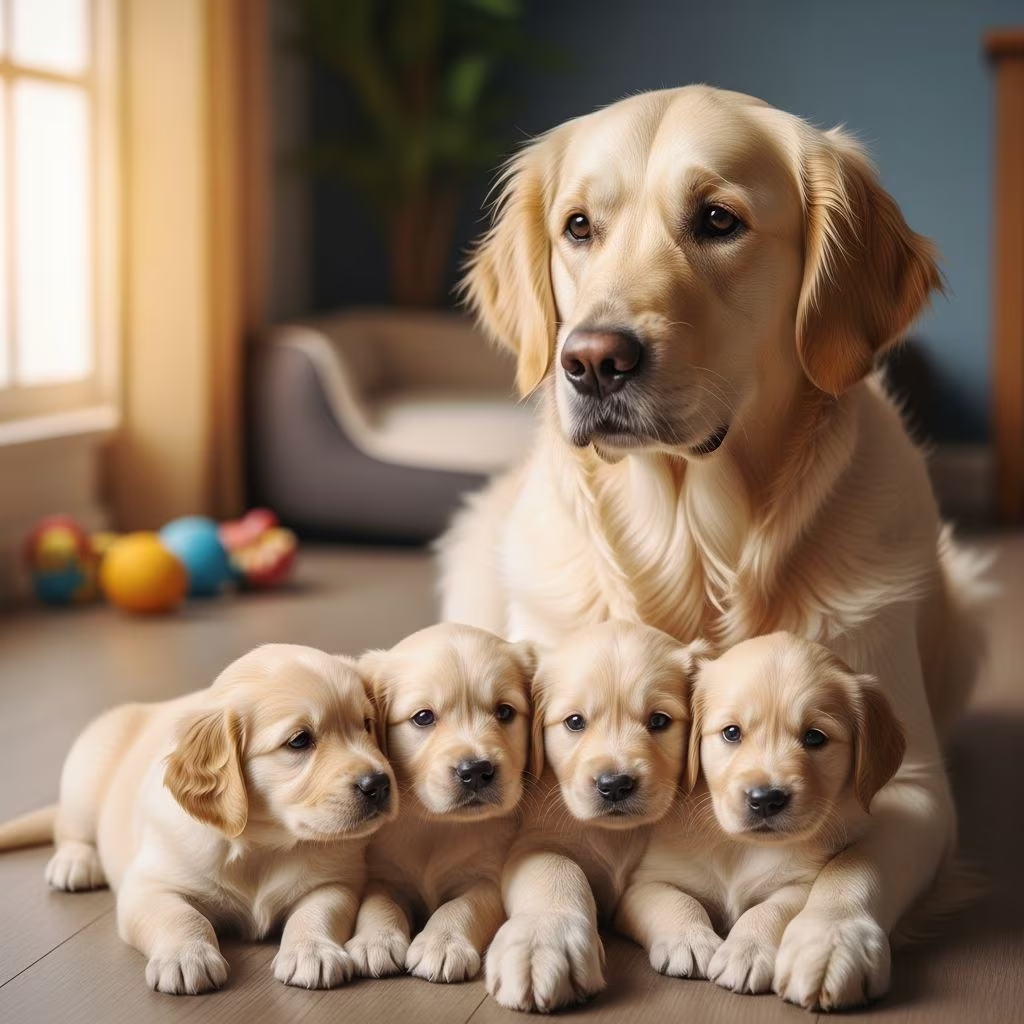
Dog Breeding and Behavior: What Really Matters
Dog breeding has a huge impact on canine health, behavior, and welfare, but it is often misunderstood or oversimplified. Many people still believe that breed alone dictates a dog’s personality or that any cute litter of puppies is harmless. Modern research paints a more complex picture: genetics matter, but so do early experiences, socialization, and the ethics of the humans making breeding decisions.
This article unpacks how dog breeding intersects with behavior, health, and ethics so you can make informed, dog-centered choices whether you are adopting, buying from a breeder, or simply trying to understand your own pet better.
Does Breed Determine a Dog’s Behavior?
For decades, popular culture and even some training advice have suggested that specific breeds are destined to behave in specific ways. Recent large-scale genetic studies have challenged this assumption by directly measuring how much of behavior can be predicted by breed label alone.
What research tells us about breed and behavior
In a major genomic study of tens of thousands of dogs, researchers found that breed explains less than 10% of the variation in individual behavior. In other words, if you want to predict how a specific dog will act, their breed is a weak indicator at best.
- Behavior is highly variable within breeds: Two dogs of the same breed can have very different reactions to strangers, other dogs, or new environments.
- Behavioral traits are partly inherited: Around a quarter of behavioral variation appears heritable, meaning genes do play a role, but not in a simple “breed = behavior” way.
- Environment and learning are powerful: Early environment, socialization, and training strongly influence fear, sociability, and aggression across all breeds.
Recent behavioral genetics work in dogs confirms that traits like social fear, non-social fear, and startle response have measurable heritability but are also significantly shaped by experience. This combination makes dogs highly flexible, which is why a well-socialized dog from a stigmatized breed can be a delightful family companion.
Why stereotypes about “dangerous breeds” are misleading
Breed stereotypes often become self-fulfilling. When a breed is labeled “aggressive,” individuals from that breed may face:
- Fewer adoption opportunities and longer shelter stays
- Restrictions or bans in housing and local legislation
- Owners who anticipate aggression and may respond with fear or punishment
These pressures can worsen behavior problems rather than prevent them. Many highly stigmatized dogs, such as Pit Bull–type dogs, are in reality human-sociable and capable of being affectionate, stable family pets when bred and raised responsibly.
How Genetics, Inbreeding, and Selection Shape Dogs
Breed does not fully determine behavior, but genetics profoundly influence health and temperament. How breeders use (or misuse) genetics is central to the ethics of dog breeding.
What is inbreeding and why does it matter?
Inbreeding occurs when genetically related dogs are bred together. Over time, this increases the likelihood that puppies inherit two copies of harmful genetic variants, raising the risk of inherited diseases and sometimes behavioral issues.
- High inbreeding can reduce fertility, lifespan, and overall robustness.
- It can increase susceptibility to disease and exacerbate breed-specific health conditions.
- It can also influence stress responses and fearfulness, which may affect behavior.
Recent research examining commercial breeding (CB) kennels found that dogs from these facilities can actually have lower inbreeding coefficients than many pet dogs bred elsewhere, highlighting that breeding context and practices matter at least as much as labels like “show” or “pet” breeder.
Behavioral genetics: what can be selected for?
Because some aspects of behavior are heritable, ethical breeders can use selection to reduce fear, improve sociability, and emphasize stable temperaments. Studies in kennel-raised dogs show that genetic differences are associated with:
- Social fear (e.g., fear of people and social situations)
- Non-social fear (e.g., fear of novel objects or sounds)
- Startle responses and recovery from startling stimuli
Genetic risk scores in these studies suggest that breeding away from extreme fearfulness is possible, especially when combined with good early-life socialization and low-stress environments.
| Genetic factor | Potential impact on dogs | Implication for breeders |
|---|---|---|
| Inbreeding coefficient | Higher risk of inherited disease, reduced resilience | Avoid close matings, maintain genetic diversity |
| Behavioral risk alleles | Increased tendency toward fear or reactivity | Select against high-risk combinations when possible |
| Polygenic behavioral traits | Subtle differences in fear, sociability, and arousal | Pair dogs with complementary, stable temperaments |
Free-Ranging Dogs vs. Purebred Dogs: Different Mating Systems
Understanding what happens when humans don’t control mating helps clarify what selective breeding actually changes. Studies of free-ranging domestic dogs—those that roam and mate freely in urban or rural environments—show a mating system very different from that of their wolf ancestors and many purebred dogs.
Polygamous dogs, monogamous wolves
Gray wolves typically live in family packs with a single dominant breeding pair and their offspring from multiple seasons. Domestic dogs living freely, in contrast, show a polygamous mating system (polygynandry):
- Multiple male and female dogs in a group may breed in the same season.
- A single litter can have more than one father (multiple paternity).
- Adult offspring may remain in or disperse between neighboring groups.
This shift in mating system is believed to be linked to domestication and living around humans, where food and shelter are less tied to cooperative hunting. For modern dog breeding, this underscores how strongly human choices—who is allowed to mate with whom—shape population genetics and behavior.
| Trait | Gray wolf | Free-ranging domestic dog |
|---|---|---|
| Mating system | Social monogamy | Polygamous (polygynandry) |
| Typical litter paternity | Single father | Often 1–3 fathers per litter |
| Pack structure | Single breeding pair and offspring | Multiple breeding males and females |
Ethical Dog Breeding: Putting Welfare First
Ethical breeding is less about producing “perfect” physical traits and more about prioritizing health, stability, and welfare over appearance or quick profits. A breeder’s decisions reverberate for generations—in bodies, in behavior, and in the homes where the puppies ultimately live.
Core principles of responsible dog breeding
- Health testing and transparency
Ethical breeders use appropriate health screening (e.g., orthopedic, cardiac, eye, or genetic tests) based on the breed’s known risks, and they share results openly with puppy buyers. - Temperament and behavior as key selection criteria
Breeding dogs are chosen for stable, predictable temperaments, not just looks. Dogs with severe fear, aggression, or extreme anxiety are not bred, even if they are physically excellent. - Low-stress, enriched environments
Puppies are raised with early neurological stimulation, careful exposure to sounds, surfaces, and gentle handling, all known to support resilient behavior later in life. - Genetic diversity and long-term planning
Responsible breeders avoid high inbreeding, overuse of popular sires, and repeated close matings to maintain a healthier gene pool. - Lifelong responsibility
Ethical breeders take back or help rehome dogs if needed, reducing the burden on shelters.
Red flags of irresponsible breeding
In contrast, irresponsible breeding often focuses on producing as many puppies as possible or exaggerating certain physical features, with little regard for health or behavior.
- No or minimal health testing for known breed issues
- Unwillingness to show health or pedigree documentation
- Puppies leaving before 8 weeks, or raised with little human contact
- Emphasis on color, size, or novelty over temperament and welfare
- Reluctance to ask buyers questions or to take dogs back if problems arise
How Upbringing and Environment Shape a Dog
Genes set a foundation, but a dog’s life story fills in most of the details. Several key environmental factors have strong, evidence-based effects on behavior and welfare.
Early socialization and exposure to novelty
The sensitive period for socialization—roughly between 3 and 14 weeks of age—is critical for shaping how a dog responds to people, other dogs, and new situations.
- Positive, controlled exposure to varied people, animals, sounds, and environments supports curiosity and resilience.
- Lack of exposure or traumatic experiences during this time can contribute to lasting fear and reactivity.
Studies of behavioral phenotypes in kennel-raised dogs emphasize how early environment interacts with genetics: even dogs with moderate genetic risk for fear can do well when raised in enriched, predictable settings.
Training, leadership, and communication
Training methods profoundly affect behavior regardless of breed:
- Reward-based training builds trust, reduces fear, and encourages problem-solving.
- Harsh punishment or “dominance” approaches can increase anxiety and aggression, especially in already fearful dogs.
Clear, consistent routines and communication—rather than coercion—help dogs understand what is expected and feel secure in their environment.
Head Shape, Body, and Behavior
Beyond breed labels, specific physical traits can correlate with certain behavioral tendencies. For example, some research suggests that dogs with different skull shapes (brachycephalic, mesocephalic, dolichocephalic) differ in aspects of behavior and sensory processing.
- Flat-faced (brachycephalic) dogs may show distinct social engagement or responsiveness patterns.
- Long-nosed (dolichocephalic) dogs often have different visual fields and may be more tuned to motion at a distance.
However, experts emphasize that training, socialization, and daily management still matter more than head shape for predicting behavior. Body form is one piece of a multi-factor puzzle that includes genetics, early environment, and lifelong learning.
Choosing a Breeder or a Dog: Practical Guidance
Whether you are considering a purebred puppy or a mixed-breed rescue, the same core questions apply: who made decisions about this dog’s genetics, and what experiences has the dog had so far?
Questions to ask a breeder
- What health tests have been done on the parents, and can I see the results?
- How do you select breeding dogs for temperament and behavior?
- How are puppies socialized before they go home, and at what age do they leave?
- What support do you provide to owners over the dog’s lifetime?
- Will you take the dog back if things don’t work out?
What to look for in any individual dog
- Relaxed, curious body language in a reasonably calm environment
- Ability to recover from mild startle or surprise
- Interest in people without overwhelming panic or intense avoidance
- Clear signs that the dog has been handled and interacted with kindly
Frequently Asked Questions (FAQs)
Q: If breed only explains a small portion of behavior, why do breeds still seem so different?
Breeds were developed by selecting for certain physical and working traits, so some broad tendencies exist. However, modern studies show that there is enormous overlap between breeds, and individual variation is much larger than most people expect. Your dog’s upbringing, socialization, and daily life usually matter more than their breed label.
Q: Can responsible breeding really improve behavior, or is it all about training?
Both matter. Research on behavioral genetics in dogs shows that traits like social fear and non-social fear are heritable to a moderate degree, meaning breeders can select away from extreme fearfulness. Training and socialization then build on that genetic foundation to shape the dog’s actual behavior.
Q: Is inbreeding always bad?
Some level of relatedness exists in most closed breeds, but high inbreeding increases the risk of inherited disease and can negatively affect health and behavior. Ethical breeders monitor inbreeding levels and prioritize genetic diversity where possible, rather than repeatedly breeding very closely related dogs.
Q: Are dogs from shelters or free-breeding populations less healthy or more aggressive?
Not necessarily. Free-breeding and mixed-breed dogs can sometimes have lower inbreeding and fewer certain hereditary diseases, though they may lack early socialization or veterinary care. Behavior depends on each dog’s genetics and life experiences, so many shelter dogs become excellent companions with proper support.
Q: What is the single most important factor I can control for my dog’s behavior?
Early, positive socialization combined with consistent, reward-based training has the greatest influence most owners can control. Even if you cannot change your dog’s genetics, you can provide experiences that build confidence, trust, and clear communication.
References
- Genetic inference of the mating system of free-ranging domestic dogs — P. S. H. Gácsi et al., Behavioral Ecology. 2021-04-22. https://academic.oup.com/beheco/article/32/4/646/6208826
- More Evidence That Breed Does Not Equal Behavior — Kinship. 2022. https://www.kinship.com/dog-behavior/breed-behavior-study
- Heritability and Genome-Wide Association Study of Dog Behavioral Phenotypes in Commercial Breeding Kennels — P. H. Jensen et al., Animals. 2024-07-02. https://www.ncbi.nlm.nih.gov/pmc/articles/PMC11675989/
- Mating system of free-ranging domestic dogs and its consequences for the population genetic structure — M. I. Natoli et al., Proceedings of the National Academy of Sciences. 2025. https://www.pnas.org/doi/10.1073/pnas.2421756122
- A Dog’s Head Shape Actually Affects Their Personality, New Study Finds — Kinship. 2023. https://www.kinship.com/news/dog-head-shape-influences-behavior



