

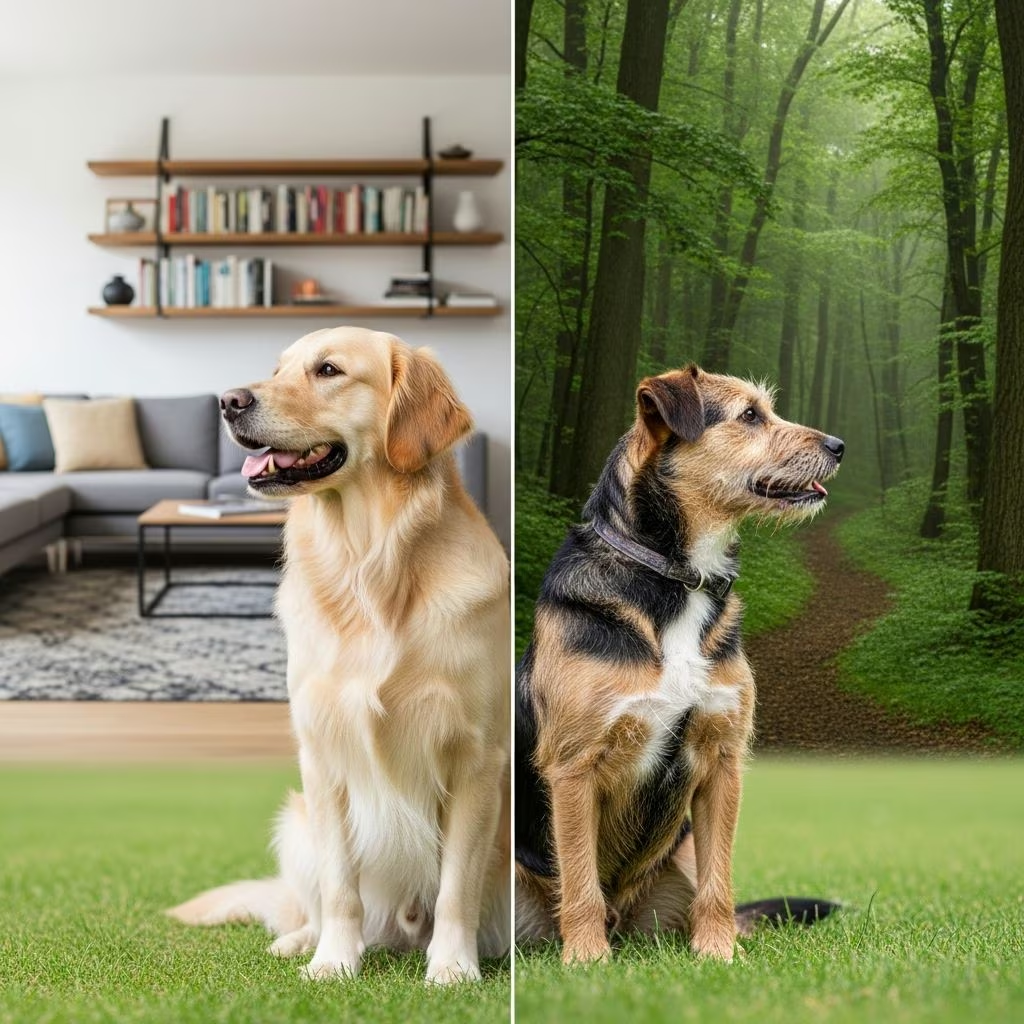
Understanding Dog Breed Behavior: The Science Behind Behavioral Traits
Dog behavior is far more complex than breed stereotypes suggest. While many people assume that a dog’s breed determines their personality and actions, recent scientific research reveals a more nuanced picture. A groundbreaking study found that a dog’s breed accounts for less than 10 percent of their behavior, challenging long-held assumptions about breed-specific temperaments. This discovery has important implications for dog owners, trainers, and policymakers who rely on breed classifications to predict behavioral outcomes.
Understanding the true drivers of canine behavior requires examining both genetic factors and environmental influences. The interaction between a dog’s inherited traits, their early socialization, and their owner’s personality creates a unique behavioral profile that cannot be reduced to breed categories alone.
The Genetics of Dog Breed Behavior
Modern genomic research has identified specific genetic markers associated with behavioral traits in dogs. Scientists have discovered that herding dogs exhibit distinct constellations of behaviors marked by inherent instinct and motor skills shaped through selective breeding over generations. These genetic signatures reveal how centuries of intentional breeding have shaped behavioral predispositions in different dog types.
One particularly significant finding involves the EPHB1 gene, which shows strong evidence of selection in herding breeds like border collies. This gene, critical for neuronal function, distinguishes border collie lines selected for strong herding behaviors from show-quality border collies and other nonherding breeds. The presence of breed-specific genetic variants suggests that herding behaviors have a biological foundation, though these genes alone do not determine a dog’s complete behavioral profile.
Selective Breeding and Behavioral Adaptation
Different dog breeds have been subjected to distinctive selective pressures over several generations, leading to the acquisition of desired behavioral characteristics. Herding dogs, for example, were selectively bred for behaviors related to controlling livestock—including intense focus, quick responsiveness to commands, and specific motor patterns. These behaviors reflect historical needs for human survival and demonstrate how human occupations shaped canine genetic diversity.
However, the relatively recent formalization of breed standards means that genetic differentiation continues even within established breeds. Border collies, for instance, were only recognized by the American Kennel Club in 1995 and became eligible for conformation competitions shortly thereafter. This short timeframe has already led to detectable genetic differences between show-line and working-line border collies, with genes showing evidence of selection for modified behaviors suited to the show ring.
Behavioral Differences Across Breed Groups
Research comparing different breed categories reveals significant variations in aggression, fearfulness, and trainability. These differences point to diverse behavioral profiles within the canine population, though it is critical to understand that these patterns reflect genetic predispositions combined with environmental factors rather than inherent breed characteristics that apply universally.
Herding Breeds
Herding dog breeds show the lowest levels of aggression toward both animals and people compared to other breed categories. This pattern aligns with their selective breeding for behaviors requiring cooperation, responsiveness to human direction, and focus on livestock rather than confrontation. The genetic signatures in herding breeds are highly enriched in genes relating to social interaction and cognitive functions, linking to heightened sensitivity to human communication and the ability to quickly grasp new commands.
Guarding Breeds
Guarding breeds, traditionally bred to protect property and livestock, exhibit higher levels of aggression due to their innate protective instincts. The perpetuation of these traits through generations of selective breeding has led to elevated aggression levels. However, guarding breeds are not inherently aggressive in all contexts; rather, they possess behavioral predispositions shaped by their historical functions.
Companion Breeds
Companion breeds display moderate levels of fearfulness and were selectively bred for characteristics favorable to cohabitation with humans. These breeds were chosen for their friendly nature and calm dispositions, making them ideal for domestic life and close human interaction. Despite breed-level patterns, significant variability exists within companion breed groups, emphasizing the influence of individual experiences and training.
Mixed-Breed Dogs
Mixed-breed dogs present an interesting case study in behavioral diversity. Research shows that mixed-breed dogs exhibit notably higher levels of fear compared to various purebred categories. This elevated fearfulness likely stems from insufficient early socialization and exposure to diverse settings during critical developmental stages. The miscellaneous genetic backgrounds of mixed-breed dogs, combined with potentially challenging shelter experiences, underscore the importance of individual behavioral assessment rather than breed-based assumptions.
The Owner-Dog Personality Connection
Beyond genetics, owner personality plays a substantial role in shaping dog behavior. Studies comparing dog guardians’ self-assessments on personality tests to their dogs’ behaviors have revealed fascinating correlations. Pet parents who rated highly on extroversion had dogs who behaved in a more extroverted manner. Additionally, openness of a pet parent corresponded to trainability of a dog, and extroverted dog parents were less likely to have dogs who showed aggressive behavior.
This owner-dog personality alignment suggests that dogs adapt their behavior to match their environment and the people around them. A dog living with an anxious owner may develop anxiety-related behaviors, while a dog with a confident, engaged owner may display greater confidence and trainability. This dynamic interaction highlights why two dogs of the same breed raised in different households can exhibit dramatically different behavioral profiles.
Key Behavioral Traits and What Influences Them
Aggression: Genetics, Breeding, and Misconceptions
Research challenges common breed stereotypes about aggression. A questionnaire-based survey found that breeds perceived as aggressive are actually less aggressive than expected, while mixed-breed dogs tend to exhibit more aggression than their breed-category peers. This discrepancy between perception and reality emphasizes the danger of relying on breed reputations rather than individual assessment.
The complex interaction between genetics, environment, and personal interactions influences aggression levels in dogs. A dog’s housing conditions, early socialization experiences, and training history all contribute significantly to aggressive tendencies. Furthermore, neutering status interacts with breed genetics; recent research found that castrated males from certain breeds displayed different aggression patterns compared to intact counterparts, with distinct variations depending on breed and neuter status.
Fearfulness and Socialization
Fearfulness in dogs is greatly influenced by early life encounters and socialization rather than breed alone. Dogs lacking positive early interactions and exposure to diverse settings during critical developmental stages are significantly more likely to display fear-related behaviors. This finding underscores the universal importance of proper puppy socialization across all breeds and mixed-breed dogs.
Managing fearfulness requires a comprehensive approach prioritizing positive early interactions, proper socialization, and ongoing behavioral guidance. Individual differences within breed groups can be as substantial as differences between breeds, indicating that personalized behavioral assessment and training are essential.
Trainability and Cognitive Function
Genes relating to cognitive functions and learning capacity show evidence of selection, particularly in herding breeds designed to rapidly acquire new commands and problem-solve in complex herding scenarios. However, owner characteristics also influence trainability; openness and engagement from the owner correlate with improved trainability in their dogs.
Dogs living with owners who actively engage in training, provide mental stimulation, and maintain consistent boundaries develop better trainability than those with less engaged owners, regardless of breed. The interaction between a dog’s genetic predisposition for learning and the owner’s commitment to training determines the ultimate expression of trainability.
Practical Implications for Dog Owners
Understanding the true drivers of dog behavior has important practical implications:
- Avoid breed stereotyping: A dog’s breed accounts for less than 10 percent of their behavior, so individual assessment is essential rather than assumptions based on breed category.
- Prioritize early socialization: Exposure to diverse environments, people, and experiences during puppyhood significantly influences fearfulness, aggression, and adaptability throughout a dog’s life.
- Recognize owner influence: Your personality and behavior directly influence your dog’s temperament and behavioral development. Dogs adapt to their owner’s energy and emotional state.
- Consider individual differences: Within any breed, substantial behavioral variation exists. Two dogs of the same breed will have different behavioral profiles based on genetics, early experiences, and their specific living situation.
- Seek professional guidance: When behavioral issues arise, work with qualified trainers and veterinary behaviorists who assess individual dogs rather than relying on breed-based assumptions.
Implications for Dog Ownership Laws and Policy
The scientific understanding of dog behavior has significant implications for breed-specific legislation and dog ownership policies. Laws based solely on breed categories fail to account for the complexity of behavioral factors. Herding breeds, despite their low aggression levels, might be subject to restrictive regulations in some jurisdictions, while the actual behavioral risks depend on individual dogs, their training, and their owners.
Effective dog ownership laws should move beyond breed categories and focus on individual behavior assessment, owner responsibility, and evidence-based standards. This approach better protects public safety while avoiding discriminatory restrictions on specific breeds that may not be behaviorally distinct from other categories.
The Future of Canine Behavioral Science
Ongoing research continues to refine our understanding of how genetics, breeding, socialization, and owner factors interact to shape dog behavior. As scientists identify more genetic variants associated with specific behaviors and better understand gene-environment interactions, dog owners and professionals will have increasingly precise tools for predicting and shaping behavioral outcomes.
The emerging consensus in behavioral science is clear: dog behavior results from a complex interplay of factors, with breed accounting for a small portion of the total picture. This understanding calls for more nuanced, individualized approaches to dog training, ownership, and policy—approaches that respect the complexity of canine behavior while avoiding oversimplified breed-based stereotypes.
Frequently Asked Questions
Q: How much does breed actually determine a dog’s behavior?
A: Research shows that a dog’s breed accounts for less than 10 percent of their behavior. While breed contributes to genetic predispositions for certain traits, environmental factors, early socialization, training, and owner personality play much larger roles in shaping how a dog behaves.
Q: Are herding dogs more aggressive than other breeds?
A: No, herding dogs actually show the lowest levels of aggression toward both animals and people compared to other breed categories. They were selectively bred for cooperative behaviors and responsiveness to human direction rather than confrontation.
Q: Why do mixed-breed dogs show more fearfulness?
A: Mixed-breed dogs often exhibit higher fearfulness due to insufficient early socialization and potentially challenging shelter experiences rather than genetic factors. Proper socialization and positive early interactions can significantly reduce fear-related behaviors in mixed-breed dogs.
Q: How does my personality influence my dog’s behavior?
A: Studies show direct correlations between owner personality and dog behavior. Extroverted owners tend to have more extroverted dogs, and owner openness correlates with dog trainability. Dogs adapt to their owner’s emotional state and behavioral patterns.
Q: Should breed-specific laws be based on behavioral research?
A: Breed-specific legislation is not supported by behavioral science. Since breed accounts for less than 10 percent of behavior, laws should focus on individual behavior assessment and owner responsibility rather than breed categories.
Q: Can I predict my dog’s behavior based on their breed?
A: While breed provides some genetic predisposition for certain traits, individual dogs show substantial behavioral variation within breeds. Early socialization, training, living conditions, and owner personality are more predictive of actual behavior than breed alone.
References
- Genomic evidence for behavioral adaptation of herding dogs — Science Advances. 2024. https://www.science.org/doi/10.1126/sciadv.adp4591
- Variations in Canine Behavioural Characteristics across Breed Groups — PMC/NIH. 2024. https://pmc.ncbi.nlm.nih.gov/articles/PMC11429495/
- People And Their Dogs Really Do Look Alike, New Research Finds — Kinship. https://www.kinship.com/news/people-and-dogs-look-alike-study



