

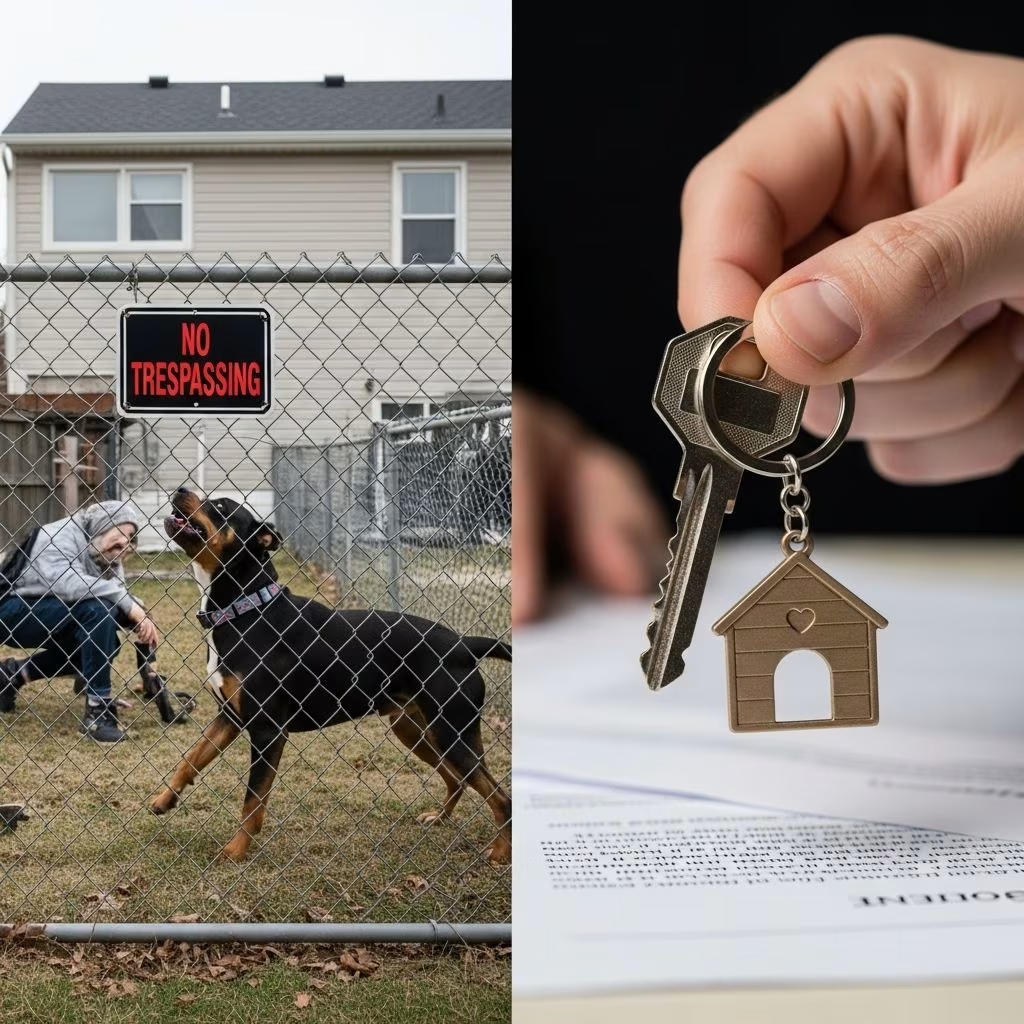
Dog Breed Bans Infringe Property Rights and Violate Constitutional Protections
For decades, communities across the United States have implemented breed-specific legislation (BSL) with the intention of protecting public safety. However, these laws fundamentally infringe on the property rights of American citizens and fail to achieve their stated objectives. Dogs are legally classified as property under U.S. law, and breed-specific legislation restricts citizens’ ability to own particular breeds, thereby violating constitutionally protected property rights. This article examines the constitutional implications of breed-specific legislation, explores why these laws are ineffective, and presents evidence supporting breed-neutral alternatives that focus on actual dangerous behavior rather than breed stereotypes.
Understanding Breed-Specific Legislation and Its Constitutional Problems
Breed-specific legislation encompasses laws that prohibit or severely restrict the ownership of dogs based on their breed or perceived breed. These regulations often include outright bans on breeds such as pit bull terriers, Doberman pinschers, German shepherds, Rottweilers, and Chow Chows. However, some BSL provisions are even more restrictive, imposing burdensome requirements that make ownership virtually impossible, including mandatory liability insurance policies, strict handling regulations, and prohibitions on dogs leaving their property.
The fundamental problem with breed-specific legislation lies in its constitutional implications. Dogs constitute personal property under American law, and the Fifth Amendment’s takings clause, along with state property rights protections, grants citizens the right to possess and utilize their property without unreasonable governmental restrictions. Breed-specific laws violate this principle by arbitrarily restricting what type of property—in this case, dogs of certain breeds—citizens may legally own. Furthermore, these laws often fail to provide adequate due process protections required under the Fourteenth Amendment, as they may not allow owners to demonstrate that their individual dog poses no danger to the community.
Recognition of these constitutional violations has prompted legislative action. Twenty-two states have enacted laws that prohibit governmental overreach through breed-specific legislation, demonstrating growing awareness among state legislatures that such bans conflict with fundamental property rights. The American Bar Association, in its 2012 House of Delegates resolution, explicitly urged all state, territorial, and local legislative bodies to adopt breed-neutral dangerous dog laws that ensure due process protections while repealing breed-specific provisions.
Public Opinion Strongly Opposes Breed-Specific Legislation
American public opinion decisively opposes breed-specific legislation. A 2014 national survey conducted by Luntz Global revealed that 94% of Americans believe the government should not dictate what dog breeds citizens can own. Furthermore, 84% of Americans surveyed stated that federal, state, or local government should not tell people which dog breeds they cannot own. This overwhelming consensus reflects Americans’ understanding that personal property rights and individual freedom should prevail over breed-based stereotypes.
The disconnect between public opinion and existing local ordinances demonstrates how outdated breed-specific laws persist in certain jurisdictions despite widespread opposition. Citizens who have never violated any law or owned an aggressive dog find themselves unable to keep beloved pets simply because of breed designations. This arbitrary application of breed restrictions impacts responsible, law-abiding pet owners who represent no threat to public safety.
Breed-Specific Legislation Fails to Enhance Public Safety
One of the most compelling arguments against breed-specific legislation is its documented ineffectiveness at improving public safety. Peer-reviewed studies published on the National Canine Research Council website demonstrate that most factors involved in dog bites are elements the owner controls—not the dog’s breed heritage. Variables such as training, socialization, supervision, and the owner’s responsibility toward their animal are far more predictive of dangerous behavior than breed identification.
The factors that actually predict dog aggression include:
- Owner negligence and irresponsible pet ownership
- Lack of proper training and socialization
- Absence of appropriate supervision
- History of abuse or neglect
- Failure to spay or neuter
- Chaining or confinement without human contact
- Use of dogs for fighting or guarding purposes
Because breed-specific legislation targets the wrong variable—the dog’s breed rather than the owner’s behavior—it fails to prevent dog bites and fails to enhance community safety. Studies consistently show that jurisdictions with breed-specific laws experience no meaningful reduction in dog bite incidents compared to communities without such laws. This ineffectiveness has prompted major professional organizations to reject breed-specific approaches entirely.
Professional Organizations Support Breed-Neutral Approaches
The most respected animal welfare and legal organizations in the United States have publicly opposed breed-specific legislation and endorsed breed-neutral alternatives. These endorsements carry significant weight, as they represent the consensus of experts who study dog behavior, public health, and animal welfare.
The American Veterinary Medical Association supports the repeal of breed-specific laws, recognizing that breed is not a reliable predictor of dangerous behavior and that breed-neutral laws focusing on individual dog behavior are more effective.
The National Animal Care & Control Association similarly opposes breed-specific legislation, advocating instead for laws that focus on dangerous dog behavior and responsible ownership practices.
The American Bar Association passed a formal resolution in 2012 urging all governmental agencies to adopt comprehensive breed-neutral dangerous dog ordinances. The ABA specifically recommended that such laws should:
- Ensure due process protections for dog owners
- Encourage responsible pet ownership through education and accountability
- Focus on the behavior of both dogs and their owners
- Repeal any existing breed-specific provisions
The International Municipal Lawyers Association, recognizing both the legal and practical problems with breed-specific ordinances, issued a new model dangerous-dog ordinance in 2018 that explicitly removed breed-specific sections. This action by municipal legal experts acknowledged that breed-specific provisions often violate constitutional protections and should be replaced with behavior-based standards.
Breed-Specific Legislation Violates Constitutional Protections
Beyond property rights concerns, breed-specific legislation frequently violates additional constitutional protections. Many breed-specific ordinances fail to provide adequate due process protections as required by the Fourteenth Amendment. These laws often presume a dog is dangerous solely based on breed identification, without allowing the owner an opportunity to demonstrate that their individual animal poses no danger.
Additionally, some breed-specific legislation inadvertently violates the Americans with Disabilities Act (ADA). When breed restrictions prevent citizens from owning service dogs of particular breeds, they effectively deny disabled individuals their legal right to possess service animals necessary for their safety and independence. This represents a significant constitutional and civil rights violation that extends beyond general property rights concerns.
The due process implications of breed-specific laws are substantial. In many jurisdictions, a dog identified as a restricted breed may be seized and euthanized without the owner receiving a meaningful opportunity to contest the determination or demonstrate the dog’s benign temperament. This deprivation of property and potential loss of life without due process conflicts with fundamental constitutional protections.
Breed-Specific Legislation Wastes Taxpayer Resources
Beyond constitutional and effectiveness concerns, breed-specific legislation imposes significant financial burdens on communities. These laws are expensive to enforce, requiring animal control officials to identify dogs by breed, investigate breed violations, and potentially prosecute owners. The resources devoted to breed identification and enforcement could be redirected toward evidence-based public safety measures that actually reduce dog bite incidents.
Furthermore, breed-specific laws often result in costly litigation when owners challenge ordinances on constitutional grounds. Many communities have faced expensive legal battles defending breed-specific provisions, ultimately losing cases when courts determine that the laws violate property rights or other constitutional protections. These litigation costs represent wasted taxpayer resources that could have been avoided through adoption of breed-neutral legislation from the outset.
Evidence-Based Behavioral Testing Demonstrates Individual Dog Temperament
Rather than relying on breed stereotypes, effective dog legislation should incorporate behavioral assessment tools that accurately measure individual dogs’ temperament and safety. The American Temperament Test Society (ATTS) has established standardized behavioral testing protocols that evaluate a dog’s actual temperament rather than breed assumptions. Notably, pit bull terriers tested through the ATTS consistently score higher for temperament stability than many other breeds not subject to breed-specific legislation.
Some progressive jurisdictions have begun implementing behavioral exemptions to breed-specific laws. Washington State, for example, allows dogs of restricted breeds to be exempted from breed-based regulations if they pass the American Kennel Club Canine Good Citizen Test or an equivalent behavioral assessment. Dogs that successfully complete these evaluations are exempt from breed-specific restrictions for a period of at least two years. This approach recognizes individual dog temperament while maintaining community safety standards.
Responsible Dog Owners Suffer Under Breed-Specific Restrictions
Breed-specific legislation causes genuine hardship to responsible, law-abiding citizens who own dogs of restricted breeds. Pet owners who have never caused any problem, whose dogs have never shown aggression, and who follow all animal care regulations nonetheless find themselves unable to legally keep their beloved companions. These unintended consequences of breed-specific laws extend beyond property rights violations to include emotional hardship and forced separation of people from their pets.
When breed-specific legislation is enacted retroactively, existing dog owners may suddenly find their legally owned pets classified as prohibited. This situation creates impossible choices: relocate from one’s home and community, surrender a beloved family member to animal shelters or rescue organizations, or break the law. Such consequences demonstrate the injustice inherent in breed-focused legislation.
Breed-Neutral Alternatives: A More Effective Approach
Breed-neutral dangerous dog laws represent a superior alternative to breed-specific legislation. These laws focus on actual dangerous behavior and irresponsible ownership rather than breed assumptions. Breed-neutral ordinances typically include provisions such as:
- Prohibitions on allowing dogs to roam unsupervised or unconfined
- Requirements for appropriate training and socialization
- Liability standards for owners whose dogs cause injury
- Enhanced penalties for owners of dogs that demonstrate aggressive behavior
- Spay/neuter requirements to reduce population pressures
- Education and responsible ownership programs
These evidence-based approaches address the actual causes of dangerous dog incidents while respecting property rights and constitutional protections. Jurisdictions implementing breed-neutral laws typically achieve better public safety outcomes than those relying on breed restrictions.
Successful Challenges to Breed-Specific Legislation
Animal advocates across the country have successfully defeated breed-specific measures, demonstrating that legislative change is possible. In 2013, Best Friends Animal Society’s advocacy efforts helped residents of Watertown, Wisconsin, overturn a proposed breed-specific measure targeting pit bull terriers. In 2014, dedicated advocates working with Best Friends’ legislative experts succeeded in passing state-level prohibitions on breed-specific legislation in both Utah and South Dakota.
These victories demonstrate that informed citizens can effectively challenge breed-specific ordinances through advocacy, education, and legal action. As awareness increases regarding the constitutional problems and practical ineffectiveness of breed-specific laws, more communities are reconsidering these outdated regulations.
Frequently Asked Questions About Breed-Specific Legislation
Q: Are breed-specific laws effective at reducing dog bites?
A: No. Peer-reviewed research demonstrates that breed-specific legislation does not reduce dog bite incidents. Communities with breed-specific laws experience similar or higher bite rates compared to jurisdictions with breed-neutral laws focusing on owner behavior.
Q: Do breed-specific laws violate property rights?
A: Yes. Dogs are legally classified as personal property, and breed-specific legislation restricts citizens’ ability to own certain property without due process protections, violating constitutional property rights.
Q: What do professional organizations say about breed-specific legislation?
A: The American Veterinary Medical Association, National Animal Care & Control Association, and American Bar Association all oppose breed-specific legislation and support breed-neutral alternatives focusing on individual dog behavior and responsible ownership.
Q: What percentage of Americans support breed-specific laws?
A: Only 6-16% of Americans support breed-specific legislation. A 2014 national survey found that 94% of Americans believe government should not dictate dog breed ownership, and 84% believe government should not restrict breed choices.
Q: What factors actually predict dangerous dog behavior?
A: Research shows that owner behavior, training, socialization, supervision, and responsibility are the primary factors in dog aggression—not the dog’s breed. Irresponsible ownership, abuse, and neglect are far better predictors of dangerous incidents than breed.
Q: How many states prohibit breed-specific legislation?
A: Twenty-two states have enacted laws prohibiting breed-specific legislation or restricting local governments’ ability to impose breed-based restrictions.
Q: What are breed-neutral alternatives to breed-specific laws?
A: Breed-neutral laws focus on dangerous dog behavior, irresponsible ownership, proper training, socialization requirements, liability standards, and owner accountability rather than breed identification.
Conclusion: Protecting Property Rights While Ensuring Community Safety
Dog breed-specific legislation represents an outdated, ineffective, and constitutionally problematic approach to community safety. These laws infringe on the fundamental property rights of citizens, fail to reduce dog bite incidents, waste valuable taxpayer resources, and harm responsible pet owners. The overwhelming consensus of both the American public and expert organizations supports replacing breed-specific legislation with breed-neutral laws that address actual dangerous behavior and irresponsible ownership.
Every American should have the right to own whatever breed of dog they choose—it is a matter of personal freedom, property rights, and constitutional protection. Communities can achieve genuine public safety improvements by implementing evidence-based, breed-neutral dangerous dog ordinances that focus on individual dog behavior and owner responsibility rather than breed stereotypes. As more jurisdictions recognize the constitutional problems and practical failures of breed-specific legislation, the momentum continues building toward comprehensive reform that protects both property rights and public safety.
References
- Many local dog breed bans violate the Constitution — Best Friends Animal Society. 2024. https://bestfriends.org/advocacy/ending-breed-specific-legislation/dog-breed-bans-infringe-property-rights
- How to Take Action Against Dog Breed-Specific Legislation — Best Friends Animal Society. 2024. https://bestfriends.org/pet-care-resources/how-take-action-against-dog-breed-specific-legislation
- Anti-Dog Breed-Specific Legislation by State — Best Friends Animal Society. 2024. https://bestfriends.org/pet-care-resources/anti-dog-breed-specific-legislation-state
- Dog Breed Ban Alternatives — Best Friends Animal Society. 2024. https://bestfriends.org/pet-care-resources/breed-specific-legislation-dog-breed-ban-alternatives
- American Bar Association Resolution on Breed-Specific Legislation — American Bar Association House of Delegates. 2012. https://www.americanbar.org



