

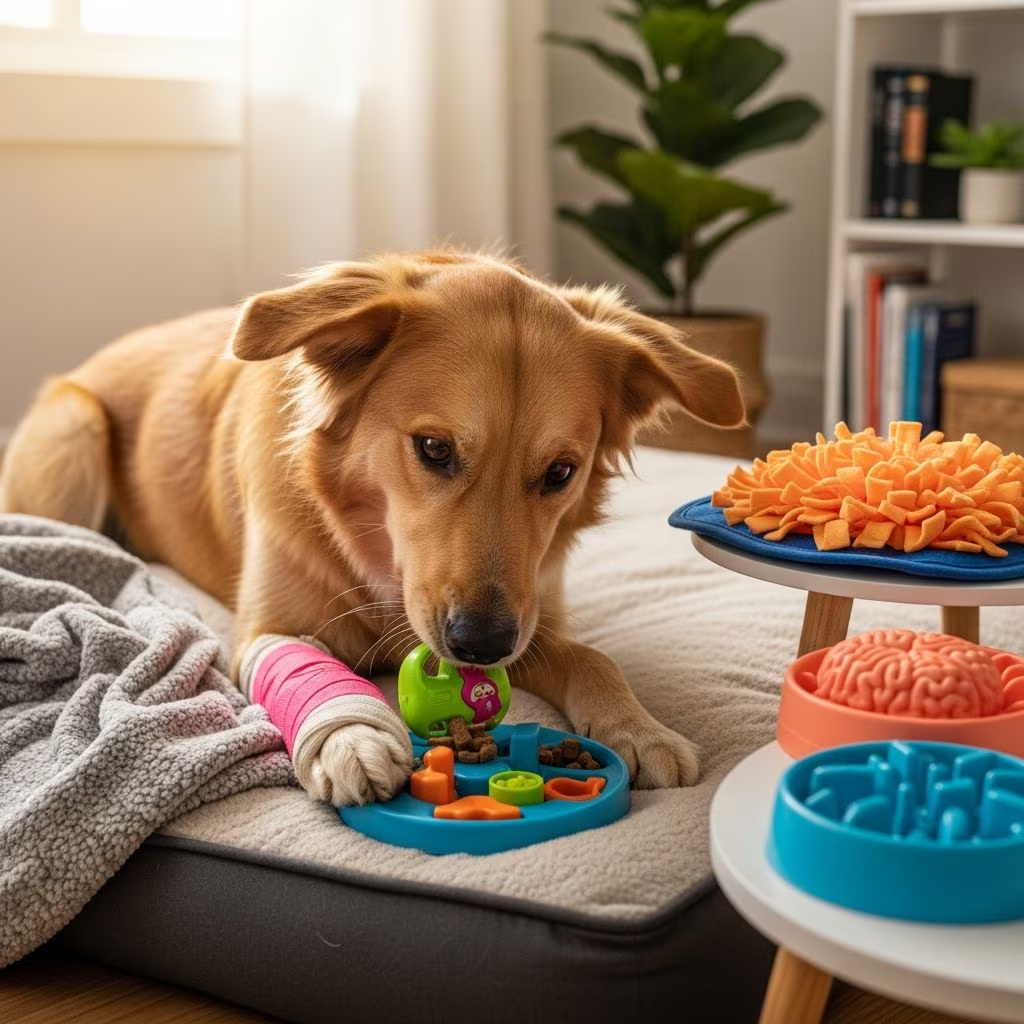
Keep Your Dog’s Brain Engaged During Activity Restrictions
If your dog has recently undergone surgery or is recovering from a muscle or joint injury, your veterinarian has likely recommended activity restrictions. While these limitations are essential for your dog’s physical health and recovery, the challenge of keeping an underexercised dog mentally stimulated is very real. Dogs who aren’t getting their usual physical outlets often resort to destructive behaviors like excessive chewing, barking, or whining. Fortunately, mental exercise can be just as effective—if not more so—than physical activity in keeping your dog calm, content, and well-behaved during this recovery period.
Get Clear on Your Dog’s Restrictions
Your first step in managing your dog’s activity restriction is to have a detailed conversation with your veterinarian about exactly what your dog can and cannot do. Don’t settle for vague guidance. Ask specific questions about daily activities you’re used to doing together. Can your dog take a short 10-minute leash walk? Is swimming allowed? Are stairs permitted? Can she play in the yard? The answers may surprise you—there may be more options available than you initially assumed.
Understanding the precise boundaries of your dog’s restrictions allows you to work within them creatively. Some dogs with mild restrictions might still enjoy supervised yard time or short, controlled walks on leash. Others may need near-complete rest. Whatever your dog’s situation, clarity from your vet ensures you’re keeping her safe while maximizing the activities that are permitted.
Give Your Dog’s Brain a Workout
The key to keeping both you and your dog sane during activity restrictions lies in providing mental exercise. Physical activity may be off the table, but cognitive stimulation is not. Mental exercise can take many forms, and the good news is that most of them can be done right in your home while your dog remains safely within her restrictions.
Mental exercise is incredibly powerful for tiring out dogs. A dog who has spent an hour working her brain will often be just as tired—sometimes more tired—than a dog who has spent an hour running around the yard. The difference is that brain work doesn’t compromise healing or violate activity restrictions. Additionally, mental stimulation provides an outlet for your dog’s natural problem-solving instincts and keeps her engaged in positive activities rather than destructive ones.
Training: The Foundation of Mental Enrichment
One of the most effective forms of mental exercise is training. Time spent practicing obedience commands is excellent for your dog’s brain and has the added benefit of improving her overall training. During her recovery period, ask your dog to sit, lie down, stay, or perform any other commands she already knows in exchange for rewards like toys, treats, a belly rub, or even a trip outside.
Make training sessions short and frequent rather than long and exhausting. Five to ten-minute sessions multiple times a day are ideal. This approach keeps your dog’s mind engaged without overwhelming her. Consider enrolling in a weekly training class specifically designed for dogs with activity restrictions. Many trainers offer modified classes that focus on stationary behaviors and mental challenges. These classes provide structured learning, motivation, and a change of scenery—all valuable for a dog in recovery.
Teach Your Dog New Tricks
In addition to practicing familiar commands, your dog’s recovery period is the perfect time to teach new tricks. Learning novel behaviors challenges the mind and tires dogs out mentally, even without physical exercise. The key is to choose tricks that don’t compromise your dog’s healing. Avoid tricks that require jumping, running, or rapid movements.
Some excellent stationary tricks to consider include:
- Beg – Teaching your dog to sit up on her hind legs (if safe for her condition)
- Rollover – A gentle trick that requires coordination but not locomotion
- Wave – A cute behavior that engages her front paws
- Spin – A slow, controlled spin in place (check with your vet first)
- Shake or High-Five – Classic paw-based behaviors
- Nod or Shake Head – Teaching her to nod yes and shake no
- Play Dead – A fun down-stay variation
Cognitive Games and Discrimination Exercises
Cognitive games provide an engaging way to exercise your dog’s brain without requiring physical exertion. One particularly effective type is teaching your dog to discriminate between objects and identify them by name. Start by presenting one object and naming it, then present a second object with its own name, and finally ask your dog to retrieve the correct object when you name it.
These discrimination games can be adapted to your dog’s interests. If your dog is toy-obsessed and enjoys retrieving, teach her the names of her toys so you can ask her to retrieve a specific one on command. This transforms playtime into a cognitive challenge. Advanced versions of this game might include teaching your dog to bring you a tissue when you sneeze or to clean up her toys by placing them one at a time into a toy basket.
Targeting and Interactive Training Games
Targeting exercises are excellent stationary activities that engage your dog’s mind and body in safe ways. These include:
- Paw Targeting – Teaching your dog to touch her paw to a designated target object
- Nose Targeting – Teaching your dog to touch her nose to a designated target
Once your dog masters basic targeting, you can use these skills to teach her to activate interactive toys. She can learn to push a talking button, press a light button, or even play a kiddie piano using her learned targeting skills. These activities combine physical interaction with mental engagement, keeping her motivated and entertained.
Enrichment Toys and Puzzle Feeders
Beyond training, enrichment toys provide excellent mental stimulation when used strategically. Puzzle toys and Kong-style toys filled with treats or frozen peanut butter engage your dog’s problem-solving instincts and keep her occupied for extended periods. Experts recommend having filled food toys ready in the freezer so they can be incorporated into your dog’s daily routine. These frozen toys provide extended engagement and can be particularly soothing during recovery.
Scent-based enrichment activities also provide significant mental stimulation. Create a treasure hunt by hiding treats around designated areas of your home and encouraging your dog to search for them using her nose. This taps into your dog’s natural foraging instincts and provides meaningful mental exercise without requiring physical exertion.
Cooperative Care and Behavioral Training
Your dog’s recovery period presents an excellent opportunity to work on cooperative care behaviors that will benefit both of you long-term. Behaviors like chin rest—where your dog rests her chin on a rolled-up towel while you perform examinations or grooming—teach her to participate actively in husbandry procedures. These cooperative behaviors are built on mutual understanding: you communicate that you’ll stop the procedure if she looks away or disengages, giving her control and consent in the process.
The Bucket Game is another valuable cooperative care behavior that you can teach during this time. This game involves your dog choosing to engage with you by looking at or touching a bucket, with the understanding that you will pause any procedure if she disengages. These behaviors reduce stress during veterinary visits and grooming, making them invaluable skills for any dog.
Impulse Control and Patience Training
Activity restrictions provide an ideal opportunity to strengthen impulse control. Teach or reinforce behaviors that require your dog to wait for permission before engaging in activities. Classic exercises include:
- Wait Before Eating – Place a treat within your dog’s reach and require her to maintain focus on you until you give permission to take it
- Balance a Treat on Your Nose – This exercise requires significant impulse control and patience, especially effective for dogs who already know “wait”
- “Yes” and “No” – Teaching your dog to nod her head up and down for yes and shake it left to right for no
These impulse control exercises not only provide mental stimulation but also build a stronger foundation of obedience that will serve your dog well beyond her recovery period.
Managing Your Dog’s Environment During Recovery
Beyond specific training activities, thoughtfully managing your dog’s environment supports mental wellbeing during activity restrictions. Limit large gatherings and exciting activities in your home while your dog is under restrictions. A dog who cannot move normally becomes frustrated when surrounded by exciting stimuli she cannot engage with. Keeping her environment calm and controlled reduces frustration and behavioral issues.
Maintain a predictable routine with regular feeding times, training sessions, enrichment activities, and rest periods. Dogs find comfort and security in predictability, especially during stressful recovery periods. Ensure your dog has a comfortable resting spot where she can retreat and relax undisturbed.
Addressing Pain and Anxiety
It’s important to recognize that pain and anxiety can contribute to behavioral issues during recovery periods. If your dog is displaying frustration, destructive behavior, or unusual anxiety despite mental enrichment efforts, discuss pain management and anxiety support with your veterinarian. Addressing these underlying issues creates the foundation for successful behavioral management and mental engagement.
FAQ Section
Q: How much mental exercise does my dog need during activity restrictions?
A: Most dogs benefit from 2-4 short training sessions (5-10 minutes each) daily, plus daily enrichment activities like puzzle toys or scent games. The exact amount depends on your dog’s age, temperament, and specific restrictions. Start with this baseline and adjust based on your dog’s response.
Q: Can mental exercise replace physical exercise entirely?
A: Mental exercise is excellent for keeping dogs stimulated and can significantly tire them out, but it shouldn’t completely replace the physical movement your vet has approved. Follow your veterinarian’s guidelines about permitted activities and supplement those with mental enrichment.
Q: What if my dog isn’t motivated by treats or toys?
A: Different dogs are motivated by different things. Some are food-motivated, others by toys, play, affection, or praise. Experiment to find what truly motivates your individual dog and use that as a reward in training sessions.
Q: How can I tell if my dog is getting enough mental stimulation?
A: A mentally stimulated dog should be calmer, less destructive, and more willing to rest. If your dog is still whining, being destructive, or acting restless despite mental enrichment, work with your veterinarian or a certified trainer to assess whether pain, anxiety, or insufficient stimulation is the issue.
Q: Are there any tricks or activities I should avoid during recovery?
A: Yes—always consult your veterinarian before teaching new tricks or activities. Avoid anything involving jumping, running, rapid direction changes, or excessive weight-bearing on the injured area. Choose stationary tricks and low-impact activities that align with your dog’s specific restrictions.
The Bottom Line
Boredom is the enemy of the well-behaved dog, particularly during recovery periods when physical exercise is restricted. The good news is that mental exercise through training, cognitive games, enrichment toys, and interactive activities keeps your dog engaged and stimulated. When your dog is actively using her mind—whether through play, eating, or work—she receives the mental exercise that helps her relax on the rug in front of the fire instead of chewing it up. By implementing these mental enrichment strategies, you’ll not only get your dog through her recovery period successfully but may also discover new training and enrichment activities that enhance your relationship long after her restrictions are lifted.
References
- 4 Ways to Keep Your Dog Busy When They Can’t Exercise — Kinship. 2024. https://www.kinship.com/dog-behavior/when-your-dogs-activity-restricted-keep-her-brain-engaged
- How to Engage Your Dog’s Brain When Activity is Restricted — Whole Dog Journal. 2024. https://www.whole-dog-journal.com/training/how-to-engage-your-dogs-brain-when-activity-is-restricted/
- Managing Behavior During Exercise Restrictions — Rewards Dog Training. 2024. https://www.youtube.com/watch?v=bIaxuvf1gLI



