

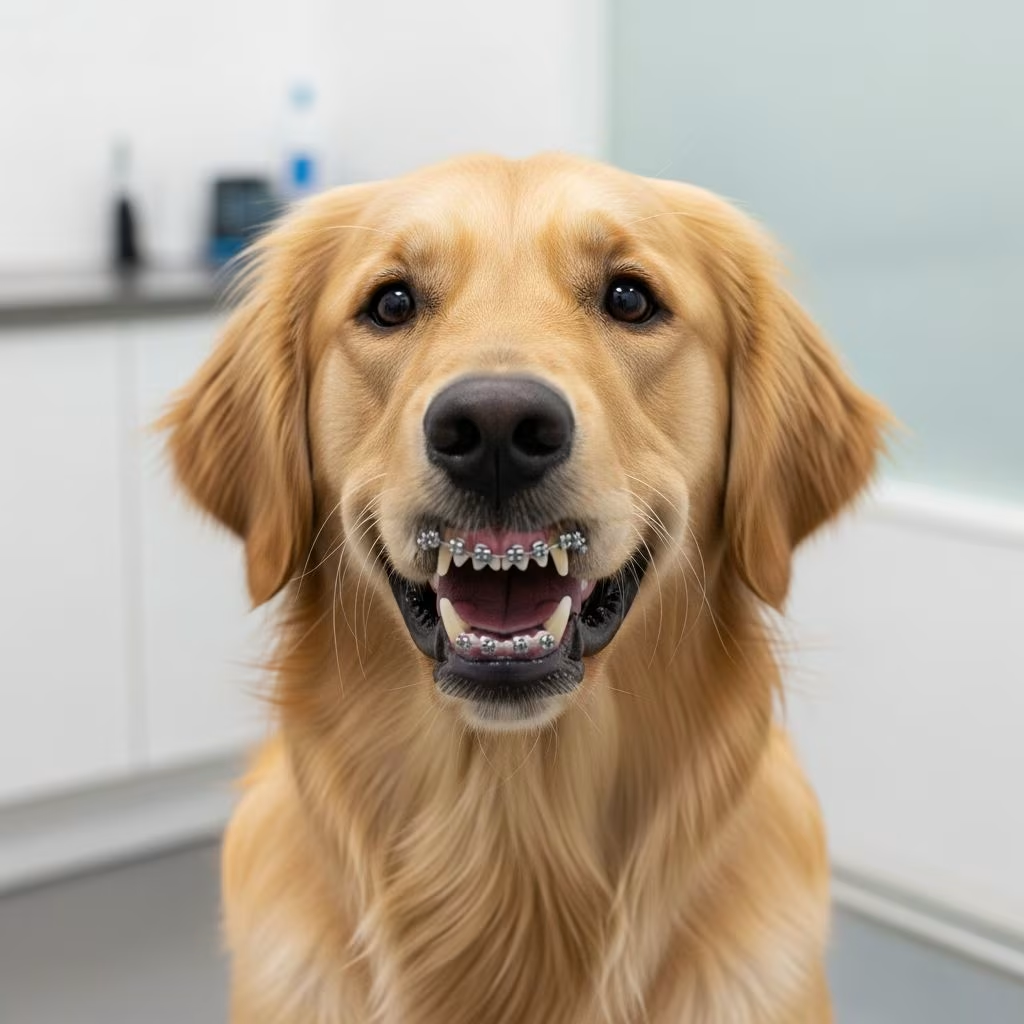
Dog braces, or canine orthodontics, are specialized veterinary treatments designed to correct misaligned teeth and bite issues in dogs, improving oral function, reducing pain, and preventing long-term health complications. Unlike human braces often used for cosmetics, dog braces focus on functionality to ensure dogs can eat, chew, and live comfortably without dental trauma.
What Are Dog Braces?
Dog braces involve orthodontic appliances like brackets, wires, elastic chains, or spacers attached to the teeth to gradually reposition them into proper alignment. These treatments, available for over 30 years in veterinary dentistry, address serious malocclusions rather than purely aesthetic concerns, as dogs prioritize function over appearance.
Common appliances include masal chains for maxillary canine teeth, which apply distal tipping forces to correct forward-pointing canines that crowd the lower jaw. Fixed metal brackets on anchor teeth (like premolars and molars) connect via wires and elastics, typically requiring 4-6 weeks of treatment with bi-weekly adjustments often done without sedation.
Removable aligners, similar to Invisalign, offer options for milder cases, using clear plastic trays to shift teeth progressively. Materials like stainless steel or medical-grade plastics ensure durability and comfort, minimizing irritation during adaptation.
Do Dogs Need Braces? Common Dental Problems
Not all crooked teeth require intervention; veterinarians assess if misalignment causes pain, infection risk, or functional impairment. Key issues treatable with braces include:
- Malocclusion (improper bite): Misaligned jaws where teeth fail to meet correctly, leading to chewing difficulties and wear.
- Linguoversion (base narrow): Lower canine teeth displaced toward the tongue, often traumatizing the palate; common in long-narrow jaw breeds like Collies.
- Mesioverted maxillary canines: Upper canines pointing forward, narrowing space for lower teeth and causing trauma.
- Crowded or rotated teeth: Due to retained deciduous teeth or jaw space shortages, increasing infection risks.
- Overbite/underbite: Jaw length discrepancies making chewing painful.
Untreated, these lead to chronic pain, infections, difficulty eating, and in severe cases, teeth penetrating soft tissues.
Breeds Prone to Orthodontic Issues
Certain genetics predispose breeds to dental misalignments. Brachycephalic (short-nosed) dogs have crowded jaws, while toy breeds suffer retained baby teeth. Here’s a table of at-risk breeds:
| Breed Type | Examples | Common Issues |
|---|---|---|
| Brachycephalic | Bulldogs, Pugs, Boston Terriers | Overbites, crowded teeth |
| Toy Breeds | Chihuahuas, Pomeranians, Yorkies | Retained deciduous teeth, rotations |
| Sighthounds/Collies | Collies, Shelties, Greyhounds | Linguoversion, base narrow |
| Medium/Large | Labradors, Shepherds (select lines) | Class II malocclusions |
Brachycephalic breeds face higher malocclusion rates due to skull compression, while toys’ small jaws exacerbate crowding.
Treatment Options for Misaligned Teeth in Dogs
Orthodontics isn’t always first-line; vets evaluate severity. Options include:
- Interceptive orthodontics: Early deciduous tooth removal to guide permanent eruption.
- Dog braces/masal chains: Ideal for young dogs post-eruption; less invasive than extractions, preserving tooth integrity.
- Spacers/aligners: For mild cases, widening diastemas without fixed appliances.
- Extractions or reductions: For unsalvageable teeth; braces stabilize post-surgery.
- Ball therapy: Non-braces alternative for linguoversion using acrylic balls on teeth.
Braces suit patients needing preserved dentition, offering functional, pain-free results with fewer follow-ups than alternatives.
How Are Dog Braces Applied?
Procedures occur under anesthesia for precision. Steps:
- Bonding brackets to anchor teeth (e.g., maxillary 4th premolar, 1st molar) as a unit.
- Attaching a hook to the target tooth (e.g., canine).
- Securing elastic chain for controlled force; distal tipping for mesioverted canines.
- Follow-ups every 2 weeks for adjustments; total 4-6 weeks, faster than humans due to physiology.
Treatment targets young dogs during permanent tooth eruption for best outcomes.
Care for Dogs with Braces
Home care is straightforward:
- Daily brushing: Use pet-safe toothpaste on braces to prevent plaque.
- Soft diet: Avoid hard chews; monitor for loose wires.
- Antiseptic rinses: As prescribed to reduce infection risk.
- Regular vet checks: For tightening/replacement; most dogs adapt quickly.
Owners report minimal discomfort post-adjustment, with visible improvements in weeks.
Cost of Dog Braces
Costs vary by complexity, location, and specialist: $1,500-$5,000 total, including anesthesia, materials, and 4-6 visits. Less than repeated extractions long-term; insurance may cover if medically necessary. (Inferred from veterinary dentistry standards; consult local vets.)
Risks and Considerations
Braces are safe under veterinary supervision but risks include:
- Bracket failure or gingival irritation.
- Infection if hygiene lapses.
- Not suitable for all; severe cases may need extraction.
Vets prioritize health over perfection: “Get the mouth healthy and functional,” not cosmetic.
Frequently Asked Questions (FAQs)
Can all dogs get braces?
No, only those with functional issues; cosmetic braces aren’t standard. Young dogs respond best.
How long do dog braces take?
Typically 4-6 weeks for canines, up to months for complex cases; faster than humans.
Are dog braces painful?
Initial discomfort fades; dogs adapt well with proper care.
What if braces aren’t an option?
Alternatives: extractions, reductions, or interceptive care.
Do brachycephalic dogs need braces often?
Yes, due to genetic crowding; early screening helps.
References
- Dog Braces (Orthodontics) — Advanced Animal Dentistry. 2025. https://animaldental.com.au/dog-braces-orthodontics/
- Does My Dog Need Braces? Understanding Canine Orthodontics Treatment Options — Animal Dental AZ. Accessed 2026. https://animaldentalaz.com/does-my-dog-need-braces-understanding-canine-orthodontics-treatment-options/
- Can Dogs Wear Braces to Straighten Teeth? — Orthodontics of West Covina. Accessed 2026. https://orthodontistwestcovina.com/can-dogs-wear-braces-to-straighten-teeth/
- Understanding Dog Braces: A Guide to Canine Orthodontics — Oreata AI Blog. 2024. https://www.oreateai.com/blog/understanding-dog-braces-a-guide-to-canine-orthodontics/e2024ca214e99587d107ae2ca1ae9917
- Dog Braces: Everything You Need to Know — PetMD. Accessed 2026. https://www.petmd.com/dog/care/dog-braces-everything-you-need-know



