

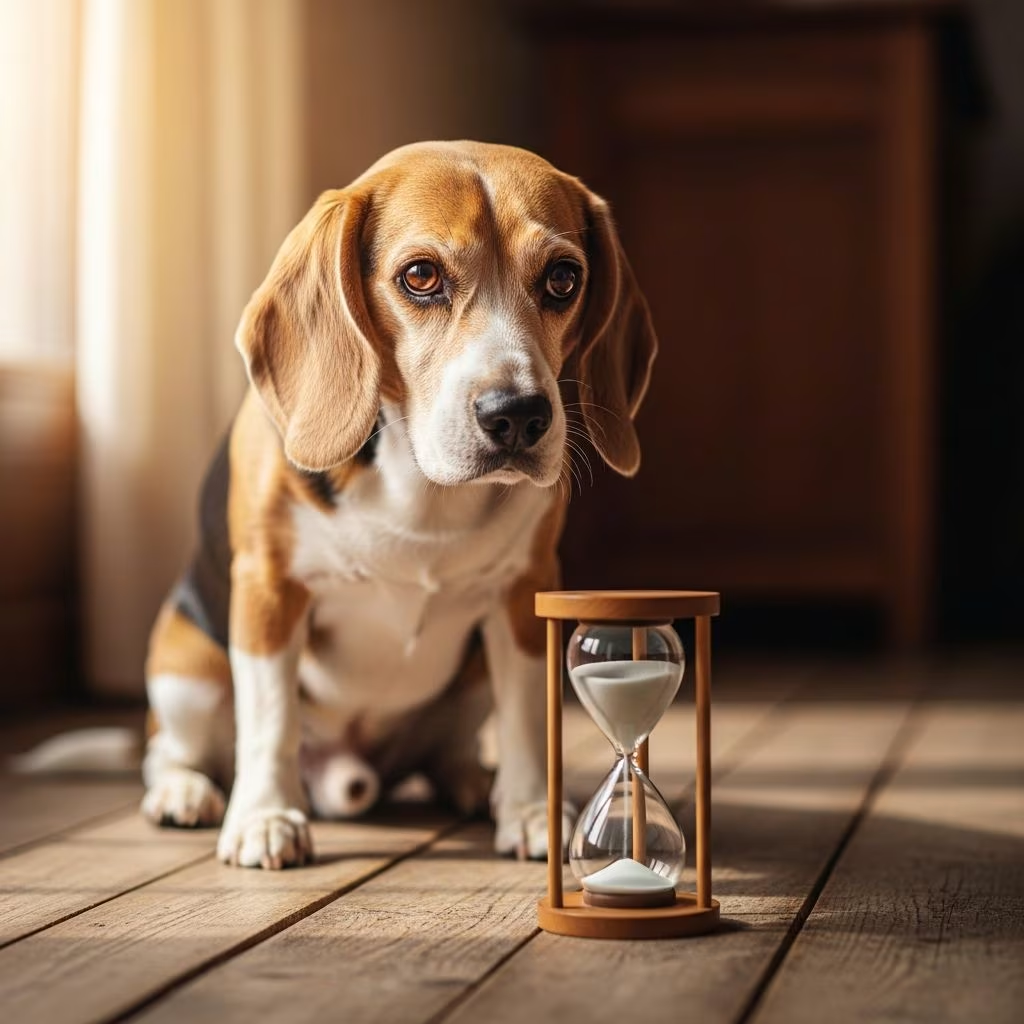
Healthy adult dogs typically retain stool for 8 to 12 hours comfortably, though puppies require breaks every 1 to 3 hours and seniors may need more frequent opportunities due to reduced control.
Understanding Canine Digestion Timelines
The canine digestive process begins in the mouth with enzymatic breakdown and progresses through the stomach, small intestine for nutrient absorption, and large intestine where water is reabsorbed to form stool. This full cycle generally spans 6 to 12 hours from meal ingestion to elimination readiness.
Adult dogs, with mature bowel muscles, can delay defecation beyond this window if trained, often holding for overnight periods. However, exceeding 12 hours routinely increases discomfort risks as the colon extracts excess moisture, hardening waste.
Age-Specific Bowel Control Guidelines
Bowel retention capacity varies significantly by life stage, influenced by muscle development and physiological changes.
- Puppies: Limited control means needs arise 1-3 hours post-meal or wake-up, aligning with house-training demands.
- Adults: Peak control allows 8-12 hours, suiting typical twice-daily feeding schedules with post-meal poops.
- Seniors: Muscle weakening and potential incontinence reduce limits to 6-8 hours or less.
| Age Group | Average Hold Time | Key Considerations |
|---|---|---|
| Puppy (under 6 months) | 1-4 hours | Frequent monitoring essential for training. |
| Adult (1-7 years) | 8-12 hours | Matches work/sleep cycles if healthy. |
| Senior (8+ years) | 6-8 hours | Watch for mobility or digestive decline. |
Factors Shaping Bowel Retention
Several variables determine how long a dog can comfortably hold stool beyond basic age differences.
Body Size and Breed
Larger breeds process meals slower due to greater intestinal length, extending hold times compared to small or toy varieties with faster metabolisms.
Diet Composition
High-fiber diets promote quicker transit and softer stools, reducing hold needs, while low-fiber or high-fat meals slow digestion. Digestive enzymes in premium foods enhance nutrient uptake, supporting predictable elimination.
Activity and Routine
Regular exercise stimulates intestinal motility, shortening retention. Consistent feeding and walk schedules train dogs to align bowels with opportunities.
Health Status
Gastrointestinal issues like diarrhea deplete stool reserves temporarily, allowing longer gaps post-recovery, but chronic conditions shorten safe holds.
Post-Meal Elimination Patterns
Dogs often signal readiness 30 minutes after eating, as the gastrocolic reflex triggers colon contractions. Morning walks capitalize on overnight accumulation, with most defecating soon after waking.
For twice-daily fed dogs, expect two poops per day; added meals may require extras. Track individual patterns to preempt accidents.
Risks of Extended Stool Retention
While occasional 12+ hour holds pose minimal harm to healthy adults, chronic delays invite complications.
- Constipation: Water reabsorption dries stool, causing painful straining.
- Anal Gland Issues: Lack of pressure from passing stool hinders natural expression.
- Bowel Stretching: Prolonged holding enlarges the colon, impairing future control.
- Discomfort Signals: Restlessness, circling, or whining indicate distress.
Beyond 48 hours without defecation warrants veterinary evaluation, as it signals potential blockages or illness, though post-diarrhea recovery can safely extend to 72 hours.
Recognizing and Addressing Retention Behaviors
Dogs may deliberately delay pooping due to environmental aversions, stress, or learned habits rather than physical limits.
- Surface Preferences: Grass lovers resist concrete; provide variety.
- Anxiety Triggers: New routines or absences prompt holding.
- Training Gaps: Reinforce with praise for outdoor success.
Promoting Optimal Bowel Health
Maintain regularity through structured care to minimize retention needs.
- Establish fixed feeding times to predict elimination.
- Schedule walks 30 minutes post-meal and upon waking.
- Incorporate fiber-rich foods or supplements for smooth transit.
- Ensure ample hydration to soften stool.
- Monitor for changes; consult vets on persistent irregularities.
Frequently Asked Questions
How long after eating do dogs typically poop?
Most eliminate within 30 minutes, though full digestion takes 8-12 hours.
Is 24 hours without pooping dangerous?
Not immediately for healthy dogs, but over 48 hours requires vet attention.
Can diet improve bowel predictability?
Yes, high-fiber and enzyme-enhanced kibble accelerates transit and eases passage.
Do puppies outgrow short hold times?
Yes, control matures by 6-8 months, reaching adult 8-hour capacities.
What if my senior dog holds longer than usual?
Assess for pain or weakness; more frequent, assisted breaks help.
Daily Poop Frequency Benchmarks
Observe these norms to gauge health:
- Adults: 1-3 times daily.
- Puppies: 3-5 times.
- Seniors: 1-2 times, with softer consistency possible.
Deviations signal dietary tweaks or medical checks.
References
- How Long Do Dogs Hold Their Poop? — Dial A Vet. 2023. https://www.dialavet.com/blog/how-long-do-dogs-hold-their-poop
- How Long Can Dogs Hold Their Poop? — Woofz. 2023. https://www.woofz.com/blog/how-long-can-dogs-hold-their-poop/
- How Long Can Dogs Hold Their Poop? A Guide for Dog Owners — WoPet. 2023. https://wopet.com/dogs/how-long-can-dogs-hold-their-poop/
- How Long Can Dogs Hold Their Poop? — Bernie’s Best. 2023. https://www.bernies.com/blogs/bernies-blog/how-long-can-dogs-hold-their-poop/
- How Often Should Dogs Poop Every Day? — Rover.com. 2023. https://www.rover.com/blog/how-many-times-a-day-should-my-dog-poop/
- How Long Is Too Long to Leave Your Dog Alone — Carries Dog Walk Pet Sit. 2017-06-14. https://www.carriesdogwalkpetsit.com/blog/2017/6/14/how-long-is-too-long-to-leave-your-dog-alone
- How Long Can A Dog Go Without Pooping? A Vet Answers — ToeGrips. 2023. https://toegrips.com/how-long-can-dog-go-without-pooping/



