
Dog Blood Pressure Testing: Essential Guide
Discover if blood pressure tests for dogs are worth the effort, how they work, and when they matter for your pet's wellness.
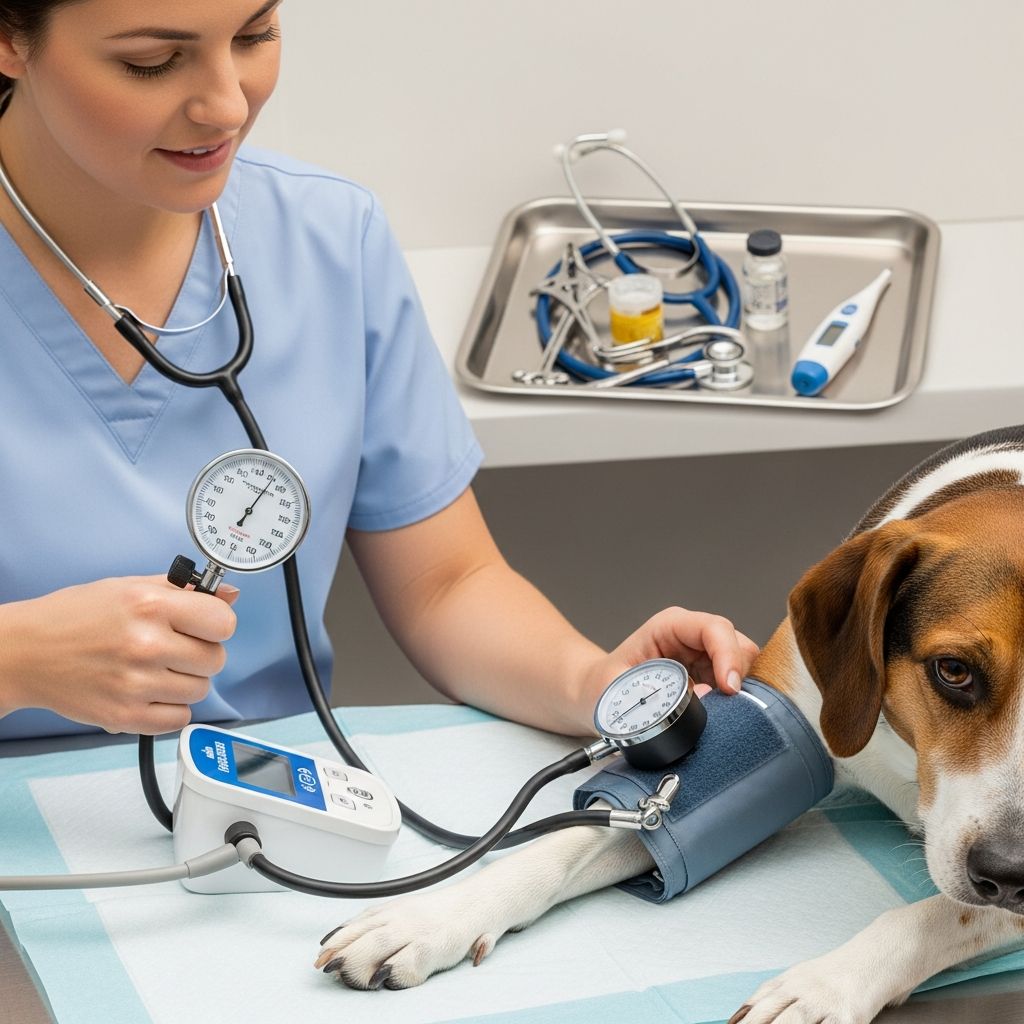
Blood pressure monitoring in dogs helps detect hypertension early, preventing organ damage and improving quality of life through timely interventions.
Why Monitor Blood Pressure in Canines?
Maintaining optimal blood pressure is vital for dogs, as elevated levels can silently harm vital organs like the kidneys, eyes, and heart. Unlike humans, dogs rarely show obvious symptoms of high blood pressure until advanced stages, making routine screening crucial during veterinary visits.
Hypertension affects up to 20% of older dogs, often linked to kidney disease or endocrine disorders. Early detection allows for treatments like diet changes or medications, extending lifespan and vitality.
Understanding Canine Blood Pressure Basics
Canine blood pressure readings include systolic pressure (heart contraction phase), diastolic pressure (relaxation phase), and mean arterial pressure (average). Normal systolic values range from 110-160 mmHg in awake dogs, varying by breed, age, and stress levels.
- Systolic: Peak pressure during heartbeat.
- Diastolic: Lowest pressure between beats.
- Mean Arterial Pressure (MAP): Average driving blood flow to organs; ideally 60-90 mmHg.
Values above 180 mmHg systolic or 120 mmHg MAP indicate hypertension, warranting further investigation.
Primary Methods for Measuring Dog Blood Pressure
Veterinarians use noninvasive techniques for routine checks, prioritizing accuracy and patient comfort. These methods involve an inflatable cuff on the limb or tail.
Doppler Ultrasonography Technique
Doppler is the gold standard for dogs, especially smaller breeds, using ultrasound waves to detect arterial blood flow audibly. It reliably measures systolic pressure but not diastolic or mean.
Procedure Steps:
- Select cuff size: 40% of limb circumference to avoid false readings.
- Place cuff on forelimb or hindlimb, probe over artery (e.g., radial or dorsal pedal).
- Inflate cuff above estimated systolic pressure until pulse sound vanishes.
- Deflate slowly; note pressure when pulse returns— that’s systolic.
- Repeat 5-7 times, averaging results after 3-5 minute acclimation.
Doppler excels in hypotensive or arrhythmic dogs due to direct audio feedback.
Oscillometric Devices
Oscillometry automates readings by detecting cuff pressure oscillations from arterial pulses, providing systolic, diastolic, MAP, and heart rate. It’s user-friendly for multi-readings but less accurate in small or stressed dogs.
Key Advantages:
- Hands-free operation.
- Full profile (SAP, DAP, MAP).
- Suitable for continuous monitoring.
Limitations: Often overestimates in hypotension or arrhythmias; MAP is most reliable.
| Method | Measures | Best For | Accuracy Notes |
|---|---|---|---|
| Doppler | Systolic only | Small dogs, arrhythmias | Highly reliable |
| Oscillometric | SAP, DAP, MAP | Larger dogs, automation | MAP most accurate |
Factors Influencing Accurate Readings
Stress, cuff fit, and positioning skew results. Acclimate dogs 5-10 minutes in a quiet room; support limbs without gripping to minimize tension.
- Cuff Sizing: Too tight elevates readings; too loose lowers them.
- Patient Factors: Panting, movement, or excitement can raise pressure 20-40 mmHg.
- Site: Mid-radius or metatarsal preferred; tail for uncooperative dogs.
Take multiple readings, discarding outliers, for a true baseline.
Recognizing Hypertension Signs in Dogs
Subtle clues include nosebleeds, vision loss, seizures, or weakness. Systemic hypertension often stems from chronic kidney disease (65% cases), hyperthyroidism, or Addison’s.
Secondary hypertension resolves with underlying treatment; primary (idiopathic) requires lifelong management.
When Should You Test Your Dog?
Screen seniors over 8 years annually, or sooner if kidney issues, protein-losing nephropathy, or endocrine diseases exist. Routine wellness exams benefit breeds prone to heart or renal problems like Cavaliers or Labs.
- Geriatric dogs (>7 years).
- Known renal or cardiac patients.
- Unexplained symptoms: bleeding, blindness.
Treatment Strategies for High Blood Pressure
Amlodipine (calcium channel blocker) is first-line, reducing pressure 30-50 mmHg. ACE inhibitors like benazepril aid if proteinuria present. Diet low in sodium/phosphorus supports kidneys.
Monitor quarterly post-treatment; combine with weight control and exercise for holistic management.
Home Monitoring: Feasible for Owners?
Portable Doppler units cost $300-800; training via vet demos enables trends tracking. Not diagnostic alone—confirm anomalies professionally.
Pros: Early alerts, bonding experience.
Cons: Stress-induced inaccuracies, learning curve.
Costs and Accessibility of Testing
Vet visits: $50-150 per session. In-house machines common; referrals for complex cases. Pet insurance often covers diagnostics for symptomatic dogs.
Common Myths About Dog Blood Pressure
- Myth: Only old dogs need checks. Fact: Any age with risk factors.
- Myth: Symptoms always appear first. Fact: Silent until organ damage.
- Myth: Human cuffs work. Fact: Vet-specific sizes essential.
FAQs
What is a normal blood pressure for dogs?
Awake systolic 110-160 mmHg; hypertension >160-180 mmHg.
How often should I test my dog?
Annually for seniors; more if at risk.
Can I measure blood pressure at home?
Yes, with Doppler training, but vet oversight needed.
What causes high blood pressure in dogs?
Kidney disease primary; also endocrine issues.
Is blood pressure testing painful?
Noninvasive and quick; mild cuff discomfort only.
Preventive Tips for Healthy Blood Pressure
Feed renal-support diets early, maintain ideal weight, ensure hydration, and schedule regular vet checkups. Early intervention halves complication risks.
References
- Indirect Blood Pressure Measurement: Guides for Vets — Clinician’s Brief. 2023. https://www.cliniciansbrief.com/article/indirect-blood-pressure-measurement
- HOW TO MEASURE BLOOD PRESSURE IN DOGS — YouTube (Veterinary Channel). 2022. https://www.youtube.com/watch?v=kc3acCpe_ck
- Noninvasive Blood Pressure Monitoring in the Canine and Feline Patient — Today’s Veterinary Nurse. 2023. https://todaysveterinarynurse.com/diagnostics/noninvasive-blood-pressure-monitoring-in-the-canine-and-feline-patient/
- Non–invasive blood pressure measurement in animals: Part 1 — PMC (PubMed Central). 2020. https://pmc.ncbi.nlm.nih.gov/articles/PMC7074114/
- Blood Pressure Management in Small Animals: A Technician’s Guide — CVC A Vets Blog. 2023. https://blog.cvcavets.com/blog/blood-pressure-management-in-small-animals-a-technicians-guide
- An instructional video on Oscillometric and Doppler techniques — YouTube (JAVMA). 2022. https://www.youtube.com/watch?v=J7MuTW0Prxg
- Blood Pressure Monitoring From a Veterinary Nursing Perspective — Today’s Veterinary Practice. 2023. https://todaysveterinarypractice.com/cardiology/todays-technician-blood-pressure-monitoring-from-a-nursing-perspective-part-2-blood-pressure-monitoring-techniques/
Similar Articles








Read full bio of Sneha Tete




