

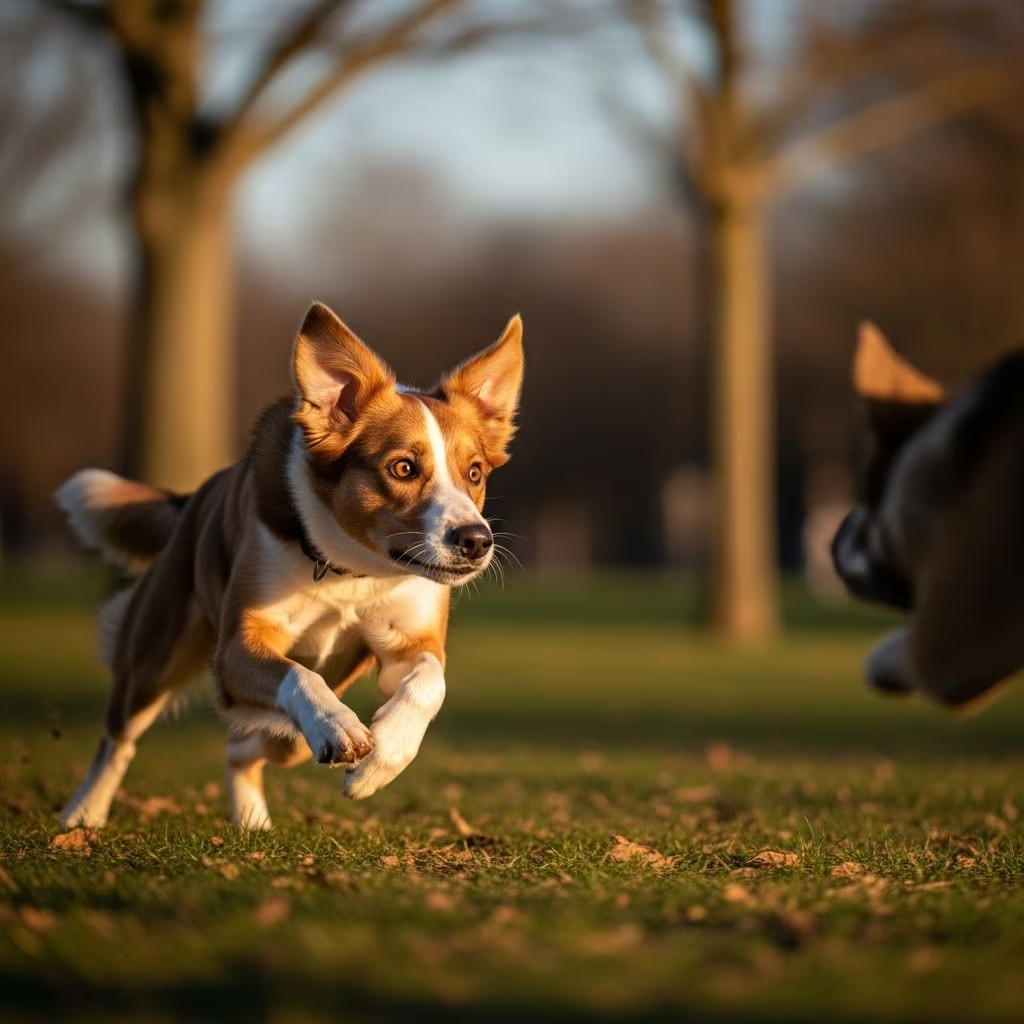
Understanding Dog Chase Behaviors
Chasing and running after prey, nipping at heels, and herding are entirely normal dog behaviors that stem from their natural instincts. These behaviors are more strongly motivated in certain breeds, particularly those bred for hunting or herding purposes. However, when chase behaviors become excessive or directed toward inappropriate targets such as cars, joggers, or bicycles, they can pose serious safety risks to your dog, other animals, and people. Understanding the underlying motivations behind chase behaviors is the first step toward managing and controlling them effectively.
Why Dogs Chase: Understanding the Motivation
Dogs engage in chase behaviors for several interconnected reasons rooted in their natural biology and psychological state. The primary driver behind most chasing is the dog’s perception that their behavior has caused the target to move away. From the dog’s perspective, their chase created the movement, which creates a powerful self-rewarding cycle. Dogs don’t understand that the car or jogger was going to move anyway; they only recognize that their action resulted in the desired outcome.
Prey Drive and Natural Instinct
The prey drive, also known as predatory instinct, is deeply embedded in a dog’s core nature and is part of the hunting instinct found throughout the Canidae family, which includes wolves, foxes, and wild dogs. When exposed to a moving target, powerful chemical reactions occur in the dog’s brain, with adrenaline and other neurotransmitters creating an intense focus that can override training and rational decision-making. This instinctual response is so powerful that even the most well-trained dogs may “disobey” commands when prey drive activates, as instincts and instinctual actions often overpower learned behaviors.
Reinforcement Through Repetition
Chase behaviors become stronger over time through repeated encounters, especially when reinforced in a variable manner. Some targets move slowly while others move quickly, teaching the observant dog to bark and chase with greater intensity to ensure that every pursued target moves as rapidly as possible. The very fact that the target is moving typically provides sufficient reinforcement and stimulation, making the behavior increasingly difficult to extinguish once it has been established.
Fear and Anxiety Factors
A dog’s personality significantly affects the intensity of chase behaviors. Fearful dogs that are frightened by a person or moving vehicle become highly motivated to ensure the scary stimulus does not linger. These dogs may chase to create distance between themselves and the perceived threat. The intensity of this behavior can increase rapidly, and unfortunately, scolding or punishing a fearful dog to stop chasing typically increases the dog’s fear level and makes the behavior worse rather than better.
Low Frustration Tolerance
Dogs with low frustration tolerance display high levels of chasing behavior because they are very eager to reach their goal. Even if a dog is motivated to engage with the target appropriately—perhaps to meet a person or another dog, or to greet someone getting out of a car—the dog may become frustrated when his effort to get closer causes the target to retreat instead. This frustration leads to running with greater speed, only to become even more frustrated as the target remains ahead. Over time, this cycle reinforces the chasing behavior.
Factors Influencing Chase Behavior Intensity
Multiple factors influence how intensely a dog will pursue a chase behavior. Environmental conditions, different triggers, and the distance from triggers all play roles in determining chase intensity. Additionally, whether the dog is tired or has plenty of energy to burn at that moment significantly impacts behavior. The family member present with the dog can also influence how intensely chase behaviors are displayed. Dogs with unstable temperaments—nervous or fearful dogs combined with high prey drive—present a particular challenge, as these factors can combine to create dangerous situations where the dog becomes highly excited and aroused during the chase.
Why Punishment Doesn’t Work
One of the most critical misunderstandings about managing chase behaviors is the belief that punishment will stop the behavior. Yelling “no” or punishing the dog will not stop a behavior that has strong motivational underpinnings. Attempting to punish a dog to stop chasing is likely to increase the dog’s anxiety or fear about the stimulus, making the problem worse. Since chase behaviors are often rooted in fear or predatory drive—both powerful motivators—punishment approaches typically fail and can create additional behavioral problems.
Effective Management Strategies
In order to control chase behaviors, it is necessary to train the dog to do something different than what it was doing before. This requires a structured approach that addresses the underlying motivation and teaches alternative responses.
Response Substitution Training
Once a dog has been engaging in chase behaviors for some time, the behavior becomes increasingly difficult to stop because the moving target itself provides sufficient reinforcement. A program of response substitution is necessary to teach the dog the desired and acceptable response when exposed to the stimulus. This involves consistently redirecting the dog’s attention to an alternative, appropriate behavior whenever the triggering stimulus appears. For example, teaching the dog to sit or lie down when a jogger approaches creates a new association with the trigger.
Desensitization and Counter-Conditioning
If fear or anxiety is present when the dog is exposed to the stimulus, desensitization and counter-conditioning are necessary to change the dog’s attitude and emotions to positive ones. This process involves controlling the trigger and presenting it at a very low intensity—far away and moving slowly—so that your dog can remain calm. The goal is to gradually increase the dog’s tolerance and positive association with the trigger over time. Once the dog can relax in the presence of the trigger, he may no longer be motivated to chase.
Relaxation Techniques
For dogs whose chase behaviors are rooted in fear or frustration, relaxation techniques such as sit and stay commands are essential. These techniques help the dog develop emotional regulation and provide an alternative focus during triggering situations. Consistent practice of these commands in non-triggering situations builds the foundation for success when the actual trigger appears.
Environmental Management and Prevention
While training is essential, environmental management plays an equally important role in preventing chase behaviors from occurring and being reinforced. Keep your dog on a secure leash in areas where chase triggers are likely to appear, such as parks, busy streets, or neighborhoods with joggers. Ensure your home and yard are securely fenced to prevent escape and pursuit of outdoor stimuli. Avoid situations where your dog is likely to encounter chase triggers until training has progressed sufficiently.
Exercise and Mental Stimulation
Dogs that receive adequate physical exercise and mental stimulation are less likely to engage in problematic chase behaviors. Insufficient exercise and mental stimulation can lead to increased chasing as the dog seeks outlets for excess energy and engagement. Regular, vigorous exercise appropriate to your dog’s age and ability, combined with training activities and enrichment such as puzzle toys and scent work, helps satisfy the dog’s natural drives in appropriate ways.
Safety Considerations
It’s important to remember that when dealing with a dog with higher chasing behavior drives, there is always a possibility that things can go wrong. Precaution and awareness can save the day. Never assume your dog won’t chase—instead, assume that if given the opportunity, he might, and manage accordingly. Avoid putting your dog in situations where chase behaviors are likely to escalate or lead to dangerous outcomes. Work with a qualified professional dog trainer or behavior consultant to develop a customized management and training plan specific to your dog’s needs and triggers.
The Role of Genetics and Breed Tendencies
Some dogs are genetically predisposed to stronger chase drives based on their breed heritage and genetic background. Hunting and herding breeds, in particular, have been selectively bred for generations to exhibit strong chase behaviors. While training and management can help control these behaviors, it’s important to acknowledge that some dogs will always have a strong inclination to chase. Understanding your dog’s breed characteristics helps set realistic expectations for training and management.
Frequently Asked Questions About Dog Chase Behaviors
Q: Is chasing behavior always dangerous?
A: While chasing is a normal dog behavior, it becomes problematic when directed toward inappropriate targets like cars, joggers, or bicycles, which pose safety risks to your dog and others. Supervised chasing of appropriate toys or in designated play areas is generally safe.
Q: Can I train an older dog to stop chasing?
A: Yes, but it’s more challenging than prevention. Once a dog has been engaging in chase behaviors for some time, the behavior is more difficult to stop. However, response substitution and desensitization training can still be effective with patience and consistency.
Q: Why doesn’t punishment stop my dog from chasing?
A: Punishment doesn’t work because chase behaviors are driven by powerful motivations like prey drive or fear. Punishment typically increases anxiety and fear, making the behavior worse rather than better.
Q: How long does it take to see results from training?
A: The timeline varies depending on the dog’s age, how long the behavior has been established, and the consistency of training. Generally, you should expect to see gradual improvements over weeks to months with consistent effort.
Q: Should I work with a professional trainer?
A: For serious chase behaviors, especially those involving fear or directed toward dangerous targets like cars, working with a qualified professional dog trainer or behavior consultant is highly recommended to ensure safety and success.
Q: Can certain breeds be trained to have no chase drive?
A: While training can significantly manage and redirect chase drive, completely eliminating it in breeds with strong genetic predisposition is unrealistic. The goal is to teach appropriate channels for this natural behavior.
References
- Dog Behavior Problems – Chase Behaviors — VCA Animal Hospitals. 2025. https://vcahospitals.com/know-your-pet/dog-behavior-problems—chase-behaviors
- Dog Behavior Problems: Chase Behaviors — Brampton Veterinarian. 2025. https://bramptonveterinarian.com/dog-behavior-problems-chase-behaviors/
- Ten Reasons Your Dog May Develop Behavior Problems — Clicker Training. 2025. https://clickertraining.com/ten-reasons-your-dog-may-develop-behavior-problems/
- Behavior Problems in Dogs – Dog Owners — Merck Veterinary Manual. 2025. https://www.merckvetmanual.com/dog-owners/behavior-of-dogs/behavior-problems-in-dogs
- Why Do Dogs Chase Their Tail? — PetMD. 2025. https://www.petmd.com/dog/behavior/why-do-dogs-chase-their-tails



