

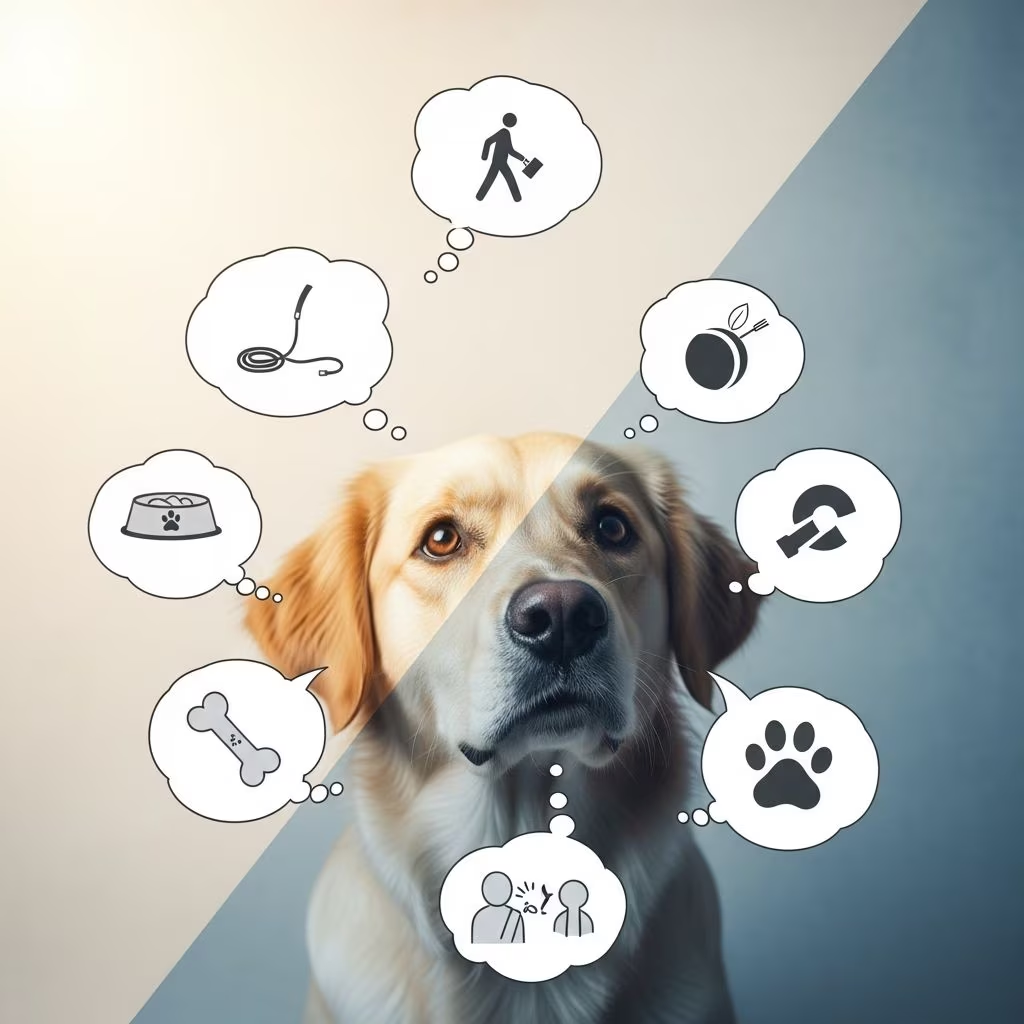
Beware Simple Names for Complex Dog Behavior Problems
It is tempting to explain your dog with quick labels: “stubborn,” “dominant,” “needy,” “reactive.” Those words feel tidy, but most canine behavior is anything but simple. Many labels mix together emotion, learning history, genetics, health, and the human–dog relationship in a way that can cloud what is really going on. When words get too simple, the help we offer our dogs often gets too simple, too.
This article unpacks several common dog behavior labels and shows how they can obscure stress, fear, pain, or unmet needs. Instead of getting stuck on a name, you will learn to look for specific behaviors, triggers, and contexts so you can choose kinder and more effective solutions.
Why Simple Behavior Labels Can Mislead
Dogs do not behave in a vacuum. Their actions are shaped by:
- Emotion (fear, anxiety, frustration, joy)
- Learning history (what has been rewarded or punished before)
- Health and pain (orthopedic issues, GI discomfort, sensory loss)
- Environment (noise, crowds, other animals, routines)
- Human interaction style (handling, predictability, training methods)
Research shows that owner personality traits, stress, and handling style correlate with how dogs behave, especially with fearfulness and aggression. When we shrink all of that into one word—like “aggressive”—we risk missing the true drivers of behavior and delaying appropriate support, including medical care when needed.
The Trouble With Global Labels
Labels feel satisfying because they suggest a stable trait: “He is reactive” sounds like a fixed personality, not a pattern that changes across situations. But canine behavior problems are often:
- Context-specific: The dog reacts only on-leash, only at the door, or only around certain people or animals.
- State-dependent: Stress, fatigue, illness, or hormonal changes can intensify or reduce problem behaviors.
- Learned over time: Repetition of the same situation can either escalate behavior (more barking, lunging) or reduce it (habituation) depending on what the dog experiences.
When we call a dog “dominant” or “spiteful,” we are not describing specific body language, triggers, or consequences. We are usually describing how we feel about the behavior. That is a poor foundation for behavior change.
Common Dog Behavior Labels—and What They Can Hide
The following sections walk through some of the most common everyday labels and show what can lurk underneath each one.
“My Dog Is Stubborn”
“Stubborn” is often used for dogs who do not comply quickly with cues like sit, come, or leave it. But non-compliance is not proof of an attitude problem. It frequently reflects:
- Confusion: The dog does not actually understand the cue in this environment or with these distractions.
- Competing motivations: Sniffing, chasing, or greeting someone is more rewarding than responding to a cue.
- Stress or fear: Anxious dogs may freeze, shut down, or move away instead of responding, especially in busy or noisy places.
- Pain or physical limitation: Sitting, lying down, or jumping may hurt, so the dog avoids it.
Instead of “stubborn,” describe what you see:
- “She turns her head away and licks her lips when I call her in the park.”
- “He sits at home but not at the vet’s office.”
Specific descriptions help you and any professional you consult identify whether you need clearer training, better rewards, a quieter environment, or a veterinary exam.
“My Dog Is Dominant”
“Dominant” is one of the most overused and misunderstood labels in dog behavior. In scientific contexts, dominance refers to a relationship about access to resources, not a personality type. Modern research in applied dog behavior and welfare emphasizes that most so-called dominance issues are better understood as fear, anxiety, or confusion, especially in pet dogs living in family homes.
Dogs labelled “dominant” often:
- Guard food, toys, or resting spots
- Resist being moved, pushed, or forced off furniture
- Lunge, bark, or snap when restrained or cornered
These situations usually involve the dog feeling threatened or uncertain about losing resources, not trying to control their family. Focusing on dominance can push people toward confrontational methods (alpha rolls, harsh corrections) that increase fear and the risk of aggression instead of resolving the underlying emotional issue.
“My Dog Is Needy or Clingy”
Many families describe their dog as “velcro,” “clingy,” or “too attached.” Close bonding is normal and often beneficial for both humans and dogs, but excessive distress when separated can signal a behavior problem such as separation-related disorders.
What “needy” might really mean:
- Separation-related anxiety or distress: Whining, pacing, destruction, or house-soiling when left alone or when a particular person leaves.
- Lack of enrichment: Dogs with little exercise, social contact, or mental stimulation may seek constant interaction to fill unmet needs.
- Inconsistent routines: Unpredictable comings and goings or variable responses to attention-seeking can make dogs more anxious and clingy.
Instead of “He’s just needy,” look for patterns:
- Does the dog panic only when truly alone, but not with a pet sitter?
- Do signs appear before departure, or only after?
- Does more exercise and structured enrichment reduce the behavior?
Such questions help distinguish between a training issue, a welfare issue, and an anxiety disorder that may benefit from both behavior modification and veterinary support.
“My Dog Is Reactive”
“Reactive” is a popular shorthand for dogs who bark, lunge, growl, or spin at triggers such as other dogs, strangers, bikes, or cars. It is a helpful starting description, but very broad. Reactivity can reflect a mix of:
- Fear: The dog feels unsafe near the trigger and tries to increase distance.
- Frustration: Social or prey-motivated dogs barred from greeting or chasing may explode on-leash.
- Over-arousal: High excitement with poor impulse control.
- Pain: Physical discomfort lowers the threshold for aggressive displays.
Call it reactivity if you like, but then answer more specific questions:
- What is your dog’s body language before the outburst—curious, worried, stiff, wiggly?
- How far away is the trigger when behavior starts?
- Does the dog react off-leash, on-leash, behind a barrier, or in all settings?
Those details guide interventions like distance-based training, counterconditioning, environmental management, and medical evaluation for pain or anxiety.
“My Dog Is Guarding”
Resource guarding describes behaviors used to keep others away from valued items or spaces: stiffening, eating faster, staring, growling, snapping, or biting. It is a real pattern, and unlike some labels, it is also a useful technical term—yet it is still only the beginning of the story.
Guarding can be influenced by:
- Early experience: Dogs who have had food or toys repeatedly taken away may learn to defend them.
- Genetics: Some lines may be more prone to sensitivity around resources.
- Household routines: Chasing a dog around the house to grab stolen items can accidentally strengthen guarding behavior.
- Stress load: Dogs under chronic stress often show more intense responses to perceived threats, including resource guarding.
Instead of simply labelling a dog “a guarder,” note:
- What exactly is being guarded (food bowl, chew, person, doorway)?
- From whom (familiar adult, child, another dog)?
- What body language appears early (freezing, side-eye, lip lift) before obvious aggression?
These details can support safer management and a training plan built on gradual exposure and positive associations, often with the help of a qualified behavior professional.
“My Dog Looks Guilty”
The so-called “guilty look”—ears back, lowered posture, squinty eyes, lip licking—is one of the most famous dog expressions. People often assume it proves that the dog knows they did wrong and is feeling remorse. Controlled experiments suggest something different: dogs show this look based on how their person behaves, not on whether they actually broke a rule.
Dogs are very sensitive to human emotional cues and body language, a phenomenon called social referencing. When an owner returns to a mess and speaks in a tense or angry tone, dogs display appeasement signals even if they did not cause the damage. Those same signals appear when a person approaches a nervous dog in a confrontational way. The expression communicates, “Please calm down,” not “I understand the moral weight of my actions.”
When we mistake appeasement for guilt, we can unknowingly:
- Overestimate a dog’s understanding of cause and effect
- Punish long after the behavior occurred, which dogs do not connect with past actions
- Miss signs of fear and stress that need gentler handling
How Health, Genetics, and Environment Complicate the Picture
Beyond labels, three major domains shape dog behavior in powerful, interacting ways: health, genetics, and environment.
Medical and Physical Factors
Undiagnosed pain, sensory changes, or chronic disease can drive or worsen behavior problems. Studies highlight that dogs who are fearful or anxious may display aggression, avoidance, or repetitive behaviors, and that welfare problems often arise when their needs are not met or when humans misread subtle stress signals.
Behavior changes that should trigger a veterinary workup include:
- Sudden onset of aggression or irritability
- New house-soiling in a previously reliable dog
- Disorientation, pacing, or night-time restlessness
- Reluctance to jump, climb stairs, or be touched
Seeing these signs as “spiteful” or “lazy” can delay needed medical treatment.
Genetics and Breed Tendencies
Genetics influence how dogs look and may shape broad tendencies, but they are not destiny for specific behavior problems. A large recent study found that while DNA tests can reliably predict many aspects of canine appearance, they do not accurately predict individual behavioral traits in pet dogs. This means a dog’s breed or test profile cannot substitute for real observations of that dog in their real environment.
However, evolutionary history and selection for certain working roles (herding, guarding, scent work) can affect:
- Baseline activity level
- Response to movement (chasing, stalking)
- Vocalization patterns
- Sensitivity to social cues
Rather than labelling a dog “a herder” or “a guard dog” in a way that justifies problem behavior, use that information to guide enrichment and management: give outlets for chasing games through fetch or scent work, for example, instead of allowing uncontrolled chasing of joggers or children.
The Human–Dog Relationship and Daily Management
How people live with and manage their dogs plays a major role in what behaviors emerge. Research has found that common problems—such as jumping up, territorial behavior, and over-excitement—are widespread and often linked to management choices and expectations.
Key aspects of management that affect behavior include:
- Consistency and predictability: Dogs cope better when routines and rules are clear.
- Exercise and enrichment: Insufficient mental and physical activity is linked with fearfulness and other behavior challenges.
- Social opportunities: Limited contact with other dogs or people can increase fear and reactivity.
- Handling style: Harsh or inconsistent punishment is associated with more anxiety and aggression, while reward-based training is linked to better welfare and learning outcomes.
From Labels to Action: A More Helpful Framework
Instead of stopping at a label, move through a practical checklist. This turns a vague description into a plan you and a professional can act on.
| Instead of this label… | Ask these questions… | Next useful step |
|---|---|---|
| Stubborn | Does the dog understand the cue in easy settings? What distractions are present? Could this movement hurt? | Re-train in low-distraction areas, use higher-value rewards, and seek a vet exam if pain is suspected. |
| Dominant | What resource or situation is involved? What early signals does the dog show? How do people respond? | Manage access to triggers, avoid confrontations, and consult a reward-based behavior professional. |
| Needy | Is distress present only when alone? Are there signs of panic (vocalizing, destruction)? | Increase enrichment, develop gradual alone-time training, and discuss anxiety treatment with your vet. |
| Reactive | What is the trigger, distance, and body language before the outburst? On- or off-leash? | Adjust routes and distances, use counterconditioning, and get professional guidance for safety. |
| Guarding | What’s being guarded, from whom, and how intense is it? | Prevent risky scenarios, trade for higher-value items, and build a structured desensitization plan. |
When and How to Seek Professional Help
Behavior problems are extremely common. Studies estimate that the vast majority of pet dogs show at least one behavior issue at some point in life, with separation- and attachment-related problems among the most frequent. You are not alone if you are struggling, and help is available.
Consider reaching out to a qualified professional when:
- There is any risk of bites to people or other animals
- Behavior suddenly worsens or changes without an obvious reason
- Your dog’s quality of life is affected (cannot relax, explore, or rest comfortably)
- Household stress is high or you feel stuck and frustrated
Look for:
- Veterinarians or veterinary behaviorists who can assess medical and pharmacological needs
- Certified behavior consultants or reward-based trainers with education in learning theory and canine body language
When you describe your concerns, focus on concrete details, not labels. Instead of “He’s dominant,” say “He stiffens and growls when I approach while he’s chewing a bone.” That kind of description helps professionals keep your dog and your family safer while crafting an evidence-based plan.
Frequently Asked Questions (FAQs)
Q: Is it ever useful to use behavior labels like reactive or guarding?
A: Yes, as long as you treat them as shorthand for a cluster of observable behaviors, not as a personality verdict. Always follow any label with specific descriptions of what your dog does, when, and in response to what.
Q: How do I know if my dog’s behavior is a training problem or a medical problem?
A: Sudden changes, behaviors linked to movement or touch, and signs like lethargy, weight loss, or increased drinking all warrant a veterinary exam. When in doubt, rule out pain and illness first; even the best training plan cannot fix a behavior driven by physical discomfort.
Q: Can my personality or stress level really affect my dog’s behavior?
A: Studies suggest that owner traits, stress, and handling style are correlated with dogs’ fearfulness, aggression, and resilience. Calm, consistent routines and reward-based training are associated with more stable behavior, while high unpredictability and harsh corrections can increase anxiety.
Q: If DNA tests don’t predict behavior well, should I ignore breed completely?
A: Breed or type can offer broad clues about energy level or typical activities a dog might enjoy, but they cannot reliably predict whether an individual dog will be aggressive, fearful, or easy to train. Use breed information to guide enrichment and management, not as a justification for unsafe behavior or as a substitute for watching your unique dog.
Q: What’s the first step I should take if I’m worried about my dog’s behavior?
A: Start by writing down exactly what you see: the behavior, triggers, time of day, people present, and your dog’s body language. Then schedule a veterinary check to rule out health issues, and share your notes with a qualified, reward-based trainer or behavior professional for a tailored plan.
References
- People and Their Dogs Really Do Have Similar Personalities — Kinship. 2023-10-26. https://www.kinship.com/pet-behavior/dogs-mirror-humans
- The role of dogs is associated with owner management practices and environmental factors — N. Chersini et al., PLOS ONE. 2024-06-26. https://journals.plos.org/plosone/article?id=10.1371/journal.pone.0305166
- A New Study Says 99% of Dogs Have Behavior Issues—These Are the Most Common — Kinship. 2023-02-16. https://www.kinship.com/news/dogs-behavior-issues-study
- Genetic testing predicts appearance but not behavior in dogs — E. G. Boyko et al., Proceedings of the National Academy of Sciences. 2025-01-21. https://www.pnas.org/doi/10.1073/pnas.2421752122



