

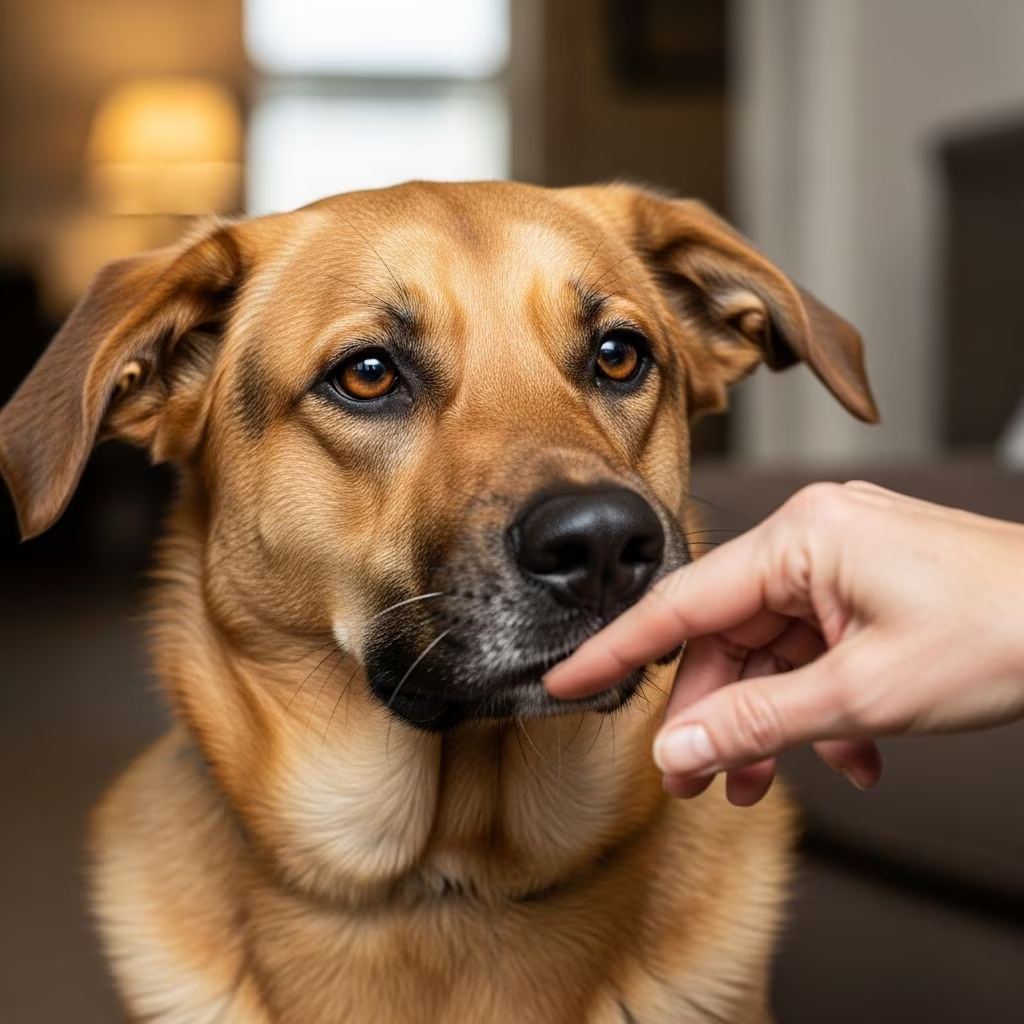
Dogs biting faces is a prevalent and serious issue, particularly affecting children, with specific human behaviors often preceding these incidents. Understanding these triggers and implementing prevention strategies can significantly reduce risks.
Understanding Dog Bites to the Face
Dog bites to the face represent a significant public health concern, disproportionately impacting young children. Research analyzing 132 facial dog bite incidents reveals that **76%** occurred when humans bent over the dog, **19%** when faces were placed close to the dog’s face, and **5%** involved mutual gazing between human and dog. Notably, no incidents involved victims stepping on, pulling the dog’s hair, punishing, scolding, or trimming nails beforehand, debunking some common myths about bite triggers.
**70% of victims were children**, with **84% under 12 years old**. All bites came from adult dogs, with male and large dogs overrepresented. Large dogs (48% of cases) caused more severe injuries, leading to higher rates of medical treatment compared to small dogs (P <0.01). Incidents frequently happened in the dog’s home, yard, or garden, with the dog off-leash.
| Risk Factor | Prevalence | Key Insight |
|---|---|---|
| Bending over dog | 76% | Most common precursor; invades dog’s personal space. |
| Face close to dog’s face | 19% | Perceived as threat or challenge. |
| Gazing/staring | 5% | Intense eye contact signals confrontation. |
| Child victims | 70% | Children at height disadvantage, more face exposure. |
| Large dogs | 48% | Higher injury severity and treatment needs. |
These findings underscore that bites often stem from unintentional provocation rather than unprovoked aggression. Adult presence (parents in 43%, dog owners in 62%) failed to prevent bites, highlighting that mere supervision is insufficient without risk awareness.
Why Do Dogs Bite Faces?
Dogs bite faces due to a combination of instinctual responses, miscommunication, and environmental factors. Faces are targeted because they are at eye level during common interactions like petting or playing, especially with shorter individuals like children. Central facial areas (nose, lips) receive over half of bites, as they are prominent during close encounters.
- Fear or Defensive Response: Bending over looms threateningly, mimicking predatory postures. Dogs may snap to create distance.
- Resource Guarding: Face proximity near food, toys, or rest areas can trigger protective bites.
- Overstimulation: Rough play escalating when faces enter the fray.
- Pain or Illness: Unnoticed discomfort prompts defensive nips.
- Lack of Socialization: Poor exposure to diverse humans leads to fear-based reactions.
Large, male adult dogs dominate statistics due to greater bite force and territorial tendencies, though all sizes pose risks. Off-leash status in familiar territories amplifies boldness.
Common Scenarios Leading to Face Bites
Real-world scenarios mirror study data. Parents often instruct children to “give the dog a hug,” positioning small faces directly in front of canine muzzles. Toddlers approach sleeping dogs or those eating, ignoring subtle warnings like lip licks or yawning.
In homes, “supervising” adults distract themselves with phones, missing tension builds like ear pinning or whale eye (whites showing). Yards become hotspots when dogs defend boundaries from approaching faces over fences.
“The presence of a child’s parent or dog’s owner is not sufficient to prevent bites.” — Global commentary on facial bite study
Recognizing Warning Signs Before a Bite
Dogs communicate stress through body language. Early intervention prevents escalation.
- Facial Cues: Lip licking, yawning, averted gaze, closed mouth tightening.
- Body Postures: Stiffening, leaning away, raised hackles, tail tucking or rigid wagging.
- Auditory Signals: Growling, whining, lip smacking.
- Displacement Behaviors: Sudden sniffing, scratching, or yawning.
Children misinterpret play bows or tail wags as invitations, but frozen stares or crouched readiness signal imminent bites. Train families to “leave room for a doggy donut”—maintain space around the dog’s muzzle.
Preventing Face Bites: Essential Strategies
Supervision and Risk Assessment
**Never assume adult presence equals safety.** Assess each dog’s history: prior bites, trauma, breed traits, size. Supervise means active monitoring—within arm’s reach, eyes on interaction. Teach children rules: no approaching eating/sleeping dogs, no bending over, ask permission first.
Avoid High-Risk Behaviors
- Do not bend over dogs; kneel sideways instead.
- Maintain face distance—pet from chest level.
- Avoid direct staring; blink and look away.
- Keep dogs leashed in yards with visitors.
Teaching Bite Inhibition: The Key to Safety
**Bite inhibition** is a dog’s ability to control bite force, learned primarily as puppies. Dogs with strong inhibition mouth gently; poor inhibition leads to damaging bites even without aggression.
Puppies develop this through littermate play: hard bites elicit yelps and play cessation, teaching pressure control. Singleton or early-weaned pups (<5-6 weeks) miss this, risking poor inhibition.
How to Teach Bite Inhibition
Replicate littermate lessons post-adoption:
- Startle Response: For hard bites, yelp sharply like a puppy (“Eep!”) then withdraw attention 30-60 seconds.
- Progress Gradually: Ignore medium bites first; address hardest only initially to avoid overwhelming.
- Redirect: Offer chew toys post-yelp.
- Eliminate Mouthing: Once gentle, yelp at any skin contact; teach “four on the floor.”
For yelping-resistant dogs, use calm “Ouch!” and exit. Consistency yields 90% success. Socialize via controlled puppy playdates, not chaotic dog parks.
Adult Dog Retraining
Older dogs benefit from tug games ending on cue, reinforcing gentle mouths. Positive reinforcement trumps punishment, which worsens fear.
Special Risks for Children and Families
Children face highest risk due to size (faces at bite level), impulsivity, and inability to read cues. **84% of child victims under 12**—toddlers most vulnerable. Even “friendly” family dogs bite unsupervised kids.
- Educate: Use dog body language flashcards.
- Model: Parents demonstrate safe approaches.
- Barriers: Baby gates during high-risk times (meals, naps).
Risk assessment per dog-family: Rescue histories, triggers. No dog is “all kid-friendly” without proven socialization.
What to Do If Your Dog Bites a Face
- Immediate Care: Control bleeding, seek ER for facial wounds (infection, scarring risks high).
- Isolate Dog: Prevent repeats; muzzle train.
- Professional Help: Consult veterinary behaviorist for aggression eval.
- Legal/Insurance: Report if severe; review policies.
Do not punish post-bite—increases fear aggression.
Frequently Asked Questions (FAQs)
Why do dogs bite faces more than other areas?
Faces are primary during interactions; bending/leaning exposes them centrally (nose/lips in >50% bites).
Are large dogs more dangerous?
Large dogs cause severe injuries (48% cases), but all sizes bite. Size correlates with treatment needs.
Can bite inhibition be taught to adult dogs?
Yes, via consistent redirection and positive reinforcement, though puppies learn easiest.
Is adult supervision enough?
No—43-62% bites occurred with adults present, often distracted.
What if my child is bitten?
Seek immediate medical care; facial bites risk scarring/infection. Consult behaviorist for dog.
Conclusion: Proactive Safety Saves Faces
Preventing face bites demands awareness of triggers (bending 76%), vigilant supervision beyond presence, and bite inhibition training. Every dog owner must prioritize these to protect vulnerable children and maintain trust.
References
- Dog Bites to the Face — Clinician’s Brief. 2016-05-01. https://www.cliniciansbrief.com/article/dog-bites-face
- Human behavior preceding dog bites to the face — PubMed/Acta Veterinaria Scandinavica. 2015-11-25. https://pubmed.ncbi.nlm.nih.gov/26598785/
- Dog Bite Inhibition: Why it Matters and How to Teach it — Kinship. Accessed 2026. https://www.kinship.com/dog-behavior/dog-bite-inhibition



