

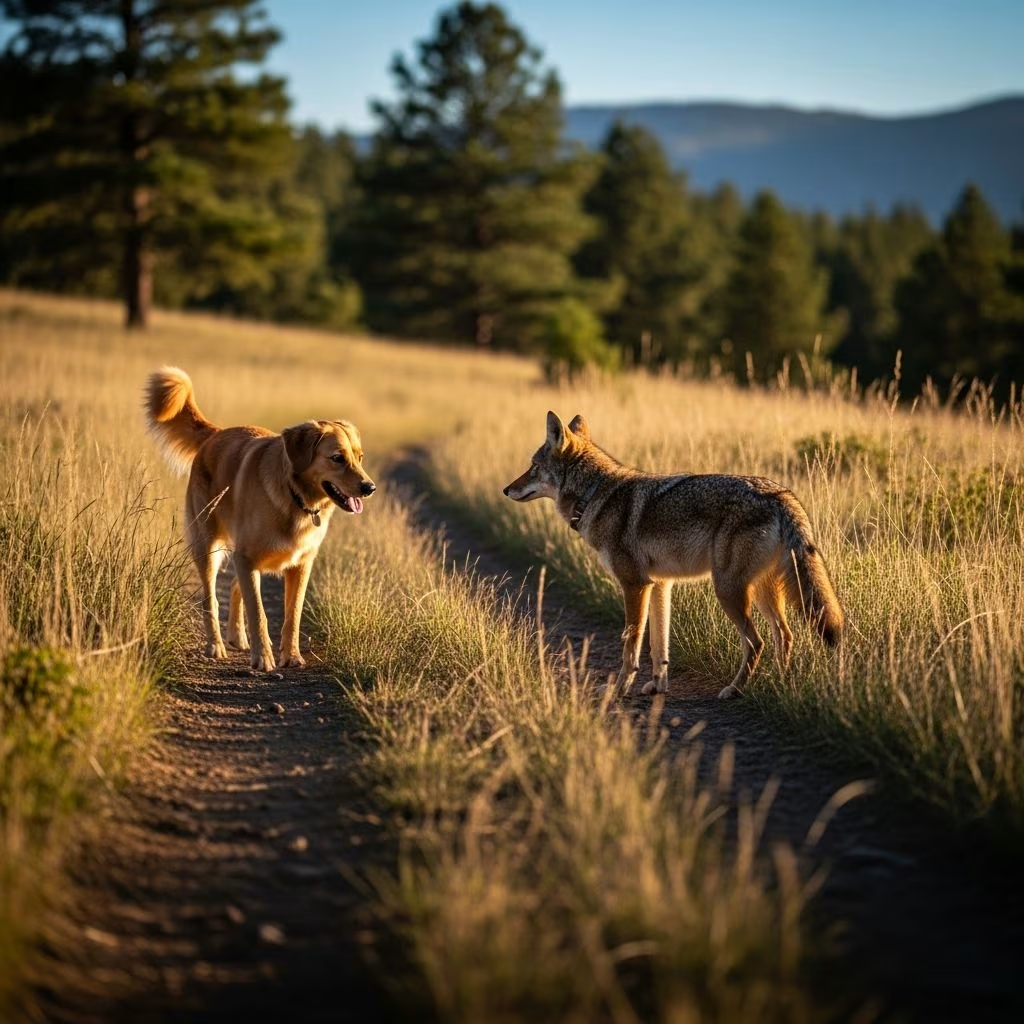
Coyotes are increasingly common in cities, suburbs, and rural areas, which means more chances for them to cross paths with our dogs. Understanding how dogs and coyotes interact can help you interpret what you see on walks or in videos and, most importantly, keep your dog safe.
Recent research using real-world video clips shows that interactions between dogs and coyotes are not always simple predator–prey situations. They range from clearly playful to clearly dangerous, with a wide spectrum in between. At the same time, coyotes remain wild, territorial carnivores, and the safest assumption is that unsupervised or close contact is risky.
How Dogs and Coyotes Interact
A scientific study that analyzed 35 social media videos of free-ranging coyotes and dogs interacting found three main categories of behavior: playful, agonistic (conflict-related), and predatory, plus a fourth group of undetermined behaviors.
| Interaction Type | Key Features | Typical Risk Level for Dogs |
|---|---|---|
| Playful | Mutual chasing, play bows, loose bodies, role reversals | Can change quickly; still potentially risky |
| Agonistic | Threats, chasing off, lunging, bites, retreats, staring | Moderate to high risk of bites and escalation |
| Predatory | Stalking, ambushing, bite-shaking small dogs | High risk; potentially fatal, especially for small dogs |
| Other/Undetermined | Watching from a distance, slow following, unclear intent | Risk depends on context; treat with caution |
Play Behavior Between Dogs and Coyotes
Surprisingly, many recorded encounters looked like play between two social canids.
- Mutual play signals: Both dogs and coyotes were seen giving play bows (front end lowered, rear up), often taking turns.
- Chase with reversals: The chaser and the one being chased frequently switched roles, which is typical of consensual play in dogs.
- Loose, bouncy movement: Bodies were relaxed and movements springy rather than stiff.
Despite these playful features, the context is still a wild animal meeting a domestic dog. Play can shift into conflict, especially if one animal becomes overwhelmed, frightened, or overly aroused.
Agonistic (Conflict-Related) Interactions
Agonistic behavior includes a wide range of conflict-related actions—not just overt aggression.
- Threat displays: Staring, stiff posture, raised hackles, growling, or lunging.
- Chasing off: Coyotes may rush at dogs to drive them out of an area they consider theirs, especially near dens or pups.
- Biting: Both species have been seen biting the other during conflicts.
- Retreats and appeasement: Turning away, increasing distance, or lowering the body to reduce escalation.
In the analyzed clips, coyotes more often showed defensive aggression—reacting to a dog that was approaching, chasing, or already close—while dogs rarely displayed defensive aggression in the same way. This may reflect that many dogs see coyotes as something to chase, while coyotes are protecting territory, food, or pups.
Predatory Interactions With Dogs
A smaller subset of interactions were clearly predatory.
- Ambushing: Coyotes were seen waiting and then suddenly rushing small dogs.
- Bite-shaking: In several clips, coyotes grabbed small dogs and shook them—a hallmark predatory behavior in canids.
- Targeting small dogs: Predatory shaking was only observed with small dogs; there were no confirmed cases of dogs acting predatory toward coyotes in this dataset.
There were also videos in which coyotes watched small dogs from a distance, showing possible predatory interest without fully engaging (no stalk or attack). Even if no attack occurs, this kind of focused watching suggests the potential for risk.
Other and Unclear Behaviors
Not all interactions fit neatly in one category.
- Observing from afar: Coyotes sometimes watch dogs from a distance, possibly assessing them as competitors, threats, or potential prey.
- Slow trailing: One documented clip showed a male coyote following a female dog slowly, sniffing and urinating along the way—interpreted as possible sexual interest.
- “Testing” behavior: Some observers describe coyotes approaching with bouncy or play-like movements, apparently gauging how the dog will respond.
Because intentions are hard to prove from video alone, handlers and guardians should treat these ambiguous behaviors cautiously and prioritize increasing distance.
Key Variables That Affect Dog–Coyote Encounters
Not every dog–coyote meeting looks the same. Several important variables shape how these encounters unfold.
Dog Size and Body Type
Dog size was strongly associated with interaction type in the research videos.
- Small dogs:
- Only one small dog was seen playing with a coyote in the studied clips.
- Small dogs were the only size class subjected to predatory bite-shaking by coyotes.
- No small dogs were involved in agonistic (two-sided conflict) interactions; they were more likely to be targets than fighters.
- Medium and large dogs:
- Most agonistic encounters involved medium or large dogs.
- In nearly all recorded agonistic interactions, the dog was larger than the coyote.
- Larger dogs were more likely to chase or confront coyotes and to be perceived as territorial threats.
Even if a large dog can physically push a coyote away, conflict and injury are still possible—for the dog, the coyote, and any humans who intervene.
Coyote Territoriality and Season
Coyotes maintain exclusive territories and defend them from other coyotes and perceived intruders, including dogs. Several factors can intensify their response:
- Denning and pup season: When pups are in a den, adult coyotes are especially defensive and may approach dogs more boldly to drive them away.
- Mating season: Adult coyotes may be more mobile and more likely to encounter dogs while seeking mates.
- Food availability: When food is scarce, coyotes may be more willing to approach human spaces or take risks near dogs in search of resources.
Dog Behavior and Human Handling
What the dog does—and what the person does—also shapes the interaction.
- Off-leash chasing: Dogs that chase coyotes can trigger defensive aggression. A dog may see it as a game, but a coyote may interpret it as an attack.
- High activity levels: Very active or hyper dogs may attract a coyote’s attention, potentially arousing defensive or predatory responses.
- Human anxiety: Anxious handlers may inadvertently increase a dog’s arousal through leash tension and vocal cues, making interactions more chaotic.
Are Dogs and Coyotes Natural Enemies?
The relationship between dogs and coyotes is complex. Based on the video study, it cannot be accurately described as purely predator–prey.
- Evidence of social behavior: Both species initiated play with the other, and many interactions looked similar to dog–dog social behavior.
- Comparable rates of play and conflict: The number of playful and agonistic encounters in the dataset was similar.
- Predatory events were fewer but serious: Predatory attacks on small dogs were less common in the sample than play or agonism but carried much higher stakes.
From a safety perspective, what matters most is that coyotes are wild and manage their territories and resources according to their own priorities, not ours. Interactions may look playful until they are not, and dogs do not always read coyotes’ signals accurately. Guardians should not allow close contact even if a coyote appears relaxed or playful.
Practical Safety Tips for Dog Guardians
While the research helps explain what we see, everyday decisions are about prevention and risk reduction. Guidance from wildlife agencies emphasizes both keeping dogs safe and keeping coyotes wary of people.
During Walks
- Keep dogs leashed in coyote areas: A non-retractable leash allows you to prevent chasing and maintain more control.
- Avoid dawn, dusk, and night if coyotes are common: Coyotes are most active during low-light hours, especially in human-dominated areas.
- Stick to open, well-lit paths: Avoid dense brush, ravines, and areas with poor visibility where you might surprise a coyote.
- Do not let your dog approach a coyote: Even if a coyote seems curious or playful, increase distance calmly and steadily.
- If a coyote approaches:
- Remain standing and keep your dog close to you.
- Use a firm voice, wave your arms, and make yourself look larger.
- Back away slowly; do not run, as running can trigger pursuit.
At Home and in Yards
- Supervise dogs when outdoors: Especially small dogs and during high-risk hours (evening, night, early morning).
- Use secure fencing: Taller, dig-resistant fences reduce the chance of coyotes entering; some communities recommend at least 6-foot fences with coyote rollers.
- Remove attractants: Do not leave pet food, unsecured garbage, or fallen fruit available, as these can draw coyotes closer to homes.
- Clean up after your dog: Dog waste can attract coyotes by signaling the presence of potential competitors or food sources.
Training and Management Strategies
- Reliable recall: Teach a strong “come” cue so you can quickly call your dog away if a coyote appears.
- Leash manners: Practice staying calm and close at your side so you can move away smoothly in an encounter.
- Desensitization to noises: Conditioning your dog not to panic at noise-makers (like rattling cans or whistles) can help if you need to use them to deter a coyote.
What Research Tells Us—and What It Does Not
The social media video study offers a rare window into real-world dog–coyote encounters captured by the public. It provides several useful insights:
- Diverse interaction types: Coyotes and dogs engage in play, conflict, and predation, rather than fitting a single pattern.
- Role of size: Small dogs are at greater risk of being treated as prey, whereas medium and large dogs are more often involved in conflict or play.
- Asymmetry of risk: Dogs rarely, if ever, display predatory behavior toward coyotes in these clips; the more serious danger runs from coyotes to dogs.
However, the study also has limitations:
- Videos are opportunistic, not systematically collected, so they may overrepresent unusual or dramatic events.
- Short clips may not capture what happened before or after the recorded interaction.
- Interpretation of intentions (such as whether an approach is playful testing or predatory assessment) always involves some uncertainty.
For dog guardians and communities, the message is clear: interactions can be complex, but the safest approach is to prevent close contact, manage attractants, and respect coyotes as wild animals sharing our landscapes.
Frequently Asked Questions (FAQs)
Q: Can dogs and coyotes safely play together?
A: Research shows that dogs and coyotes sometimes engage in mutual play, including chasing and play bows. However, because coyotes are wild, territorial animals and play can shift into conflict or predation, it is not considered safe to allow or encourage such interactions.
Q: Are small dogs more likely to be attacked by coyotes?
A: Yes. In video analyses, predatory bite-shaking was only recorded toward small dogs, and coyotes were seen watching small dogs from a distance with possible predatory interest. Small dogs should always be closely supervised and kept on leash in coyote areas.
Q: Do coyotes see large dogs as prey?
A: Large and medium dogs are rarely treated as prey in documented encounters. Instead, they are more often involved in agonistic (conflict) or sometimes playful interactions. However, coyotes may still attack larger dogs defensively, especially near dens, pups, or food sources.
Q: What should I do if a coyote approaches my dog?
A: Keep your dog close, pick up small dogs if safe, and do not run. Stand tall, use a firm voice, wave your arms, and slowly back away while facing the coyote. Increase distance until the coyote stops following, and report unusually bold behavior to local wildlife authorities if recommended in your area.
Q: How can I reduce the chance of coyote encounters near my home?
A: Supervise pets outdoors, especially at night, secure trash and pet food, clean up fallen fruit, and maintain fences to reduce access. These steps lower the reward for coyotes entering your property and help keep them wary of human spaces.
References
- Dog And Coyote Interactions — Kinship. 2023. https://www.kinship.com/dog-behavior/dog-and-coyote-interactions
- Insights into Coyote-Dog Encounters from Social Media — Sequin et al., Human–Wildlife Interactions (Utah State University). 2018. https://digitalcommons.usu.edu/hwi/vol12/iss2/9/
- Prevent Coyote Attacks: Understanding Risk Factors & Solutions — Pet Playgrounds. 2023-12-19. https://petplaygrounds.com/2023/12/19/will-a-coyote-attack-a-dog/
- Dogs & Coyotes — Project Coyote. 2016. https://projectcoyote.org/wp-content/uploads/2016/08/Dogs_Coyotes.pdf



