

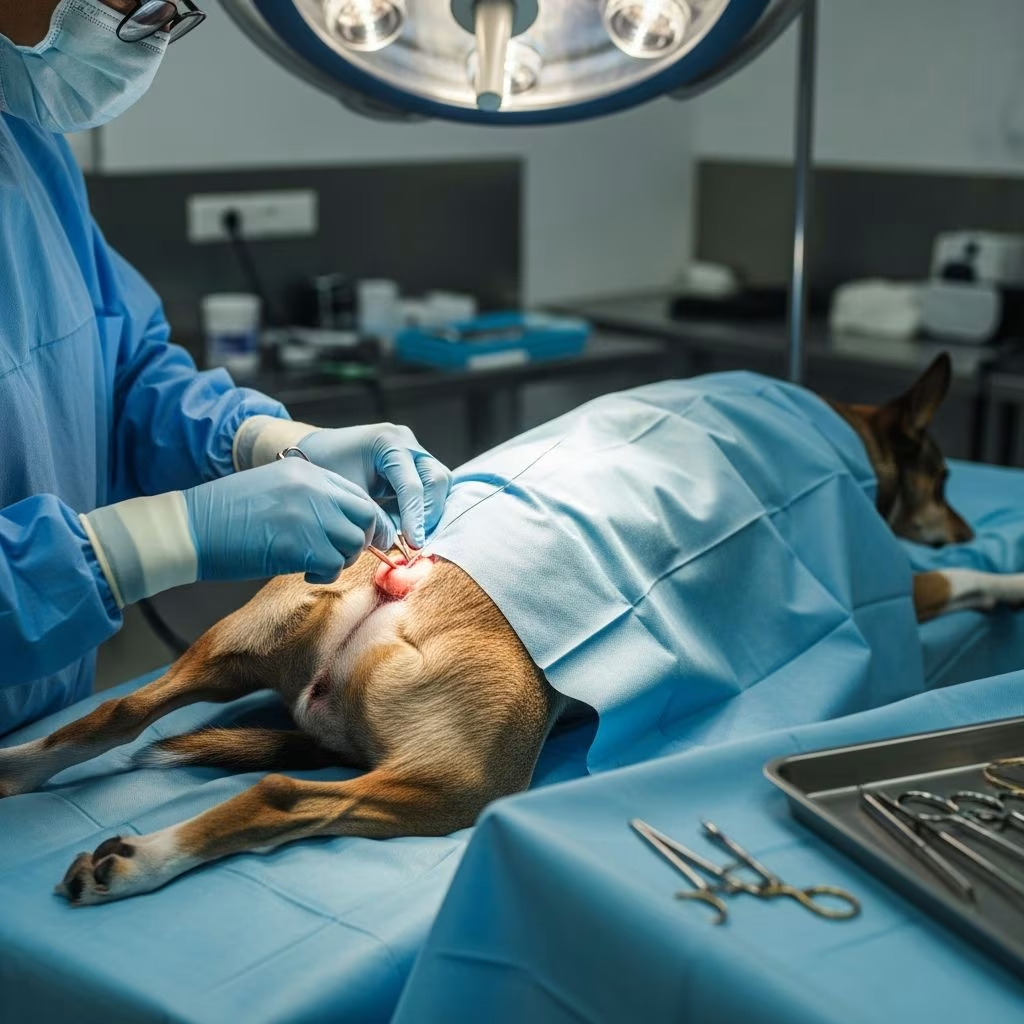
Anal gland removal surgery, known medically as anal sacculectomy, serves as a definitive solution for dogs suffering from persistent anal sac disorders. This procedure eliminates problematic glands that frequently cause discomfort, infections, or impactions unresponsive to conservative treatments.
Understanding Canine Anal Sac Function and Common Disorders
Dogs possess two small sacs located on either side of the anus, designed to secrete a pungent fluid during defecation. These glands aid in territorial marking and communication among canines. Normally, they empty spontaneously with bowel movements, but issues arise when they fail to do so.
Disorders manifest as impaction, where thick secretions block the ducts, leading to swelling and pain. Untreated, this progresses to infection, abscess formation, or even rupture, causing foul-smelling discharge, scooting, excessive licking, and reluctance to sit. Chronic cases may involve fistulas or tumors, necessitating advanced intervention.
- Impaction: Most frequent, often in small breeds or those with soft stools.
- Infection/Abscess: Bacterial overgrowth leads to pus-filled swellings.
- Tumors: Rare but serious, requiring excision to prevent metastasis.
Breeds prone to these problems include Chihuahuas, Dachshunds, and Bulldogs due to anatomical factors like narrow ducts or poor muscle tone.
Non-Surgical Management Options Before Considering Surgery
Veterinarians first pursue conservative approaches. Manual expression every 4-6 weeks prevents buildup in mild cases. Dietary modifications, such as high-fiber foods, firm stools to promote natural emptying. Epsom salt soaks or flushing alleviate minor infections.
Antibiotics treat acute infections, while anti-inflammatories reduce swelling. Probiotics support gut health, indirectly aiding gland function. However, when problems recur despite diligent care—often after 3-6 months of management—surgery becomes the recommended path.
| Management Type | Pros | Cons | Suitability |
|---|---|---|---|
| Manual Expression | Quick, non-invasive | Temporary; requires repetition | Mild, infrequent issues |
| Dietary Fiber | Promotes natural emptying | Slow results; inconsistent | Preventive in early stages |
| Antibiotics/Flushing | Resolves infections | Doesn’t prevent recurrence | Acute abscesses |
Indications for Anal Sacculectomy in Dogs
Surgery is indicated for recurrent impactions (more than 4-6 episodes yearly), chronic infections resistant to meds, perianal fistulas, or glandular neoplasia. It’s also considered for dogs with severe pain impacting quality of life or those failing multiple expression attempts.
Unilateral removal suits isolated issues, while bilateral addresses symmetric disease, preventing contralateral problems. Pre-surgical diagnostics include physical exams, cytology, imaging (ultrasound/radiographs), and biopsies if masses are present.
Detailed Procedure: How Anal Gland Removal is Performed
Conducted under general anesthesia, the surgery demands precision due to glands’ proximity to sphincter muscles controlling continence. Surgeons employ meticulous dissection to excise sacs and ducts without damaging nerves or musculature.
Step-by-Step Process:
- Preparation: Glands are expressed and sometimes injected with polymer for visualization.
- Incision: Small cuts (1-2 cm) made at 4 and 8 o’clock positions around the anus.
- Dissection: Glands freed from surrounding tissues using fine instruments or electrocautery for small breeds.
- Ligation and Excision: Ducts tied off to prevent fecal leakage; glands fully removed.
- Closure: Internal dissolvable sutures; external skin glued or stitched.
Innovative techniques like inside-out everting with forceps reduce operative time to 5-10 minutes bilaterally, minimizing trauma in toy breeds. Advanced facilities use LigaSure for hemostasis and ultrasound-guided nerve blocks for pain control.
Potential Risks, Complications, and Mitigation Strategies
While success rates exceed 95%, risks include incontinence (1-5%, usually transient), wound dehiscence, infection, or fecal leakage if ducts incompletely sealed.
Board-certified anesthesiologists mitigate anesthesia risks via tailored protocols, especially in seniors. Post-op e-collars prevent self-trauma. One study reported only minor scooting in 1/28 cases with a novel method.
- Short-term: Pain, swelling (managed with multimodal analgesics).
- Long-term: Rare incontinence resolves with stool softeners.
Post-Operative Care and Recovery Timeline
Recovery spans 2-6 weeks. Dogs go home same-day or next, with e-collars mandatory for 10-14 days. Restricted activity: short leash walks only, no jumping.
Daily Protocol:
- Clean incision with chlorhexidine; monitor for redness/discharge.
- Administer prescribed pain meds, antibiotics (7-14 days).
- High-fiber diet prevents constipation/straining.
- Follow-up at 7-10 days, 4 weeks.
Most resume normal function by week 3; full healing by 6 weeks. Complications drop with compliance.
Financial Aspects: Costs and Value Considerations
Costs range $1,600-$3,000+ per dog, varying by unilaterality, location, inclusions (bloodwork, imaging, meds, rechecks). Flat-fee packages offer transparency, often 30-40% less than hospitals.
| Component | Typical Cost Range |
|---|---|
| Anesthesia & Surgeon | $800-$1,500 |
| Pre-op Diagnostics | $200-$500 |
| Meds & Follow-ups | $300-$600 |
| Total Bilateral | $1,800-$2,800 |
Long-term savings from averting repeated vet visits justify investment for chronic cases.
Outcomes and Prognosis After Surgery
Prognosis is excellent: 90-95% achieve pain-free lives without recurrence. Activity levels improve; no ongoing expressions needed. Tumors excised early prevent spread.
Owners report enhanced pet happiness. Minor incontinence affects <5%, self-resolving.
Frequently Asked Questions (FAQs)
Is anal gland removal safe for puppies or seniors?
Yes, with age-appropriate anesthesia. Puppies post-weaning; seniors benefit from specialists.
Will my dog leak after surgery?
Rare; proper ligation prevents it. Monitor early.
Can one gland be removed if only one is problematic?
Yes, but bilateral often preferred for symmetry.
How soon can my dog play after surgery?
Light activity week 1; full by week 4-6.
Does pet insurance cover this?
Often yes, as surgical necessity; check policy.
References
- Anal Gland Removal Surgery for Dogs in South Orange County, CA — Bliss Animal Hospital. 2023. https://blissanimalhospital.com/blog/anal-gland-removal-surgery-for-dogs-south-orange-county-ca/
- Anal Sacculectomy – Veterinary Surgery Specialists — My Pet Surgery. 2023. https://mypetsurgery.com/service/anal_acculectomy/
- Anal Gland Removal — Maraboon Vet Surgery. 2023. https://www.maraboonvet.com.au/anal-gland-removal
- Anal Gland Sac Removal | SurgiPet — SurgiPet. 2023. https://www.surgipet.com/surgeries/anal-gland-sac-removal-surgery
- Inside-out anal sacculectomy in small dog breeds and cats — Frontiers in Veterinary Science. 2023-01-20. https://www.frontiersin.org/journals/veterinary-science/articles/10.3389/fvets.2023.1105826/full
- Anal Sacculectomy in Dogs — WagWalking. 2023. https://wagwalking.com/treatment/anal-sacculectomy



