

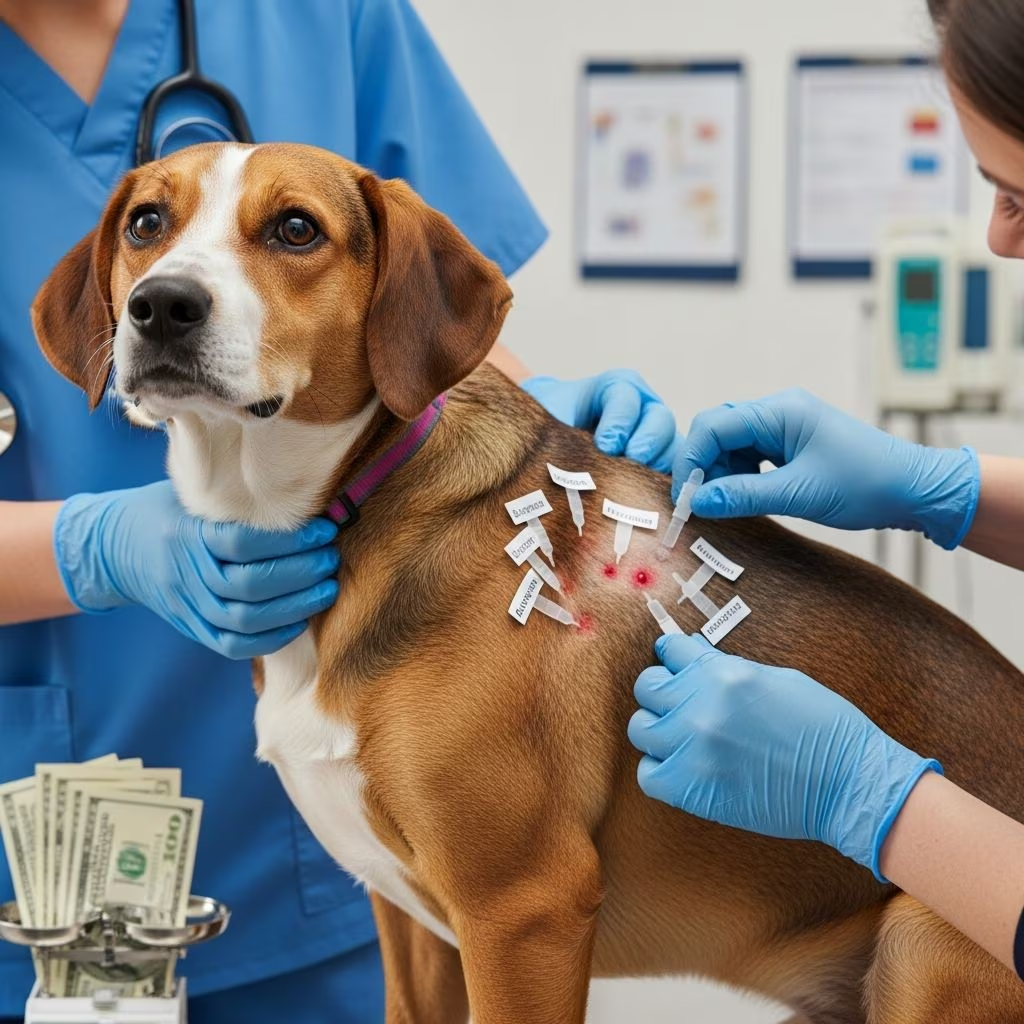
Dog allergy testing identifies specific triggers causing itching, infections, and discomfort, enabling targeted treatments like immunotherapy that can reduce reliance on medications. While costs range from $200 to $600, the long-term benefits often justify the expense for chronic cases.
Understanding Canine Allergic Reactions
Dogs commonly suffer from allergies manifesting as relentless scratching, red skin, ear infections, and gastrointestinal upset. These reactions stem from an overactive immune response to environmental elements like pollen, dust mites, or food proteins. Unlike humans, dogs rarely sneeze; instead, they paw at their faces, chew their paws, or develop hot spots. Accurate diagnosis prevents missteps like switching diets unnecessarily when the issue is airborne irritants.
Environmental allergies, or atopic dermatitis, affect up to 15% of dogs, peaking in young adults of breeds like Labrador Retrievers, French Bulldogs, and West Highland White Terriers. Food sensitivities, though less common at 10%, mimic these symptoms, complicating home remedies.
Main Methods for Diagnosing Dog Allergies
Veterinarians use two primary testing categories: skin-based and blood-based, each with unique procedures and suitability.
Intradermal Skin Testing (IDST)
IDST, the gold standard for environmental allergens, involves shaving a patch on the dog’s flank, injecting diluted allergens under the skin, and observing wheal formations over 20-30 minutes. Performed under light sedation by board-certified dermatologists, it maps reactions to grasses, molds, and animal dander. Sensitivity reaches 85% with specificity around 80% when using standardized panels.
Advantages include direct correlation to immunotherapy formulations. Drawbacks: requires 8-10 weeks off antihistamines, not ideal for dogs with thin skin or clotting issues.
Blood Serum Testing (RAST or IgE Assays)
Blood tests measure allergen-specific IgE antibodies without sedation. A simple venipuncture yields results in days, screening 50-100 allergens. While convenient, false positives occur in 20-50% of cases due to non-relevant antibodies. Newer assays like Pet Allergy Xplorer analyze molecular components for precision.
Best for initial screening or when skin testing is impractical, but less reliable for treatment planning.
Food Allergy Elimination Trials
No lab test reliably detects food allergies; instead, vets prescribe novel protein diets (e.g., kangaroo or duck) for 8-12 weeks. Improvement followed by flare-up on reintroduction confirms sensitivity. This gold standard avoids blood test pitfalls where 20-30% of healthy dogs test falsely positive.
Recent Advances in Testing Accuracy
Research from the University of Nebraska Medical Center compared allergen extracts: ultrafiltered dog extracts detected 14% more positives than standard epithelium and 5% more than acetone-precipitated versions, enhancing immunotherapy efficacy. Europe’s Pet Allergy Xplorer uses molecular diagnostics for nuanced profiles, distinguishing cross-reactive allergens.
Peer-reviewed studies affirm IDST’s superiority for canine atopic dermatitis, though optimal concentrations vary, risking false positives at high doses. Molecular testing, akin to human ImmunoCAP, targets proteins in saliva and dander for pet selection in allergic families.
Financial Breakdown: What to Expect
Costs vary by location and method:
| Test Type | Average Cost (USD) | Includes |
|---|---|---|
| IDST | $300-$600 | Consult, sedation, panel of 50+ allergens |
| Blood Test | $200-$400 | Sample analysis, basic report |
| Food Trial | $100-$300 | Diet, follow-ups (excludes food cost) |
| Immunotherapy Vial | $400-$800/year | Custom serum for shots/drops |
Insurance may cover 50-90%, and immunotherapy saves on monthly meds ($50-200). ROI appears in 6-12 months for severe cases.
Success Rates and Treatment Outcomes
Immunotherapy based on IDST improves 60-80% of dogs, reducing symptoms by half within a year. Blood test-guided shots yield similar gains despite lower specificity. Combining tests with Favrot criteria (e.g., seasonal flares, non-resolving infections) boosts diagnostic confidence to 85%.
- 60-70% full responders discontinue meds.
- 20-30% partial improvement.
- 10% non-responders need alternatives like Apoquel or Cytopoint.
Is Testing Worth It? Decision Factors
For mild, seasonal itching, meds suffice. Invest in testing for:
- Year-round symptoms unresponsive to trials.
- Recurrent infections/yeast overgrowth.
- Desire for drug-free management.
Skip if budget-constrained or symptoms resolve seasonally. Consult dermatologists for personalized advice.
Step-by-Step Guide to Getting Tested
- Document symptoms: photos, timeline, breed history.
- Visit primary vet for rule-outs (fleas, mange).
- Referral to dermatologist.
- Prep: 4-6 weeks med washout.
- Test day: sedation, monitoring.
- Results review: customize immunotherapy.
- Follow-up shots weekly, then monthly.
Alternatives to Formal Testing
- Medications: Apoquel ($2-3/day), Cytopoint injections ($50-100/month).
- Topicals: Medicated shampoos, sprays.
- Diets: Hydrolyzed proteins for trials.
- Environment: Air purifiers, frequent baths.
These control but don’t cure, unlike immunotherapy.
Frequently Asked Questions
How accurate are dog allergy blood tests?
Blood tests like RAST have 50-70% accuracy for environmental allergies, prone to false positives. IDST is more reliable at 80-85%.
Can puppies get allergy tested?
Wait until 1-2 years when allergies manifest; early testing risks negatives.
Does insurance cover dog allergy testing?
Many pet plans reimburse 70-90% post-deductible.
How long does immunotherapy take to work?
Improvement in 3-6 months; full effects by year one.
Are at-home allergy tests reliable?
No; they lack validation and often mislead.
Choosing the Right Vet Specialist
Seek ACVD diplomates via findadermatologist.org. Prepare questions on panel allergens relevant to your region (e.g., Southern grasses vs. Northern molds).
Long-Term Management Strategies
Post-testing, integrate shots with flea prevention, omega-3s, and hypoallergenic bedding. Annual rechecks adjust vials as allergens evolve.
Testing transforms reactive care into proactive relief, enhancing quality of life for dogs and owners alike.
References
- Dog Allergy Testing: New Research, Better Answers for Owners — The Training of Dogs. 2023. https://www.thetrainingofdogs.com/post/dog-allergy-testing-latest-research
- Efficacy of diagnostic testing for allergen sensitization in canine atopic dermatitis — Frontiers in Veterinary Science. 2025-01-15. https://www.frontiersin.org/journals/veterinary-science/articles/10.3389/fvets.2025.1551207/full
- Dog Allergy Tests: Everything a Pet Parent Needs To Know — PetMD. 2024. https://www.petmd.com/dog/procedure/dog-allergy-tests
- Research Update: Testing for Food Allergies — Tufts University Petfoodology. 2020-03-06. https://sites.tufts.edu/petfoodology/2020/03/06/food-allergy-testing/
- RAST Testing in Dogs — VCA Animal Hospitals. 2024. https://vcahospitals.com/know-your-pet/rast-testing-in-dogs



