

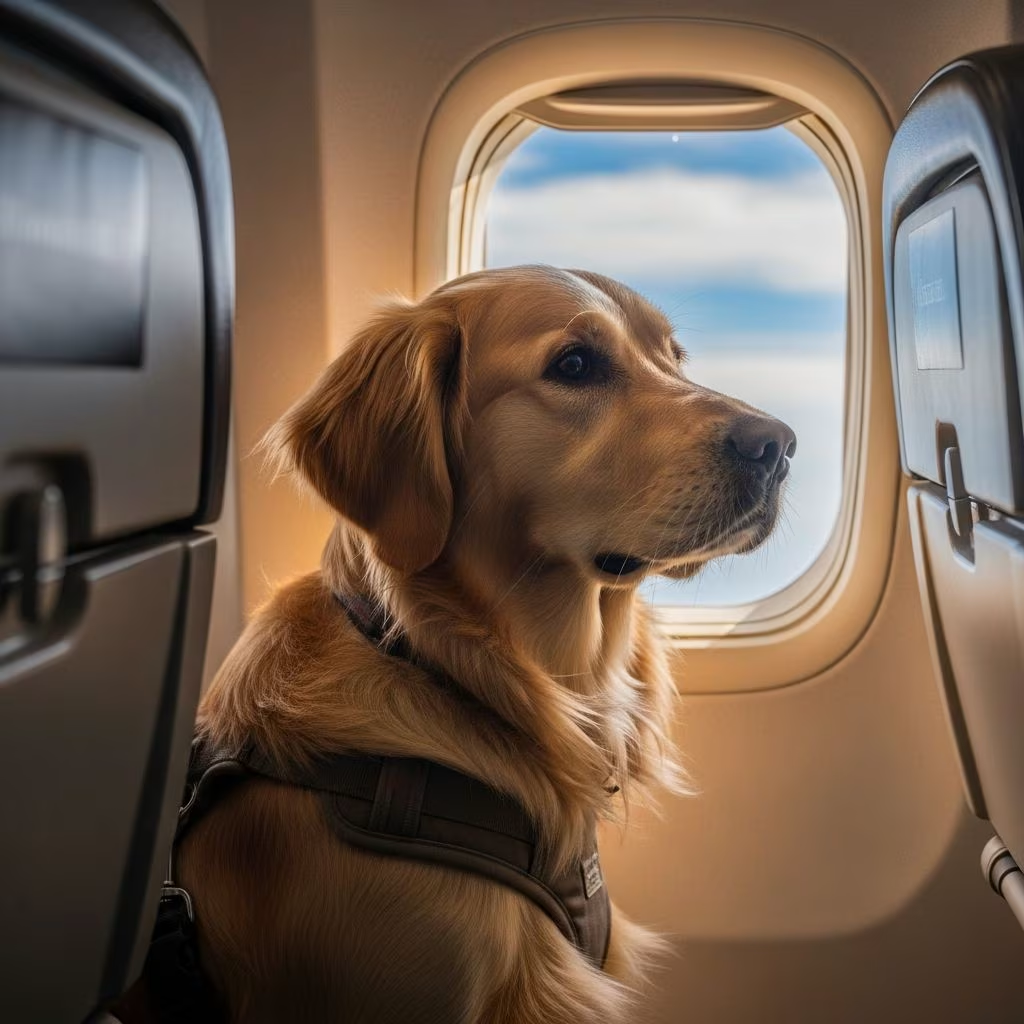
Air travel with your dog requires careful planning and preparation to ensure both safety and comfort throughout the journey. Whether your dog travels in the cabin or cargo hold, understanding the requirements and taking proactive measures can significantly reduce stress for both you and your pet. This comprehensive guide covers everything you need to know before booking your flight and boarding the aircraft.
Understanding Airline Options and Regulations
Airlines offer different travel accommodations depending on your dog’s size and the specific carrier’s policies. Small dogs that fit within airline-approved carriers can typically travel in the cabin with you, while larger dogs must travel either as checked luggage or as manifest cargo. Understanding these distinctions helps you choose the best option for your pet’s needs and safety.
Cabin travel keeps your dog with you during the flight, providing reassurance and immediate care. However, airlines strictly limit the number of pets allowed in the cabin, and your dog must remain in an approved carrier throughout the flight that fits securely under the seat in front of you. The carrier must meet specific airline dimensions, and your dog cannot disturb other passengers during the journey.
For larger dogs traveling as checked luggage or manifest cargo, significant differences exist in how they are handled. Checked luggage compartments may lack climate control, while manifest cargo areas maintain temperature-controlled environments and are staffed by trained personnel. This distinction becomes particularly important during extreme weather conditions.
Pre-Flight Veterinary Assessment
Before scheduling your flight, schedule a veterinary appointment to ensure your dog is healthy enough for air travel. This consultation becomes especially critical if your dog has existing health conditions or hasn’t been examined within the past few months.
Certain breeds and health conditions require special consideration. Brachycephalic dogs—those with flat faces such as Pugs, English Bulldogs, Boston Terriers, and Pekingese—face increased respiratory challenges when confined in carriers or cargo compartments, particularly in hot or humid weather. Additionally, dogs with heart disease, kidney disease, or other pre-existing medical problems may experience health complications from air travel stress.
Your veterinarian can provide guidance specific to your dog’s health status and may recommend specific preparations. Do not administer sedatives or tranquilizers without veterinary approval, as these medications can trigger in-flight medical emergencies. If your dog experiences significant travel anxiety, discuss appropriate options with your veterinarian, who may recommend a test dose of any recommended medication before your trip to evaluate its effects.
Selecting and Preparing the Travel Carrier
The travel carrier serves as your dog’s home during transit and must meet specific safety and comfort standards. For cabin travel, collapsible fabric carriers that fit under airline seats work well for small dogs, while larger carriers may not meet airline specifications.
If your dog will travel in cargo or as checked luggage, the crate must feature sturdy, waterproof walls and flooring to prevent crushing and contain any urine leakage. A disposable absorbent pad designed for puppies or people with bladder control issues provides protection for the crate’s interior. Airlines may recommend specific approved crates, so verify requirements with your carrier before purchasing.
Familiarize your dog with the carrier weeks before your departure date. Allow your dog to explore the carrier with the door open and closed, playing inside to create positive associations. This gradual acclimation reduces stress and anxiety when the carrier becomes necessary for travel.
Carrier Labeling and Identification
Attach permanent, highly visible labels to your carrier’s exterior with the following information:
- Your name and telephone number
- Your flight schedule and destination
- Contact information for someone at your destination
- Your dog’s name and microchip number
Do not rely on baggage tags alone, as these may become lost or damaged during handling. Your dog should also wear an identification tag attached to a collar or harness, with harnesses being preferable due to their security. Ensure all contact information on tags is current and accessible at all times.
Microchipping and Emergency Preparedness
Microchipping provides permanent identification if your dog escapes during travel. All pets traveling by air should be microchipped before departure, and you should carry a copy of the microchip number with you for reference. Combine microchipping with updated collar tags and tags on the carrier itself to maximize your chances of locating your dog if separation occurs.
Carry a recent photograph of your dog with you during travel. This becomes invaluable if your dog becomes separated from you at the airport or during transit. The photograph helps airline personnel and airport staff identify your dog quickly.
Optimizing Your Flight Selection
The timing and routing of your flight significantly impact your dog’s travel experience. Direct flights prove far superior to flights with connections or layovers, as they reduce your dog’s time in transit and eliminate risks of missed baggage connections or exposure to extreme weather on tarmacs. Direct flights also reduce handling by multiple airline staff members, minimizing stress and potential complications.
Scheduling weekday flights often provides better options for direct routing than weekend travel. Additionally, flying during less busy travel periods ensures airline personnel have additional time to handle your dog with appropriate care and attention.
Avoid flying your dog in cargo or checked luggage during times when ground temperatures fall below 40°F (4°C) or exceed 80°F (21°C). Although temperature-controlled holding areas exist, the vehicles used to transport luggage are not always sheltered from environmental elements. The American Red Cross recommends against traveling when temperatures exceed 85°F (29°C) or drop below 45°F (7°C).
Pre-Departure Feeding and Hydration
Proper feeding management before flight time reduces airsickness and digestive issues. Do not feed your dog within four to six hours before boarding your flight. This fasting period allows the stomach to empty, reducing nausea and the likelihood of accidents in the carrier during flight.
Provide fresh water until flight time, and ensure water remains available in the carrier during the flight when possible. Once you arrive at your destination, offer fresh water immediately to rehydrate your dog after the journey.
Navigating Airport Security Procedures
Airport security screening requires specific procedures when traveling with your dog. Your dog’s carrier must pass through the X-ray machine separately from your dog. Place your personal items such as electronics, bags, shoes, and belts in screening bins first, then remove your dog (secured on a leash and well-fitted harness) and place the empty carrier in the X-ray unit.
You will carry your dog through the human screening device while your carrier is X-rayed. Retrieve your carrier on the other side of the checkpoint and secure your dog inside before gathering your personal items. This process requires advance planning to move smoothly through security, particularly during busy travel periods.
Before departure or after arrival at your destination, allow your dog a potty break before securing it in the crate for travel. This opportunity to relieve itself reduces anxiety and the likelihood of accidents during the flight.
Communication with Airline Staff
Inform every airline employee you encounter—both on the ground and in flight—that you are traveling with a dog. This communication ensures that staff members are prepared and aware of your dog’s presence. If your dog travels in the cargo hold and the plane experiences delays, request that airline personnel check on your dog’s welfare whenever feasible.
If you have any concerns about your dog’s condition, insist that airline staff assess your dog whenever possible. In certain situations, removing your dog from the cargo hold and deplaning may be warranted for your dog’s safety and well-being.
In-Flight and Post-Arrival Management
Once aboard the aircraft, your dog must remain in the carrier for the entire flight duration. Never place your dog in an overhead bin; pets must be secured below the seat in front of you according to airline policies. Bring along cleaning supplies in case of accidents in the carrier during flight, allowing you to manage any issues discreetly.
For dogs traveling in cargo, some airlines accept small pouches of dried food taped to the outside of the crate, allowing personnel to feed your dog on long flights or during layovers. Discuss feeding options with your airline when booking or checking in.
Managing Your Dog in Accommodations
When you reach your hotel or temporary accommodation, exercise caution to prevent escape. If you must leave your dog unattended in your room, confine your dog to the carrier or a closed bathroom. Inform housekeeping staff about your dog’s presence and request that they wait until you return before entering the room. Display a “Do Not Disturb” sign to add extra security.
Post-Travel Recovery and Monitoring
After completing your journey, monitor your dog for signs of stress, illness, or injury. Air travel can temporarily disrupt normal behavior and appetite. Allow your dog time to readjust to the new environment and return to normal routines gradually.
If your dog shows signs of distress, illness, or behavioral changes after traveling, consult a veterinarian promptly. Some dogs may experience motion sickness, anxiety, or other complications from air travel that warrant professional evaluation.
References
- Airplane Travel With Your Dog — VCA Animal Hospitals. https://vcahospitals.com/know-your-pet/travel—airplane-travel-with-your-dog
- Pet Travel Safety — Centers for Disease Control and Prevention. https://www.cdc.gov/healthy-pets/travel/index.html
- Pet Travel Safety — American Red Cross. https://www.redcross.org/get-help/how-to-prepare-for-emergencies/pet-travel-safety.html
- Air Travel Tips for Flying With Pets — ASPCA Pet Insurance. https://www.aspcapetinsurance.com/resources/flying-with-pets/
- Pet Travel Tips — Center for Pet Safety. https://www.centerforpetsafety.org/faqs/pet-travel-tips/
- Travel Safety Tips — ASPCA. https://www.aspca.org/pet-care/general-pet-care/travel-safety-tips



