

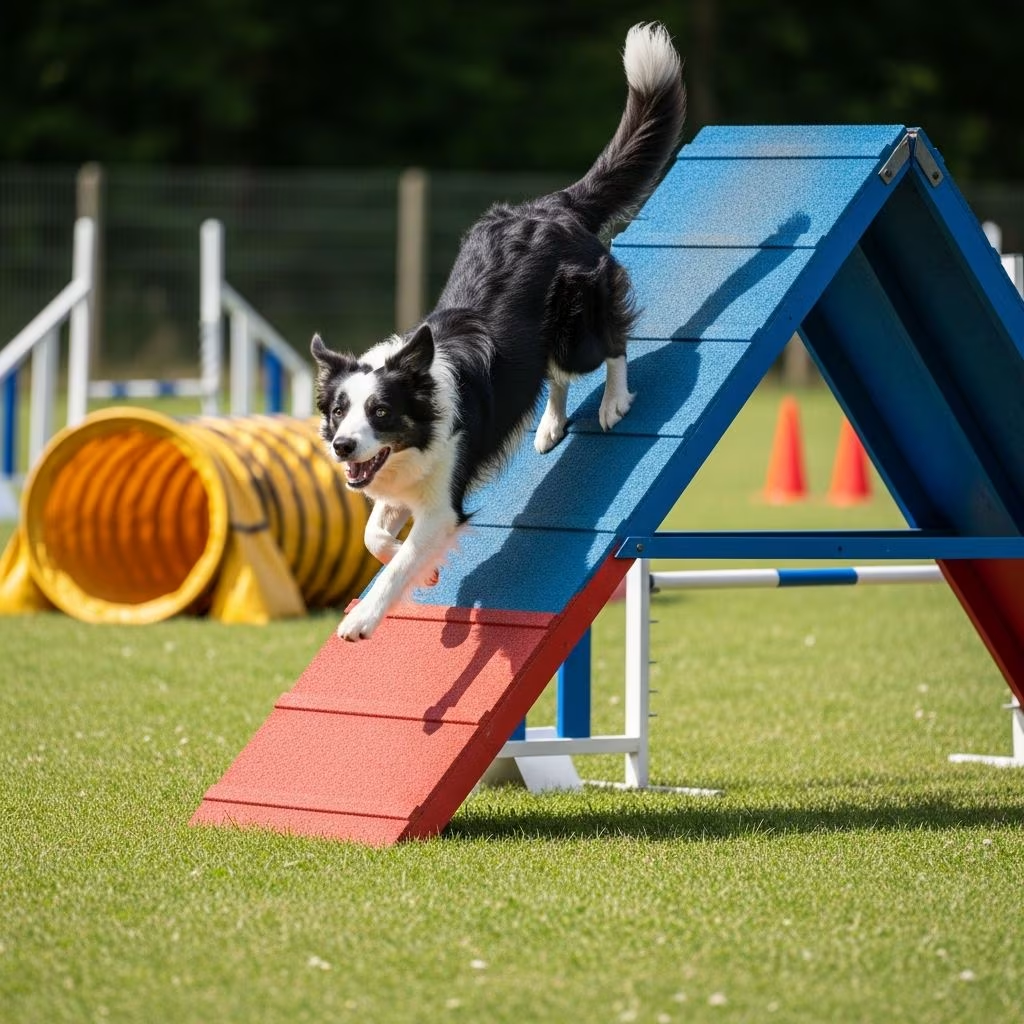
Dog Agility Training Tips: Complete Beginner’s Guide
Dog agility training is an exciting and rewarding activity that strengthens the bond between you and your furry companion while providing excellent physical exercise and mental stimulation. Agility training teaches your dog to navigate obstacles with precision and speed, all while responding to your direction through hand cues and voice commands. Whether you’re interested in competitive agility or simply want to enhance your dog’s coordination and confidence, this comprehensive guide will walk you through everything you need to know to get started.
What Is Dog Agility Training?
Dog agility is a dog sport that involves teaching your pup to maneuver through various obstacles with direction from you, their handler. It’s more than just a fun activity—it’s a form of communication and bonding between dog and owner. Agility training teaches dogs to use body awareness, follow directional cues, and work with their handlers as a team. The sport emphasizes positive reinforcement, building trust, and creating clear channels of communication through body language and voice commands.
During agility competitions, dogs run off-leash through courses containing 14-20 obstacles in a predetermined order. However, beginners can start with much simpler setups in their own backyards, making agility accessible to dogs of all ages and experience levels.
Before You Start: Foundation Requirements
Success in dog agility begins with a solid foundation. Before introducing your dog to obstacles, several important prerequisites must be in place.
Establish Basic Obedience Skills
Your dog will need to follow your cues closely during the agility course, so it’s essential to brush up on basic obedience skills using positive reinforcement techniques. The core commands your dog should master include:
- Sit
- Stay
- Come
- Down
Mastering the “stay” command is particularly important when it comes to obstacles like the teeter board, where your dog will need to remain still until the far end touches the ground. Start by teaching these commands in a quiet environment, then progress to practicing them in busier, more distracting places until your dog can respond reliably anywhere.
Get Veterinary Clearance
Before starting any agility training program, schedule a wellness exam with your veterinarian to ensure your dog is physically capable of handling the demands of agility training. This is especially important for puppies, senior dogs, and breeds prone to joint issues. Your vet can assess your dog’s fitness level and provide recommendations based on their individual health profile.
Acclimate Your Dog to Different Movements
Get your dog comfortable with moving in strange ways before introducing them to real obstacles. This preparation helps prevent fear and injury. Practice these fundamental movements:
- Walking backwards
- Placing paws in specific places
- Stepping on top of objects
- Climbing over obstacles
- Crawling through spaces
- Turning tightly around objects
- Moving away from you or to the left and right by following treat tosses
These preparatory exercises build your dog’s body awareness and confidence, making the transition to formal obstacles much smoother.
Basic Agility Moves to Master
Before tackling full obstacle courses, teach your dog fundamental agility movements that form the building blocks of advanced training.
Heeling and Directional Movement
Start by rewarding your dog for sitting beside you, then work toward moving slowly together, gradually building up to running speed. Use an object like a garbage can or tree as a guide and move in a circle around it. Practice in both directions with your dog on the outside. Only put them on the inside when they’ve mastered the skill. For an extra challenge, line up two objects and run around them in a figure-eight pattern. This develops your dog’s ability to stay close and follow your movement patterns.
Distance Work
Another basic move is teaching your dog to go out in front of you to tackle an obstacle. Since you won’t always be able to keep up and run by their side, your dog needs to understand working at a distance. An easy way to build this skill is by using a low jump (a broomstick balanced on some books will do) and your dog’s favorite toy or a small bag of treats. Start by throwing the toy or bag over the jump so your dog can chase after it, jumping the obstacle as they go. Once they understand the game, add a verbal cue like “Go” and start adding distance gradually. Practice this game with your dog starting on both your right and left sides.
Essential Agility Obstacles and How to Train Them
As your dog masters foundational movements, it’s time to introduce specific obstacles. Here’s how to train each type:
Jumps
Jumps are often the first obstacle dogs encounter in agility training. Once you’ve received the go-ahead from your vet, create jumps by laying a piece of plywood on top of a few books. Make sure your dog won’t hurt themselves if they knock the jump over. Start very low—one to two inches off the ground for large breeds, or even on the ground for small breeds—and increase the jump height slowly as your dog gains confidence and consistency.
Tunnels
Open tunnels are long, canvas tubes that can be either straight or curved, and your dog must enter at one end and exit at the other. You can create a simplified version at home by using a large open box or even a blanket draped over two chairs. Start with shorter tunnels and gradually work up to longer distances as your dog becomes comfortable.
Weave Poles
One of the most entertaining obstacles to watch, weave poles usually consist of 6 to 12 upright poles spaced out along a straight line that your dog must weave through. To create DIY weave poles, use ski poles or PVC pipes that you push into the ground. Begin with the poles spaced quite far apart. Walk through the poles with your dog on a leash to get them used to the weaving movement. Next, lure your dog through the poles independently using treats. You can slowly move the poles closer together as your dog learns the movements. Remember that flexibility is very important here, so take it slow to ensure your dog doesn’t hurt themselves.
Dog Walk
The dog walk is a raised walkway with ramps at either end. You could create one using a picnic bench and placing pieces of wood at either end for the ramps. Some dogs may hesitate to climb up onto this obstacle, so you can try starting with the end section first. Pick up your pup and place them a short distance from the end of the obstacle. Most of the time, dogs will take the couple of steps required to get off. Then you can build up until your dog is happy with the whole obstacle.
A-Frame
The agility A-frame is an obstacle shaped like the letter “A.” Dogs must climb up the A-frame to the top and then climb down the other side. To complete the obstacle properly, dogs must make contact with the takeoff footing and the landing footing. Consider starting with a mini-A frame and gradually increasing the height as your dog becomes more comfortable; the regulation size is 9 feet tall.
Teeter Board
An agility teeter typically consists of a long, narrow plank balanced on a pivot point in the middle—resembling a park seesaw. It should have a non-slip surface to help dogs maintain their footing. When you feel your dog is ready, you can build your own teeter board with a long piece of wood resting on top of a pipe. Progress slowly, luring your dog with treats and praising them whenever they touch and take small steps onto it. When they get to the center and the teeter begins to shift, reward your pup with a jackpot of treats for staying on the teeter. You can eventually switch to thicker pipes when they’re completely comfortable with the movement.
Training Methods and Best Practices
Use Positive Reinforcement
Throughout all agility training, employ positive reinforcement techniques. Reward your dog with treats, praise, and their favorite toys when they successfully complete obstacles or demonstrate desired behaviors. Using a toy as a reward can be a brilliant way to keep your dog’s attention during training sessions. This approach builds enthusiasm and keeps your dog motivated to learn.
Progress Gradually
Never rush your dog through the training process. Start with low or simplified versions of obstacles and gradually increase difficulty as your dog demonstrates mastery and confidence. Rushing can lead to fear, injury, and setbacks in training.
Keep Sessions Short and Fun
Dogs have limited attention spans, so keep training sessions relatively short—typically 10-15 minutes for beginners. End on a positive note with a successful completion and reward. This keeps training fun and prevents frustration for both you and your dog.
Getting Professional Training
While you can start basic agility training at home with DIY obstacles, there is no substitute for getting into a formal agility class. Finding a local club and auditing a class can help you see if the instructor’s teaching style suits you. Look for trainers who use positive training techniques and offer lowered equipment for beginners. Full-size equipment should wait until your dog is comfortable and has mastered the basics.
Professional trainers provide several advantages, including proper equipment, personalized feedback, exposure to different environments, and socialization opportunities with other dogs. They can also identify and correct mistakes in your handling technique that might impede progress.
Equipment Options
You have several options for obtaining agility equipment:
- Purchase Online: You can purchase most standard agility equipment online for backyard use.
- DIY Construction: Build equipment yourself using plans available on the web and materials you purchase locally.
- Household Adaptations: Create simplified versions using items you already have at home, such as tomato stakes for weave poles or a blanket over two chairs for a tunnel.
- Join a Club: Access full equipment by enrolling in an agility class at a local club.
Building Communication and Bonding
Agility training is fundamentally about building a common language between dog and owner. It teaches you to use body language to communicate clearly and effectively. During agility trials, dogs run off-leash and free to run wherever they choose, which is where the bonding and teamwork truly shine. You can’t touch your dog, so using only cues and body language, you must direct them where to go because the order of the obstacles changes every time. It’s essential to communicate clearly with your dog, and they need to keep their eyes on you as much as possible.
Age and Health Considerations
Different dogs have different starting points for agility training. Puppies should wait until they’re fully grown and their growth plates have closed before engaging in high-impact activities. For most breeds, this means waiting until they’re 12-18 months old, though giant breeds may need to wait longer. Senior dogs can enjoy modified agility activities, but always consult your veterinarian about appropriate activities for their age and health status. Dogs with joint problems, orthopedic issues, or other health concerns should have specialized training plans developed with your vet’s input.
Frequently Asked Questions
Q: At what age can my dog start agility training?
A: Dogs should typically be at least 12-18 months old before starting formal agility training, allowing their growth plates to fully close. Puppies can begin with basic obedience and foundational movement exercises much earlier, but high-impact obstacles should wait until they’re fully grown.
Q: Can older dogs do agility training?
A: Yes, senior dogs can enjoy modified agility activities. However, consult your veterinarian about appropriate exercises for their age and any existing health conditions. Low-impact obstacles and shorter training sessions may be better suited for older dogs.
Q: Do I need special equipment to start agility training?
A: No, you can start with DIY obstacles made from household items and materials. Many effective training tools cost little to nothing, such as hula hoops for tire jumps, broomsticks for jump bars, and chairs with blankets for tunnels.
Q: How often should I train my dog in agility?
A: Start with 2-3 training sessions per week, with each session lasting 10-15 minutes. As your dog progresses, you can increase frequency and duration, but always allow rest days for recovery.
Q: What if my dog is afraid of obstacles?
A: Never force your dog through obstacles. Instead, go back to basics and use gradual desensitization. Make obstacles smaller, use more treats, and progress at your dog’s pace. Building confidence is more important than speed of progression.
Q: Is agility training suitable for all dog breeds?
A: Most dogs can participate in agility training adapted to their abilities. However, breeds with short legs or back problems may need modified obstacles. Discuss your dog’s specific breed considerations with your veterinarian or a professional agility trainer.
References
- How to Teach Your Dog Agility — Small Door Veterinary. 2024. https://www.smalldoorvet.com/learning-center/behavior/how-to-teach-your-dog-agility
- Dog Agility 101 — PetMD. 2024. https://www.petmd.com/dog/training/dog-agility-101
- The Beginner’s Guide to Agility Training for Dogs — Tug-E-Nuff. 2024. https://us.tug-e-nuff.com/blogs/news/agility-training-for-beginners
- Tips for Getting Started in Dog Agility — American Kennel Club. 2024. https://www.akc.org/expert-advice/training/agility-training-tips-competition/
- Guide to Dog Agility Training: Tunnels, Jumps & More — Toe Beans. 2024. https://www.toe-beans.com/blogs/pet-blog/guide-dog-agility-training
- A Beginner’s Guide to Dog Agility — 3 Lost Dogs. 2024. https://www.3lostdogs.com/a-beginners-guide-to-dog-agility/



